Ilit Ferber – författare
Visar alla böcker från författaren Ilit Ferber. Handla med fri frakt och snabb leverans.
15 produkter
15 produkter
Inbunden, Engelska, 2019
1 149 kr
Skickas inom 5-8 vardagar
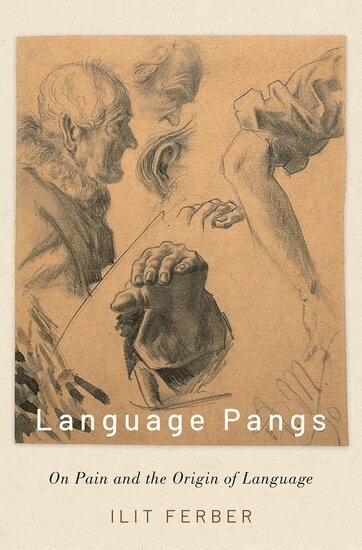
We usually think about language and pain as opposites, the one being about expression and connection, the other destructive, "beyond words" so to speak, and isolating. Language Pangs challenges these familiar conceptions and offers a radical reconsideration of the relationship between pain and language in terms of an essential interconnectedness. Ilit Ferber's premise is that we cannot probe the experience of pain without taking account its inherent relation to language; and vice versa, that our understanding of the nature of language essentially depends on how we take account of its correspondence with pain. Language Pangs brings together discussions of philosophical as well as literary texts, an intersection that is especially productive in considering the phenomenology of pain and its bearing on language. Ferber explores a phenomenology of pain and its relation to language, before providing a unique close reading of Johann Gottfried Herder's Treatise on the Origin of Language, the first modern philosophical text to consider language and pain, establishing the cry of pain as the origin of language. Herder also raises important claims regarding the relationship between human and animal, questions of sympathy and the role of hearing in the expression of pain. Beyond Herder, the book grapples with the work of other profound thinkers, including Martin Heidegger, Stanley Cavell, and André Gide, and finally, Sophocles, from them weaving new insights on the experience of pain, expression, sympathy, and hearing.
E-bok
PDF, Engelska, 2019952 kr
Läs direkt efter köp
We usually think about language and pain as opposites, the one being about expression and connection, the other destructive, "beyond words" so to speak, and isolating. Language Pangs challenges these familiar conceptions and offers a radical reconsideration of the relationship between pain and language in terms of an essential interconnectedness.Ilit Ferber''s premise is that we cannot probe the experience of pain without taking account its inherent relation to language; and vice versa, that our understanding of the nature of language essentially depends on how we take account of its correspondence with pain. Language Pangs brings together discussions of philosophical as well as literary texts, an intersection that is especially productive in considering the phenomenology of pain and its bearing on language. Ferber explores a phenomenology of pain and its relation to language, before providing a unique close reading of Johann Gottfried Herder''s Treatise on the Origin of Language, the first modern philosophical text to consider language and pain, establishing the cry of pain as the origin of language. Herder also raises important claims regarding the relationship between human and animal, questions of sympathy and the role of hearing in the expression of pain. Beyond Herder, the book grapples with the work of other profound thinkers, including Martin Heidegger, Stanley Cavell, and André Gide, and finally, Sophocles, from them weaving new insights on the experience of pain, expression, sympathy, and hearing.
E-bok
Engelska, 2019952 kr
Läs direkt efter köp
We usually think about language and pain as opposites, the one being about expression and connection, the other destructive, "beyond words" so to speak, and isolating. Language Pangs challenges these familiar conceptions and offers a radical reconsideration of the relationship between pain and language in terms of an essential interconnectedness.Ilit Ferber''s premise is that we cannot probe the experience of pain without taking account its inherent relation to language; and vice versa, that our understanding of the nature of language essentially depends on how we take account of its correspondence with pain. Language Pangs brings together discussions of philosophical as well as literary texts, an intersection that is especially productive in considering the phenomenology of pain and its bearing on language. Ferber explores a phenomenology of pain and its relation to language, before providing a unique close reading of Johann Gottfried Herder''s Treatise on the Origin of Language, the first modern philosophical text to consider language and pain, establishing the cry of pain as the origin of language. Herder also raises important claims regarding the relationship between human and animal, questions of sympathy and the role of hearing in the expression of pain. Beyond Herder, the book grapples with the work of other profound thinkers, including Martin Heidegger, Stanley Cavell, and André Gide, and finally, Sophocles, from them weaving new insights on the experience of pain, expression, sympathy, and hearing.
Inbunden, Engelska, 2026
972 kr
Kommande
In this volume, Ilit Ferber offers the first comprehensive philosophical study of Jean Améry's oeuvre. A Holocaust survivor and lifelong exile, Améry is best known for At the Mind's Limits (1966), his searing reflection on Auschwitz. Yet the prominence of this work has often obscured the breadth of his thought. Read together with On Aging (1968) and On Suicide (1976), as well as his essays on literature and culture, a fuller picture emerges: Améry's writings form a sustained meditation on identity, time, and failure.Jean Améry: Identity, Time, Failure shows how Améry's autobiographical voice and his philosophical reflections are deeply intertwined. Rather than standing in opposition, they mutually illuminate one another, making his work a rare case where personal experience becomes the ground of philosophical inquiry. Across memoir, essay, and literary interpretation, Améry probes resentment, exile, aging, and voluntary death, with a style that is both intimate and uncompromising.At the heart of the book is the claim that Améry should be understood not only as a witness but also as a philosopher in his own right. His refusal of consolation, his insistence on irreparable suffering, and his reflections on the fragility of selfhood position him as a central figure in twentieth-century thought.Through close readings, this book brings Améry into dialogue with Sartre, Proust, Beauvoir, Nietzsche, Flaubert, and Jankélévitch. These dialogues highlight the originality of Améry's perspective while situating him within broader philosophical and literary traditions.Both introduction and invitation, Jean Améry: Identity, Time, Failure guides readers through Améry's corpus and positions him at the crossroads of philosophy, literature, and testimony. It demonstrates why his voice-rooted in personal experience yet reaching beyond it-remains urgently relevant to questions of identity, mortality, and the limits of human endurance.
Inbunden, Engelska, 2013
1 384 kr
Skickas inom 5-8 vardagar
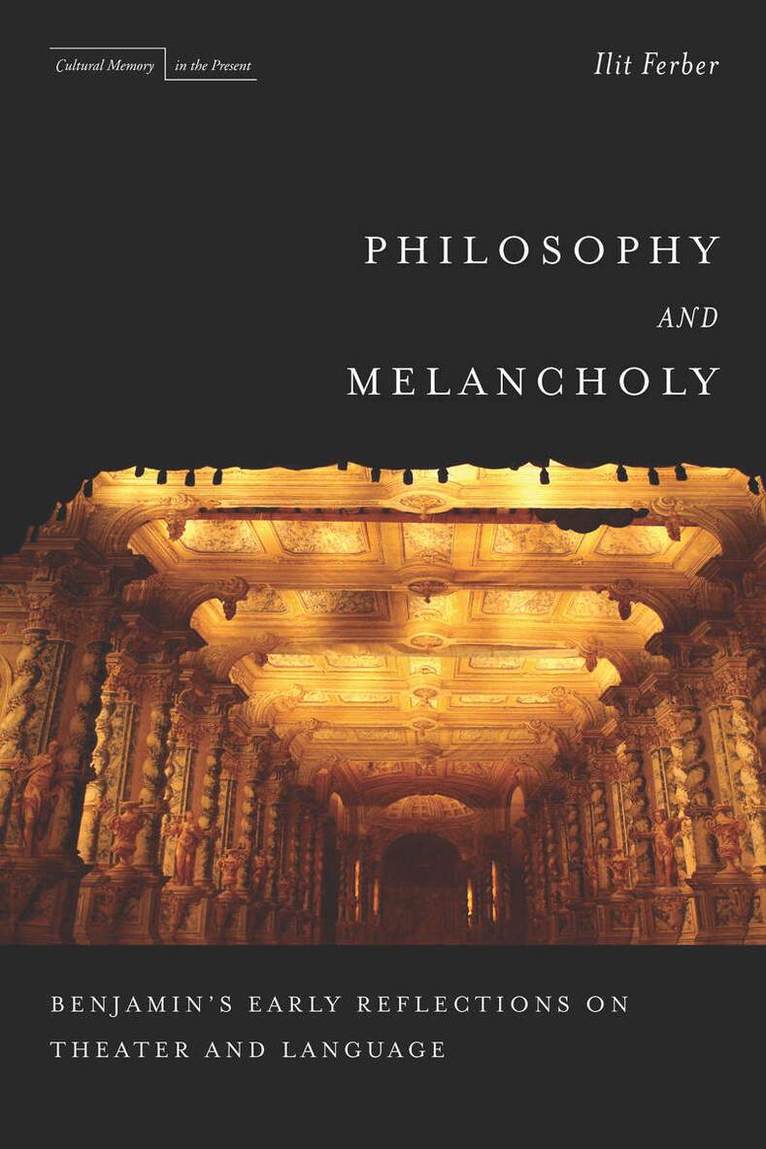
This book traces the concept of melancholy in Walter Benjamin's early writings. Rather than focusing on the overtly melancholic subject matter of Benjamin's work or the unhappy circumstances of his own fate, Ferber considers the concept's implications for his philosophy. Informed by Heidegger's discussion of moods and their importance for philosophical thought, she contends that a melancholic mood is the organizing principle or structure of Benjamin's early metaphysics and ontology. Her novel analysis of Benjamin's arguments about theater and language features a discussion of the Trauerspiel book that is amongst the first in English to scrutinize the baroque plays themselves. Philosophy and Melancholy also contributes to the history of philosophy by establishing a strong relationship between Benjamin and other philosophers, including Leibniz, Kant, Husserl, and Heidegger.
Häftad, Engelska, 2013
336 kr
Skickas inom 5-8 vardagar
This book traces the concept of melancholy in Walter Benjamin's early writings. Rather than focusing on the overtly melancholic subject matter of Benjamin's work or the unhappy circumstances of his own fate, Ferber considers the concept's implications for his philosophy. Informed by Heidegger's discussion of moods and their importance for philosophical thought, she contends that a melancholic mood is the organizing principle or structure of Benjamin's early metaphysics and ontology. Her novel analysis of Benjamin's arguments about theater and language features a discussion of the Trauerspiel book that is amongst the first in English to scrutinize the baroque plays themselves. Philosophy and Melancholy also contributes to the history of philosophy by establishing a strong relationship between Benjamin and other philosophers, including Leibniz, Kant, Husserl, and Heidegger.
392 kr
Läs direkt efter köp
This book traces the concept of melancholy in Walter Benjamin's early writings. Rather than focusing on the overtly melancholic subject matter of Benjamin's work or the unhappy circumstances of his own fate, Ferber considers the concept's implications for his philosophy. Informed by Heidegger's discussion of moods and their importance for philosophical thought, she contends that a melancholic mood is the organizing principle or structure of Benjamin's early metaphysics and ontology. Her novel analysis of Benjamin's arguments about theater and language features a discussion of the Trauerspiel book that is amongst the first in English to scrutinize the baroque plays themselves. Philosophy and Melancholy also contributes to the history of philosophy by establishing a strong relationship between Benjamin and other philosophers, including Leibniz, Kant, Husserl, and Heidegger.
Inbunden, Engelska, 2014
1 538 kr
Skickas inom 5-8 vardagar
Lament, mourning, and the transmissibility of a tradition in the aftermath of destruction are prominent themes in Jewish thought. The corpus of lament literature, building upon and transforming the biblical Book of Lamentations, provides a unique lens for thinking about the relationships between destruction and renewal, mourning and remembrance, loss and redemption, expression and the inexpressible. This anthology features four texts by Gershom Scholem on lament, translated here for the first time into English. The volume also includes original essays by leading scholars, which interpret Scholem’s texts and situate them in relation to other Weimar-era Jewish thinkers, including Walter Benjamin, Franz Rosenzweig, Franz Kafka, and Paul Celan, who drew on the textual traditions of lament to respond to the destruction and upheavals of the early twentieth century. Also included are studies on the textual tradition of lament in Judaism, from biblical, rabbinic, and medieval lamentations to contemporary Yemenite women’s laments. This collection, unified by its strong thematic focus on lament, shows the fruitfulness of studying contemporary and modern texts alongside the traditional textual sources that informed them.
Del 2 - Perspectives on Jewish Texts and Contexts
Lament in Jewish Thought
Philosophical, Theological, and Literary Perspectives
Häftad, Engelska, 2017
280 kr
Skickas inom 5-8 vardagar
Lament, mourning, and the transmissibility of a tradition in the aftermath of destruction are prominent themes in Jewish thought. The corpus of lament literature, building upon and transforming the biblical Book of Lamentations, provides a unique lens for thinking about the relationships between destruction and renewal, mourning and remembrance, loss and redemption, expression and the inexpressible. This anthology features four texts by Gershom Scholem on lament, translated here for the first time into English. The volume also includes original essays by leading scholars, which interpret Scholem’s texts and situate them in relation to other Weimar-era Jewish thinkers, including Walter Benjamin, Franz Rosenzweig, Franz Kafka, and Paul Celan, who drew on the textual traditions of lament to respond to the destruction and upheavals of the early twentieth century. Also included are studies on the textual tradition of lament in Judaism, from biblical, rabbinic, and medieval lamentations to contemporary Yemenite women’s laments. This collection, unified by its strong thematic focus on lament, shows the fruitfulness of studying contemporary and modern texts alongside the traditional textual sources that informed them.
Häftad, Tyska, 2023
327 kr
Skickas inom 3-6 vardagar
E-bok
PDF, Tyska, 2023298 kr
Läs direkt efter köp
Sprache und Schmerz werden üblicherweise als Gegensätze gedacht: Auf der einen Seite die Sprache, die sich mit Ausdruck und Kommunikation befasst und Beziehungen herstellt, während der Schmerz auf der anderen Seite gerade nicht mit Worten auszudrücken, zerstörerisch und isolierend ist. Sprachwehen hinterfragt diese vertrauten Vorstellungen und schlägt eine neue Perspektive auf das Verhältnis von Sprache und Schmerz vor, die die Wesensverwandtschaft der beiden enthüllt.Ilit Ferber geht davon aus, dass die Erfahrung von Schmerz nicht erforscht werden kann, ohne dessen innere Beziehung zur Sprache zu berücksichtigen, und umgekehrt: Das Wesen der Sprache zu verstehen, hängt essenziell von der Darstellung ihrer Beziehung zum Schmerz ab. Sprachwehen diskutiert vor diesem Hintergrund sowohl philosophische als auch literarische Texte und macht deren Schnittstellen insbesondere für eine Phänomenologie des Schmerzes und seinen Einfluss auf Sprache produktiv.Dabei gibt ein close reading von Johann Gottfried Herders Abhandlung über den Ursprung der Sprache (1772), dem ersten modernen philosophischen Text, der Sprache und Schmerz miteinander verbindet, Aufschluss über den 'Schmerzensschrei' als Ursprung der Sprache. Herder verleiht der Beziehung zwischen Mensch und Tier hohe Relevanz und verweist auf wichtige Funktionen des Mitleids und des Hörens für die Schmerzerfahrung. Martin Heideggers relativ unbekanntes Seminar von 1939 über Herders Text zum Sprachursprung liefert weitere wichtige Hinweise auf Konzepte des Schmerzes, seinen Ausdruck und das Hören. Als literarischer Text ist Sophokles' Philoktet für Herders Abhandlung zentral und daher ebenso für den Blick auf Schmerz, Ausdruck, Mitleid und Hören. Denker wie Stanley Cavell, André Gide und Werner Hamacher ergänzen die Erkenntnisse über den wesentlichen Zusammenhang von Sprache und Schmerz.Mit diesem Band liegt Ilit Ferbers vielbeachtetes Buch Language Pangs. On Pain and the Origin of Language nun auch in deutscher Sprache vor, in der Übersetzung von Peter Brandes.
Del 63 - Contributions to Phenomenology
Philosophy's Moods: The Affective Grounds of Thinking
Inbunden, Engelska, 2011
1 631 kr
Skickas inom 10-15 vardagar
Philosophy's Moods is a collection of original essays interrogating the inseparable bond between mood and philosophical thinking. What is the relationship between mood and thinking in philosophy? In what sense are we always already philosophizing from within a mood? What kinds of mood are central for shaping the space of philosophy? What is the philosophical imprint of Aristotle’s wonder, Kant’s melancholy, Kierkegaard’s anxiety or Nietzsche's shamelessness? Philosophy's Moods invites its readers to explore the above questions through diverse methodological perspectives. The collection includes twenty-one contributions by internationally renowned scholars as well as younger and emerging voices. In pondering the place of the subjective and personal roots that thinking is typically called to overcome, the book challenges and articulates an alternative to a predominant tendency in philosophy to view the theoretical content and the affective side of thought as opposed to one another.
E-bok
PDF, Engelska, 20111 519 kr
Läs direkt efter köp
Philosophy''s Moods is a collection of original essays interrogating the inseparable bond between mood and philosophical thinking. What is the relationship between mood and thinking in philosophy? In what sense are we always already philosophizing from within a mood? What kinds of mood are central for shaping the space of philosophy? What is the philosophical imprint of Aristotle’s wonder, Kant’s melancholy, Kierkegaard’s anxiety or Nietzsche''s shamelessness? Philosophy''s Moods invites its readers to explore the above questions through diverse methodological perspectives. The collection includes twenty-one contributions by internationally renowned scholars as well as younger and emerging voices. In pondering the place of the subjective and personal roots that thinking is typically called to overcome, the book challenges and articulates an alternative to a predominant tendency in philosophy to view the theoretical content and the affective side of thought as opposed to one another.
Del 63 - Contributions to Phenomenology
Philosophy's Moods: The Affective Grounds of Thinking
Häftad, Engelska, 2013
1 198 kr
Skickas inom 10-15 vardagar
Philosophy's Moods is a collection of original essays interrogating the inseparable bond between mood and philosophical thinking. What is the relationship between mood and thinking in philosophy? In what sense are we always already philosophizing from within a mood? What kinds of mood are central for shaping the space of philosophy? What is the philosophical imprint of Aristotle’s wonder, Kant’s melancholy, Kierkegaard’s anxiety or Nietzsche's shamelessness? Philosophy's Moods invites its readers to explore the above questions through diverse methodological perspectives. The collection includes twenty-one contributions by internationally renowned scholars as well as younger and emerging voices. In pondering the place of the subjective and personal roots that thinking is typically called to overcome, the book challenges and articulates an alternative to a predominant tendency in philosophy to view the theoretical content and the affective side of thought as opposed to one another.
E-bok
Spanska, 2019113 kr
Läs direkt efter köp
La literatura compone gramáticas del grito y gramáticas de la escucha. Su lenguaje no consiste tanto en representar el mundo de las cosas como en presentar el lenguaje a través del cual esas cosas se representan y la violencia que lo habita. Este libro busca analizar el entramado de violencia y escritura a partir de una perspectiva a la vez literaria y filosófica, buscando dar voz a la promesa que habita el lenguaje. Sin embargo, si se puede llegar a ser testigos de la violencia, ¿no es a costa de la destrucción del lenguaje?