Inga Rossi-Schrimpf – författare
Visar alla böcker från författaren Inga Rossi-Schrimpf. Handla med fri frakt och snabb leverans.
2 produkter
2 produkter
E-bok
PDF, Tyska, 2018148 kr
Läs direkt efter köp
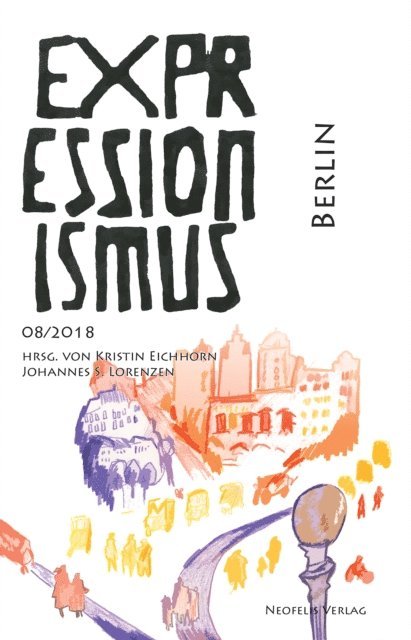
Als Prototyp der modernen Großstadt ist Berlin häufig Gegenstand expressionistischer Kunst gewesen, sei es im Film, in der Literatur oder in der bildenden Kunst: Walther Ruttmanns Berlin. Die Sinfonie der Großstadt, Alfred Döblins Berlin Alexanderplatz sowie die Werke von Ernst Ludwig Kirchner oder George Grosz sind berühmte Beispiele für diese Tendenz. Außerdem zieht Berlin als Wohn- und Wirkungsort zahlreiche Künstler*innen an, die sich oft bewusst dort niederlassen und sich mit Gleichgesinnten vernetzen. So verlagerte bekanntlich die Brücke ihr Zentrum von Dresden nach Berlin. Im literarischen Bereich ist vor allem an das Neopathetische Cabaret bzw. den Neuen Club um Kurt Hiller zu erinnern. Hinzu kommt, dass für den Expressionismus wichtige Verlage wie S. Fischer, daneben aber auch Neugründungen (z.B. Heinrich F.S. Bachmair oder Die Schmiede) in Berlin ansässig waren und zentrale expressionistische Zeitschriften wie Der Sturm oder Die Aktion gleichfalls von Berlin ausgingen.Das Heft geht diesem Phänomen aus verschiedenen Perspektiven nach. Die Beiträge beschäftigen sich exemplarisch mit der Darstellung Berlins im Werk einzelner Künstlerinnen und Künstler (Fritz Ascher, Kurt Kroner, Else Lasker-Schüler, Paul Gurk). Hinzu kommen Untersuchungen zur Darstellung Berlins in Film und Fotografie, zu expressionistischen Bauten in Berlin sowie zur belgischen Perspektive auf Berlin.
Häftad, Franska, 2018
544 kr
Tillfälligt slut
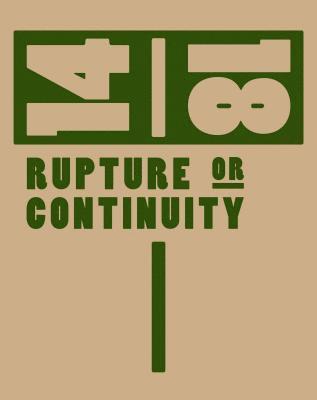
World War I had a major effect on Belgian visual arts. German occupation, the horror at the battlefield and the experience of exile, led to multiple narratives and artistic expressions by Belgian artists during and after the war. Belgian interbellum art is extremely vibrant and diverse. 14/18 - Rupture or Continuity takes a look at Belgian artistic life in the years around the First World War and how it was affected by this event. The Great War was a catalyst of artistic oppositions, leading on the one hand to a Belgian avant-garde that explored new forms and styles, while continuing to uphold a more traditional and established art on the other. Whereas the war experience consolidated an already present style for some artists, for others it constituted a revolution leading to new artistic adventures. The collection of essays in the present book highlights these contrasting facets of Belgian art in its rich historical context during the early 20th century.Contributors: Werner Adriaenssens (Royal Museums of Art and History, Brussels), Erik Buelinckx (Royal Institute for Cultural Heritage, Brussels), Sophie de Schaepdrijver (Pennsylvania State University), Ole W. Fischer (University of Utah, Salt Lake City), Eva Francioli (Universit degli Studi di Firenze), Laura Kollwelter (Royal Museum of Fine Arts of Belgium, Brussels), Christina Kott (Universit Panth on-Assas Paris 2), Fran oise Lucbert (Universit Laval, Qu bec), Peter Pauwels (independent art historian, Antwerp), Hubert Roland (F.R.S. - FNRS / Universit Catholique de Louvain), Inga Rossi-Schrimpf (Royal Museum of Fine Arts of Belgium, Brussels), Sergio Servell n (FeliXart Museum, Drogenbos), Sandrine Smets (Royal Museum of Armed Forces and Military History, Brussels), Hans Vandevoorde (Vrije Universiteit Brussel), Caterine Verdickt (Universiteit Antwerpen)