Inger NI Kuin - Böcker
Visar alla böcker från författaren Inger NI Kuin. Handla med fri frakt och snabb leverans.
4 produkter
4 produkter
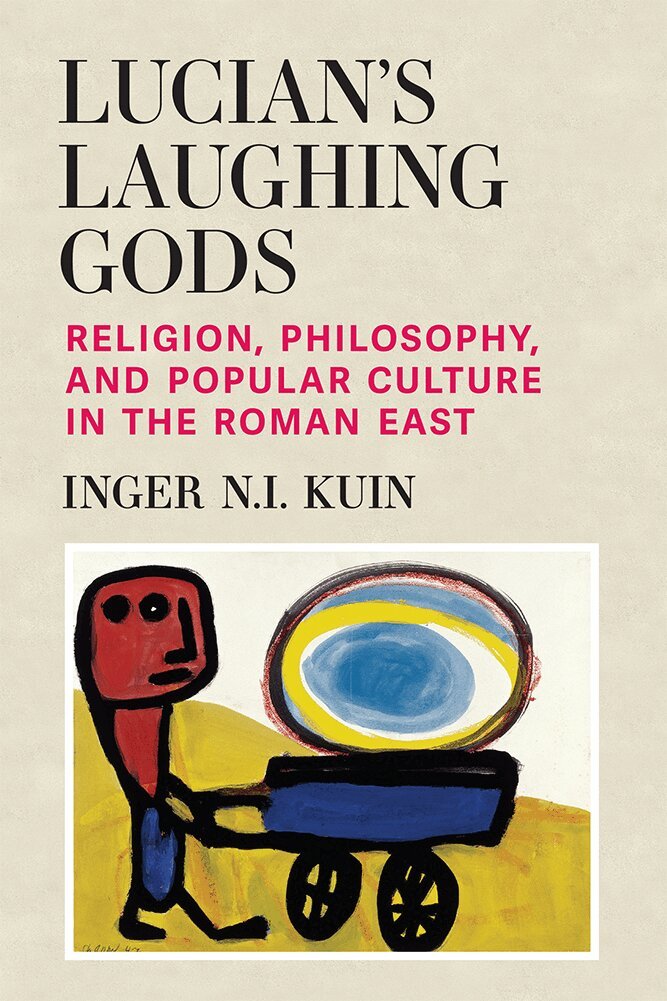
Lucian’s Laughing Gods
Religion, Philosophy, and Popular Culture in the Roman East
Inbunden, Engelska, 2023
1 152 kr
Skickas inom 7-10 vardagar
No comic author from the ancient world features the gods as often as Lucian of Samosata, yet the meaning of his works remain contested. He is either seen as undermining the gods and criticizing religion through his humor, or as not engaging with religion at all, featuring the gods as literary characters. His humor was traditionally viewed as a symptom of decreased religiosity, but that model of religious decline in the second century CE has been invalidated by ancient historians. Understanding these works now requires understanding what it means to imagine as laughing and laughable gods who are worshipped in everyday cult.In Lucian's Laughing Gods, author Inger N. I. Kuin argues that in ancient Greek thought, comedic depictions of divinities were not necessarily desacralizing. In religion, laughter was accommodated to such an extent as to actually be constituent of some ritual practices, and the gods were imagined either to reciprocate or push back against human laughter—they were never deflated by it. Lucian uses the gods as comic characters, but in doing so, he does not automatically negate their power. Instead, with his depiction of the gods and of how they relate to humans—frivolous, insecure, callous—Lucian challenges the dominant theologies of his day as he refuses to interpret the gods as ethical models. This book contextualizes Lucian’s comedic performances in the intellectual life of the second century CE Roman East broadly, including philosophy, early Christian thought, and popular culture (dance, fables, standard jokes, etc.). His texts are analyzed as providing a window onto non-elite attitudes and experiences, and methodologies from religious studies and the sociology of religion are used to conceptualize Lucian’s engagement with the religiosity of his contemporaries.
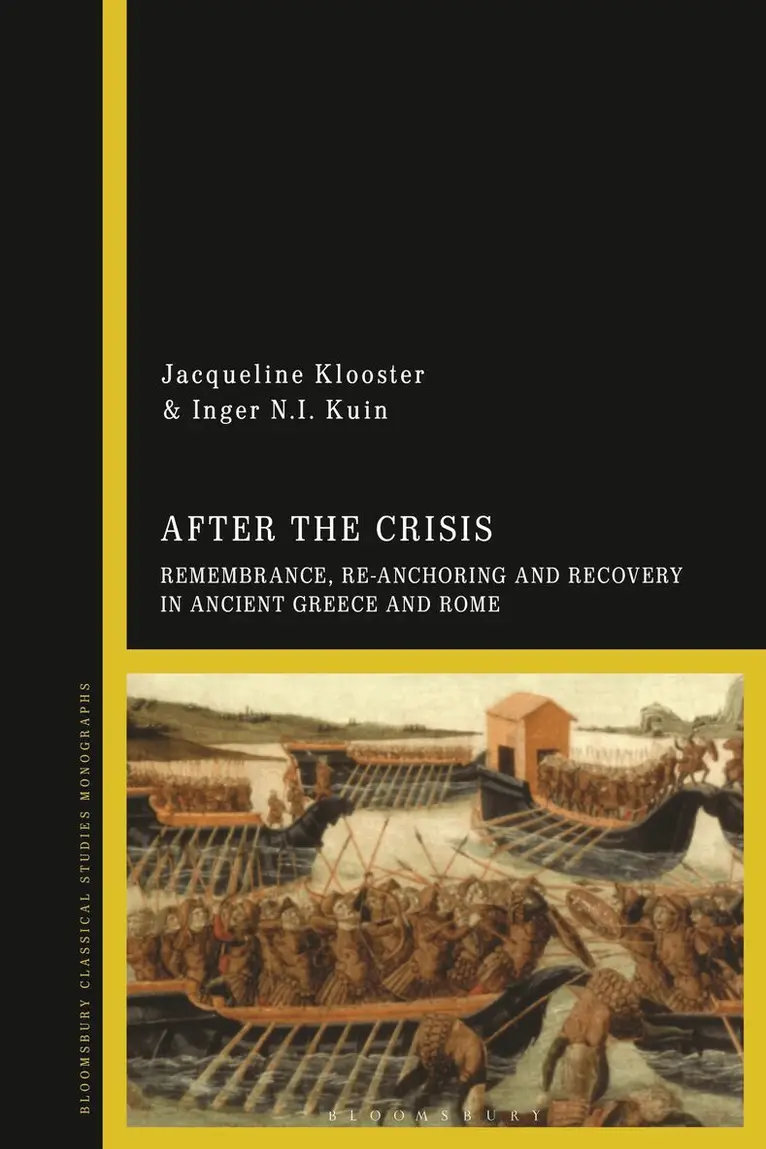
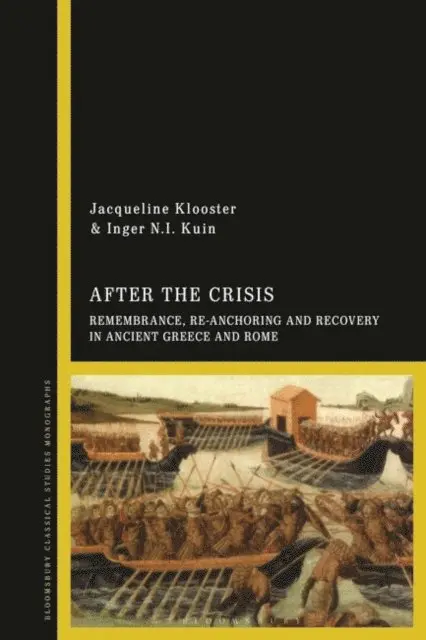
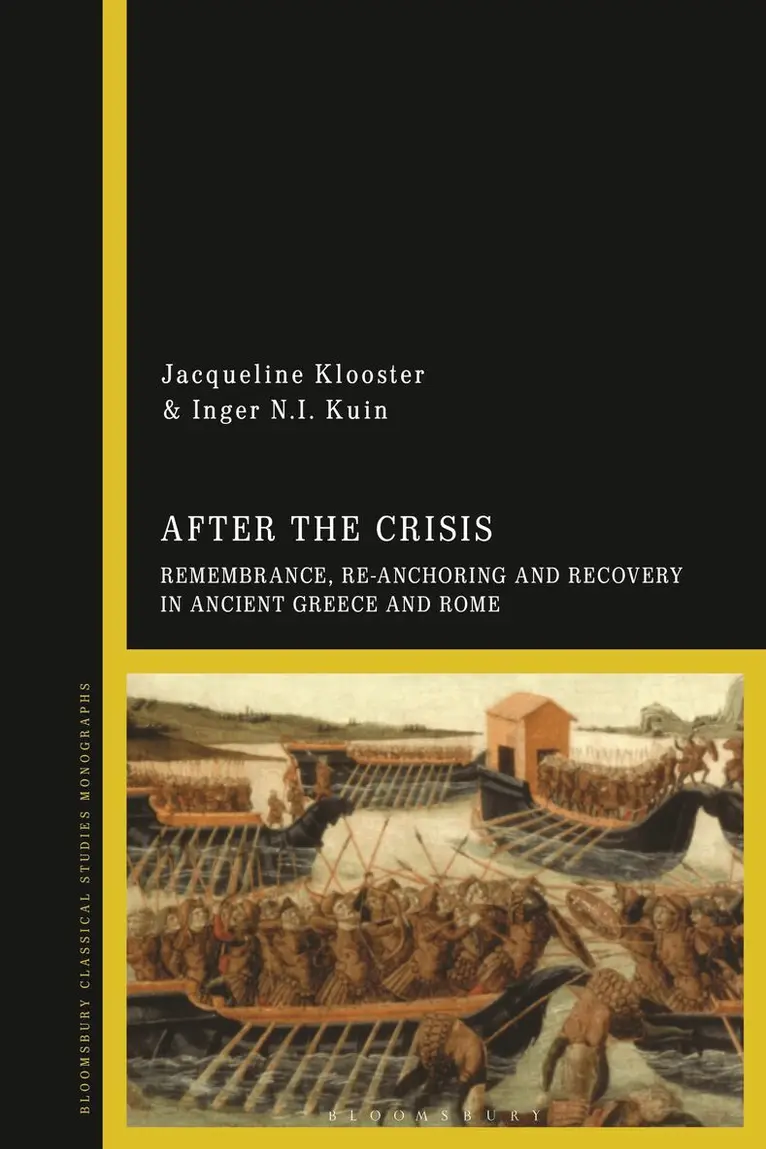
After the Crisis: Remembrance, Re-anchoring and Recovery in Ancient Greece and Rome
Inbunden, Engelska, 2020
1 520 kr
Skickas inom 10-15 vardagar
Crises resulting from war or other upheavals turn the lives of individuals upside down, and they can leave marks on a community for many years after the event. This volume aims to explore how such crises were remembered in the ancient world, and how communities reconstituted themselves after a crisis. Can crises serve as catalysts for innovation or change, and how does this work? What do crises reveal about the ‘normality’ against which they are defined and framed?People living in post-crisis societies have no choice but to adapt to the changes caused by crisis. Such adaptation entails the question of how the relationship between the pre-crisis situation and the new status quo is constructed, and by whom. Due to the reduced possibility of using the immediate past, which is tainted by conflict and bad memories, it may involve revisions of historical narratives about communal pasts and identities, through the selection of new ‘anchors’, and sometimes even a discarding of the old ones.Crises affect all areas of life, and crisis recovery likewise spans different spheres. This volume finds traces of such recovery strategies in texts as well as visual representations; in literary as well as in documentary texts; in official ideology as much as in subaltern responses. The contributors bring together the diverse testimonies for such ways of coping that have survived from antiquity.
After the Crisis: Remembrance, Re-anchoring and Recovery in Ancient Greece and Rome
Häftad, Engelska, 2021
461 kr
Skickas inom 10-15 vardagar
Crises resulting from war or other upheavals turn the lives of individuals upside down, and they can leave marks on a community for many years after the event. This volume aims to explore how such crises were remembered in the ancient world, and how communities reconstituted themselves after a crisis. Can crises serve as catalysts for innovation or change, and how does this work? What do crises reveal about the ‘normality’ against which they are defined and framed?People living in post-crisis societies have no choice but to adapt to the changes caused by crisis. Such adaptation entails the question of how the relationship between the pre-crisis situation and the new status quo is constructed, and by whom. Due to the reduced possibility of using the immediate past, which is tainted by conflict and bad memories, it may involve revisions of historical narratives about communal pasts and identities, through the selection of new ‘anchors’, and sometimes even a discarding of the old ones.Crises affect all areas of life, and crisis recovery likewise spans different spheres. This volume finds traces of such recovery strategies in texts as well as visual representations; in literary as well as in documentary texts; in official ideology as much as in subaltern responses. The contributors bring together the diverse testimonies for such ways of coping that have survived from antiquity.
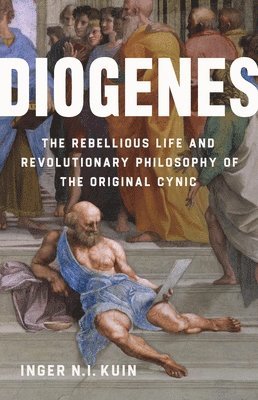
Diogenes
The Rebellious Life and Revolutionary Philosophy of the Original Cynic
Inbunden, Engelska, 2025
274 kr
Skickas inom 7-10 vardagar
The life and thought of Diogenes the Cynic, an iconoclastic philosopher who pioneered a brash and free-thinking vision of life that inspired the philosophy of StoicismIn his own day, the ancient philosopher Diogenes the Cynic had a reputation for eccentricity, dispensing wisdom from a clay pot in the marketplace and relieving himself in public. Since his death in 323 BCE, devoted followers passing on his ideas have made him famous the world over, but often in distorted, sanitized form.In Diogenes, classicist Inger N.I. Kuin scours all existing evidence of Diogenes and his followers to offer an in-depth account of Diogenes's life and thought, revealing a man whose innovative ideas about power, death, nature, and the body have much to teach the contemporary world. He pioneered a vision of simplicity and autonomy in his day-to-day life, stressing the importance of living in the here and now, and of always thinking for oneself. Diogenes stands apart as history's first recorded critic of slavery and a proud exile from polite society whose challenging thought proved foundational for the Stoics and their successors.Diogenes rehabilitates Diogenes as a compelling thinker for the twenty-first century, one who demands that we look at our society with fresh eyes and be unafraid of change-starting with ourselves.