Ingmar Lehmann - Böcker
Visar alla böcker från författaren Ingmar Lehmann. Handla med fri frakt och snabb leverans.
10 produkter
10 produkter
282 kr
Tillfälligt slut
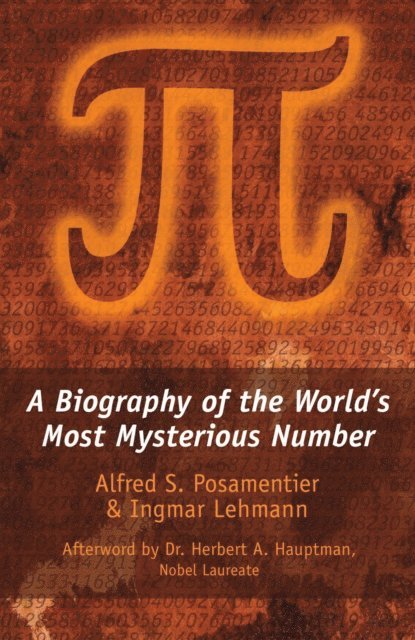
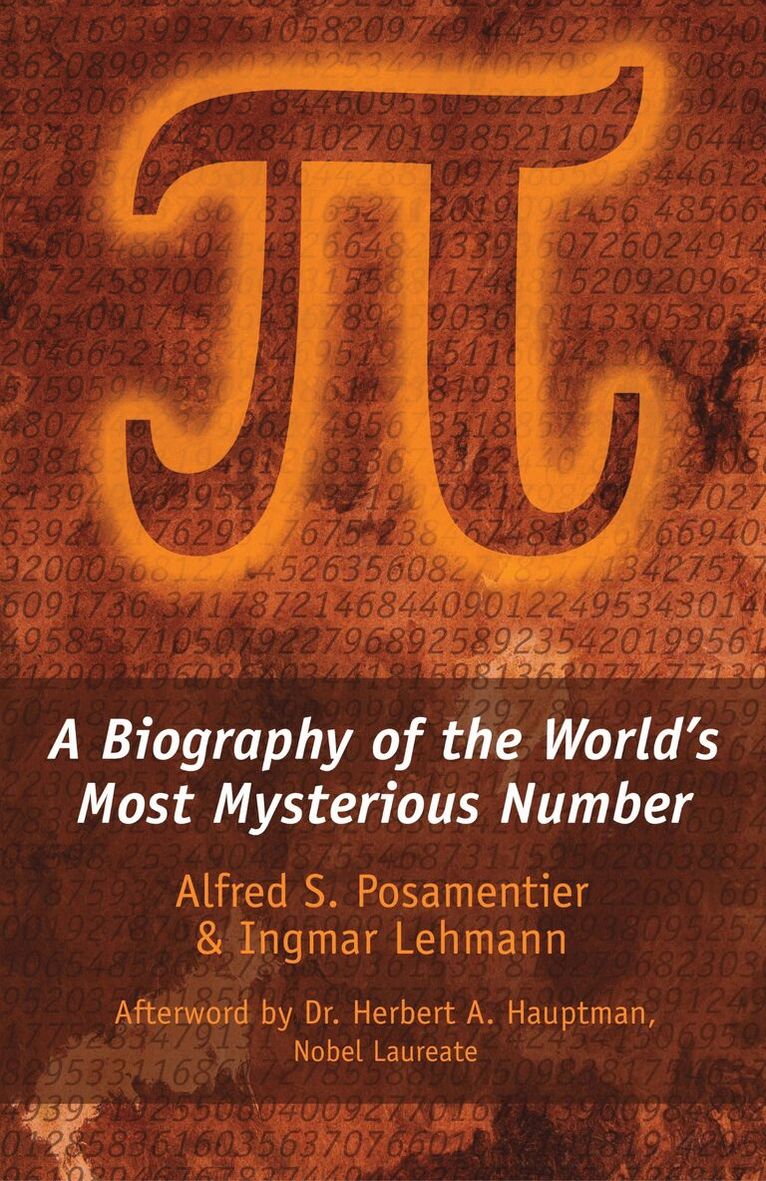
We all learned that the ratio of the circumference of a circle to its diameter is called pi and that the value of this algebraic symbol is roughly 3.14. What we weren't told, though, is that behind this seemingly mundane fact is a world of mystery, which has fascinated mathematicians from ancient times to the present. Simply put, pi is weird. Mathematicians call it a "transcendental number" because its value cannot be calculated by any combination of addition, subtraction, multiplication, division, and square root extraction. In this delightful layperson's introduction to one of math's most interesting phenomena, Drs. Posamentier and Lehmann review pi's history from prebiblical times to the 21st century, the many amusing and mind-boggling ways of estimating pi over the centuries, quirky examples of obsessing about pi (including an attempt to legislate its exact value), and useful applications of pi in everyday life, including statistics.This enlightening and stimulating approach to mathematics will entertain lay readers while improving their mathematical literacy.
325 kr
Skickas inom 5-8 vardagar
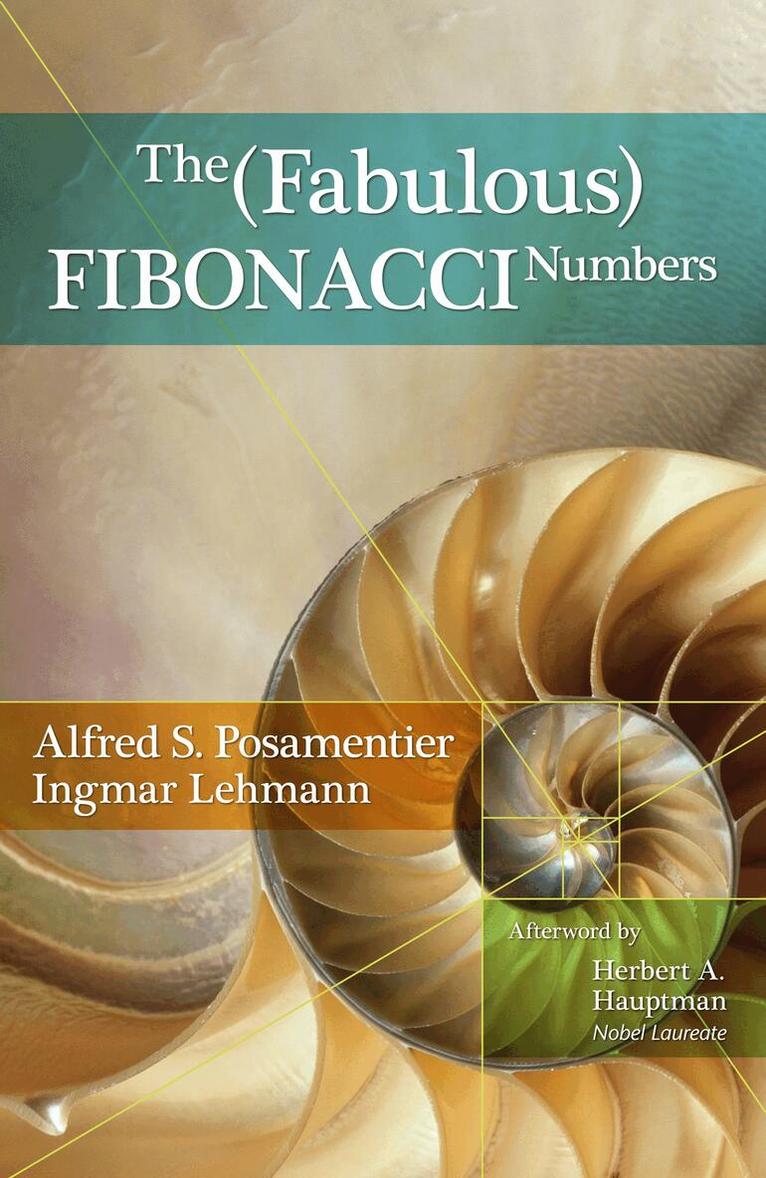
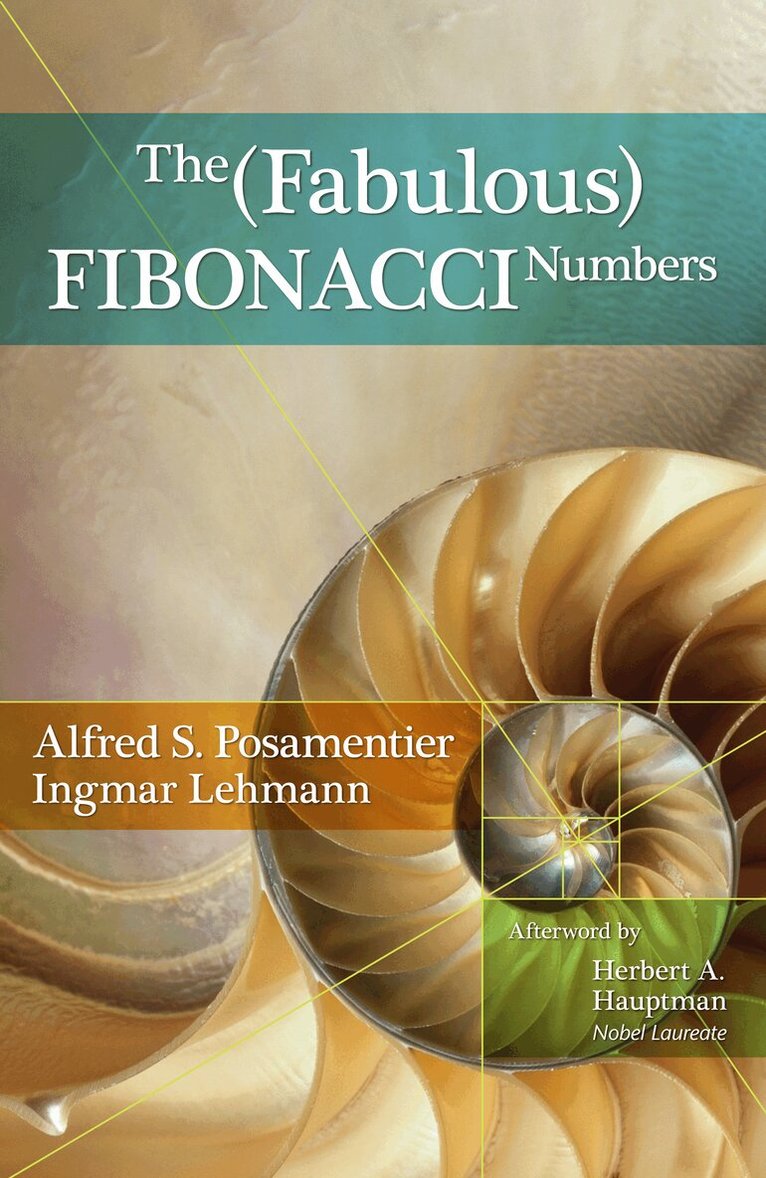
The most ubiquitous, and perhaps the most intriguing, number pattern in mathematics is the Fibonacci sequence. In this simple pattern beginning with two ones, each succeeding number is the sum of the two numbers immediately preceding it (1, 1, 2, 3, 5, 8, 13, 21, ad infinitum). Far from being just a curiosity, this sequence recurs in structures found throughout nature - from the arrangement of whorls on a pinecone to the branches of certain plant stems. All of which is astounding evidence for the deep mathematical basis of the natural world. With admirable clarity, two veteran math educators take us on a fascinating tour of the many ramifications of the Fibonacci numbers. They begin with a brief history of a distinguished Italian discoverer, who, among other accomplishments, was responsible for popularizing the use of Arabic numerals in the West. Turning to botany, the authors demonstrate, through illustrative diagrams, the unbelievable connections between Fibonacci numbers and natural forms (pineapples, sunflowers, and daisies are just a few examples). In art, architecture, the stock market, and other areas of society and culture, they point out numerous examples of the Fibonacci sequence as well as its derivative, the "golden ratio." And of course in mathematics, as the authors amply demonstrate, there are almost boundless applications in probability, number theory, geometry, algebra, and Pascal's triangle, to name a few.Accessible and appealing to even the most math-phobic individual, this fun and enlightening book allows the reader to appreciate the elegance of mathematics and its amazing applications in both natural and cultural settings.
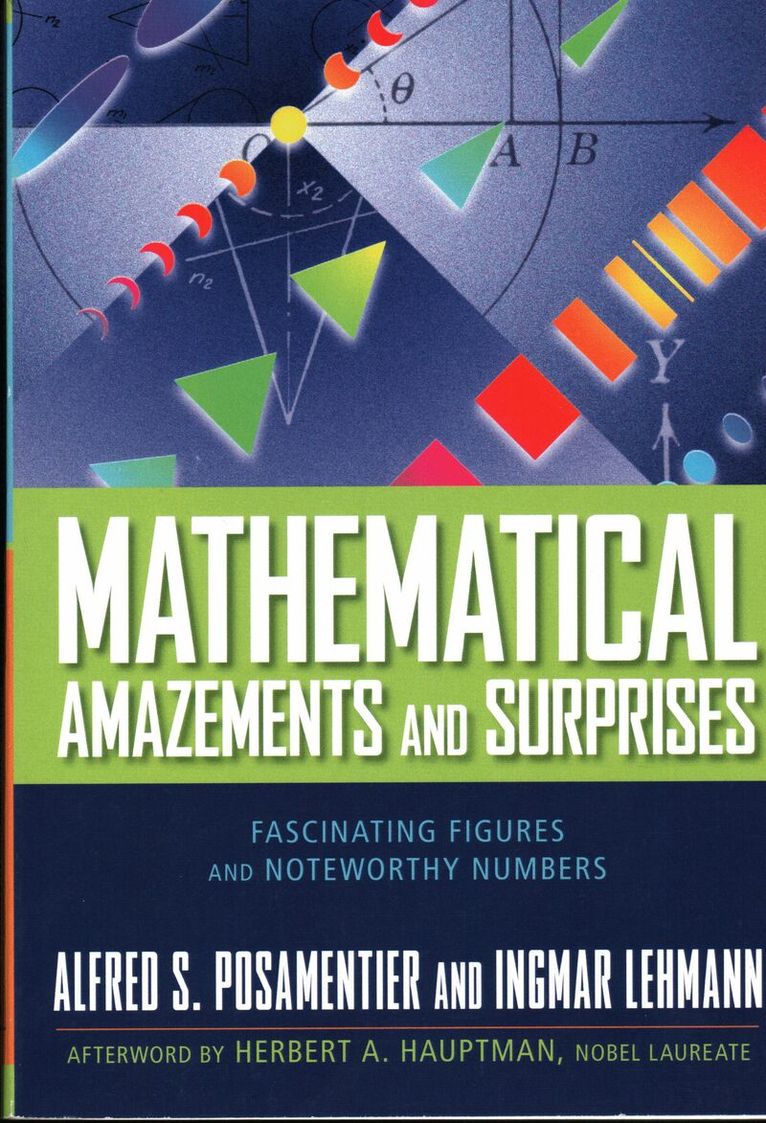
Mathematical Amazements and Surprises
Fascinating Figures and Noteworthy Numbers
Häftad, Engelska, 2009
279 kr
Skickas inom 5-8 vardagar
If you've been waiting for a book that will evoke the delight and intrigue that mathematics has to offer, this is the book for you. What are the odds of finding two people who share the same birth date in a room of thirty-five? Most people would guess they're pretty low. In actuality, the probability is better than 80 percent. This is just one of many entertaining examples of mathematical curiosities presented. Two veteran math educators have created the perfect introduction to the wonders of mathematics for the general reader, requiring only a high school background in the subject. Among the entertaining and useful tricks they teach are shortcuts in arithmetic, such as ways to determine at a glance the exact divisors of any given number. They also demonstrate how the properties of certain numbers can lead to infinite loops. What is particularly exciting is how many correct answers turn out to be counterintuitive. Exploring all these features will instill insights into the nature of numbers, improve your ability to manipulate them, and give you an appreciation for the inherent elegance of mathematics. As you marvel at the many unusual relationships and novelties revealed in this ingenious and delightful presentation, you'll be learning more math than you ever thought possible - and will be relishing every moment of it!
314 kr
Skickas inom 5-8 vardagar
What exactly is the Golden Ratio? How was it discovered? Where is it found? These questions and more are thoroughly explained in this engaging tour of one of mathematics' most interesting phenomena. The authors trace the appearance of the Golden Ratio throughout history, demonstrate a variety of ingenious techniques used to construct it, and illustrate the many surprising geometric figures in which the Golden Ratio is embedded. Requiring no more than an elementary knowledge of geometry and algebra, the authors give readers a new appreciation of the indispensable qualities and inherent beauty of mathematics.
324 kr
Skickas inom 3-6 vardagar
Everyone knows what a triangle is, yet very few people appreciate that the common three-sided figure holds many intriguing "secrets." For example, if a circle is inscribed in any random triangle and then three lines are drawn from the three points of tangency to the opposite vertices of the triangle, these lines will always meet at a common point - no matter what the shape of the triangle. This and many more interesting geometrical properties are revealed in this entertaining and illuminating book about geometry. Flying in the face of the common impression that mathematics is usually dry and intimidating, this book proves that this sometimes-daunting, abstract discipline can be both fun and intellectually stimulating. The authors, two veteran math educators, explore the multitude of surprising relationships connected with triangles and show some clever approaches to constructing triangles using a straightedge and a compass. Readers will learn how they can improve their problem-solving skills by performing these triangle constructions. The lines, points, and circles related to triangles harbor countless surprising relationships that are presented here in a very engaging fashion.Requiring no more than a knowledge of high school mathematics and written in clear and accessible language, this book will give all readers a new insight into some of the most enjoyable and fascinating aspects of geometry.
294 kr
Skickas inom 5-8 vardagar
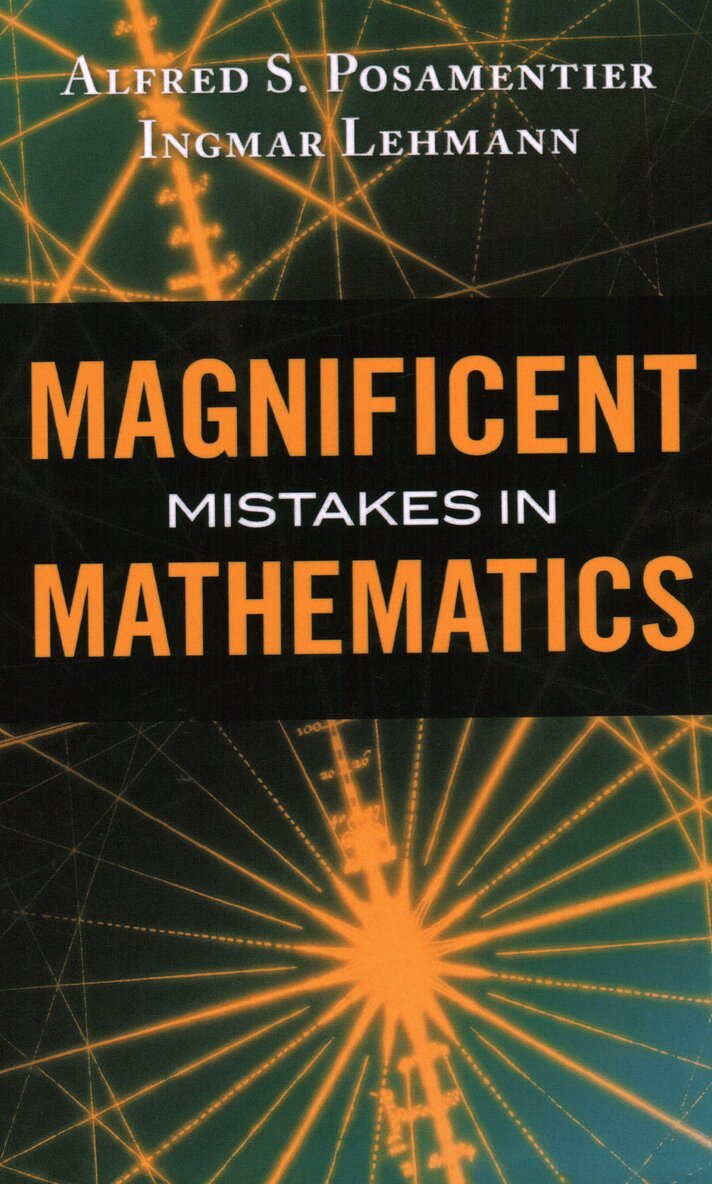
Two veteran math educators demonstrate how some "magnificent mistakes" had profound consequences for our understanding of mathematics' key concepts. In the nineteenth century, English mathematician William Shanks spent fifteen years calculating the value of pi, setting a record for the number of decimal places. Later, his calculation was reproduced using large wooden numerals to decorate the cupola of a hall in the Palais de la Decouverte in Paris. However, in 1946, with the aid of a mechanical desk calculator that ran for seventy hours, it was discovered that there was a mistake in the 528th decimal place. Today, supercomputers have determined the value of pi to trillions of decimal places. This is just one of the amusing and intriguing stories about mistakes in mathematics in this layperson's guide to mathematical principles. In another example, the authors show that when we "prove" that every triangle is isosceles, we are violating a concept not even known to Euclid - that of "betweenness." And if we disregard the time-honored Pythagorean theorem, this is a misuse of the concept of infinity. Even using correct procedures can sometimes lead to absurd - but enlightening - results.Requiring no more than high-school-level math competency, this playful excursion through the nuances of math will give you a better grasp of this fundamental, all-important science.
247 kr
Skickas inom 5-8 vardagar
An innovative and appealing way for the layperson to develop math skills--while actually enjoying itMost people agree that math is important, but few would say it's fun. This book will show you that the subject you learned to hate in high school can be as entertaining as a witty remark, as engrossing as the mystery novel you can't put down--in short, fun! As veteran math educators Posamentier and Lehmann demonstrate, when you realize that doing math can be enjoyable, you open a door into a world of unexpected insights while learning an important skill.The authors illustrate the point with many easily understandable examples. One of these is what mathematicians call the "Ruth-Aaron pair" (714 and 715), named after the respective career home runs of Babe Ruth and Hank Aaron. These two consecutive integers contain a host of interesting features, one of which is that their prime factors when added together have the same sum. The authors also explore the unusual aspects of such numbers as 11 and 18, which have intriguing properties usually overlooked by standard math curriculums. And to make you a better all-around problem solver, a variety of problems is presented that appear simple but have surprisingly clever solutions.If math has frustrated you over the years, this delightful approach will teach you many things you thought were beyond your reach, while conveying the key message that math can and should be anything but boring.
238 kr
Skickas
The most ubiquitous, and perhaps the most intriguing, number pattern in mathematics is the Fibonacci sequence. In this simple pattern beginning with two ones, each succeeding number is the sum of the two numbers immediately preceding it (1, 1, 2, 3, 5, 8, 13, 21, ad infinitum). Far from being just a curiosity, this sequence recurs in structures found throughout nature - from the arrangement of whorls on a pinecone to the branches of certain plant stems. All of which is astounding evidence for the deep mathematical basis of the natural world. With admirable clarity, two veteran math educators take us on a fascinating tour of the many ramifications of the Fibonacci numbers. They begin with a brief history of a distinguished Italian discoverer, who, among other accomplishments, was responsible for popularizing the use of Arabic numerals in the West. Turning to botany, the authors demonstrate, through illustrative diagrams, the unbelievable connections between Fibonacci numbers and natural forms (pineapples, sunflowers, and daisies are just a few examples). In art, architecture, the stock market, and other areas of society and culture, they point out numerous examples of the Fibonacci sequence as well as its derivative, the "golden ratio." And of course in mathematics, as the authors amply demonstrate, there are almost boundless applications in probability, number theory, geometry, algebra, and Pascal's triangle, to name a few.Accessible and appealing to even the most math-phobic individual, this fun and enlightening book allows the reader to appreciate the elegance of mathematics and its amazing applications in both natural and cultural settings.
254 kr
Skickas
We all learned that the ratio of the circumference of a circle to its diameter is called pi and that the value of this algebraic symbol is roughly 3.14. What we weren't told, though, is that behind this seemingly mundane fact is a world of mystery, which has fascinated mathematicians from ancient times to the present. Simply put, pi is weird. Mathematicians call it a "transcendental number" because its value cannot be calculated by any combination of addition, subtraction, multiplication, division, and square root extraction. In this delightful layperson's introduction to one of math's most interesting phenomena, Drs. Posamentier and Lehmann review pi's history from prebiblical times to the 21st century, the many amusing and mind-boggling ways of estimating pi over the centuries, quirky examples of obsessing about pi (including an attempt to legislate its exact value), and useful applications of pi in everyday life, including statistics.This enlightening and stimulating approach to mathematics will entertain lay readers while improving their mathematical literacy.
405 kr
Skickas inom 10-15 vardagar
Bezüglich der Funktionen werden vorzugsweise solche Begriffe behandelt, die einerseits im Mathematikunterricht bereits im Vorfeld der Infinitesimalrechnung eine Rolle spielen, andererseits der Vorbereitung auf die Analysis dienen.