Ingolfur Blühdorn - Böcker
Visar alla böcker från författaren Ingolfur Blühdorn. Handla med fri frakt och snabb leverans.
10 produkter
10 produkter
Post-Ecologist Politics
Social Theory and the Abdication of the Ecologist Paradigm
Inbunden, Engelska, 2000
1 525 kr
Tillfälligt slut
Since the late 1980s, ecological thought and the European eco-movement have gone through a phase of fundamental transformation which has been widely acknowledged but not yet theorised in any satisfactory way. This important text questions why radical ecological criticism has had so little impact on contemporary society, despite the urgency of the issues it highlights. The book offers a challenging theoretical critique of ecological thought itself.
2 165 kr
Skickas inom 10-15 vardagar
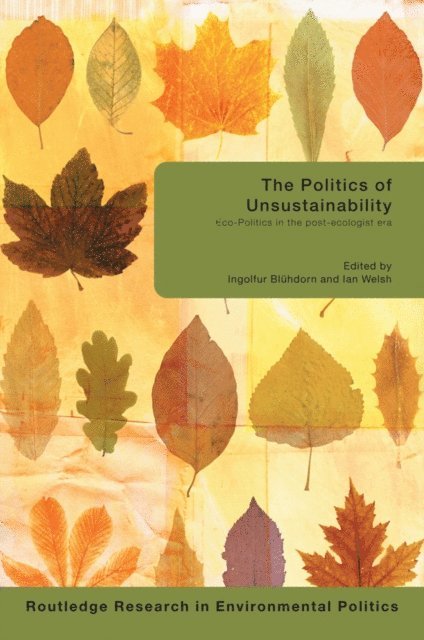
Two decades after its launch by the UN Brundtland Commission, the paradigm of sustainability seems to have reached its limits. Whilst the concept figures more prominently in public debate and policy making than ever before, the ecological footprint of advanced liberal consumer societies continues to grow, and the forceful economic development of countries such as China and India reinforces concerns that the world is moving further away from, rather than closer towards the ideal of sustainability. Given the proven failure of ecological modernisation strategies to secure sustainability, the traditional question "How may our established lifestyles and socio-economic practices be made more sustainable?" needs to be supplemented by a second, equally important, question: "How do advanced modern consumer democracies try and manage to sustain what is known to be unsustainable?" Put differently, traditional research into the politics of sustainability needs to be supplemented by a new line of research into the politics of unsustainability. Exploring the recent transformation of eco-political discourses and a variety of ways in which the unfolding paradox of sustaining the unsustainable is being managed, the present volume pioneers this new research agenda. This book was previously published as a special issue of Environmental Politics.
Economic Efficiency, Democratic Empowerment
Contested Modernization in Britain and Germany
Inbunden, Engelska, 2007
1 873 kr
Skickas inom 5-8 vardagar
Germany and Britain are two major European economies that have been trying to confront the challenges of globalisation in very different ways. Britain has favoured market liberal strategies; Germany has endeavoured to retain its tradition of consensualism and the strong welfare state. Focusing on the period since 1997/8, this book explores the controversies and struggles surrounding the agendas of social, economic, and political modernisation in the two countries. The New Labour governments in Britain and the Social Democratic coalition governments in Germany have been introducing a range of reform policies designed to reform the welfare state and increase the respective country's competitiveness in the global market. In both countries, however, these policies have triggered societal resistance. The governing parties had to confront electoral setbacks, an exodus of party members, strains on the relationship with traditional political allies, and an increasingly alienated public.Within this context, this book focuses on the tensions between two key parameters in contemporary modernisation discourses: economic efficiency and democratic renewal. Political elites in many European countries are presenting the achievement of efficiency gains as a primary objective of globalisation-induced societal reform. At the same time civic empowerment and the engagement of civil society are widely regarded as essential for increasing the quality, legitimacy, and effectiveness of public policy making. But can these two goals be achieved at the same time? What exactly does the highly contested term efficiency imply? What is its relationship towards the equally ambiguous goal of democratic renewal? Focusing on a variety of political actors, structures and strategies in Germany and Britain, the individual chapters in this book trace how the tensions between economic efficiency and democratic renewal surface, how definitional struggles surrounding these ideals are being managed, and how new syntheses between the two parameter
Economic Efficiency, Democratic Empowerment
Contested Modernization in Britain and Germany
Häftad, Engelska, 2007
867 kr
Skickas inom 5-8 vardagar
Germany and Britain are two major European economies that have been trying to confront the challenges of globalisation in very different ways. Britain has favoured market liberal strategies; Germany has endeavoured to retain its tradition of consensualism and the strong welfare state. Focusing on the period since 1997/8, this book explores the controversies and struggles surrounding the agendas of social, economic, and political modernisation in the two countries. The New Labour governments in Britain and the Social Democratic coalition governments in Germany have been introducing a range of reform policies designed to reform the welfare state and increase the respective country's competitiveness in the global market. In both countries, however, these policies have triggered societal resistance. The governing parties had to confront electoral setbacks, an exodus of party members, strains on the relationship with traditional political allies, and an increasingly alienated public.Within this context, this book focuses on the tensions between two key parameters in contemporary modernisation discourses: economic efficiency and democratic renewal. Political elites in many European countries are presenting the achievement of efficiency gains as a primary objective of globalisation-induced societal reform. At the same time civic empowerment and the engagement of civil society are widely regarded as essential for increasing the quality, legitimacy, and effectiveness of public policy making. But can these two goals be achieved at the same time? What exactly does the highly contested term efficiency imply? What is its relationship towards the equally ambiguous goal of democratic renewal? Focusing on a variety of political actors, structures and strategies in Germany and Britain, the individual chapters in this book trace how the tensions between economic efficiency and democratic renewal surface, how definitional struggles surrounding these ideals are being managed, and how new syntheses between the two parameter
Post-Ecologist Politics
Social Theory and the Abdication of the Ecologist Paradigm
Häftad, Engelska, 2015
688 kr
Skickas inom 10-15 vardagar
Since the late 1980s, ecological thought and the European eco-movement have gone through a phase of fundamental transformation which has been widely acknowledged but not yet theorised in any satisfactory way. This important text questions why radical ecological criticism has had so little impact on contemporary society, despite the urgency of the issues it highlights. The book offers a challenging theoretical critique of ecological thought itself.
674 kr
Skickas inom 10-15 vardagar
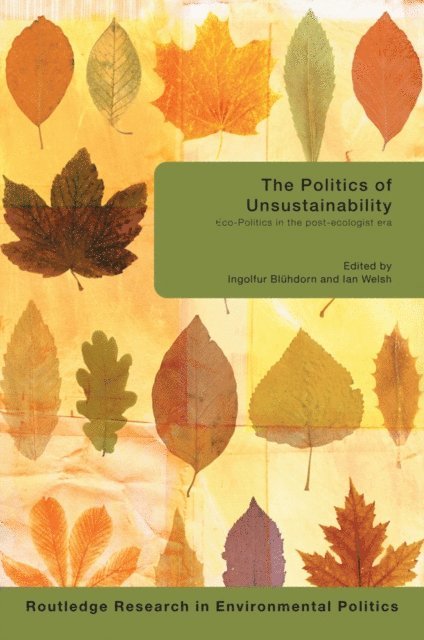
Two decades after its launch by the UN Brundtland Commission, the paradigm of sustainability seems to have reached its limits. Whilst the concept figures more prominently in public debate and policy making than ever before, the ecological footprint of advanced liberal consumer societies continues to grow, and the forceful economic development of countries such as China and India reinforces concerns that the world is moving further away from, rather than closer towards the ideal of sustainability. Given the proven failure of ecological modernisation strategies to secure sustainability, the traditional question "How may our established lifestyles and socio-economic practices be made more sustainable?" needs to be supplemented by a second, equally important, question: "How do advanced modern consumer democracies try and manage to sustain what is known to be unsustainable?" Put differently, traditional research into the politics of sustainability needs to be supplemented by a new line of research into the politics of unsustainability. Exploring the recent transformation of eco-political discourses and a variety of ways in which the unfolding paradox of sustaining the unsustainable is being managed, the present volume pioneers this new research agenda. This book was previously published as a special issue of Environmental Politics.
753 kr
Kommande
Until very recently, the climate crisis was considered the most serious and urgent challenge facing contemporary societies. There was widespread agreement that a comprehensive green transformation is necessary to address the planetary emergency, secure the survival of humanity and facilitate a good life for all. Yet, suddenly, ecological issues have slipped down the political agenda. Conservatives welcome 'the end of the green hegemony', the far-right rallies against eco-emancipatory policies, and an authoritarian turn that once again champions fossil fuels is gaining momentum across the world.This book examines the causes of this dramatic change of course. It reminds us that in environmental politics, social norms and cultural values are as important as biophysical facts. Even if the scientific evidence on climate change and the collapse of biophysical systems is clear, the supposedly categorical imperatives presented by ecologists ultimately express a particular worldview.Ingolfur Blühdorn argues that the emancipatory logic itself is a key driver of the current collapse of the green project. He shows how this counter-cultural project was fraught with inherent contradictions. Eco-emancipatory movements themselves contributed to mainstreaming values, lifestyles and notions of self-determination that ultimately blocked the green transformation and propelled a postliberal turn. To many, eco-political ideals today appear more like a threat than a promise. A renaissance of fossil fuels, autocratic leadership, and strict policies of exclusion seem to offer a better future, beyond eco-emancipatory values and the scenarios of ecological collapse.But the transition to a postliberal modernity will benefit very few and make life brutish, nasty and short for many.
251 kr
Kommande
Until very recently, the climate crisis was considered the most serious and urgent challenge facing contemporary societies. There was widespread agreement that a comprehensive green transformation is necessary to address the planetary emergency, secure the survival of humanity and facilitate a good life for all. Yet, suddenly, ecological issues have slipped down the political agenda. Conservatives welcome 'the end of the green hegemony', the far-right rallies against eco-emancipatory policies, and an authoritarian turn that once again champions fossil fuels is gaining momentum across the world.This book examines the causes of this dramatic change of course. It reminds us that in environmental politics, social norms and cultural values are as important as biophysical facts. Even if the scientific evidence on climate change and the collapse of biophysical systems is clear, the supposedly categorical imperatives presented by ecologists ultimately express a particular worldview.Ingolfur Blühdorn argues that the emancipatory logic itself is a key driver of the current collapse of the green project. He shows how this counter-cultural project was fraught with inherent contradictions. Eco-emancipatory movements themselves contributed to mainstreaming values, lifestyles and notions of self-determination that ultimately blocked the green transformation and propelled a postliberal turn. To many, eco-political ideals today appear more like a threat than a promise. A renaissance of fossil fuels, autocratic leadership, and strict policies of exclusion seem to offer a better future, beyond eco-emancipatory values and the scenarios of ecological collapse.But the transition to a postliberal modernity will benefit very few and make life brutish, nasty and short for many.
266 kr
Skickas inom 3-6 vardagar
234 kr
Skickas inom 3-6 vardagar