Institute for Laboratory Animal Research – författare
Visar alla böcker från författaren Institute for Laboratory Animal Research. Handla med fri frakt och snabb leverans.
99 produkter
Amphibians
Guidelines for the Breeding, Care and Management of Laboratory Animals
Av Subcommittee on Amphibian Standards, Committee on Standards m. fl.
E-bok, 1974
628 kr
Lägg i varukorg
National Need and Priorities for Veterinarians in Biomedical Research
Av National Research Council, Division on Earth and Life Studies m. fl.
Häftad, 2003
594 kr
Lägg i varukorg
The report identified various factors which contributed to creating an unfulfilled need for veterinarians in the biomedical research workforce, including an increase in the number of NIH grants utilizing animals and the burgeoning use of transgenic rodents, without a comparable change in the supply …
Guidelines for the Humane Transportation of Research Animals
Av National Research Council, Division on Earth and Life Studies m. fl.
Häftad, 2006
674 kr
Lägg i varukorg
Arranging the transportation of animals at research facilities is often an ordeal. There is a confusing patchwork of local, national, and international regulations; a perceived lack of high-quality shipping services; a dearth of science-based good practices; and a lack of biosafety standards. Ita …
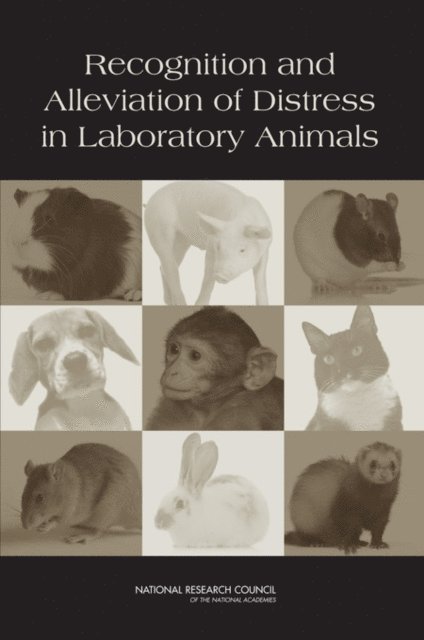
Recognition and Alleviation of Distress in Laboratory Animals
Av Committee on Recognition and Alleviation of Distress in Laboratory Animals, Institute for Laboratory Animal Research m. fl.
E-bok, 2008
526 kr
Lägg i varukorg
Scientific advances in our understanding of animal physiology and behavior often require theories to be revised and standards of practice to be updated to improve laboratory animal welfare. This new book from the Institute for Laboratory Animal Research (ILAR) at the National Research Council, …
Toxicity Testing in the 21st Century
A Vision and a Strategy
Av Committee on Toxicity Testing and Assessment of Environmental Agents, Board on Environmental Studies and Toxicology m. fl.
E-bok, 2007
485 kr
Lägg i varukorg
Advances in molecular biology and toxicology are paving the way for major improvements in the evaluation of the hazards posed by the large number of chemicals found at low levels in the environment. The National Research Council was asked by the U.S. Environmental Protection Agency to review the …
Recognition and Alleviation of Pain in Laboratory Animals
Av Committee on Recognition and Alleviation of Pain in Laboratory Animals, Institute for Laboratory Animal Research m. fl.
E-bok, 2009
526 kr
Lägg i varukorg
The use of animals in research adheres to scientific and ethical principles that promote humane care and practice. Scientific advances in our understanding of animal physiology and behavior often require theories to be revised and standards of practice to be updated to improve laboratory animal …
Occupational Health and Safety in the Care and Use of Research Animals
Av Committee on Occupational Safety and Health in Research Animal Facilities, Institute for Laboratory Animal Research m. fl.
E-bok, 1997
646 kr
Lägg i varukorg
Much has been written about the care of research animals. Yet little guidance has appeared on protecting the health and safety of the people who care for or use these animals. This book, an implementation handbook and companion to Guide For the Care and Use of Laboratory Animals , identifies …
Toxicity Testing in the 21st Century
A Vision and a Strategy
Av Committee on Toxicity Testing and Assessment of Environmental Agents, Board on Environmental Studies and Toxicology m. fl.
E-bok, 2007
678 kr
Lägg i varukorg
Advances in molecular biology and toxicology are paving the way for major improvements in the evaluation of the hazards posed by the large number of chemicals found at low levels in the environment. The National Research Council was asked by the U.S. Environmental Protection Agency to review the …
Scientific and Humane Issues in the Use of Random Source Dogs and Cats in Research
Av Committee on Scientific and Humane Issues in the Use of Random Source Dogs and Cats in Research, Institute for Laboratory Animal Research m. fl.
E-bok, 2009
458 kr
Lägg i varukorg
Scientific and Humane Issues in the Use of Random-Source Dogs and Cats in Research examines the value of random-source animals in biomedical research and the role of Class B dealers who acquire and resell live dogs and cats to research institutions. Findings include that, while some random-source …
Scientific and Humane Issues in the Use of Random Source Dogs and Cats in Research
Av Committee on Scientific and Humane Issues in the Use of Random Source Dogs and Cats in Research, Institute for Laboratory Animal Research m. fl.
E-bok, 2009
676 kr
Lägg i varukorg
Scientific and Humane Issues in the Use of Random-Source Dogs and Cats in Research examines the value of random-source animals in biomedical research and the role of Class B dealers who acquire and resell live dogs and cats to research institutions. Findings include that, while some random-source …
Recognition and Alleviation of Pain in Laboratory Animals
Av Committee on Recognition and Alleviation of Pain in Laboratory Animals, Institute for Laboratory Animal Research m. fl.
E-bok, 2009
696 kr
Lägg i varukorg
The use of animals in research adheres to scientific and ethical principles that promote humane care and practice. Scientific advances in our understanding of animal physiology and behavior often require theories to be revised and standards of practice to be updated to improve laboratory animal …
Toxicity Testing in the 21st Century
A Vision and a Strategy
Av National Research Council, Division on Earth and Life Studies m. fl.
Häftad, 2007
692 kr
Lägg i varukorg
Advances in molecular biology and toxicology are paving the way for major improvements in the evaluation of the hazards posed by the large number of chemicals found at low levels in the environment. The National Research Council was asked by the U.S. Environmental Protection Agency to review the …
Guide for the Care and Use of Laboratory Animals
Eighth Edition
Av National Research Council, Division on Earth and Life Studies m. fl.
Häftad, 2010
385 kr
Lägg i varukorg
A respected resource for decades, the Guide for the Care and Use of Laboratory Animals has been updated by a committee of experts, taking into consideration input from the scientific and laboratory animal communities and the public at large. The Guide incorporates new scientific information on …
Guide for the Care and Use of Laboratory Animals
Eighth Edition
Av Committee for the Update of the Guide for the Care and Use of Laboratory Animals, Institute for Laboratory Animal Research m. fl.
E-bok, 2010
263 kr
Lägg i varukorg
A respected resource for decades, the Guide for the Care and Use of Laboratory Animals has been updated by a committee of experts, taking into consideration input from the scientific and laboratory animal communities and the public at large. The Guide incorporates new scientific information on …
Guidelines for the Humane Transportation of Research Animals
Av Committee on Guidelines for the Humane Transportation of Laboratory Animals, Institute for Laboratory Animal Research m. fl.
E-bok, 2006
624 kr
Lägg i varukorg
Arranging the transportation of animals at research facilities is often anordeal. There is a confusing patchwork of local, national, and internationalregulations; a perceived lack of high-quality shipping services; a dearth ofscience-based good practices; and a lack of biosafety standards. It''s a …
Toxicity Testing for Assessment of Environmental Agents
Interim Report
Av Committee on Toxicity Testing and Assessment of Environmental Agents, Board on Environmental Studies and Toxicology m. fl.
E-bok, 2006
762 kr
Lägg i varukorg
Toxicity testing in laboratory animals provides much of the information used by the Environmental Protection Agency (EPA) to assess the hazards and risks associated with exposure to environmental agents that might harm public health or the environment. The data are used to establish maximum …
Development of Science-based Guidelines for Laboratory Animal Care
Proceedings of the November 2003 International Workshop
Av International Workshop on the Development of Science-based Guidelines for Laboratory Animal Care Program Committee, Institute for Laboratory Animal Research m. fl.
E-bok, 2004
953 kr
Lägg i varukorg
The Development of Science-based Guidelines for Laboratory Animal Care is the summary of an international workshop held in Washington, DC, in November 2003 to bring together experts from around the world to discuss the available knowledge that can positively influence current and pending guidelines …
Animal Care and Management at the National Zoo
Interim Report
Av Committee on a Review of the Smithsonian Institution's National Zoological Park, Board on Agriculture and Natural Resources m. fl.
E-bok, 2004
610 kr
Lägg i varukorg
This interim report assesses issues related to animal management, husbandry, health, and care at the Smithsonian Institution''s National Zoological Park. The report finds that there are shortcomings in care and management that are threatening the well-being of the animal collection and identifies …
National Need and Priorities for Veterinarians in Biomedical Research
Av Committee on Increasing Veterinary Involvement in Biomedical Research, Institute for Laboratory Animal Research m. fl.
E-bok, 2003
525 kr
Lägg i varukorg
The report identified various factors which contributed to creating an unfulfilled need for veterinarians in the biomedical research workforce, including an increase in the number of NIH grants utilizing animals and the burgeoning use of transgenic rodents, without a comparable change in the supply …
International Perspectives
The Future of Nonhuman Primate Resources: Proceedings of the Workshop Held April 17-19, 2002
Av International Perspectives: The Future of Nonhuman Primate Resources Program Committee, Institute for Laboratory Animal Research m. fl.
E-bok, 2003
953 kr
Lägg i varukorg
The future of nonhuman primate (NHP) resources is a concern of scientists, veterinarians, and funding authorities. An April 2002 workshop brought participants from all over the world to discuss various aspects of the issue such as current shortfalls and excesses in NHP breeding and exportation …
Science, Medicine, and Animals
Av and Animals Committee to Update Science, Medicine, Institute for Laboratory Animal Research m. fl.
E-bok, 2004
277 kr
Lägg i varukorg
Science, Medicine, and Animals explains the role that animals play in biomedical research and the ways in which scientists, governments, and citizens have tried to balance the experimental use of animals with a concern for all living creatures. An accompanying Teacher''s Guide is available to help …
Guidelines for the Care and Use of Mammals in Neuroscience and Behavioral Research
Av Committee on Guidelines for the Use of Animals in Neuroscience and Behavioral Research, Institute for Laboratory Animal Research m. fl.
E-bok, 2003
559 kr
Lägg i varukorg
Expanding on the National Research Council''s Guide for the Care and Use of Laboratory Animals, this book deals specifically with mammals in neuroscience and behavioral research laboratories. It offers flexible guidelines for the care of these animals, and guidance on adapting these guidelines to …
Occupational Health and Safety in the Care and Use of Nonhuman Primates
Av Committee on Occupational Health and Safety in the Care and Use of Nonhuman Primates, Institute for Laboratory Animal Research m. fl.
E-bok, 2003
676 kr
Lägg i varukorg
The field of occupational health and safety constantly changes, especially as it pertains to biomedical research. New infectious hazards are of particular importance at nonhuman-primate facilities. For example, the discovery that B virus can be transmitted via a splash on a mucous membrane raises …
Definition of Pain and Distress and Reporting Requirements for Laboratory Animals
Proceedings of the Workshop Held June 22, 2000
Av Committee on Regulatory Issues in Animal Care and Use, Institute for Laboratory Animal Research m. fl.
E-bok, 2000
641 kr
Lägg i varukorg
In this first in a proposed series of workshops on regulatory issues in animal care and use, the Institute for Laboratory Animal Research (ILAR) has addressed the existing and proposed requirements for reporting pain and distress in laboratory animals. The Animal Welfare Act, administered by the …
Strategies That Influence Cost Containment in Animal Research Facilities
Av Committee on Cost of and Payment for Animal Research, Institute for Laboratory Animal Research m. fl.
E-bok, 2000
710 kr
Lägg i varukorg
Care and use of animals in research are expensive, prompting efforts to contain or reduce costs. Components of those costs are personnel, regulatory compliance, veterinary medical care, and laboratory animal management, equipment, and procedures. Many efforts have been made to control and reduce …
Microbial Status and Genetic Evaluation of Mice and Rats
Proceedings of the 1999 US/Japan Conference
Av International Committee of the Institute for Laboratory Animal Research, Institute for Laboratory Animal Research m. fl.
E-bok, 2000
678 kr
Lägg i varukorg
US/Japan meetings on laboratory animal science have been held virtually every year since 1980 under the US/Japan Cooperative Program on Science and Technology. Over the years these meetings have resulted in a number of important documents including the Manual of Microbiologic Monitoring of …
Microbial and Phenotypic Definition of Rats and Mice
Proceedings of the 1998 US/Japan Conference
Av International Committee of the Institute for Laboratory Animal Research, Institute for Laboratory Animal Research m. fl.
E-bok, 1999
676 kr
Lägg i varukorg
US-Japan meetings on laboratory animal science have been held virtually every year since 1980 under the US-Japan Cooperative Program on Science and Technology. Over the years these meetings have resulted in a number of important documents including the Manual of Microbiologic of Monitoring of …
Monoclonal Antibody Production
Av Committee on Methods of Producing Monoclonal Antibodies, Institute for Laboratory Animal Research m. fl.
E-bok, 1999
658 kr
Lägg i varukorg
The American Anti-Vivisection Society (AAVS) petitioned the National Institutes of Health (NIH) on April 23, 1997, to prohibit the use of animals in the production of mAb. On September 18, 1997, NIH declined to prohibit the use of mice in mAb production, stating that "the ascites method of mAb …
Psychological Well-Being of Nonhuman Primates
Av Committee on Well-Being of Nonhuman Primates, Institute for Laboratory Animal Research m. fl.
E-bok, 1998
932 kr
Lägg i varukorg
A 1985 amendment to the Animal Welfare Act requires those who keep nonhuman primates to develop and follow appropriate plans for promoting the animals'' psychological well-being. The amendment, however, provides few specifics. The Psychological Well-Being of Nonhuman Primates recommends practical …
Rodents
Av Committee on Rodents, Institute for Laboratory Animal Research m. fl.
E-bok, 1996
702 kr
Lägg i varukorg
In the 15 years since the last Institute of Laboratory Animal Resources report on the general management of rodents was published, important advances in biomedical research and increased public awareness have created a new environment for animal research. Modern technology-such as insertion of …