Iraj Bashiri - Böcker
Visar alla böcker från författaren Iraj Bashiri. Handla med fri frakt och snabb leverans.
6 produkter
6 produkter
1 315 kr
Skickas inom 10-15 vardagar
Modern Iran: Caliphs, Kings, and Jurisprudents explores the changes in Iranian identity that have taken place in ancient, medieval, and contemporary times. Students learn how this identity has been transformed from an abstract Zoroastrian order into a vibrant Shi'ite creed rooted in ancestor worship.Readers learn about the earliest stages of Iran's development, including the Rashidun Caliphs, the Umayyads, and the Abbasids. They study the impact of the Mongols, Safavids, and Qajars. Later chapters discuss the rise of the Pahlavis, Islamic Iran, and the rule of the jurisprudents. The book concludes with a consideration of what lies ahead for modern Iran, as well as a comprehensive summing up of Iranian identity.Detailed and comprehensive, Modern Iran is well-suited to courses in Islamic studies, particularly Shi'ite Islam, Iranian studies, and Iranian culture and identity. With its clear commitment to placing Iran in appropriate and accessible historical and cultural contexts, the book is also an excellent supplemental text for classes on Iran and the west.
3 946 kr
Skickas inom 3-6 vardagar
3 358 kr
Skickas inom 3-6 vardagar
863 kr
Skickas inom 10-15 vardagar
Modern Iranian Philosophy: From Ibn Sīnā to Mullā Ṣadrā Shīrāzī is a concise overview of developments in Iranian philosophy from ancient times to the seventeenth century, emphasizing the era beginning with Ibn Sīnā and ending with Mullā Ṣadrā Shīrāzī.The text places Iranian philosophy within the framework of Islamic philosophy, details the emergence of a popular theology stemming from interaction between Zoroastrianism and Islam, and addresses efforts to establish Shīʿite orthodoxy.The book explains Mullā Ṣadrā's theory of existence and its contribution to Twelver Shīʿite orthodoxy. It explores Mullā Ṣadrā's al-Asfār, its structural makeup, and assesses the effect of Ṣadrā's theory on the Islamic Republic of Iran created by Ayatollah Khomeini.In addition, the material offers valuable insight into contemporary events through chapters addressing the meeting of east and west.Scholarly and sensitive, Modern Iranian Philosophy is appropriate for upper-division undergraduate courses. It can also be used in graduate level courses and as a tool for researchers.
1 095 kr
Skickas inom 10-15 vardagar
Ancient Iran: Cosmology, Mythology, History presents Iran's pre-Islamic history within the context of both its complex cosmology and rich mythology. The book uses the concept of farr to show how authority, finding guidance in the cosmic realm, organized the lives of Iran's hero-saints in the mythic realm. It also discusses how historical monarchs organized their hierarchical societies according to the dictates of Ahura Mazda.The book is divided into three parts. The first part examines cosmology, concentrating on Ahura Mazda. and the Ahuric order that emanates from him. The next section addresses mythology and describes how the rulership of hero-saints promoted the farr, culminating in the unique creed of Zoroaster. The final section tells the history of pre-Islamic Iran. It begins with a study of life on the plateau, moves on to the stages of empire, and focuses on the interactions thus far neglected between the early Achaemenids and ancient Egypt. It concludes with the rule of the Parthians and Sassanids. Additionally, through a new interpretation of Firdowsi's Shahname, the volume shows how the prophet Zoroaster reorganized Mazdian cosmology to fit the ethical, philosophical, and sociological dynamics of Achaemenid and Sassanid Iran. The addition of a comprehensive account of the lives of the characters of the Shahname enhances the narrative. The text provides cutting-edge scholarship for graduate students and scholarly insight for researchers. It is also appropriate for upper-level undergraduate students.
1 371 kr
Skickas inom 5-8 vardagar
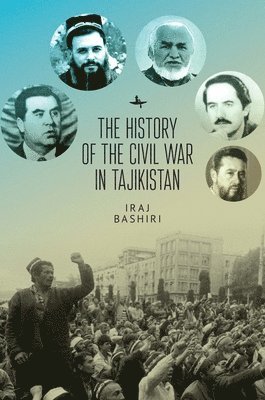
In the 10th century, the Turks separated the Tajiks, a Central Asian community, from their Iranian kinfolk. The Tajiks adopted the Hanafi faith and, alongside ethnicity, made it a pillar of their identity. Between 1920 and 1990, the Soviets tried to alter the Tajiks' identity. While they could affect the Tajiks' social status substantially (cf. Afghanistan), they failed in changing the Tajiks' ideology. Instead, they became involved in a conflict that pitted Soviet Tajiks against radical Muslim Tajiks, the latter intentionally misidentified as Wahhabis by the Soviets. The question was about the viability of enforcing the secular Soviet constitution versus the Islamic Shari'a. Inability to resolve the dispute led to civil war (1992). The volume traces the conflict from its roots in Bukhara to the establishment of an independent secular Tajik state (1997).