Irene Bono - Böcker
Visar alla böcker från författaren Irene Bono. Handla med fri frakt och snabb leverans.
2 produkter
2 produkter
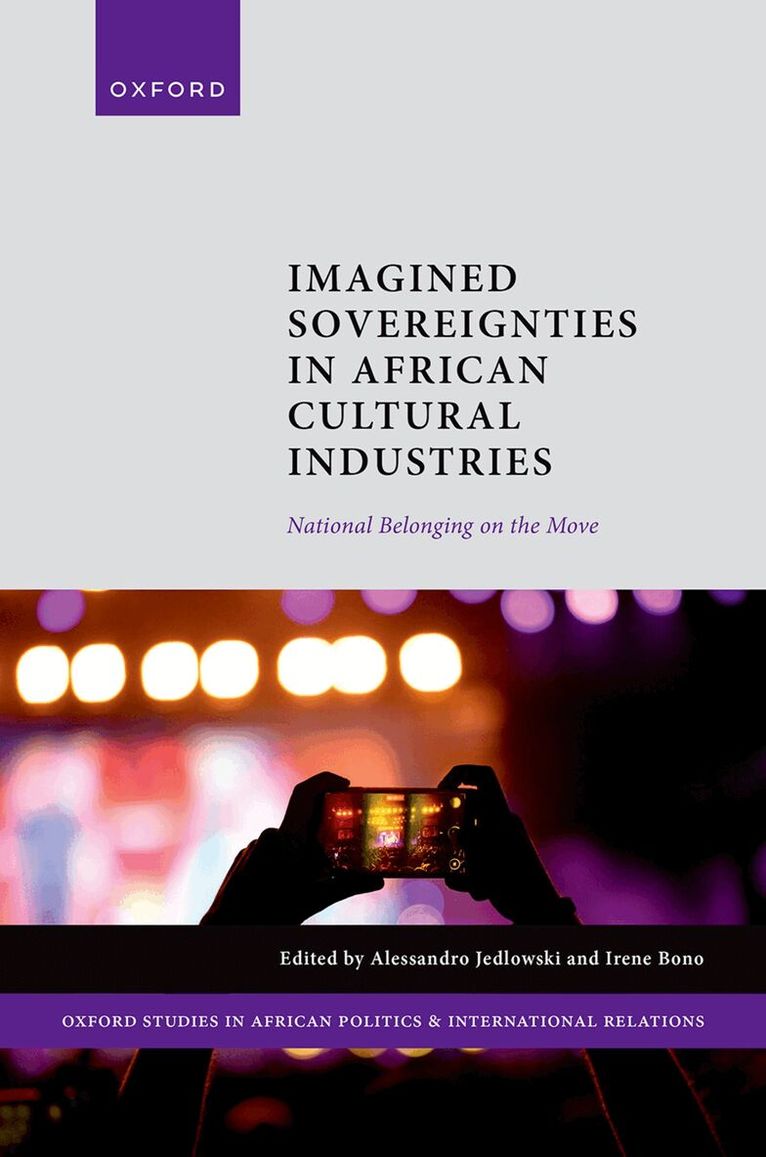
Imagined Sovereignties in African Cultural Industries
National Belonging on the Move
Inbunden, Engelska, 2026
1 225 kr
Kommande
Imagined Sovereignties in African Cultural Industries explores the evolving dynamics of imagined communities through the lens of cultural production in music and audiovisual media in Nigeria, Senegal, Côte d'Ivoire, Morocco and the DRC. Positioned at the intersection of politics, international relations, and anthropology, this edited volume adopts an interdisciplinary, ethnographic, and comparative approach to examine how cultural industries contribute to reconfiguring notions of belonging and sovereignty. Drawing and building upon Anderson's concept of imagined communities, the book argues that technological innovation has destabilized traditional national boundaries, enabling the sentiment of belonging to expand transnationally or contract into localized, niche formations. These emergent configurations-resembling networks, silos, or bubbles-challenge the geographically bounded model of the nation-state, in terms both of how the nation is imagined and how state sovereignty is envisaged over the media sector. The volume foregrounds the perspectives of cultural producers, whose practices are shaped by the interplay of artistic, political, and economic imperatives. It demonstrates that the communities these artists help to imagine are not solely the product of cultural expression, but also of market dynamics influenced by neoliberal globalization and resurgent nationalist discourses. By analysing the tensions between localist, national, and pan-African orientations in cultural content, the book reveals how cultural industries mediate between competing forces of fragmentation and integration. Expanding on existing scholarship, Imagined Sovereignties contends that imagined communities are co-constituted by cultural, political, economic, and material processes. This nuanced understanding underscores the necessity of redefining sovereignty and belonging in Africa's rapidly transforming media landscapes.Oxford Studies in African Politics and International Relations is a series for scholars and students working on African politics and International Relations and related disciplines. Volumes concentrate on contemporary developments in African political science, political economy, and International Relations, such as electoral politics, democratization, decentralization, gender and political representation, the political impact of natural resources, the dynamics and consequences of conflict, comparative political thought, and the nature of the continent’s engagement with the East and West. Comparative and mixed methods work is particularly encouraged. Case studies are welcomed but should demonstrate the broader theoretical and empirical implications of the study and its wider relevance to contemporary debates. The focus of the series is on sub-Saharan Africa, although proposals that explain how the region engages with North Africa and other parts of the world are of interest.Series Editors: Nic Cheeseman (University of Birmingham), Peace Medie (University of Bristol), and Ricardo Soares de Oliveira (Sciences Po, Paris).
1 199 kr
Skickas inom 5-8 vardagar
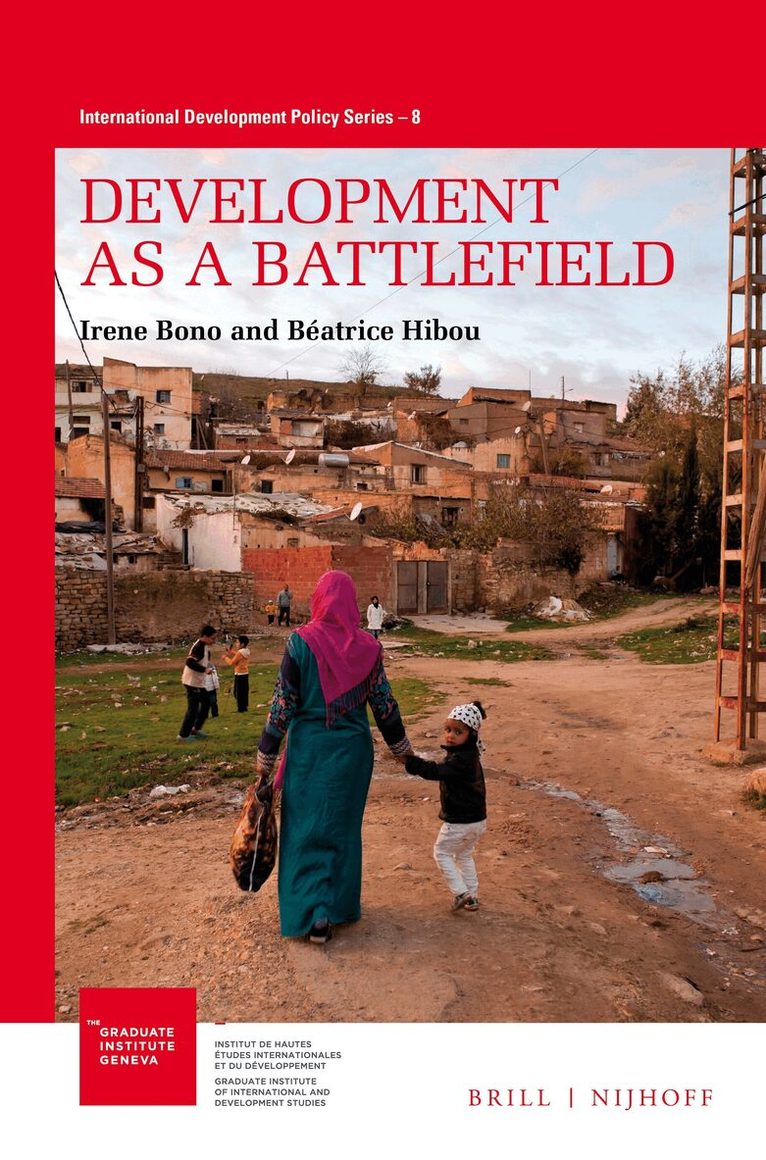
Development as a Battlefield is an innovative exploration of the multidimensional meanings of – and interactions between – conflict and development. The two phenomena are all too often regarded as ostensibly antagonistic. This was exemplified again in the context of the Arab Spring that erupted in December 2010 and was eventually short-lived in several countries of the Middle-East and North-Africa (MENA) region. This volume – the 8th thematic issue of International Development Policy – is an invitation to reconsider and renew the way social scientists usually seek to make sense of socio-political and economic developments in the MENA region and beyond.Contributors include: Fariba Adelkhah, Yasmine Berriane, Irene Bono, Ayşe Buğra, Raphaëlle Chevrillon-Guibert, Anouck Gabriela Côrte réal-Pinto, Nadia Hachimi Alaoui, Béatrice Hibou, Adriana Kemp, Nora Lafi. Talia Margalit, Marie Vannetzel, Elena Vezzadini, and Merieme Yafout.