Irene Kacandes - Böcker
Visar alla böcker från författaren Irene Kacandes. Handla med fri frakt och snabb leverans.
9 produkter
9 produkter
220 kr
Skickas inom 10-15 vardagar
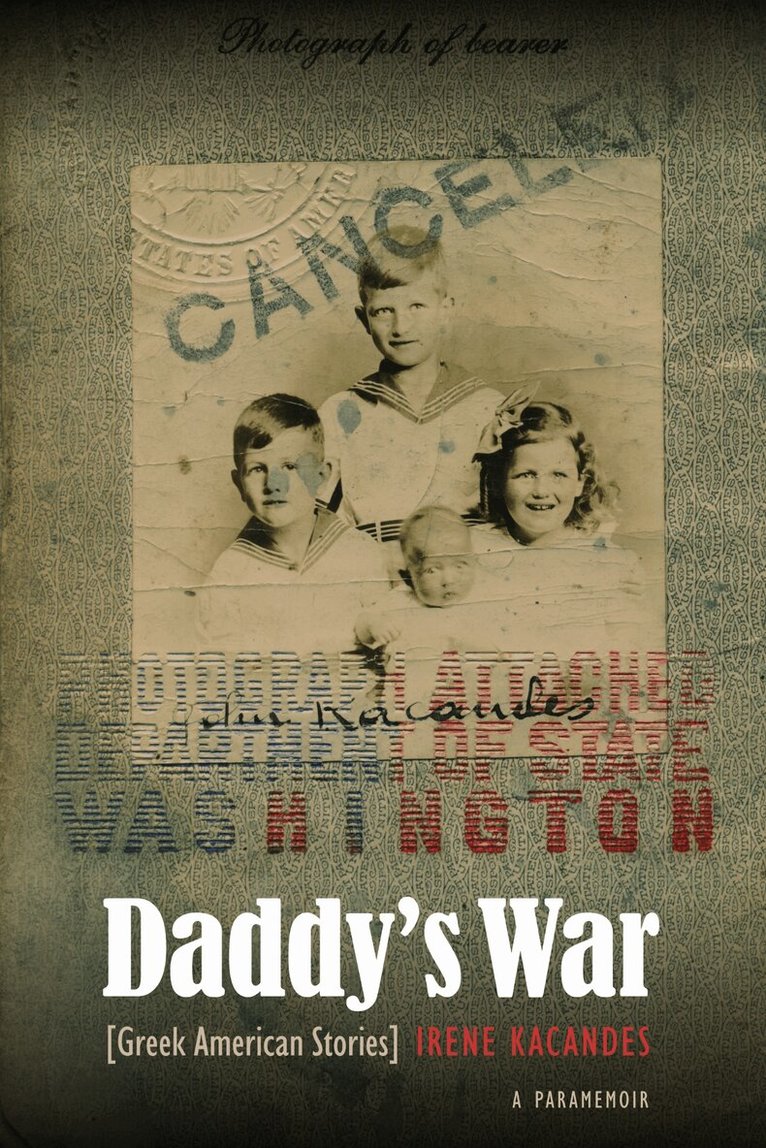
When she was very young, Irene Kacandes knew things about her father that had no plot, no narrator, and no audience. To her childhood self these things resembled beings who resided with her family, like the ancestresses who'd thrown themselves off cliffs rather than be taken by the Turks, or the forefathers who'd fought the Trojans. For decades she thought of these cohabitants as Daddy's War Experiences and tried to stay away from them. When tragedy touched the adult life she had constructed for herself, however, she realized she had to confront her family's wartime past. Kacandes begins with what she did know: that her immigrant grandmother returned to Greece with four young children—and without her husband—only to get trapped there by the Nazi occupation. Though still a child himself, her father, John, helped feed his younger siblings by taking up any task possible, including smuggling arms to the Resistance. Kacandes painstakingly uncovers a complex truth her father chose not to tell, a truth inextricably entwined with the Holocaust, discovering, too, a common but little-told story about how the telling of such memories is negotiated between survivors and their children. Daddy's War brings new understanding to how trauma, like the revenge of Greek gods, can visit each generation and offers a model for breaking the cycle.
422 kr
Skickas inom 10-15 vardagar
Everywhere you turn today, someone (or something) is talking to you—the television, the radio, cell phones, your computer. If you think some of the novels and stories you read are talking to you too, you're not alone, and you're not mistaken. In this innovative, multidisciplinary work, Irene Kacandes reads contemporary fiction as a form of conversation and as part of the larger conversation that is modern culture. Within a framework of talk as interaction, Kacandes considers texts that can be classified as "statements," that is, texts that wholly or in part ask for their readers to react— to talk back—to them in certain ways. The works she addresses—from writers as varied as Harriet O. Wilson, Margaret Atwood, William Faulkner, Virginia Woolf, Graham Swift, Günter Grass, John Barth, Julio Cortázar, and Italo Calvino—conduct their interactions in certain modes to accomplish different sorts of cultural work: storytelling, testimony, apostrophe, and interactivity. By focusing on texts within these groupings, Kacandes is able to relate the different modes of talk fiction to extraliterary cultural developments in our oral age—and to show how such interactions, however contrary to the dominant twentieth-century view of literature as art for art's sake, help to keep literature alive and speaking to us.
Let's Talk About Death
Asking the Questions that Profoundly Change the Way We Live and Die
Häftad, Engelska, 2015
229 kr
Skickas inom 5-8 vardagar
Experts in end-of-life care tell us that we should talk about death and dying with relatives and friends, but how do we get such conversations off the ground in a society that historically has avoided the topic? This book provides one example of such a conversation. The coauthors take up challenging questions about pain, caregiving, grief, and what comes after death. Their unlikely collaboration is itself connected to death: the murders of two of Irene's closest friends and Steve's support in perpetuating memories of those friends' lives and not just their violent ends.The authors share the results of a no-holds-barred discussion they conducted for several years over email. Readers can consider a range of views on complicated issues to which there are no right answers. Letting ourselves pose certain questions has the potential to profoundly change the way we think about death, how we choose to die, and, just as importantly, the way we live.Honest, probing, sensitive, and even humorous at times, the completely open discussions in this book will help readers deal with a topic that most of us try to avoid but that everyone will face eventually.
Del 34 - Rochester Studies in East and Central Europe
On the Run in Occupied Poland
Tales of a Refugee Childhood
Inbunden, Engelska, 2026
1 229 kr
Skickas inom 7-10 vardagar
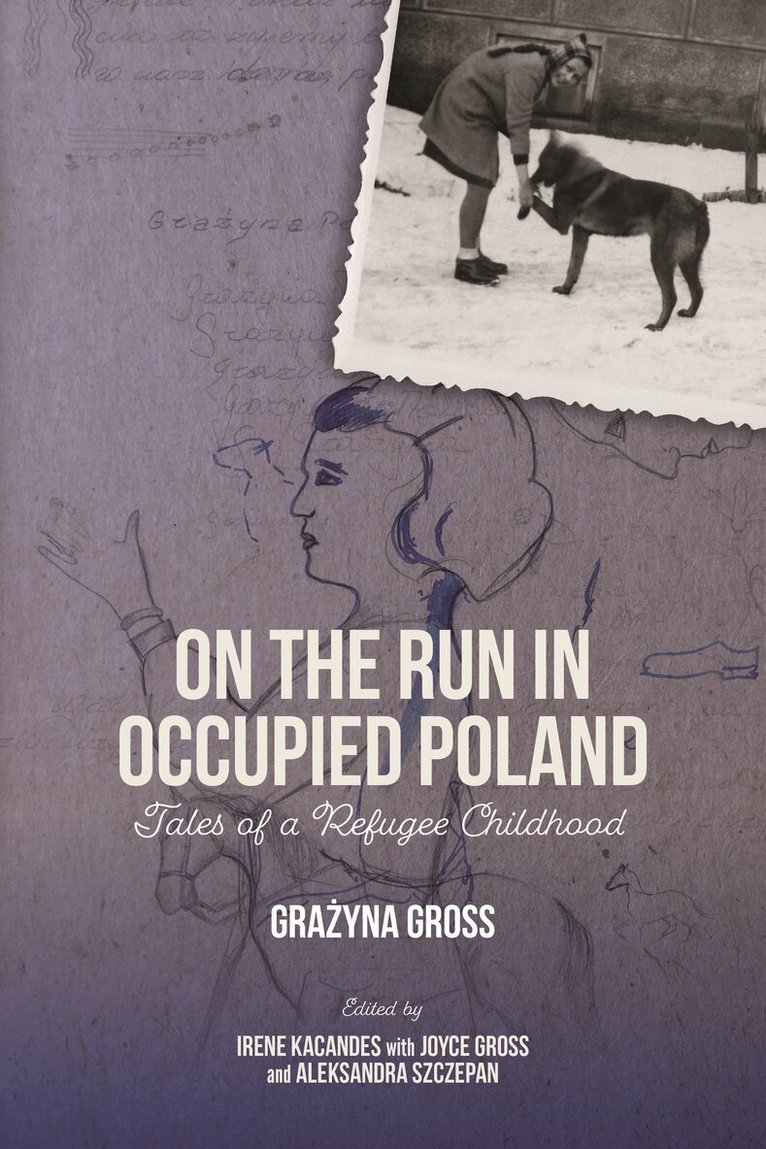
Fleeing Soviet-occupied Vilnius in 1940, a girl and her parents arrive in German-occupied Poland. This child's-eye account brings wartime and refugee experiences vividly to life.On the Run in Occupied Poland presents the daily wartime experiences of a Polish-Catholic girl. Written as an adult by Grażyna Gross, née Połtowicz (1931-2022), this collection of vignettes communicates uncannily the perspective of the child Gross was at the time, while also conveying her adult thoughts on the strategies human beings deploy to stay alive as refugees in times of war.This unusual contribution to the history of Occupied Poland highlights the fates of dispossessed Polish families as a result of both the Russian Revolution and the division of Poland in World War II.Providing concrete details of lived experience during these monumental events, this "paramemoir" constitutes a type of life-writing that goes beyond a single individual. It is a life story with enhancements in the form of factual footnotes, rare photographic evidence, a map, and contextualizing commentary in the form of essays by Joyce Gross, the author's daughter, Irene Kacandes, a professor and friend, and Aleksandra Szczepan, a scholar educated in Kraków, the city in which Gross spent the longest period of the war.A compelling source for further research into how the occupation of Poland from both East and West affected non-Jewish Poles, this book will be treasured by historians as well as ordinary readers for its surprising insights into a difficult refugee childhood that overshadowed a whole life.
Del 34 - Rochester Studies in East and Central Europe
On the Run in Occupied Poland
Tales of a Refugee Childhood
Häftad, Engelska, 2026
354 kr
Skickas inom 7-10 vardagar
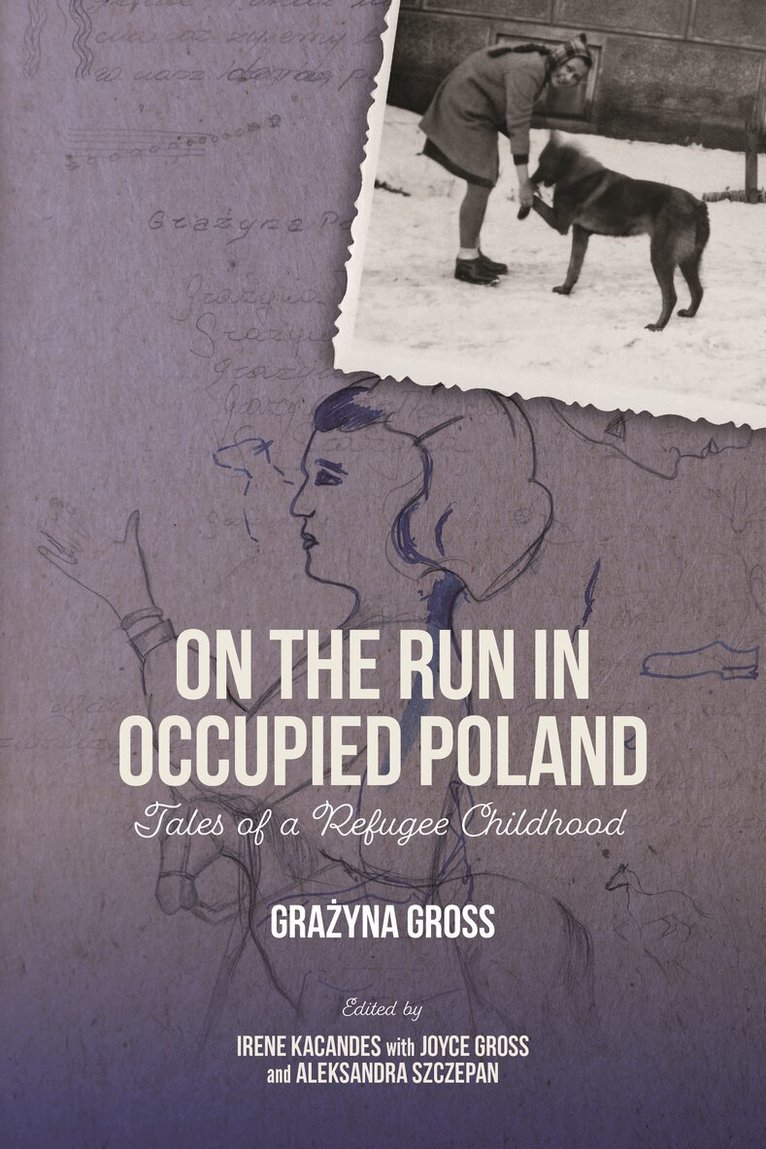
Fleeing Soviet-occupied Vilnius in 1940, a girl and her parents arrive in German-occupied Poland. This child's-eye account brings wartime and refugee experiences vividly to life.On the Run in Occupied Poland presents the daily wartime experiences of a Polish-Catholic girl. Written as an adult by Grażyna Gross, née Połtowicz (1931-2022), this collection of vignettes communicates uncannily the perspective of the child Gross was at the time, while also conveying her adult thoughts on the strategies human beings deploy to stay alive as refugees in times of war.This unusual contribution to the history of Occupied Poland highlights the fates of dispossessed Polish families as a result of both the Russian Revolution and the division of Poland in World War II.Providing concrete details of lived experience during these monumental events, this "paramemoir" constitutes a type of life-writing that goes beyond a single individual. It is a life story with enhancements in the form of factual footnotes, rare photographic evidence, a map, and contextualizing commentary in the form of essays by Joyce Gross, the author's daughter, Irene Kacandes, a professor and friend, and Aleksandra Szczepan, a scholar educated in Kraków, the city in which Gross spent the longest period of the war.A compelling source for further research into how the occupation of Poland from both East and West affected non-Jewish Poles, this book will be treasured by historians as well as ordinary readers for its surprising insights into a difficult refugee childhood that overshadowed a whole life.
2 014 kr
Skickas inom 3-6 vardagar
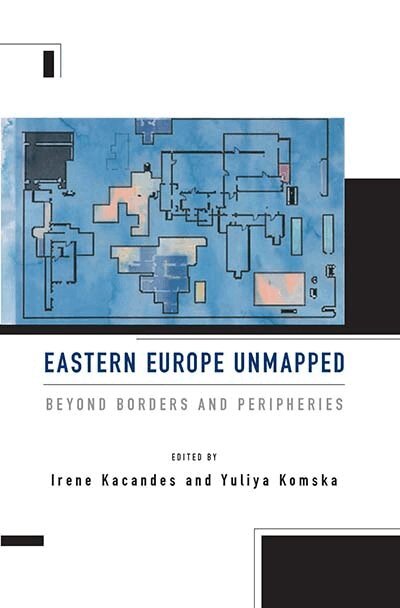
Arguably more than any other region, the area known as Eastern Europe has been defined by its location on the map. Yet its inhabitants, from statesmen to literati and from cultural-economic elites to the poorest emigrants, have consistently forged or fathomed links to distant lands, populations, and intellectual traditions. Through a series of inventive cultural and historical explorations, Eastern Europe Unmapped dispenses with scholars' long-time preoccupation with national and regional borders, instead raising provocative questions about the area's non-contiguous-and frequently global or extraterritorial-entanglements.
583 kr
Skickas inom 3-6 vardagar
Arguably more than any other region, the area known as Eastern Europe has been defined by its location on the map. Yet its inhabitants, from statesmen to literati and from cultural-economic elites to the poorest emigrants, have consistently forged or fathomed links to distant lands, populations, and intellectual traditions. Through a series of inventive cultural and historical explorations, Eastern Europe Unmapped dispenses with scholars’ long-time preoccupation with national and regional borders, instead raising provocative questions about the area’s non-contiguous—and frequently global or extraterritorial—entanglements.
599 kr
Skickas inom 3-6 vardagar
This book offers to academic and general public readers timely reflections about our relationships to violence. Taking cues from the self-reflexivity, themes, and subject matters of Holocaust, queer, and Black studies, this large group of diverse intellectuals wrestles with questions that connect past, present and future: where do I stand in relation to violence? What is my attitude toward that adjacency? Whose story gets to be told by whom? What story do I take this image to be telling? How do I co-witness to another’s suffering? How do I honor the agency and resilience of family members or historical personages? How do past violence and injustice connect to the present? In smart, self-conscious, passionate, and often painfully beautiful prose, cultural practitioners, historians and cultural studies scholars such as Angelika Bammer, Doris Bergen, Ann Cvetkovich, Marianne Hirsch, Priscilla Layne, Mark Roseman, Leo Spitzer, Susan R. Suleiman and Viktor Witkowski explore such questions, inviting readers to do the same. By making available compelling examples of thinkers performing their own work within the cauldron of crises that came to a boil in 2020 and continued into the next year, this volume proposes strategies for moving forward with hope.
452 kr
Skickas inom 7-10 vardagar
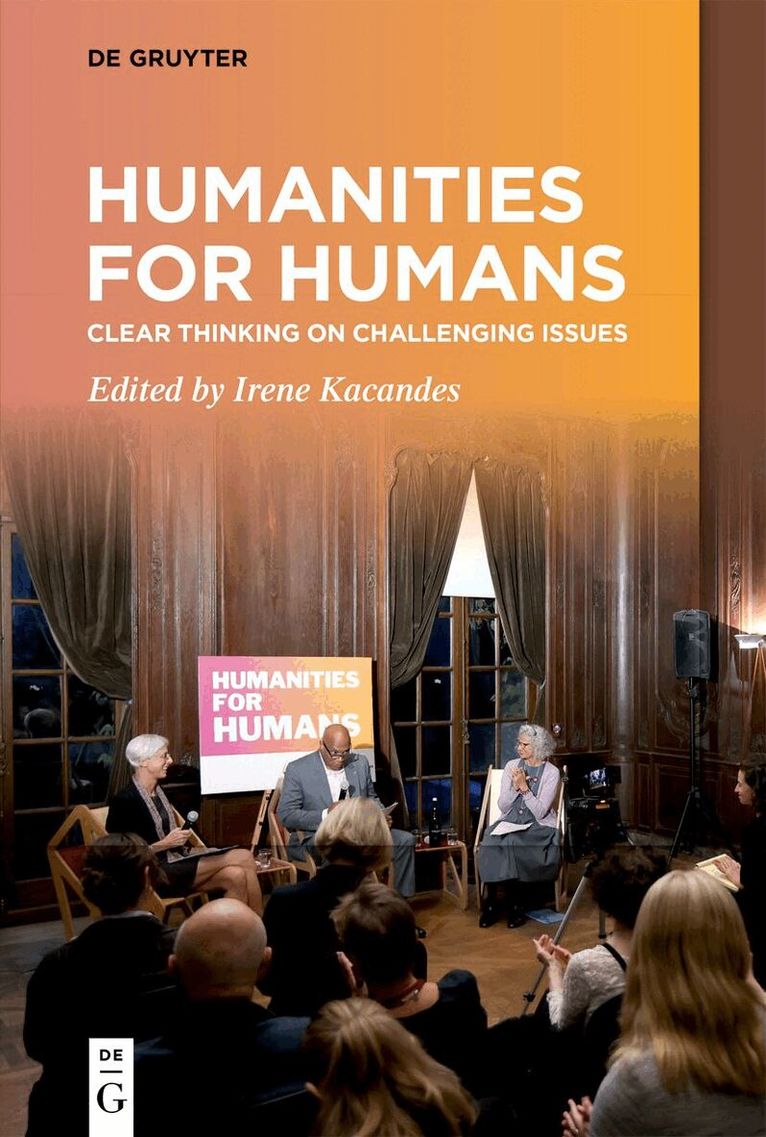
Can the academic humanities serve the general public to address some of today’s most critical challenges? This unusual volume builds on the conversation series "Humanities for Humans," curated by Irene Kacandes and funded by the De Gruyter Foundation and the New York nonprofit 1014: Space for Ideas, to answer this question in the affirmative. By asking some North America’s most prominent academics to think aloud in clear language on topics such as racism, migration, inequality, sustainability, building connection and working toward repair of our communities, this book demonstrates the ultimate value of the imagination in solving seemingly intractable problems. The authors define and distinguish. They offer historical context and concrete examples from North and South America, from Europe, from indigenous cultures, from artists and ordinary folk. By also sharing their own personal trajectories, however, these authors simultaneously anchor their insights in practical terms while highlighting the tangible role of the humanities in the everyday world.