Irving Jacobs - Böcker
Visar alla böcker från författaren Irving Jacobs. Handla med fri frakt och snabb leverans.
3 produkter
3 produkter
278 kr
Skickas inom 5-8 vardagar
The Impact of Midrash is a contribution to the analysis of a major aspect of early rabbinic exegesis, the influence of Midrash on the lives and beliefs of the Jewish people in the Holy land in the opening centuries of the current era. It examines the earliest rabbinic interpretations of the opening verses of the 'Sema' (Deut. 6:4-5) with special reference to the major themes of messianic expectation and the idealisation of martyrdom and suffering. It continues to explore the significance of these ideas for the revolt against Rome (132-5 CE) and its tragic aftermath, for the midrashic interpretation of the 'Aqedah' and for the development of the benedictions associated with the recitation of the 'Sema'.
534 kr
Skickas inom 7-10 vardagar
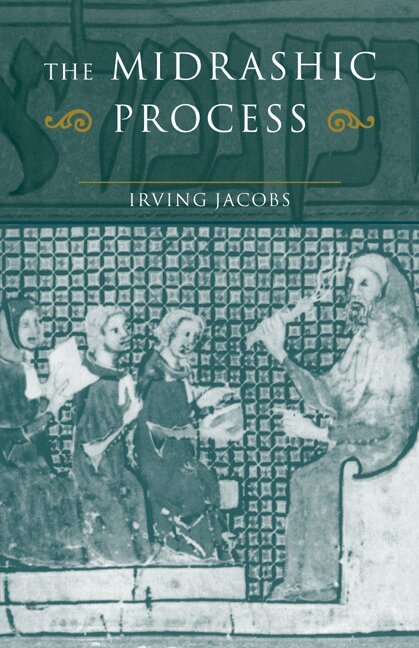
The purpose of this book is to re-examine those basic issues in the study of Midrash which to some extent have been marginalised by trends in scholarship and research. Irving Jacobs asks, for example, whether the early rabbinic exegetes had a concept of peshat, plain meaning, and, if so, what significance they attached to it in their exposition of the biblical text. He enquires if the selection of proemial and proof-texts was a random one, dependent purely upon the art or whim of the preacher, or rather if exegetical traditions linked certain pentateuchal themes with specific sections of the Prophets (and particularly the Hagiographa), which were acknowledged by preachers and audiences alike. As Midrash in its original, pre-literary form, was a living process involving both live preachers and live audiences in the ancient synagogues of the Holy Land, to what extent, he asks, did the latter influence the former in the development of their art and skills?
1 245 kr
Skickas inom 7-10 vardagar
The purpose of this book is to re-examine those basic issues in the study of Midrash which to some extent have been marginalised by trends in scholarship and research. Irving Jacobs asks, for example, whether the early rabbinic exegetes had a concept of peshat, plain meaning, and, if so, what significance they attached to it in their exposition of the biblical text. He enquires if the selection of proemial and proof-texts was a random one, dependent purely upon the art or whim of the preacher, or rather if exegetical traditions linked certain pentateuchal themes with specific sections of the Prophets (and particularly the Hagiographa), which were acknowledged by preachers and audiences alike. As Midrash in its original, pre-literary form, was a living process involving both live preachers and live audiences in the ancient synagogues of the Holy Land, to what extent, he asks, did the latter influence the former in the development of their art and skills?