Ishita Dey - Böcker
Visar alla böcker från författaren Ishita Dey. Handla med fri frakt och snabb leverans.
4 produkter
4 produkter
2 088 kr
Skickas inom 10-15 vardagar
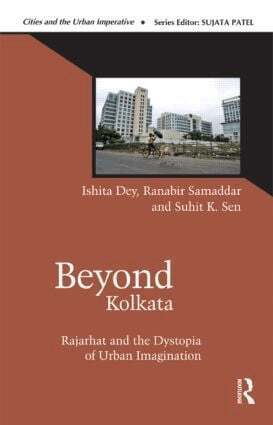
This book examines the politics behind, and the socio-economic and ecological repercussions of, the making of a new township, variously called New Town, Megacity or Jyoti Basu Nagar, in Rajarhat near Kolkata. Conceived by the West Bengal state government in the mid-1990s, in pandering to the vision of urban planners of creating a hi-tech town beyond an unruly, crowded Kolkata, and feeding the hunger of realtors and developers, the city is built on the foundations of coercive, even violent, land acquisition, state largesse and corruption — and at the cost of erasing a self-sufficient subsistence economy and despoiling a fragile environment. Yet, after its completion and departure of construction labour, the new town appears as a necropolis, a ghost city, that belies its promised image of an urban utopia, even as the displaced locals lead a precarious, mobile existence as ‘transit labour’, engaged in odd and informal jobs. Written on the basis of intensive fieldwork, government documents, court records, and chronicles of public protests, this book broadly analyses the politics and economics of urbanisation in the age of post-colonial capitalism, particularly the paradoxical combination of neoliberal and primitive modes of capital accumulation upon which the global emergence of ‘new towns’ is based. Departing from the dominant styles of urban studies that focus on cultural or spatial analysis of cities, the authors show the links between changes in space, technology, political economy, class composition, and forms of urban politics which give concrete shape to a city. It will immensely interest those in sociology, political science, economics, development studies, urban studies, policy and governance studies, and history.
2 150 kr
Skickas inom 10-15 vardagar
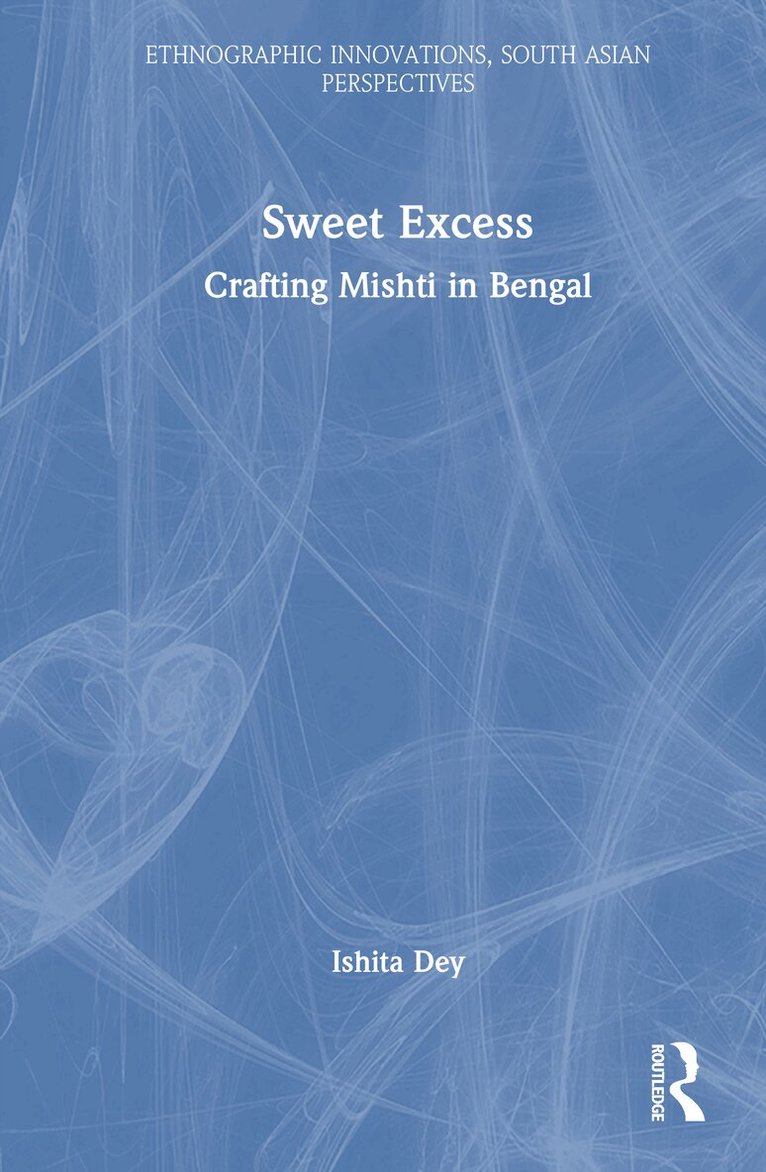
This book is an ethnographic work on excess. Based on a decade-long field work of a single food substance — sweets — it follows sweet-making in sweetshops, domestic spaces, fairs, festivals and its representation in recipe books to understand how caste, religion, science and law inform the life of a food item with an extremely short shelf life. It shows how food items of conspicuous consumption find a meaning in everyday lives of people through its socio-cultural meanings - ritual, pride of craftsmanship, heritage and cultural identity. It also shows how sweets continue to be a ubiquitous part of ‘Bengali’ diet in a geography that has been witness to acute hunger, starvation, food movements and social welfare programmes to ensure food security.As a multi-sited ethnography on sweetness in diverse settings and its associated meanings in West Bengal and Bangladesh, this book explores everyday workplace hierarchies between artisans that reveal how caste and religion inform the choice of who is hired into this line of work. It also highlights how discourses on food safety and the overpowering presence of World Trade Organization have affected the life of the Bengali mishti.The volume will be of great interest to scholars and researchers of ethnography, sociology, history, and South Asian studies. And if you, dear reader, love mishti, you will love this, too!
593 kr
Skickas inom 10-15 vardagar
This book is an ethnographic work on excess. Based on a decade-long field work of a single food substance — sweets — it follows sweet-making in sweetshops, domestic spaces, fairs, festivals and its representation in recipe books to understand how caste, religion, science and law inform the life of a food item with an extremely short shelf life. It shows how food items of conspicuous consumption find a meaning in everyday lives of people through its socio-cultural meanings - ritual, pride of craftsmanship, heritage and cultural identity. It also shows how sweets continue to be a ubiquitous part of ‘Bengali’ diet in a geography that has been witness to acute hunger, starvation, food movements and social welfare programmes to ensure food security.As a multi-sited ethnography on sweetness in diverse settings and its associated meanings in West Bengal and Bangladesh, this book explores everyday workplace hierarchies between artisans that reveal how caste and religion inform the choice of who is hired into this line of work. It also highlights how discourses on food safety and the overpowering presence of World Trade Organization have affected the life of the Bengali mishti.The volume will be of great interest to scholars and researchers of ethnography, sociology, history, and South Asian studies. And if you, dear reader, love mishti, you will love this, too!
725 kr
Skickas inom 10-15 vardagar
This book examines the politics behind, and the socio-economic and ecological repercussions of, the making of a new township, variously called New Town, Megacity or Jyoti Basu Nagar, in Rajarhat near Kolkata. Conceived by the West Bengal state government in the mid-1990s, in pandering to the vision of urban planners of creating a hi-tech town beyond an unruly, crowded Kolkata, and feeding the hunger of realtors and developers, the city is built on the foundations of coercive, even violent, land acquisition, state largesse and corruption — and at the cost of erasing a self-sufficient subsistence economy and despoiling a fragile environment. Yet, after its completion and departure of construction labour, the new town appears as a necropolis, a ghost city, that belies its promised image of an urban utopia, even as the displaced locals lead a precarious, mobile existence as ‘transit labour’, engaged in odd and informal jobs. Written on the basis of intensive fieldwork, government documents, court records, and chronicles of public protests, this book broadly analyses the politics and economics of urbanisation in the age of post-colonial capitalism, particularly the paradoxical combination of neoliberal and primitive modes of capital accumulation upon which the global emergence of ‘new towns’ is based. Departing from the dominant styles of urban studies that focus on cultural or spatial analysis of cities, the authors show the links between changes in space, technology, political economy, class composition, and forms of urban politics which give concrete shape to a city. It will immensely interest those in sociology, political science, economics, development studies, urban studies, policy and governance studies, and history.