Israel Bartal - Böcker
Visar alla böcker från författaren Israel Bartal. Handla med fri frakt och snabb leverans.
9 produkter
9 produkter
394 kr
Skickas inom 10-15 vardagar
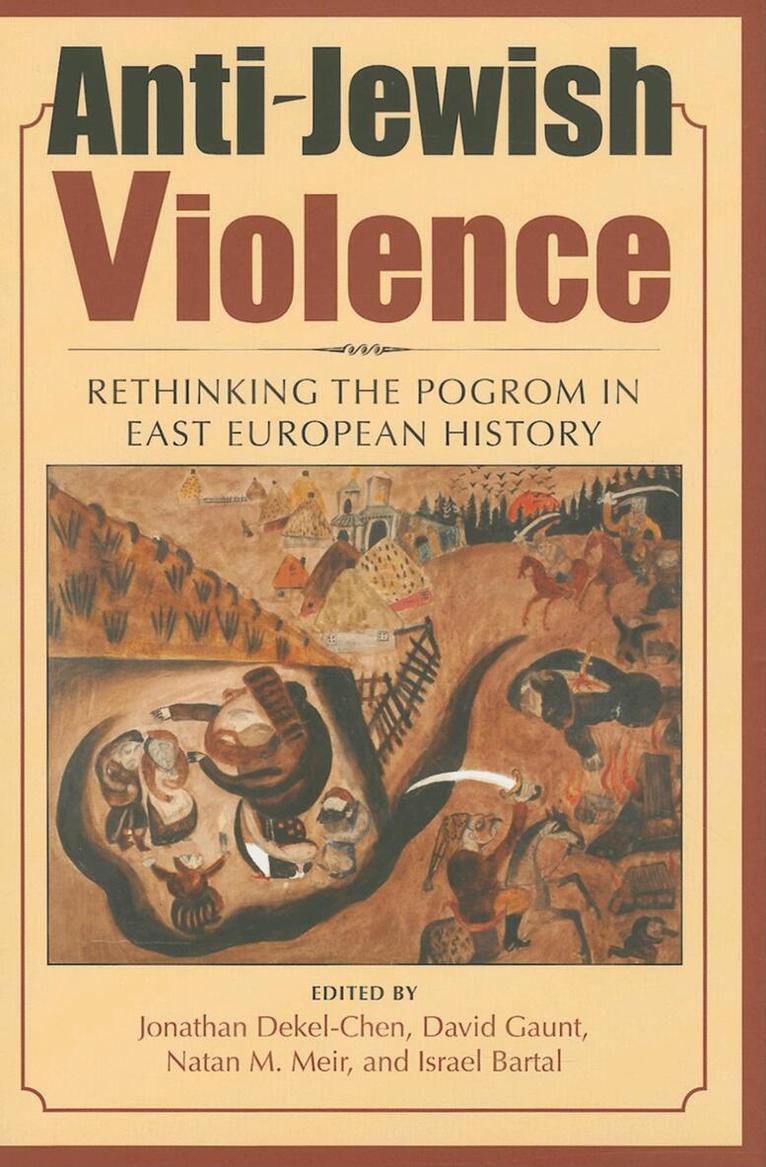
Although overshadowed in historical memory by the Holocaust, the anti-Jewish pogroms of the late 19th and early 20th centuries were at the time unrivaled episodes of ethnic violence. Incorporating newly available primary sources, this collection of groundbreaking essays by researchers from Europe, the United States, and Israel investigates the phenomenon of anti-Jewish violence, the local and transnational responses to pogroms, and instances where violence was averted. Focusing on the period from World War I through Russia's early revolutionary years, the studies include Poland, Ukraine, Belorussia, Lithuania, Crimea, and Siberia.
316 kr
Skickas inom 10-15 vardagar
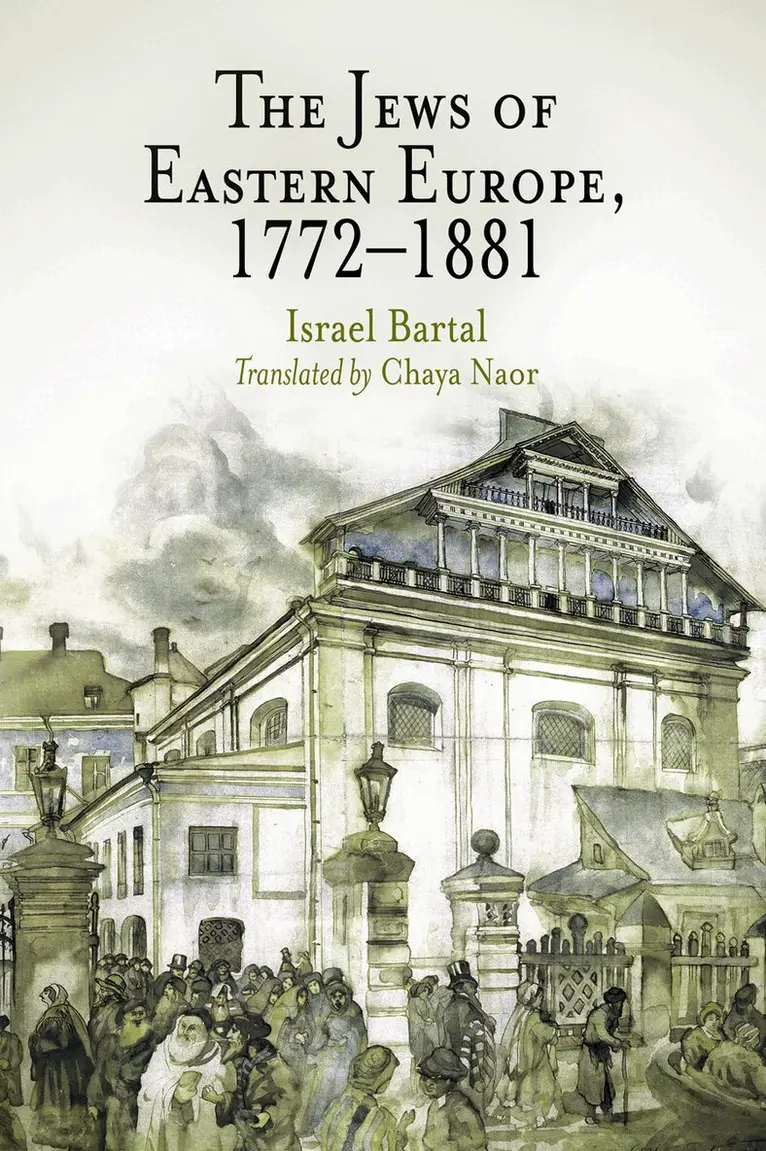
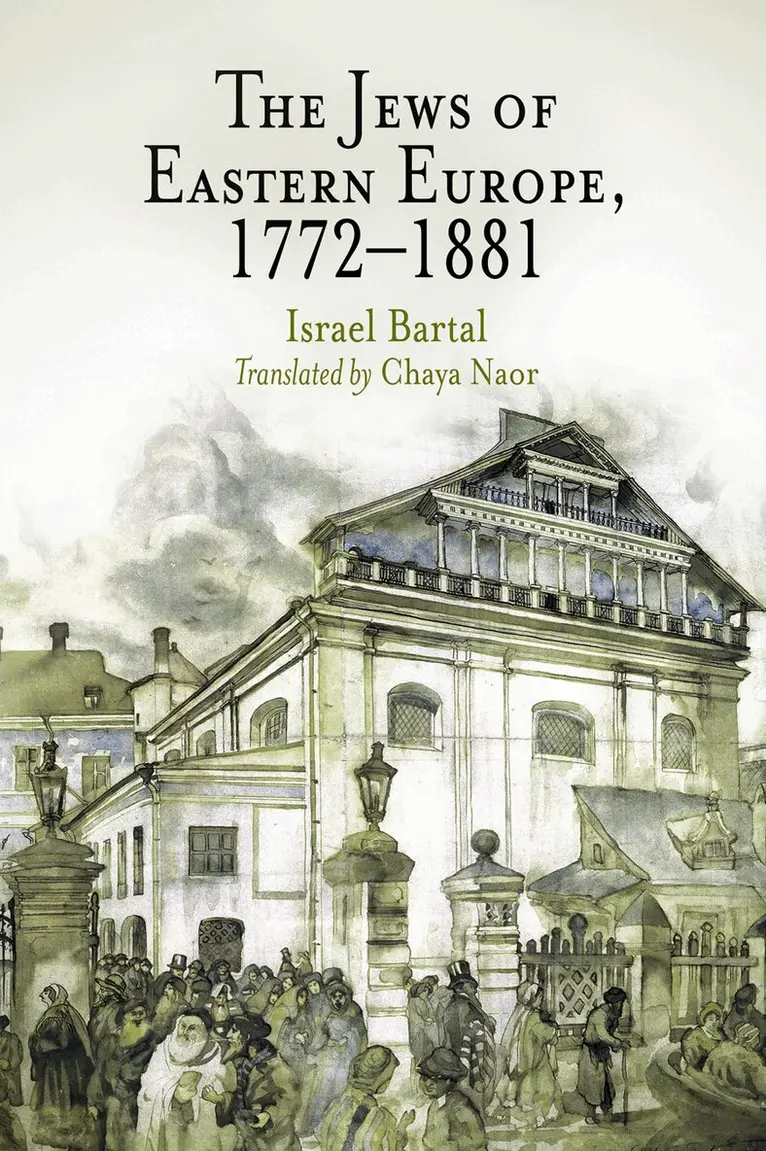
In the nineteenth century, the largest Jewish community the modern world had known lived in hundreds of towns and shtetls in the territory between the Prussian border of Poland and the Ukrainian coast of the Black Sea. The period had started with the partition of Poland and the absorption of its territories into the Russian and Austro-Hungarian empires; it would end with the first large-scale outbreaks of anti-Semitic violence and the imposition in Russia of strong anti-Semitic legislation. In the years between, a traditional society accustomed to an autonomous way of life would be transformed into one much more open to its surrounding cultures, yet much more confident of its own nationalist identity. In The Jews of Eastern Europe, Israel Bartal traces this transformation and finds in it the roots of Jewish modernity.
Del 35 - Polin: Studies in Polish Jewry
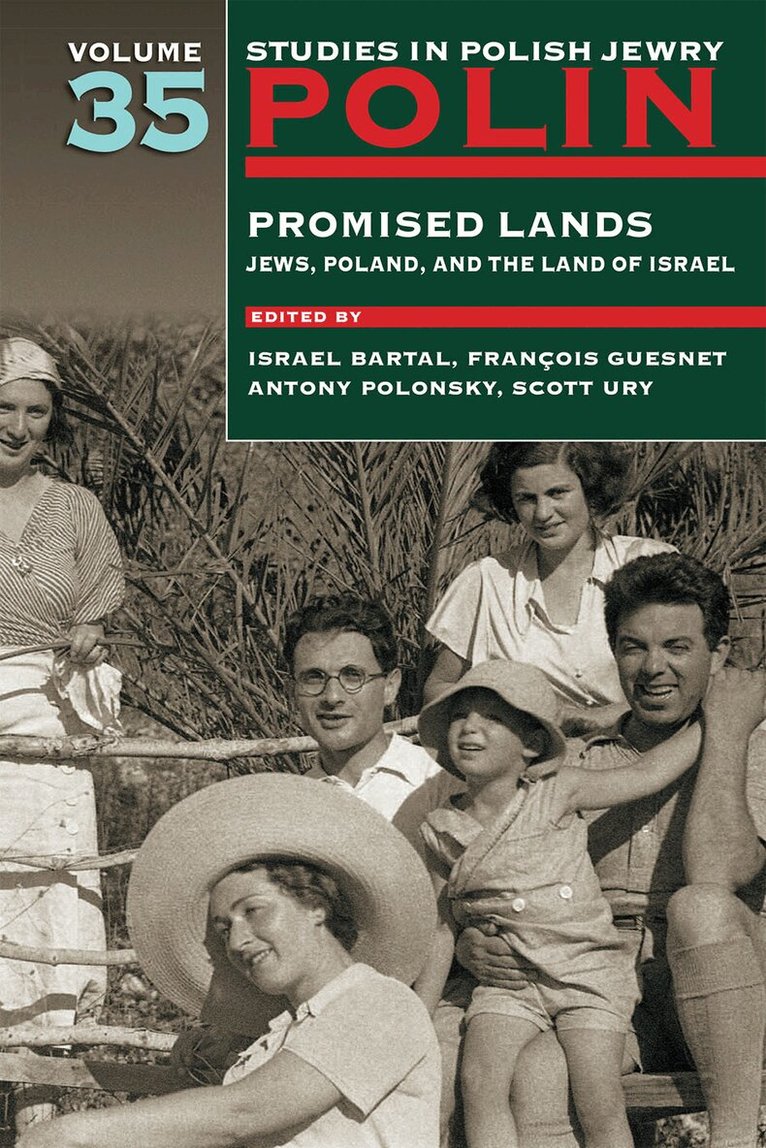
Polin: Studies in Polish Jewry Volume 35
Promised Lands: Jews, Poland, and the Land of Israel
Inbunden, Engelska, 2023
1 302 kr
Skickas inom 7-10 vardagar
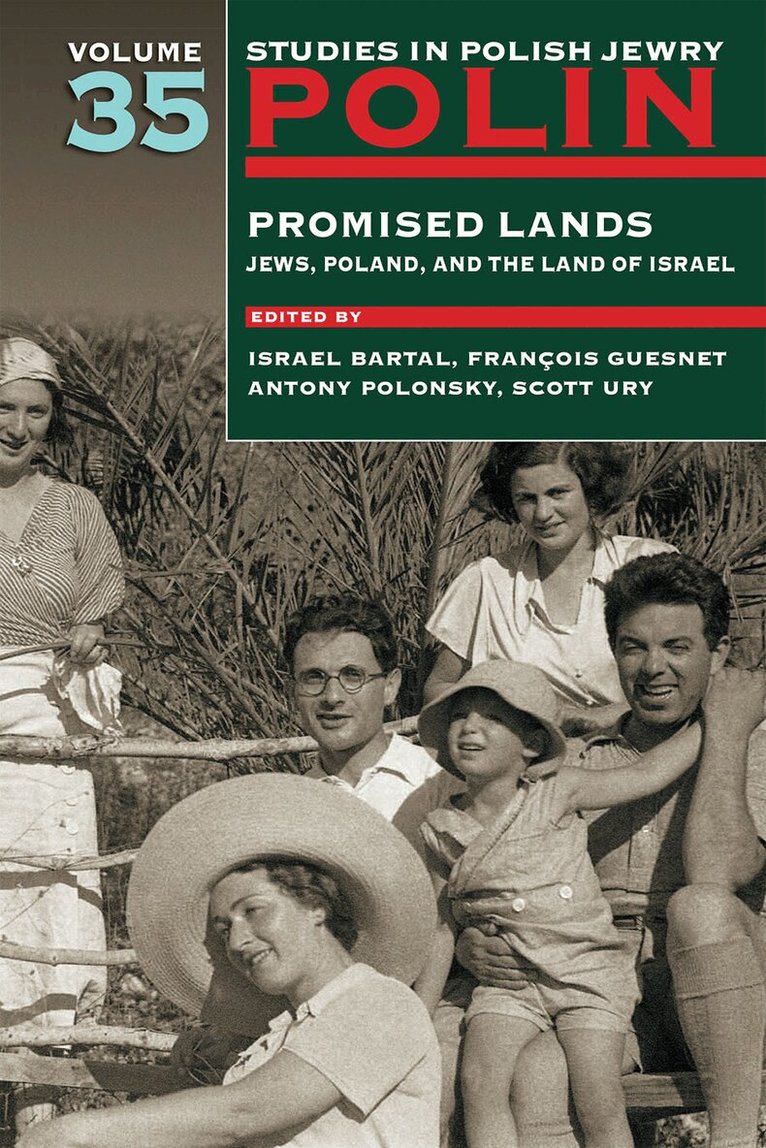
An in-depth and multifaceted investigation of how Polish Jews, Polish Zionism, and Polish culture influenced Israel’s cultural and political development, as well as of how the Zionist project influenced Jewish life in Poland. From its inception as a political movement, Zionism had as its main goal the creation of a ‘New Jew’ who could contribute to building a Jewish state, preferably in the historic homeland of the Jewish people, where Jews would free themselves from the negative characteristics which, in the view of the ideologues of Zionism, had developed in the diaspora. Yet, inevitably, those who settled in Palestine brought with them considerable cultural baggage. A substantial proportion of them came from the Polish lands, and their presence significantly affected the political and cultural life of the Yishuv, and later the State of Israel. In this volume, scholars from Israel, Poland and elsewhere in Europe, and North America explore different aspects of this influence, as well as the continuing relationship between Israel and Poland, up to the present day.
Del 35 - Polin: Studies in Polish Jewry
Polin: Studies in Polish Jewry Volume 35
Promised Lands: Jews, Poland, and the Land of Israel
Häftad, Engelska, 2023
574 kr
Skickas inom 7-10 vardagar
An in-depth and multifaceted investigation of how Polish Jews, Polish Zionism, and Polish culture influenced Israel’s cultural and political development, as well as of how the Zionist project influenced Jewish life in Poland. From its inception as a political movement, Zionism had as its main goal the creation of a ‘New Jew’ who could contribute to building a Jewish state, preferably in the historic homeland of the Jewish people, where Jews would free themselves from the negative characteristics which, in the view of the ideologues of Zionism, had developed in the diaspora. Yet, inevitably, those who settled in Palestine brought with them considerable cultural baggage. A substantial proportion of them came from the Polish lands, and their presence significantly affected the political and cultural life of the Yishuv, and later the State of Israel. In this volume, scholars from Israel, Poland and elsewhere in Europe, and North America explore different aspects of this influence, as well as the continuing relationship between Israel and Poland, up to the present day.
Del 12 - Polin: Studies in Polish Jewry
Polin: Studies in Polish Jewry Volume 12
Focusing on Galicia: Jews, Poles and Ukrainians 1772-1918
Häftad, Engelska, 1999
365 kr
Skickas inom 5-8 vardagar
From 1772-1918 Jews were concentrated more densely in Galicia than in any other area in Europe. Bartal (modern Jewish history, Hebrew University of Jerusalem) and Polonsky (Judaic and social studies, Brandeis University) are joined by a number of other scholars of Judaism to explore the Jewish community in Galicia and its relationship with the Poles, Ukranians, and other ethnic groups. Essays include discuss of the consequences of Galician autonomy; Galician Jewish migration to Vienna; the reforms of Maria Theresa and Joseph II in the 18th century, the assimilation of the Jewish elite; and levels of literacy among Poles and Jews.
Del 9 - Polin: Studies in Polish Jewry
Polin: Studies in Polish Jewry Volume 9
Jews, Poles, Socialists: The Failure of an Ideal
Häftad, Engelska, 2008
318 kr
Skickas inom 5-8 vardagar
‘The less antisemitism exists among Christians, the easier it will be to unite the social forces . . . and the sooner workers’ solidarity will emerge: solidarity of all who are exploited and wronged . . . Jew, Pole, Lithuanian.’ Józef Pilsudski, 1903The Socialist ideals of brotherhood, equality, and justice have exercised a strong attraction for many Jews. On the Polish lands, Jews were drawn to Socialism when the liberal promise of integration into the emergent national entities of east and central Europe as Poles or Lithuanians or Russians of the Hebrew faith seemed to be failing. For those Jews seeking emancipation from discrimination and the constraints of a religious community, Socialism offered a tantalizing new route to integration in the wider society. Some Jews saw in Socialism a secularized version of the age-old Jewish messianic longing, while others were driven to the Socialist movement by poverty and the hope that it would supply their material needs.But in Poland as elsewhere in Europe, Socialism failed to transcend national divisions. The articles in this volume of Polin investigate the failure of this ideal and its consequences for Jews on the Polish lands, examining Socialist attitudes to the ‘Jewish question’, the issue of antisemitism, how the growth of Socialism affected relationships between Poles and Jews, and the character of Jewish Socialist groups in Poland.The result is a significant contribution to the history of Jews in Poland. It also sheds light on the history of Socialism in east-central Europe and the complexity of national problems there. Editors and contributors: Israel Bartal, Daniel Blatman, Alina Cala, Stephen D. Corrsin, David Engel, Sylvia Barack Fishman, Gershon Hundert, Ross Kessel, Shmuel Krakowski, Dov Levin, Pawel Machcewicz, Stanislaw Meducki, Erica Nadelhaft, Magdalena Opalska, Richard Pipes, Antony Polonsky, Dina Porat, Teresa Prekerowa, Michal Sliwa, Janusz Sujecki, Jerzy Tomaszewski, Barbara Wachowska.
Del 24 - Polin: Studies in Polish Jewry
Polin: Studies in Polish Jewry Volume 24
Jews and Their Neighbours in Eastern Europe Since 1750
Häftad, Engelska, 2011
513 kr
Skickas inom 7-10 vardagar
Relations between Jews and their neighbours in eastern Europe have long been perceived, both in the popular mind and in conventional scholarship, as being in a permanent state of conflict. This volume counters that image by exploring long-neglected aspects of inter-group interaction and exchange. In so doing it broadens our understanding of Jewish history and culture, as well as that of eastern Europe. Whereas traditional historiography concentrates on the differences between Jews and non-Jews, the essays here focus on commonalities: the social, political, and economic worlds that members of different groups often shared. Shifting the emphasis in this way allows quite a different picture to emerge. Jews may have been subject to the whims of ruling powers and influenced by broader cultural and political developments, but at the same time they exerted a discernible influence on them - the social, cultural, and political spheres were ones that they not only shared, but that they also helped to create. This model of reciprocal influence and exchange has much to offer to the study of inter-group relations in eastern Europe and beyond.Designed to move the study of east European Jewry beyond the intellectual and academic discourse of difference that has long troubled scholars, this volume contributes to our perception of how members of different groups operate and interact on a multitude of different levels. The various contributions represent a wide cross-section of opinions and approaches - historical, literary, and cultural. Taken together they move our understanding of east European Jewry from the realm of the mythical to a more rational mode. In addition to essays considering interactions between Jews and Poles, other contributions examine relations between Jews and other ethnic groups (Lithuanians, Russians), discuss negotiations with various governments (Habsburg, Lithuanian, Polish, Russian, and Soviet), analyse exchanges between Jews and different cultural realms (German, Polish, and Russian), and explore how the politics of memory affects contemporary interpretations of these and related phenomena.CONTRIBUTORS Karen Auerbach, Israel Bartal, Ela Bauer, Jan Blonski, Marek Edelman, Michael Fleming, Dorota Glowacka, Regina Grol, Francois Guesnet, Brian Horowitz, Agnieszka Jagodinska, Jeff Kopstein, Sergei Kravtsov, Rachel Manekin, Czeslaw Milosz, Karin Neuberger, Przemyslaw Rozanski, Kai Struve, Joanna Tokarska-Bakir, Jerzy Turowicz, Scott Ury, Kalman Weiser, Jason Wittenberg, Marcin Wodzinski, Piotr Wrobel
336 kr
Skickas inom 5-8 vardagar
923 kr
Skickas inom 5-8 vardagar