Istvan Csicsery-Ronay, Jr. – författare
Visar alla böcker från författaren Istvan Csicsery-Ronay, Jr.. Handla med fri frakt och snabb leverans.
3 produkter
3 produkter
269 kr
Skickas inom 10-15 vardagar
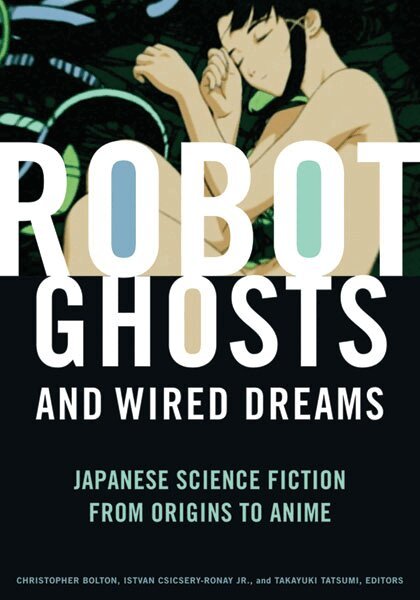
Since the end of the Second World War-and particularly over the last decade-Japanese science fiction has strongly influenced global popular culture. Unlike American and British science fiction, its most popular examples have been visual-from Gojira (Godzilla) and Astro Boy in the 1950s and 1960s to the anime masterpieces Akira and Ghost in the Shell of the 1980s and 1990s-while little attention has been paid to a vibrant tradition of prose science fiction in Japan. Robot Ghosts and Wired Dreams remedies this neglect with a rich exploration of the genre that connects prose science fiction to contemporary anime. Bringing together Western scholars and leading Japanese critics, this groundbreaking work traces the beginnings, evolution, and future direction of science fiction in Japan, its major schools and authors, cultural origins and relationship to its Western counterparts, the role of the genre in the formation of Japan’s national and political identity, and its unique fan culture. Covering a remarkable range of texts-from the 1930s fantastic detective fiction of Yumeno KyÛsaku to the cross-culturally produced and marketed film and video game franchise Final Fantasy-this book firmly establishes Japanese science fiction as a vital and exciting genre. Contributors: Hiroki Azuma; Hiroko Chiba, DePauw U; Naoki Chiba; William O. Gardner, Swarthmore College; Mari Kotani; Livia Monnet, U of Montreal; Miri Nakamura, Stanford U; Susan Napier, Tufts U; Sharalyn Orbaugh, U of British Columbia; Tamaki SaitÔ; Thomas SchnellbÄcher, Berlin Free U. Christopher Bolton is assistant professor of Japanese at Williams College. Istvan Csicsery-Ronay Jr. is professor of English at DePauw University. Takayuki Tatsumi is professor of English at Keio University.
Del 75 - Liverpool Science Fiction Texts & Studies
Mutopia
Science Fiction and Fantastic Knowledge
Inbunden, Engelska, 2022
2 042 kr
Skickas inom 7-10 vardagar
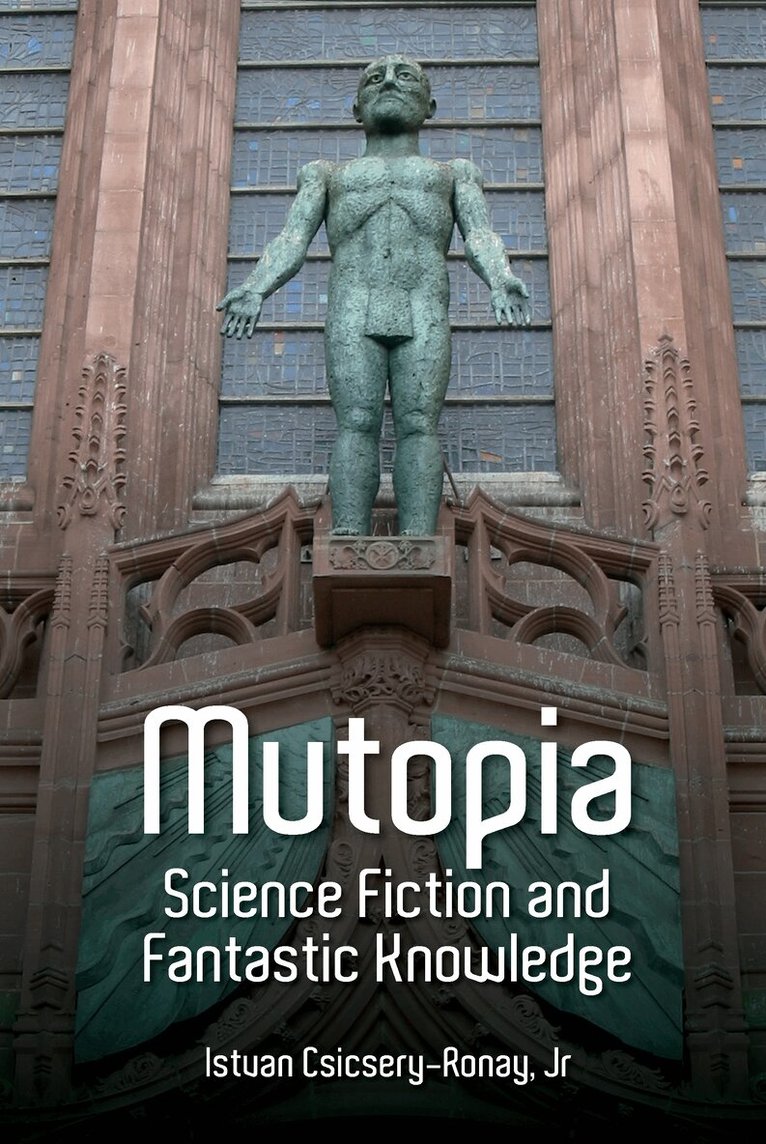
The Enlightenment’s project of establishing scientific proof for the unity of the universe led instead to the fragmentation of knowledge. The culture of certainty mutated into a culture of conjecture and speculative supplements as the image of a unified cosmos mutated into a patchwork totality. In the process, the pursuit of knowledge developed a symbiotic association with science fiction. While sf has often provided concrete ideas adopted by the knowledge faculties, equally important is the way science-fictional counterfactual world building – science fiction’s “fantastic knowledge” – has intersected with rational speculation in all fields of knowledge. As a result, the dream of a completed, rationally engineered utopia has evolved into the image of “mutopia,” in which the objects of knowledge, the process of knowing, and the science-fictional imagination itself are expected to undergo constant transformation. The essays in Mutopia address the science-fictional imagination’s relevance for scientific modeling, critical theory, the deconstruction of the future, the future of religion, the future of nations, the imagination of empire, the construction of aliens, the future of science fiction itself, and the transformation of utopia into mutopia. Written over many years by a leading scholar of science fiction, the essays are revised and expanded for republication in this collection, alongside new commentary that places them in an updated context.
Del 75 - Liverpool Science Fiction Texts & Studies
Mutopia
Science Fiction and Fantastic Knowledge
Häftad, Engelska, 2025
579 kr
Skickas inom 7-10 vardagar
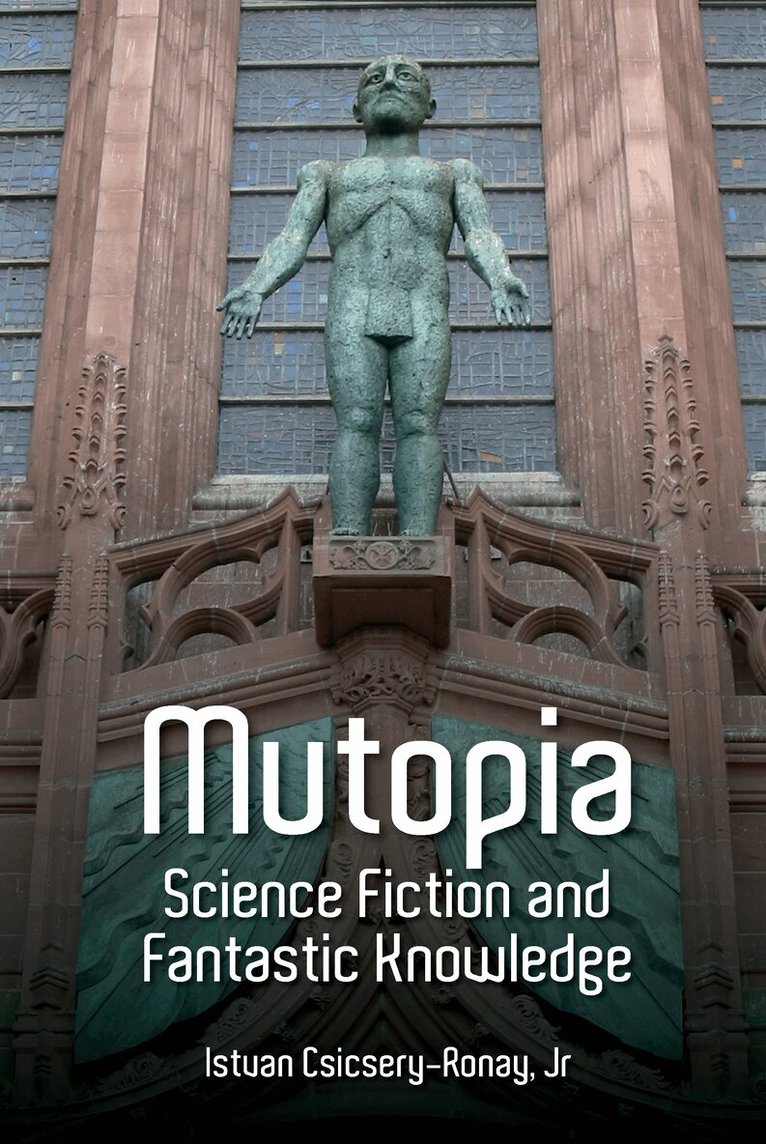
The Enlightenment’s project of establishing scientific proof for the unity of the universe led instead to the fragmentation of knowledge. The culture of certainty mutated into a culture of conjecture and speculative supplements as the image of a unified cosmos mutated into a patchwork totality. In the process, the pursuit of knowledge developed a symbiotic association with science fiction. While sf has often provided concrete ideas adopted by the knowledge faculties, equally important is the way science-fictional counterfactual world building – science fiction’s “fantastic knowledge” – has intersected with rational speculation in all fields of knowledge. As a result, the dream of a completed, rationally engineered utopia has evolved into the image of “mutopia,” in which the objects of knowledge, the process of knowing, and the science-fictional imagination itself are expected to undergo constant transformation. The essays in Mutopia address the science-fictional imagination’s relevance for scientific modeling, critical theory, the deconstruction of the future, the future of religion, the future of nations, the imagination of empire, the construction of aliens, the future of science fiction itself, and the transformation of utopia into mutopia. Written over many years by a leading scholar of science fiction, the essays are revised and expanded for republication in this collection, alongside new commentary that places them in an updated context.