Ivan Hare - Böcker
Visar alla böcker från författaren Ivan Hare. Handla med fri frakt och snabb leverans.
3 produkter
3 produkter
The Golden Metwand and the Crooked Cord
Essays in Honour of Sir William Wade QC
Inbunden, Engelska, 1998
2 643 kr
Skickas inom 7-10 vardagar
This is a lively collection of essays by an internationally distinguished group of the world's most respected administrative lawyers. It is a timely work as public law in the United Kingdom is at an extremely interesting stage in its long development. A period of unprecedented expansion in the judicial review jurisdiction and the growing legal impact of membership of the European Community provide an incentive to reflect upon and consolidate existing learning, and assess how public law doctrine and scholarship will progress into the new millenium. There has also been a recent burgeoning of theoretical public law scholarship and the development of more critical and socio-legal approaches to the subject of law and administration. This book takes account of all these factors, and also reflects the international dimension of administrative law issues. The essays are written in honour of Sir Wlliam Wade, who was Professor of English at St John's College Oxford, Rouse Ball Professor of English Law at the University of Cambridge and Master of Gonville and Caius College Cambridge. He is one of the leading scholars of his generation and is justly credited for having contributed hugely to the development of administrative law in Britain through his text Administrative Law (OUP) but also through the Hamlyn lectures and through his work as a member of the English bar, his lectures throughout the world and numerous articles, notes and essays.
1 817 kr
Skickas inom 5-8 vardagar
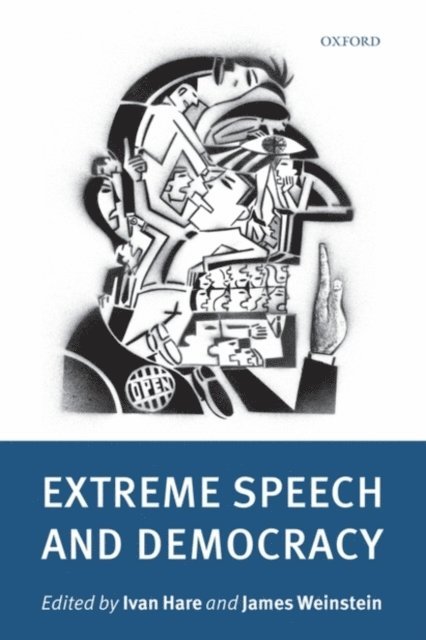
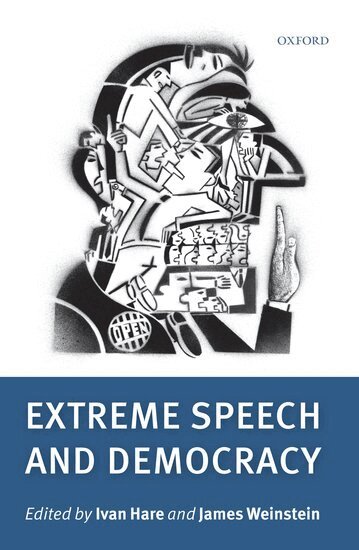
A fundamental precept of all liberal democracies is a commitment to free speech. However, democracies differ fundamentally when addressing the constitutionality of laws regulating certain kinds of speech. In the United States, the commitment to free speech in the First Amendment has been held by the Supreme Court to protect the public expression of the most noxious racist ideology and hence to render unconstitutional even narrow restrictions on hate speech. In contrast, governments have been accorded considerable leeway to restrict racist and other extreme expression in almost every other democracy, including Canada, the United Kingdom and other European countries. This book considers the constitutionality of hate speech regulation, and examines how liberal democracies have adopted fundamental differences in the way they respond to racist or extreme expressions. What accounts for the marked differences in attitude towards the constitutionality of hate speech regulation? Does hate speech regulation violate the core free speech principle constitutive of democracy? Has the traditional US position on extreme expressions justifiably not found favour elsewhere? Should, or could, other values such as the commitment to equality or dignity legitimately override the right to free speech in some circumstances? This collection of papers from some of the top free speech thinkers and writers today attempts to analyse and answer some of these fundamental questions that confront liberal democracies faced with extreme expressions.
728 kr
Skickas inom 7-10 vardagar
A commitment to free speech is a fundamental precept of all liberal democracies. However, democracies can differ significantly when addressing the constitutionality of laws regulating certain kinds of speech. In the United States, for instance, the commitment to free speech under the First Amendment has been held by the Supreme Court to protect the public expression of the most noxious racist ideology and hence to render unconstitutional even narrow restrictions on hate speech. In contrast, governments have been accorded considerable leeway to restrict racist and other extreme expression in almost every other democracy, including Canada, the United Kingdom, and other European countries. This book considers the legal responses of various liberal democracies towards hate speech and other forms of extreme expression, and examines the following questions: What accounts for the marked differences in attitude towards the constitutionality of hate speech regulation? Does hate speech regulation violate the core free speech principle constitutive of democracy? Has the traditional US position on extreme expression justifiably not found favour elsewhere? Do values such as the commitment to equality or dignity legitimately override the right to free speech in some circumstances? With contributions from experts in a range of disciplines, this book offers an in-depth examination of the tensions that arise between democracy's promises.