Ivan Illich – författare
Visar alla böcker från författaren Ivan Illich. Handla med fri frakt och snabb leverans.
33 produkter
Limits to Medicine
Medical Nemesis: The Expropriation of Health
Av Ivan Illich
Häftad, 1976
2,0 utav 5 stjärnor. Totalt antal röster: (1)
251 kr
Lägg i varukorg
"The medical establishment has become a major threat to health." This is the opening statement and basic contention of Ivan Illich's searing social critique. In Limits to Medicine Ivan Illich has enlarged on this theme of disabling social services, schools, and transport, which have become, through …
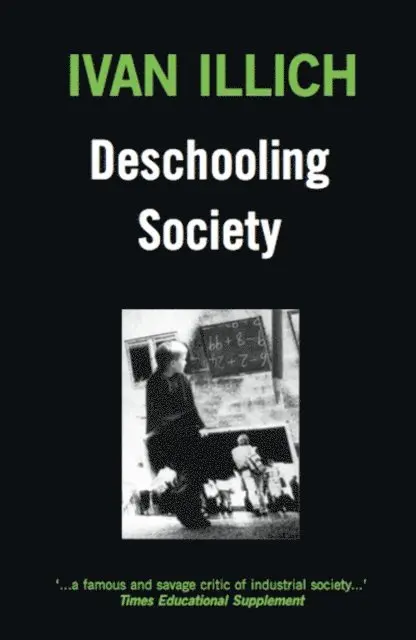
Deschooling Society
Av Ivan Illich
Häftad, 1995
5,0 utav 5 stjärnor. Totalt antal röster: (1)
181 kr
Tillfälligt slut
Schools have failed our individual needs, supporting false and misleading notions of 'progress' and development fostered by the belief that ever-increasing production, consumption and profit are proper yardsticks for measuring the quality of human life. Our universities have become recruiting …
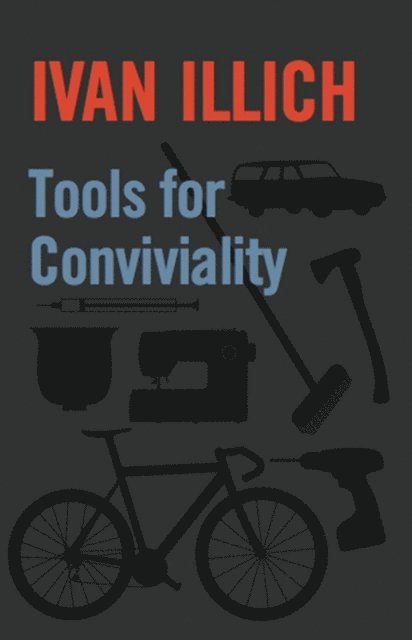
Tools for Conviviality
Av Ivan Illich
Häftad, 1973
239 kr
Tillfälligt slut
Ivan Illich argues for individual personal control over life, the tools and energy we use. A work of seminal importance. The conviviality for which noted social philosopher Ivan Illich is arguing is one in which the individuals personal energies are under direct personal control and in which the …
Beyond Economics and Ecology
The Radical Thought of Ivan Illich
Av Ivan Illich
Häftad, 2013
190 kr
Lägg i varukorg
Illichs theories on the effectiveness of cars, air travel, and energy showed that industrial progress actually hampers the speed and effectiveness we have as people who were born capable of walking to our desired destinations. Roads, airports, stations, traffic jams, all take away the benefits of …
Right to Useful Unemployment
Av Ivan Illich
E-bok, 1978
184 kr
Lägg i varukorg
In this political essay, Ivan Illich calls for the right to useful unemployment: a positive, constructive, and even optimistic concept dealing with that activity by which people are useful to themselves and others outside the production of commodities for the market.
Shadow Work
Av Ivan Illich
E-bok, 1981
184 kr
Lägg i varukorg
In five essays, followed by extensive notes and bibliographies, Ivan Illich embarks on a major historical and sociological analysis of modern man's economic existence. He traces and analyzes options which surpass the conventional political 'right-left' and the technological 'soft-hard' alternatives …
Deschooling Society
Av Ivan Illich
E-bok, 1995
161 kr
Lägg i varukorg
Schools have failed our individual needs, supporting false and misleading notions of 'progress' and development fostered by the belief that ever-increasing production, consumption and profit are proper yardsticks for measuring the quality of human life. Our universities have become recruiting …
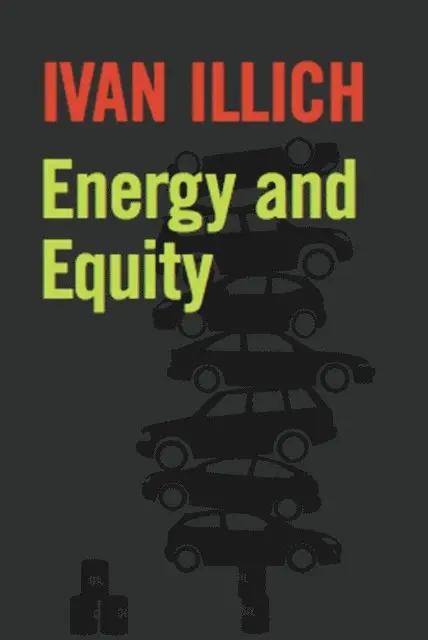
Energy and Equity
Av Ivan Illich
E-bok, 1974
184 kr
Lägg i varukorg
A junkie without access to his stash is in a state of crisis. The "energy crisis' that exists intermittently when the flow of fuel from unstable countries is cut off or threatened, is a crisis in the same sense. When such a crisis is perceived in the western sphere, there are normally two solutions …
Gender
Av Ivan Illich
E-bok, 1983
178 kr
Lägg i varukorg
The break with the past, which has been described by others as the transition to a capitalist mode of production, I describe here as the transition from the aegis of gender to the regime of sex.' Ivan Illich insists that we survey attitudes to male and female in both industrial society and its …
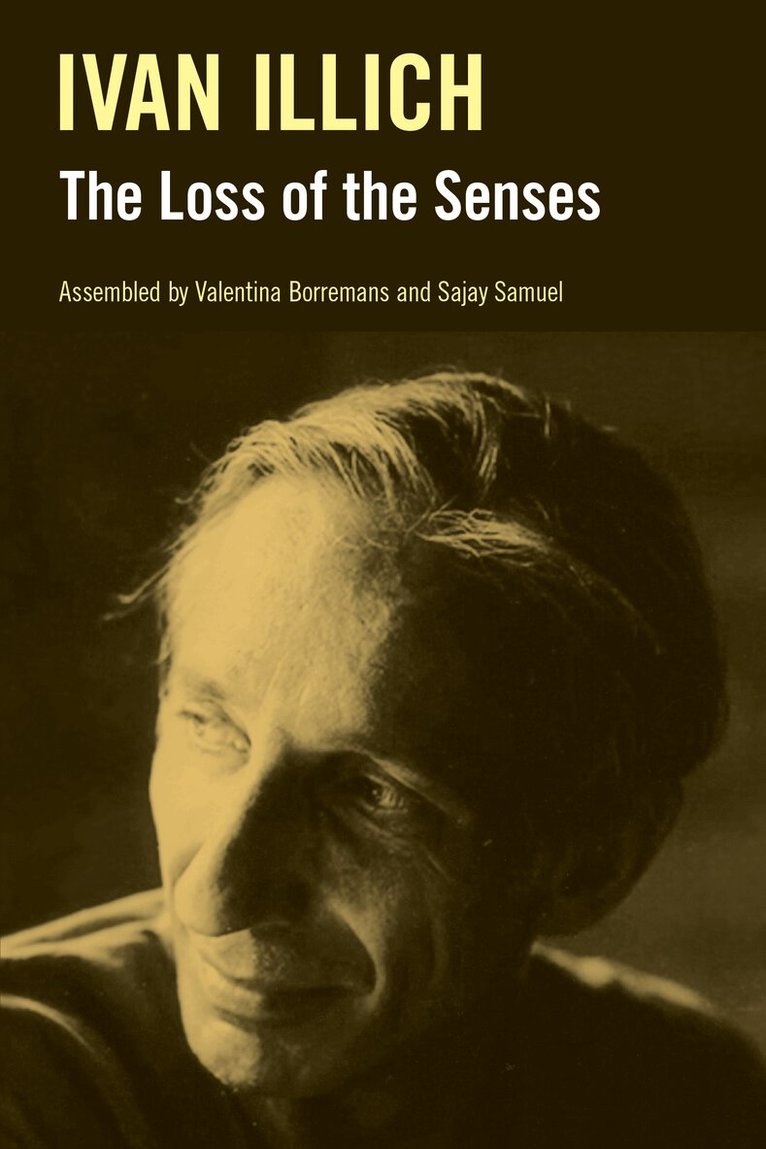
Loss of the Senses
Av Ivan Illich
Häftad, 2026
421 kr
Lägg i varukorg
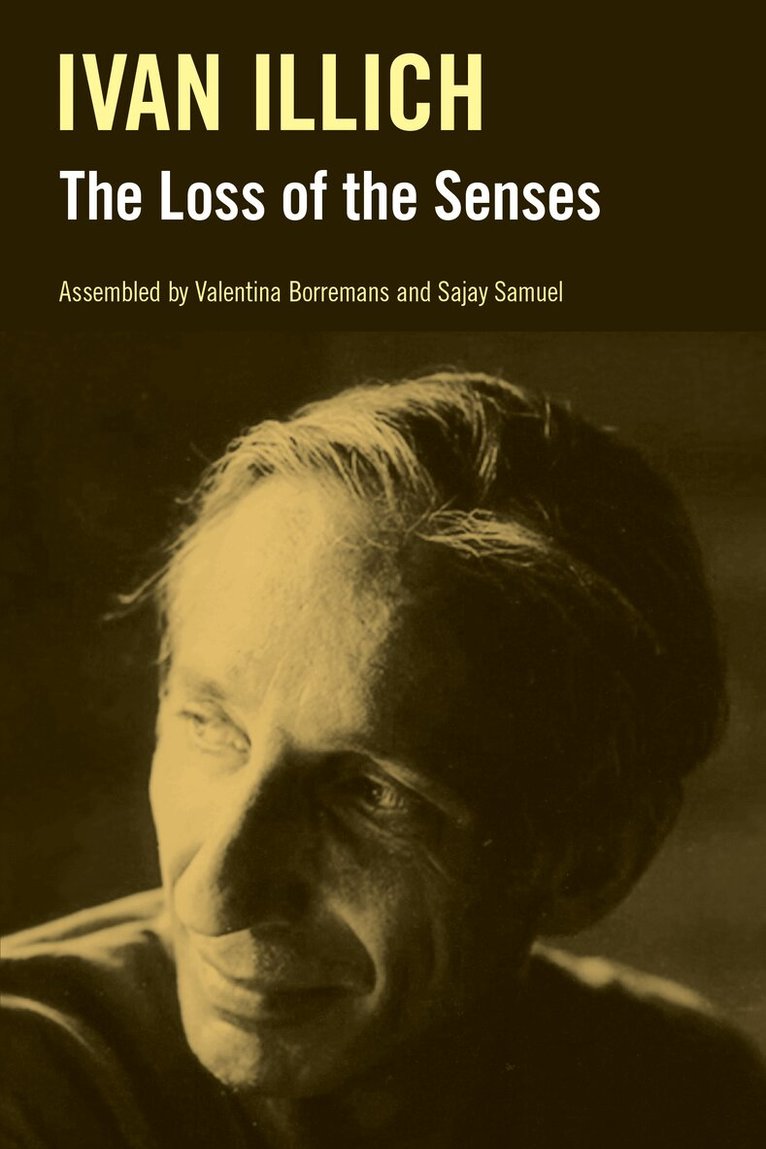
The Loss of the Senses comprises seventeen essays that Ivan Illich (1926-2022) wrote between 1987 and 1998 and continued to edit until the end of his life. This collection is unknown to the English-speaking world.The essays cut across academic disciplines and range over different facets of …
Disabling Professions
Av Ivan Illich
E-bok, 1977
165 kr
Lägg i varukorg
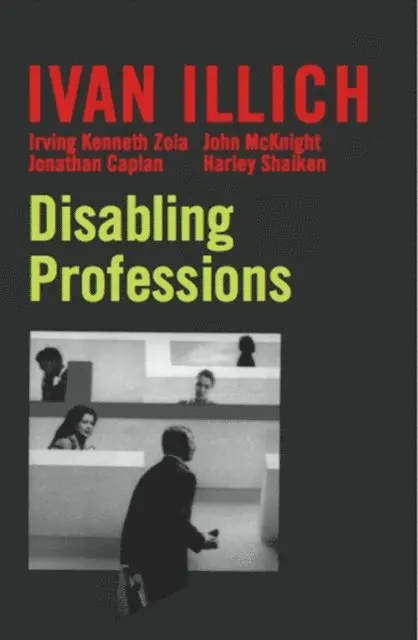
In this fascinating and controversial collection of essays Ivan Illich, Irving K Zola, John McKnight, Jonathan Caplan and Harley Shaiken challenge the power and mystery of professions. Why do we put so much resource into medicine, education and the law with so little apparent result? Why do we hold …
ABC: The Alphabetizaton of the Popular Mind
Av Ivan Illich
E-bok, 1988
184 kr
Lägg i varukorg
In ABC... philosopher and cultural analyst Ivan Illich and medieval scholar and literary critic Barry Sanders have produced an original, meticulous and provocative study of the advent, spread and present decline of literacy. They explore he impact of the alphabet on fundamental thought processes …
Celebration of Awareness
A Call for Institutional Revolution
Av Ivan Illich
E-bok, 1971
184 kr
Lägg i varukorg
As a formidable critic of some of society's most cherished institutions, such as compulsory education and organised religion, Ivan Illich has attracted world attention. His commitment to a radical humanism against conventional institutions and esatablished ideas of social virtue make for …
H20 and the Waters of Forgetfulness
Av Ivan Illich
E-bok, 1986
129 kr
Lägg i varukorg
Philosopher and social analyst Ivan Illich, one of the most influential thinkers of second half of this century, directs his attention to waterm the 'stuff' of purity and the creative force of the imagination without which life in unthinkable. He deals with the dual nature of water, as life-giving …
Limits to Medicine
Medical Nemesis: The Expropriation of Health
Av Ivan Illich
E-bok, 1976
189 kr
Lägg i varukorg
The medical establishment has become a major threat to health'. So begins Ivan Illich's spirited and reasoned attack upon the mythic prestige of contemporary medicines, examining the customs and rituals conducted by the medical profession. Relentlessly and with full documentation taken from …
Tools for Conviviality
Av Ivan Illich
E-bok, 1973
178 kr
Lägg i varukorg
A work of seminal importance, this book presents Ivan Illich's penetrating analysis of the industrial mode of production which characterises our contemporary world. The conviviality for which noted social philosopher Ivan Illich is arguing is one in which the individual's personal energies are …
Powerless Church and Other Selected Writings, 1955- 1985
Av Ivan Illich, Valentina Borremans m. fl.
Häftad, 2026
421 kr
Lägg i varukorg
Dalmatian-Austrian philosopher, Roman Catholic priest, and radical cultural critic Ivan Illich is best known for polemical writings such as Deschooling Society and Tools for Conviviality which decried Western institutions of the 1970s. This collection brings together Illich’s shorter writings from …
Loss of the Senses
Av Ivan Illich
Inbunden, 2026
1237 kr
Lägg i varukorg
The Loss of the Senses comprises seventeen essays that Ivan Illich (1926-2022) wrote between 1987 and 1998 and continued to edit until the end of his life. This collection is unknown to the English-speaking world.The essays cut across academic disciplines and range over different facets of …
Toward a History of Needs
Av Ivan Illich
Inbunden, 2026
1237 kr
Lägg i varukorg
In these pages, Ivan Illich writes against the moral authority of professions, against economic “development” as an unquestioned good, against schooling as the privileged path to learning, against the subjugation of desire to needs, and against ever greater energy use. At first glance, much of this …
Toward a History of Needs
Av Ivan Illich
Häftad, 2026
413 kr
Lägg i varukorg
In these pages, Ivan Illich writes against the moral authority of professions, against economic “development” as an unquestioned good, against schooling as the privileged path to learning, against the subjugation of desire to needs, and against ever greater energy use. At first glance, much of this …
Obras reunidas, I
Av Ivan Illich
E-bok, 2013
108 kr
Lägg i varukorg
Las tesis de Iván Illich, que encierran una profunda crítica a la sociedad industrial - que se mantiene en pie gracias al embrutecimiento de sus miembros y al cinismo de sus dirigentes-, conservan en los inicios del tercer milenio una vigencia indiscutible. En el primer volumen de sus obras …
Obras reunidas, II
Av Ivan Illich
E-bok, 2013
121 kr
Lägg i varukorg
El volumen recupera cuatro espléndidos títulos: El género vernáculo, El trabajo fantasma, H2O y las aguas del olvido y En el espejo del pasado. Es una obra heterogénea que aborda áreas del conocimiento como la historia, la lingüística, la economía, la teología, la filosofía e incluso la bioética. …
Obras reunidas, I
Av Ivan Illich
E-bok, 2025
105 kr
Lägg i varukorg
Las tesis de Iván Illich, que encierran una profunda crítica a la sociedad industrial - que se mantiene en pie gracias al embrutecimiento de sus miembros y al cinismo de sus dirigentes-, conservan en los inicios del tercer milenio una vigencia indiscutible. En el primer volumen de sus obras …
Obras reunidas, II
Av Ivan Illich
E-bok, 2025
125 kr
Lägg i varukorg
El volumen recupera cuatro espléndidos títulos: El género vernáculo, El trabajo fantasma, H2O y las aguas del olvido y En el espejo del pasado. Es una obra heterogénea que aborda áreas del conocimiento como la historia, la lingüística, la economía, la teología, la filosofía e incluso la bioética. …
Alternativas
Av Ivan Illich
E-bok, 2024
45 kr
Lägg i varukorg
Los artículos reunidos por Iván Illich en Alternativas ponen en cuestión la naturaleza de certidumbres particulares, reflejadas en tradiciones, valores, grupos o instituciones. Todos están guiados por un objetivo común que, inevitablemente, generó interés y polémica tras su aparición: "Confío en …
La Iglesia sin poder
Ensayos (1955-1985)
Av Ivan Illich, Sajay Samuel m. fl.
E-bok, 2021
181 kr
Lägg i varukorg
Filósofo, sacerdote católico y pensador radical de la cultura, a Iván Illich se lo conoce sobre todo por escritos polémicos como La sociedad desescolarizada, La convivencialidad o Némesis médica, en los que elabora una crítica de las instituciones contemporáneas en los ámbitos de la educación …
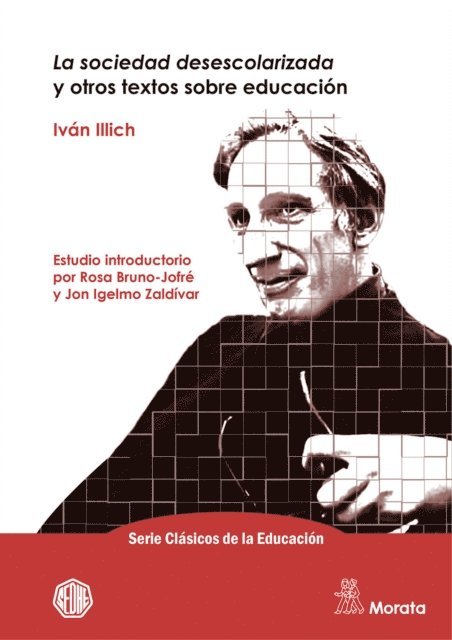
La sociedad desescolarizada y otros textos sobre educación
Av Ivan Illich
E-bok, 2020
136 kr
Lägg i varukorg
La primera edición en inglés de La sociedad desescolarizada de Iván Illich fue comercializada por la editorial Harper & Row en 1971 bajo el título Deschooling Society. En poco tiempo aparecieron traducciones del libro en diferentes idiomas, incluido el castellano en 1974. En este libro Illich …