J. B. Black – författare
Visar alla böcker från författaren J. B. Black. Handla med fri frakt och snabb leverans.
7 produkter
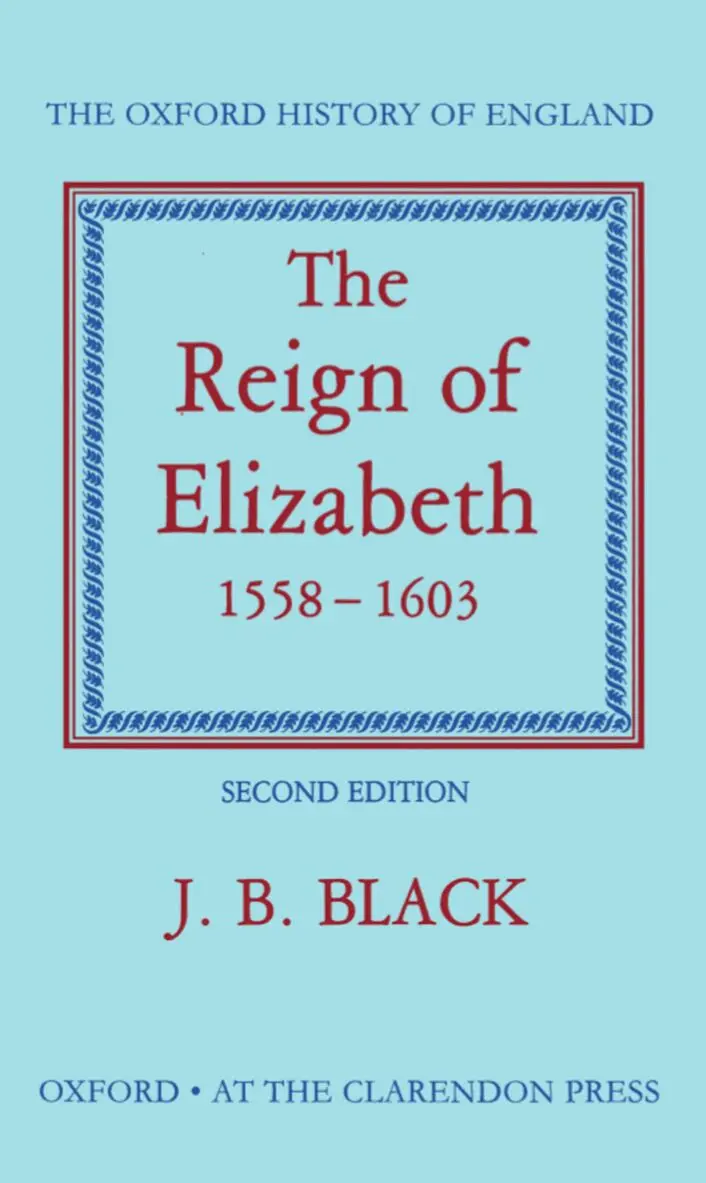
The Reign of Elizabeth 1558-1603
Av J. B. Black
Inbunden, 1963
3154 kr
Lägg i varukorg
Few rulers have impressed themselves so forcefully on the memory and imagination of their people as Queen Elizabeth I. 'Elizabethan England' was, in a very real sense, Elizabeth's England, and the country she left behind when she died was a kingdom that had won a commanding position among the great …
Art of History
A Study of Four Great Historians of the Eighteenth Century
Av J. B. Black
Inbunden, 2016
2197 kr
Lägg i varukorg
The first important scholarly consideration of Enlightenment historiography of the twentieth century, this book, originally published in 1926, critically examines the ideas of Voltaire, Hume, Robertston and Gibbon with respect to the theory and practice of historiography. The substantial …
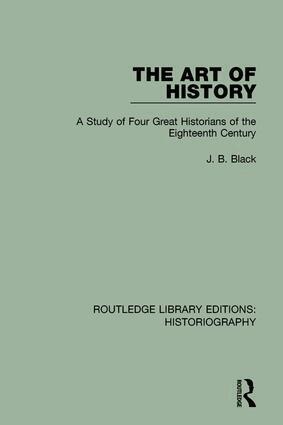
Art of History
A Study of Four Great Historians of the Eighteenth Century
Av J. B. Black
Häftad, 2018
577 kr
Lägg i varukorg
The first important scholarly consideration of Enlightenment historiography of the twentieth century, this book, originally published in 1926, critically examines the ideas of Voltaire, Hume, Robertston and Gibbon with respect to the theory and practice of historiography. The substantial …
Art of History
A Study of Four Great Historians of the Eighteenth Century
Av J. B. Black
E-bok, 2016
658 kr
Lägg i varukorg
The first important scholarly consideration of Enlightenment historiography of the twentieth century, this book, originally published in 1926, critically examines the ideas of Voltaire, Hume, Robertston and Gibbon with respect to the theory and practice of historiography. The substantial …
Art of History
A Study of Four Great Historians of the Eighteenth Century
Av J. B. Black
E-bok, 2016
658 kr
Lägg i varukorg
The first important scholarly consideration of Enlightenment historiography of the twentieth century, this book, originally published in 1926, critically examines the ideas of Voltaire, Hume, Robertston and Gibbon with respect to the theory and practice of historiography. The substantial …