J. Balthazart - Böcker
Visar alla böcker från författaren J. Balthazart. Handla med fri frakt och snabb leverans.
2 produkter
2 produkter
1 062 kr
Skickas inom 10-15 vardagar
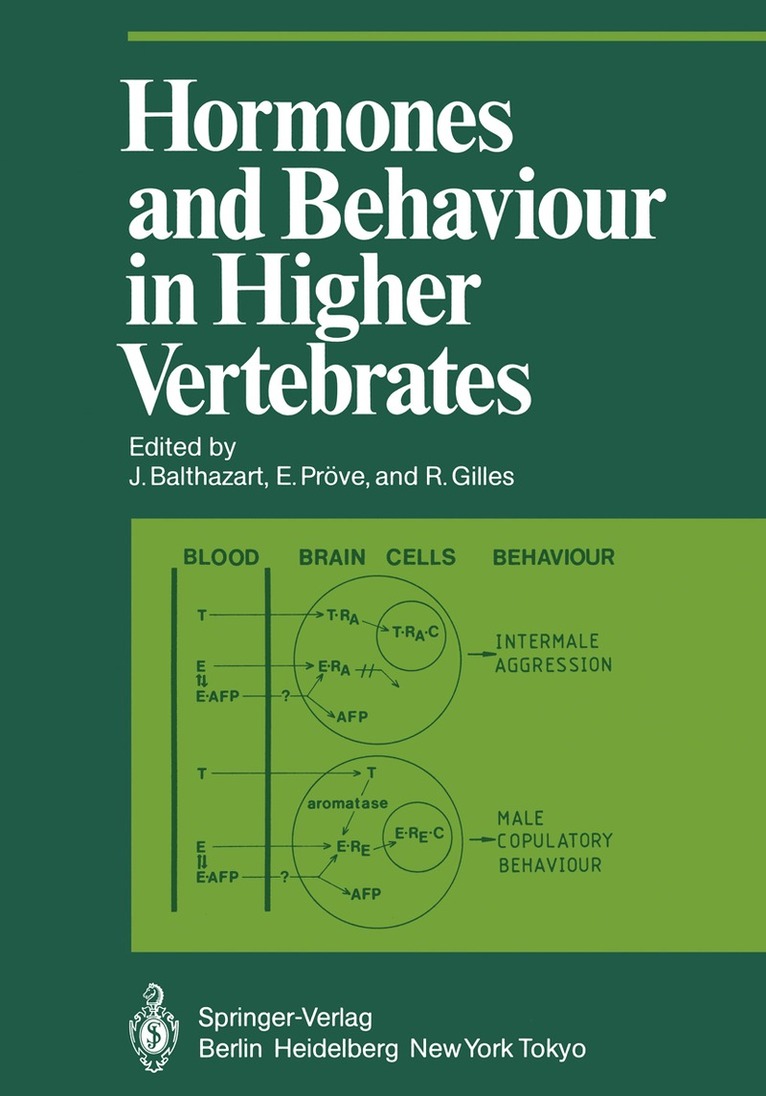
During the last decade, the study of behavioural endocrinology has gone through a very exciting phase. New technologies have appeared which have allowed us to answer new questions; the present book is a reflection of this progress. In the eariy1970's, the advent of steroid radioimmunoassays (RIA) for the first time permitted measurement of gonadal and adrenal steroids in small aliquots of plasma. It thus became possible to measure these hormones repeatedly in the same animals (Le., to undertake longitudinal studies) and also to assay them in small-sized animals such as the rat or the ring dove which had traditionally been favourite subjects for behavioural endocrinologists. With the RIA's, two major goals have been achieved. On one hand, it has been possible to ascertain that those hormones, whose action on behaviour had been postulated on the basis of gonadectomy and hor- mone therapy experiments, were actually present in adequate amounts in the intact animals at the time they were supposed to exert their ac- tion. On another hand, it has become feasible to measure the circulat- ing levels of steroids induced by treatments with exogenous hormones.This revealed that in a number of the early experiments the hormonal conditions which had been tested were completely outside the physi- ological range (plasma levels of steroids being several order of magni- tude above physiological levels after the injections) and a reinterpre- tation of the results was thus needed.
1 062 kr
Skickas inom 10-15 vardagar
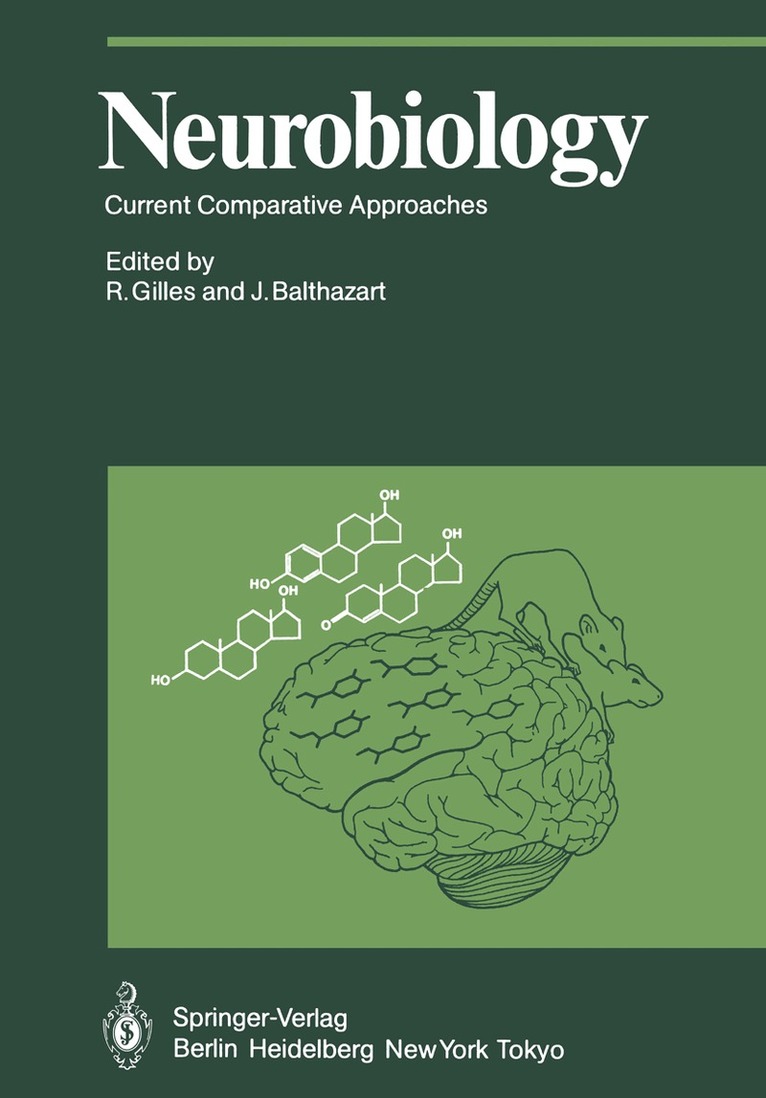
This volume is one of those published from the proceedings of the invited lectures to the First International Congress of Comparative Physiology and Biochemistry I organized at Liege (Belgium) in August 1984 under the auspices of the Section of Comparative Physiology and Biochemistry of the International Union of Biological Sciences. In a general foreword to these different volumes, it seems to me appropriate to consider briefly what may be the comparative approach. Living organisms, beyond the diversity of their morphological forms, have evolved a widespread range of basic solutions to cope with the different problems, both organismal and environmental with which they are faced. Soon after the turn of the century, some biologists realized that these solutions can be best comprehended in the frame work of a comparative approach integrating results of physiological and biochemical studies done at the organismic, cellular and molecular levels. The development of this approach amongst both physiologists and biochemists remained, however, extremely slow until recently.