J. H. Chajes - Böcker
Visar alla böcker från författaren J. H. Chajes. Handla med fri frakt och snabb leverans.
2 produkter
2 produkter
1 056 kr
Skickas inom 7-10 vardagar
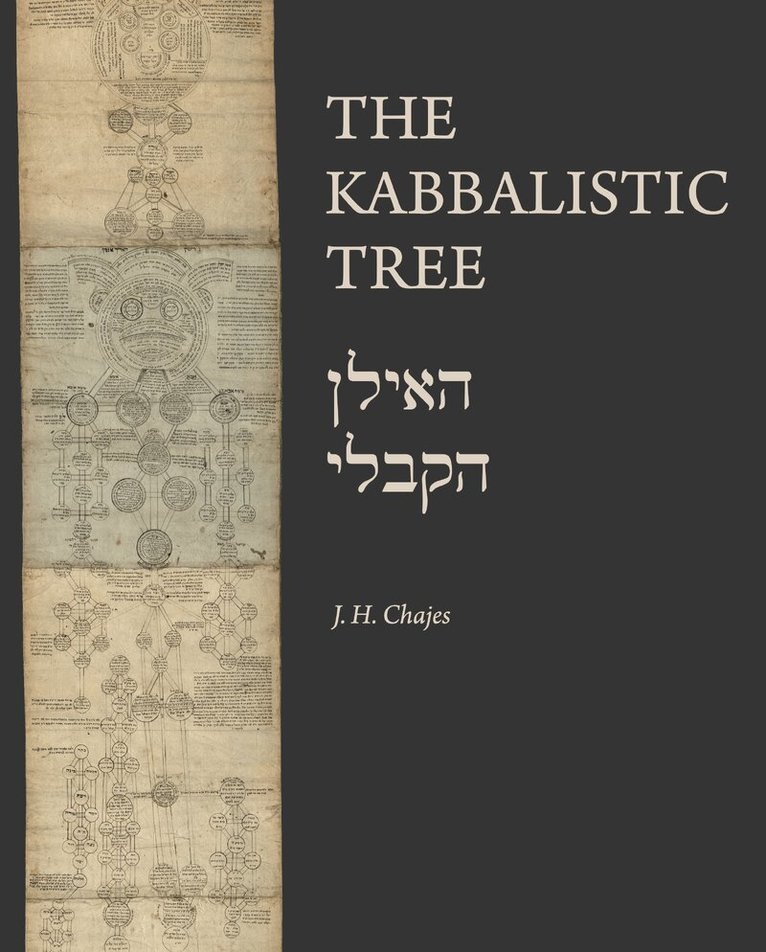
Ilanot—parchment sheets presenting the kabbalistic “tree of life”—have been at the center of Jewish mystical practice for the past seven hundred years. Written by leading ilanot expert J. H. Chajes, The Kabbalistic Tree is a comprehensive and gorgeously illustrated history of these arboreal “maps of God.”This book documents when, where, and why Jews began to visualize and to draw the mystical shape of the Divine as a Porphyrian tree. At once maps, mandalas, and memory palaces, ilanot provided kabbalists with diagrammatic representations of their structured image of God. Scrolling an ilan parchment in contemplative study, the kabbalist participated mimetically in tikkun, the development and perfection of Divinity. Chajes reveals the complex lore behind these objects. His survey begins with the classical ilanot of pre-expulsion Spain, Byzantine Crete, Kurdistan, Yemen, and Renaissance Italy. A close examination of the ilanot inspired by the Kabbalah taught by R. Isaac Luria in sixteenth-century Safed follows, and Chajes concludes with explorations of modern ilan amulets and printed ilanot. With attention to the contexts of their creation and how they were used, The Kabbalistic Tree investigates ilanot from collections around the world, including forty from the incomparable Gross Family Collection. With 250 never-before-seen images reproduced in stunning quality, this chronological and typological survey is a singular combination of exquisite art and foundational scholarship. Specialists in early modern history, religion, art history, and esotericism, as well as those fascinated by Kabbalah and its iconography, will enthusiastically embrace Chajes’s iconic work.
314 kr
Skickas inom 10-15 vardagar
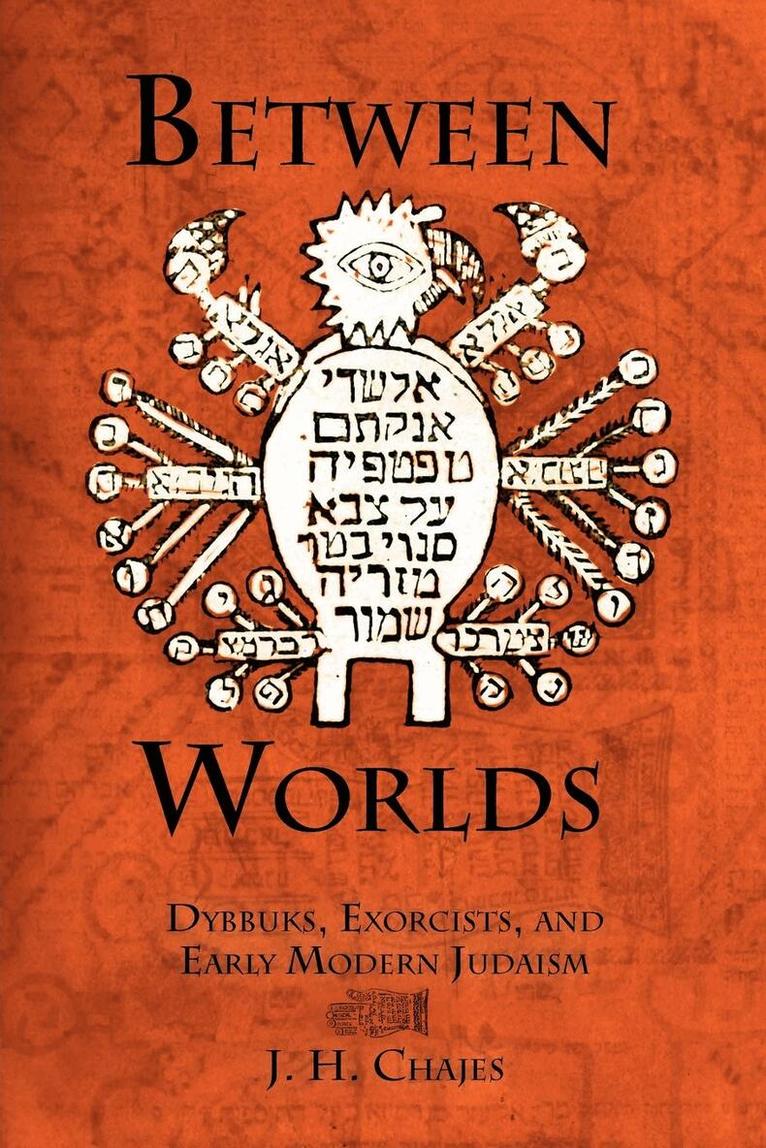
After a nearly two-thousand-year interlude, and just as Christian Europe was in the throes of the great Witch Hunt and what historians have referred to as "The Age of the Demoniac," accounts of spirit possession began to proliferate in the Jewish world. Concentrated at first in the Near East but spreading rapidly westward, spirit possession, both benevolent and malevolent, emerged as perhaps the most characteristic form of religiosity in early modern Jewish society.Adopting a comparative historical approach, J. H. Chajes uncovers this strain of Jewish belief to which scant attention has been paid. Informed by recent research in historical anthropology, Between Worlds provides fascinating descriptions of the cases of possession as well as analysis of the magical techniques deployed by rabbinic exorcists to expel the ghostly intruders.Seeking to understand the phenomenon of spirit possession in its full complexity, Chajes delves into its ideational framework-chiefly the doctrine of reincarnation-while exploring its relation to contemporary Christian and Islamic analogues. Regarding spirit possession as a form of religious expression open to-and even dominated by-women, Chajes initiates a major reassessment of women in the history of Jewish mysticism. In a concluding section he examines the reception history of the great Hebrew accounts of spirit possession, focusing on the deployment of these "ghost stories" in the battle against incipient skepticism in the turbulent Jewish community of seventeenth-century Amsterdam.Exploring a phenomenon that bridged learned and ignorant, rich and poor, men and women, Jews and Gentiles, Between Worlds maps for the first time a prominent feature of the early modern Jewish religious landscape, as quotidian as it was portentous: the nexus of the living and the dead.