J. Keith Vincent - Böcker
Visar alla böcker från författaren J. Keith Vincent. Handla med fri frakt och snabb leverans.
3 produkter
3 produkter
2 219 kr
Skickas inom 10-15 vardagar
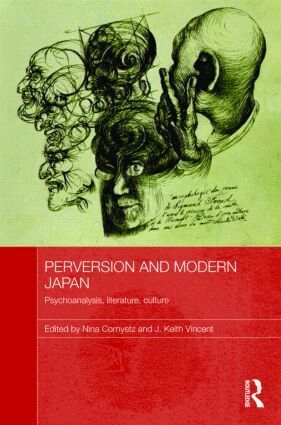
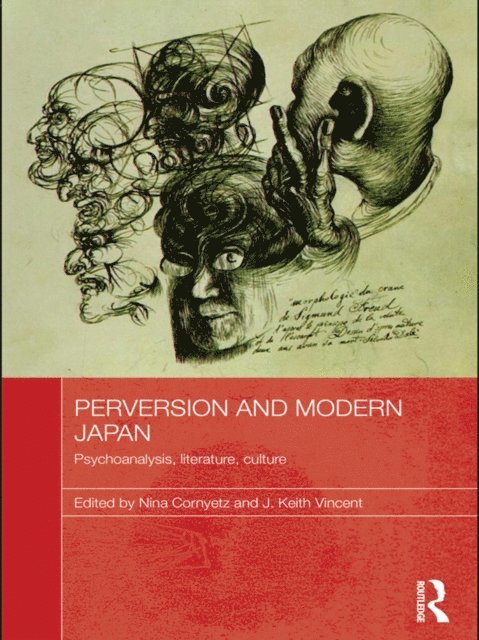
How did nerves and neuroses take the place of ghosts and spirits in Meiji Japan? How does Natsume Soseki’s canonical novel Kokoro pervert the Freudian teleology of sexual development? What do we make of Jacques Lacan’s infamous claim that because of the nature of their language the Japanese people were unanalyzable? And how are we to understand the re-awakening of collective memory occasioned by the sudden appearance of a Japanese Imperial soldier stumbling out of the jungle in Guam in 1972? In addressing these and other questions, the essays collected here theorize the relation of unconscious fantasy and perversion to discourses of nation, identity, and history in Japan. Against a tradition that claims that Freud’s method, as a Western discourse, makes a bad ‘fit’with Japan, this volume argues that psychoanalytic reading offers valuable insights into the ways in which ‘Japan’ itself continues to function as a psychic object.By reading a variety of cultural productions as symptomatic elaborations of unconscious and symbolic processes rather than as indexes to cultural truths, the authors combat the truisms of modernization theory and the seductive pull of culturalism. This volume also offers a much needed psychoanalytic alternative to the area studies convention that reads narratives of all sorts as "windows" offering insights into a fetishized Japanese culture. As such, it will be of huge interest to students and scholars of Japanese literature, history, culture, and psychoanalysis more generally.
691 kr
Skickas inom 10-15 vardagar
How did nerves and neuroses take the place of ghosts and spirits in Meiji Japan? How does Natsume Soseki’s canonical novel Kokoro pervert the Freudian teleology of sexual development? What do we make of Jacques Lacan’s infamous claim that because of the nature of their language the Japanese people were unanalyzable? And how are we to understand the re-awakening of collective memory occasioned by the sudden appearance of a Japanese Imperial soldier stumbling out of the jungle in Guam in 1972? In addressing these and other questions, the essays collected here theorize the relation of unconscious fantasy and perversion to discourses of nation, identity, and history in Japan. Against a tradition that claims that Freud’s method, as a Western discourse, makes a bad ‘fit’with Japan, this volume argues that psychoanalytic reading offers valuable insights into the ways in which ‘Japan’ itself continues to function as a psychic object.By reading a variety of cultural productions as symptomatic elaborations of unconscious and symbolic processes rather than as indexes to cultural truths, the authors combat the truisms of modernization theory and the seductive pull of culturalism. This volume also offers a much needed psychoanalytic alternative to the area studies convention that reads narratives of all sorts as "windows" offering insights into a fetishized Japanese culture. As such, it will be of huge interest to students and scholars of Japanese literature, history, culture, and psychoanalysis more generally.
Del 352 - Harvard East Asian Monographs
Two-Timing Modernity
Homosocial Narrative in Modern Japanese Fiction
Inbunden, Engelska, 2012
415 kr
Skickas inom 7-10 vardagar
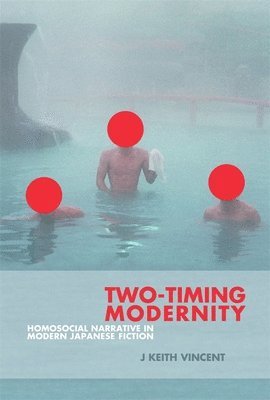
Until the late nineteenth century, Japan could boast of an elaborate cultural tradition surrounding the love and desire that men felt for other men. By the first years of the twentieth century, however, as heterosexuality became associated with an enlightened modernity, love between men was increasingly branded as “feudal” or immature. The resulting rupture in what has been called the “male homosocial continuum” constitutes one of the most significant markers of Japan’s entrance into modernity. And yet, just as early Japanese modernity often seemed haunted by remnants of the premodern past, the nation’s newly heteronormative culture was unable and perhaps unwilling to expunge completely the recent memory of a male homosocial past now read as perverse.Two-Timing Modernity integrates queer, feminist, and narratological approaches to show how key works by Japanese male authors—Mori Ōgai, Natsume Sōseki, Hamao Shirō, and Mishima Yukio—encompassed both a straight future and a queer past by employing new narrative techniques to stage tensions between two forms of temporality: the forward-looking time of modernization and normative development, and the “perverse” time of nostalgia, recursion, and repetition.