• Fri frakt över 249 kr
  • •
  • Snabba leveranser
  • •
  • Billiga böcker
Kundservice

Du är på sajten för privatpersoner.

Företag, bibliotek eller offentlig verksamhet?

Du handlar på classic.bokus.com, där alla dina funktioner finns intakta.
Till classic.bokus.com
Bokus logotyp. Gå till startsidan.
  • Erbjudanden
  • Nyheter
  • Student
  • Topplistor
  • Barn & ungdom
  • Bokus Play
  • E-böcker
  • Pocketböcker
  • Spel & pussel

10% rabatt på allt med kod: NYSTART10 →

Sidfot

Mina sidor

    Hjälp

    • Kundservice
    • Vanliga frågor och svar
    • Frakt och leverans
    • Retur vid ångerrätt
    • Reklamera vara
    • Betalning
    • Köpvillkor
    • Allmänna villkor
    • Information om webbplatsens tillgänglighet

    Om Bokus

    • Om oss
    • Pressrum
    • För studenter
    • För företag
    • För bibliotek och offentlig verksamhet
    • För leverantörer
    • Hållbarhet

    Populärt

    • Aktuella erbjudanden
    • Presentkort
    • Studentlitteratur
    • Nya böcker
    • Topplistor
    • Signerade böcker
    • Engelska böcker

    Inspiration

    • Boktips
    • BookTok
    • Populära bokserier
    • Barnbokskaraktärer
    • Populära författare
    Logotyp för Bokus
    Följ oss på Facebook (extern länk)Följ oss på Instagram (extern länk)Följ oss på YouTube (extern länk)Följ oss på TikTok (extern länk)
    bokus @ CookiesAnpassa cookiesIntegritetspolicyKöpvillkor
    Till Citymail hemsida (extern länk)Till Budbee hemsida (extern länk)Till Postnord hemsida (extern länk)Till Schenker hemsida (extern länk)Till Early Bird hemsida (extern länk)Till Walleys hemsida (extern länk)
    1. Skönlitteratur
    2. Litteraturvetenskap
    3. Litteraturvetenskap

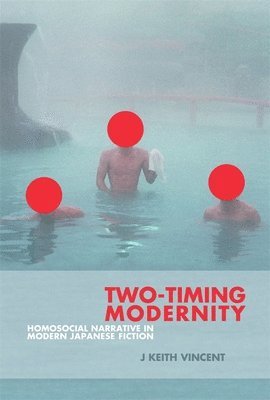
    Two-Timing Modernity

    Homosocial Narrative in Modern Japanese Fiction

    AvJ. Keith Vincent

    Inbunden, Engelska, 2012

    Del 352 i serien Harvard East Asian Monographs

    430 kr

    Beställningsvara. Skickas inom 5-8 vardagar. Fri frakt över 249 kr.

    Beskrivning

    Until the late nineteenth century, Japan could boast of an elaborate cultural tradition surrounding the love and desire that men felt for other men. By the first years of the twentieth century, however, as heterosexuality became associated with an enlightened modernity, love between men was increasingly branded as “feudal” or immature. The resulting rupture in what has been called the “male homosocial continuum” constitutes one of the most significant markers of Japan’s entrance into modernity. And yet, just as early Japanese modernity often seemed haunted by remnants of the premodern past, the nation’s newly heteronormative culture was unable and perhaps unwilling to expunge completely the recent memory of a male homosocial past now read as perverse.Two-Timing Modernity integrates queer, feminist, and narratological approaches to show how key works by Japanese male authors—Mori Ōgai, Natsume Sōseki, Hamao Shirō, and Mishima Yukio—encompassed both a straight future and a queer past by employing new narrative techniques to stage tensions between two forms of temporality: the forward-looking time of modernization and normative development, and the “perverse” time of nostalgia, recursion, and repetition.

    Produktinformation

    • Utgivningsdatum:2012-11-19
    • Mått:152 x 229 x 25 mm
    • Vikt:522 g
    • Format:Inbunden
    • Språk:Engelska
    • Serie:Harvard East Asian Monographs
    • Antal sidor:248
    • Förlag:Harvard University, Asia Center
    • ISBN:9780674067127
    • Utmärkelser:Nominated for John Whitney Hall Book Prize 2014

    Utforska kategorier

    • Litteraturvetenskap inom Skönlitteratur

    Mer om författaren

    J. Keith Vincent is Assistant Professor of Japanese and Comparative Literature at Boston University.

    Recensioner i media

    Offering incisive textual analyses of homosociality in the texts of three canonical writers (Mori Ogai, Natsume Soseki, and Mishima Yukio) and one relatively unknown writer (Hamao Shiro), Vincent examines the male homosocial continuum in Japanese fiction, exploring the way male–male relationships in the novels under discussion have been relegated to a historical and narrative past where they persist in the ‘amber of memory.’ …Vincent’s study is unique in its careful articulation of the interface between the homosexual and the homosocial and the interaction both have with feminist theories and queer studies. What is perhaps even more significant, however, is the way Vincent reads the temporality of homosexual desire in both extratextual historical contexts and the intertextual narrative structure. In so doing, he shifts the focus of his argument from a general critique of culture to close textual readings. Here his literary analyses are astute, linguistically deft, and original. This is a path breaking work that will be an important resource for scholars of literature and sexuality.