J. M. Opal - Böcker
Visar alla böcker från författaren J. M. Opal. Handla med fri frakt och snabb leverans.
2 produkter
2 produkter
192 kr
Skickas inom 7-10 vardagar
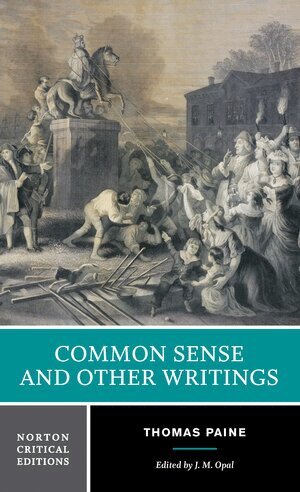
Thomas Paine’s loyalties were with universal and self-evident principles rather than with a particular group or nation, and it is this dimension that informed his most important works. This Norton Critical Edition shows how Paine’s fury at the British Empire, including its injustices to South Asians and Africans, shaped his first best seller, Common Sense, and how his direct involvement with the French Revolution pushed his ideas toward a unique form of democratic radicalism. Together with his rejection of organized religion, Paine’s radicalism resulted in his being one of the most hated men in both monarchial Britain and republican America.This volume includes J. M. Opal’s introduction, “Thomas Paine and the Revolutionary Enlightenment, 1770s–90s,” which provides essential biographical and historical details across three tumultuous decades. Paine’s most important works—from Common Sense (1776) through Agrarian Justice (1796)—are reprinted and are accompanied by explanatory annotations.Supporting materials include a wide range of documents from the turbulent years following the publication of both Common Sense and the Declaration of Independence. These include Pennsylvania’s gradual emancipation statute of the 1780s, an ex-slave’s impassioned call for revolutionary violence against European imperialists and masters, and a British conservative’s witty rejoinder to Paine’s vision of a brave new world.Four major interpretations of Paine’s work are provided by Nathan R. Perl-Rosenthal, Robert A. Ferguson, Gary Kates, and Gregory Claeys.A Selected Bibliography is also included.
325 kr
Skickas inom 10-15 vardagar
During the first half-century of American independence, a fundamental change in the meaning and morality of ambition emerged in American culture. Long stigmatized as a dangerous passion that led people to pursue fame at the expense of duty, ambition also raised concerns among American Revolutionaries who espoused self-sacrifice. After the ratification of the U.S. Constitution and the creation of the federal republic in 1789, however, a new ethos of nation-making took hold in which ambition, properly cultivated, could rescue talent and virtue from the parochial needs of the family farm. Rather than an apology for an emerging market culture of material desire and commercial dealing, ambition became a civic project-a concerted reply to the localism of provincial life. By thus attaching itself to the national self-image during the early years of the Republic, before the wrenching upheavals of the Industrial Revolution, ambitious striving achieved a cultural dominance that future generations took for granted.Beyond the Farm not only describes this transformation as a national effort but also explores it as a personal journey. Centered on the lives of six aspiring men from the New England countryside, the book follows them from youthful days full of hope and unrest to eventual careers marked by surprising success and crushing failure. Along the way, J. M. Opal recovers such intimate dramas as a young man's abandonment by his self-made parents, a village printer's dreams of small-town fame, and a headstrong boy's efforts to both surpass and honor his family. By relating the vast abstractions of nation and ambition to the everyday milieus of home, work, and school, Beyond the Farm reconsiders the roots of American individualism in vivid detail and moral complexity.