J W Hanson - Böcker
Visar alla böcker från författaren J W Hanson. Handla med fri frakt och snabb leverans.
10 produkter
10 produkter
History of the old Towns, Norridgewock and Canaan, Comprising Norridgewock, Canaan, Starks, Skowhegan, and Bloomfield, From Their Early Settlement to the Year 1849; Including a Sketch of the Abnakis Indians
Inbunden, Engelska, 2022
405 kr
Skickas inom 5-8 vardagar
394 kr
Skickas inom 5-8 vardagar
285 kr
Skickas inom 5-8 vardagar
History of Gardiner, Pittston and West Gardiner, With a Sketch of the Kennebec Indians, & New Plymou
Inbunden, Engelska, 2022
391 kr
Skickas inom 5-8 vardagar
History of Gardiner, Pittston and West Gardiner, With a Sketch of the Kennebec Indians, & New Plymou
Häftad, Engelska, 2022
280 kr
Skickas inom 5-8 vardagar
Historical Sketch of the Old Sixth Regiment of Massachusetts Volunteers: During Its Three Campaigns in 1861, 1862, 1863, and 1864 ...
Häftad, Engelska, 2012
369 kr
Skickas inom 3-6 vardagar
428 kr
Skickas inom 3-6 vardagar
495 kr
Skickas inom 3-6 vardagar
Del 18 - Archaeopress Roman Archaeology
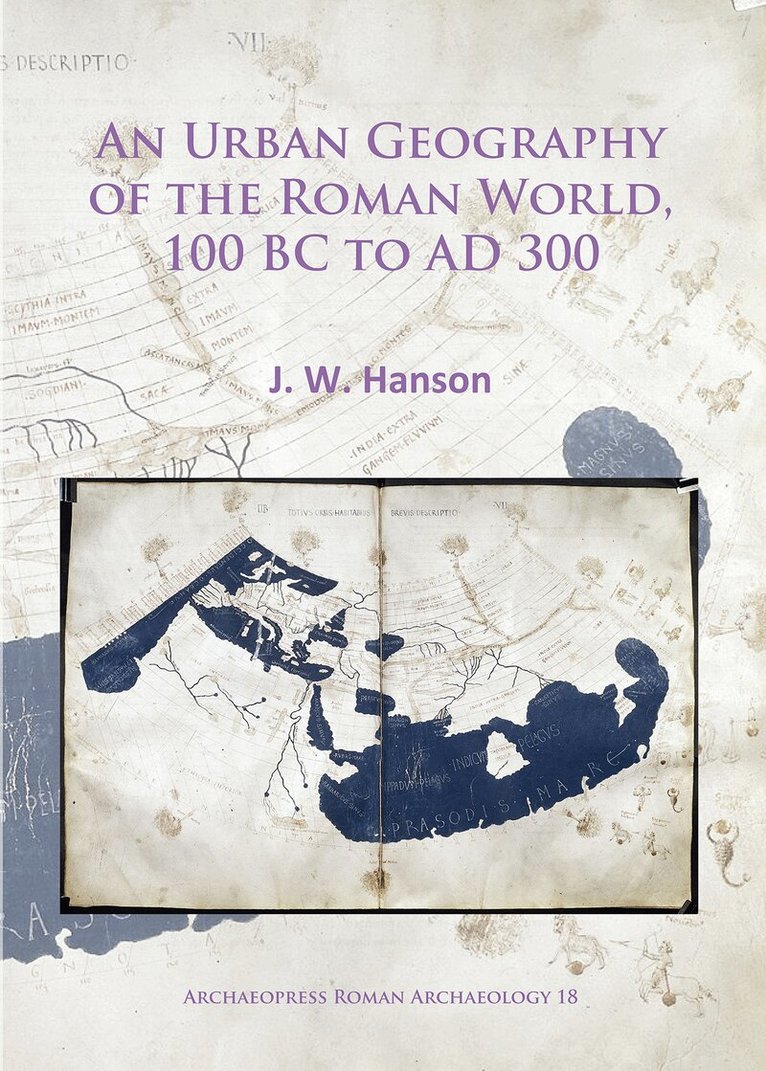
Urban Geography of the Roman World, 100 BC to AD 300
Häftad, Engelska, 2016
979 kr
Skickas
Although there have been numerous studies of individual cities or groups of cities, there has never been a study of the urbanism of the Roman world as a whole, meaning that we have been poorly informed not only about the number of cities and how they were distributed and changed over time, but also about their sizes and populations, monumentality, and civic status. This book provides a new account of the urbanism of the Roman world between 100 BC and AD 300. To do so, it draws on a combination of textual sources and archaeological material to provide a new catalogue of cities, calculates new estimates of their areas and uses a range of population densities to estimate their populations, and brings together available information about their monumentality and civic status for the first time. This evidence demonstrates that, although there were relatively few cities, many had considerable sizes and populations, substantial amounts of monumentality, and held various kinds of civic status. This indicates that there was significant economic growth in this period, including both extensive and intensive economic growth, which resulted from an influx of wealth through conquest and the intrinsic changes that came with Roman rule (including the expansion of urbanism). This evidence also suggests that there was a system that was characterized by areas of intense urban demand, which was met through an efficient system for the extraction of necessity and luxury goods from immediate hinterlands and an effective system for bringing these items from further afield. The disruption of these links seems to have put this system under considerable strain towards the end of this period and may have been sufficient to cause its ultimate collapse. This appears to have been in marked contrast to the medieval and early modern periods, when urbanism was more able to respond to changes in supply and demand.
282 kr
Skickas inom 5-8 vardagar