Jacek Z. Kubiak - Böcker
Visar alla böcker från författaren Jacek Z. Kubiak. Handla med fri frakt och snabb leverans.
15 produkter
15 produkter
1 685 kr
Skickas inom 7-10 vardagar
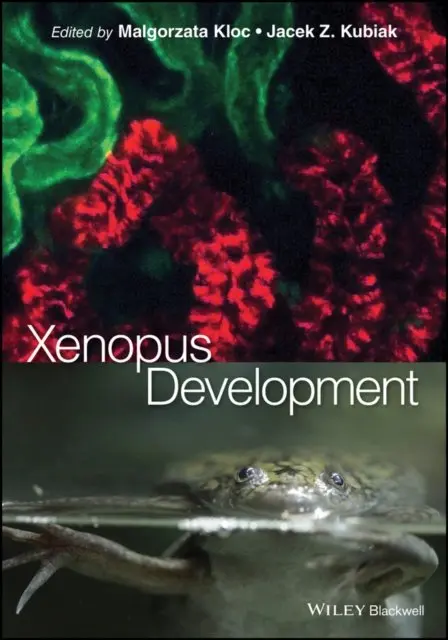
Frogs from the genus Xenopus have long been used as model organisms in basic and biomedical research. These frogs have helped unlock key fundamental developmental and cellular processes that have led to important scientific breakthroughs and have had practical application in embryology, cancer research and regenerative medicine. Xenopus Development is a vital resource on the biology and development of these key model organisms, and will be a great tool to researchers using these frogs in various disciplines of biological science. Xenopus Development is divided into four sections, the first three highlight key processes in Xenopus development from embryo to metamophosis. These sections focus on the cellular processes, organogenesis and embryo development. The final section highlights novel techniques and approaches being used in Xenopus research.Providing thorough and detailed coverage, Xenopus Development, will be a timely and welcome volume for those working in cell and molecular biology, genetics, developmental biology and biomedical research. Provides broad overview of the developmental biology of both Xenopus laevis and Xenopus tropicalisExplores cellular to systems development in key biomedical model organismsTimely synthesis of the field of Xenopus biologyHighlights key biomedical and basic biological findings unlocked by Xenopus
2 939 kr
Skickas inom 10-15 vardagar
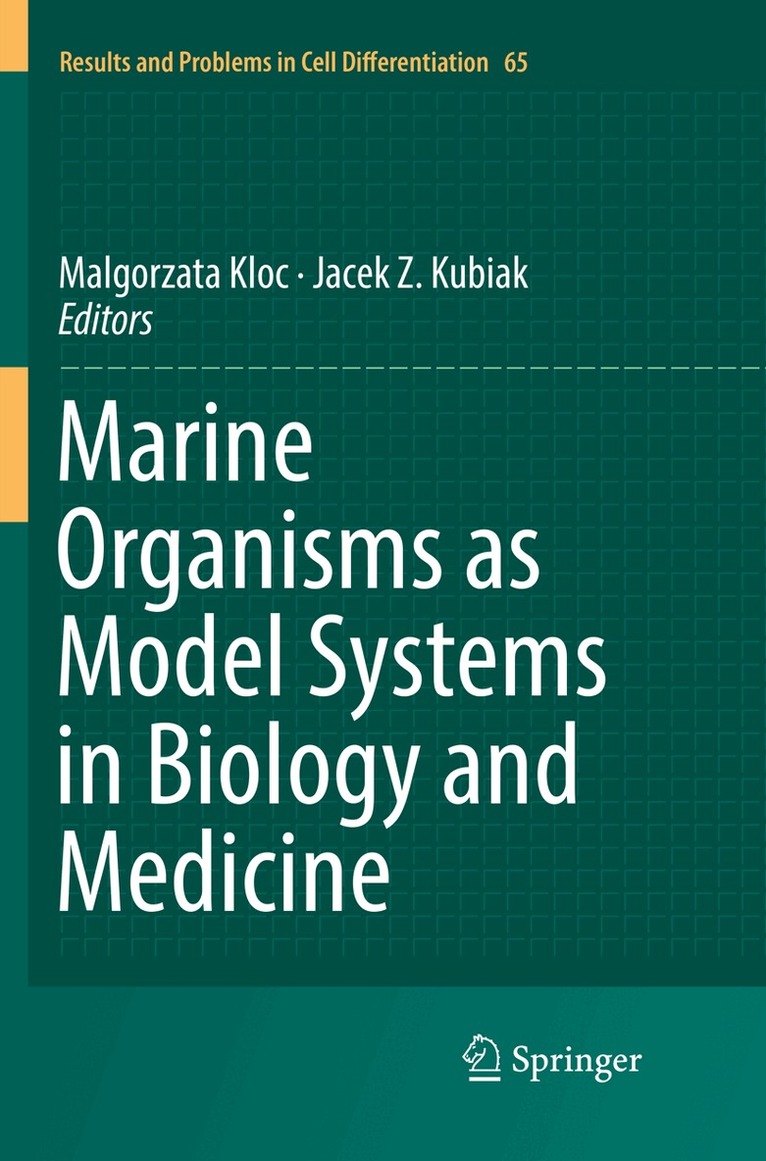
This book highlights the potential advantages of using marine invertebrates like tunicates, echinoderms, sponges and cephalopods as models in both biological and medical research.
2 416 kr
Skickas inom 10-15 vardagar
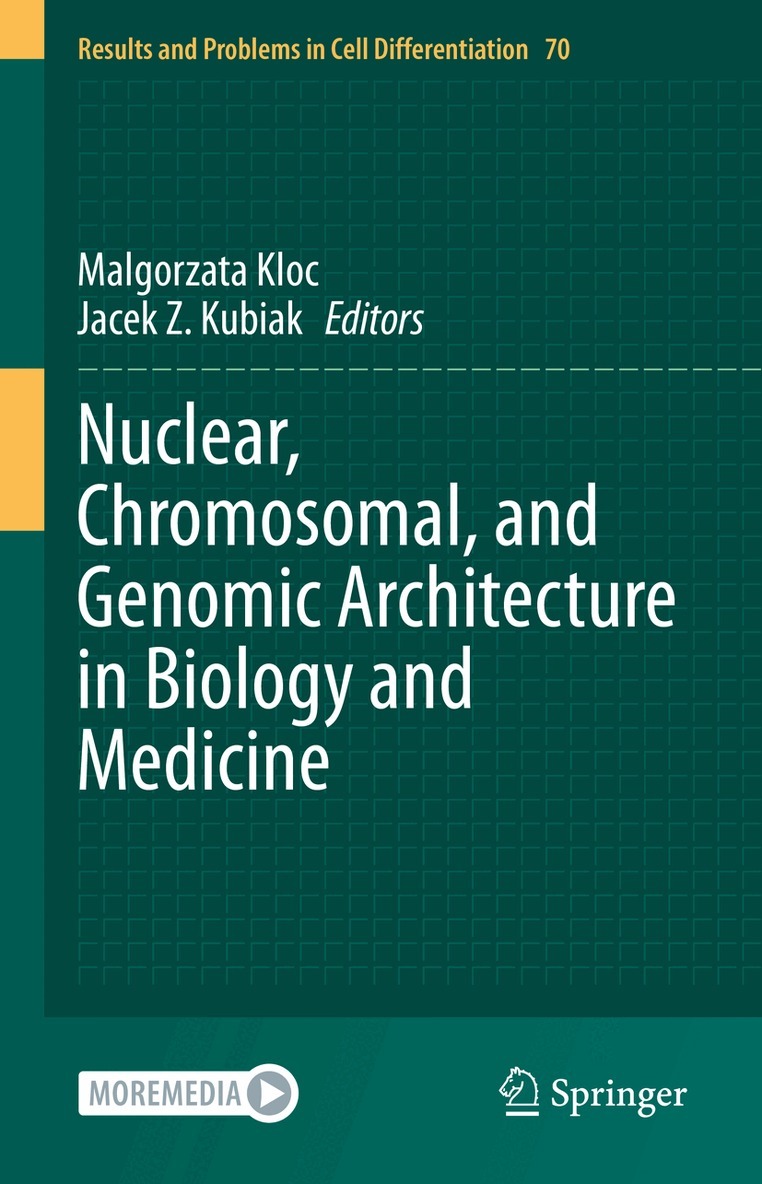
This volume reviews the latest research on the functional implications of nuclear, chromosomal and genomic organization and architecture on cell and organismal biology, and development and progression of diseases.The architecture of the cell nucleus and non-random arrangement of chromosomes, genes, and the non-membranous nuclear bodies in the three-dimensional (3D) space alters in response to the environmental, mechanical, chemical, and temporal cues. The changes in the nuclear, chromosomal, or genomic compaction and configuration modify the gene expression program and induce or inhibit epigenetic modifications. The intrinsically programmed rearrangements of the nuclear architecture are necessary for cell differentiation, the establishment of cell fate during development and maturation of tissues and organs including the immune, muscle, and nervous systems.The non-programmed changes in the nuclear architecture can lead to fragmentation of the nucleus and instability ofthe genome and thus cause cancer. Microbial and viral infections can lead to a clustering of centromeres, telomeres and ribosomal DNA and alter the properties of the nuclear membrane, allowing large immobile macromolecules to enter the nucleus. Recent advances in next-generation sequencing technologies combined with nucleus/chromosome conformation capture, super-resolution imaging, chromosomal contact maps methods, integrative modeling, and genetic approaches, are uncovering novel features and importance of nuclear, chromosomal and genomic architecture. This book is an interesting read for cell biologists, researchers studying the structure and function of chromosomes, and anyone else who wants to get an overview of the field of nuclear, chromosomal and genomic architecture.
2 416 kr
Skickas inom 10-15 vardagar
This volume reviews the latest research on the functional implications of nuclear, chromosomal and genomic organization and architecture on cell and organismal biology, and development and progression of diseases.The architecture of the cell nucleus and non-random arrangement of chromosomes, genes, and the non-membranous nuclear bodies in the three-dimensional (3D) space alters in response to the environmental, mechanical, chemical, and temporal cues. The changes in the nuclear, chromosomal, or genomic compaction and configuration modify the gene expression program and induce or inhibit epigenetic modifications. The intrinsically programmed rearrangements of the nuclear architecture are necessary for cell differentiation, the establishment of cell fate during development and maturation of tissues and organs including the immune, muscle, and nervous systems.The non-programmed changes in the nuclear architecture can lead to fragmentation of the nucleus and instability ofthe genome and thus cause cancer. Microbial and viral infections can lead to a clustering of centromeres, telomeres and ribosomal DNA and alter the properties of the nuclear membrane, allowing large immobile macromolecules to enter the nucleus. Recent advances in next-generation sequencing technologies combined with nucleus/chromosome conformation capture, super-resolution imaging, chromosomal contact maps methods, integrative modeling, and genetic approaches, are uncovering novel features and importance of nuclear, chromosomal and genomic architecture. This book is an interesting read for cell biologists, researchers studying the structure and function of chromosomes, and anyone else who wants to get an overview of the field of nuclear, chromosomal and genomic architecture.
Del 73 - Results and Problems in Cell Differentiation
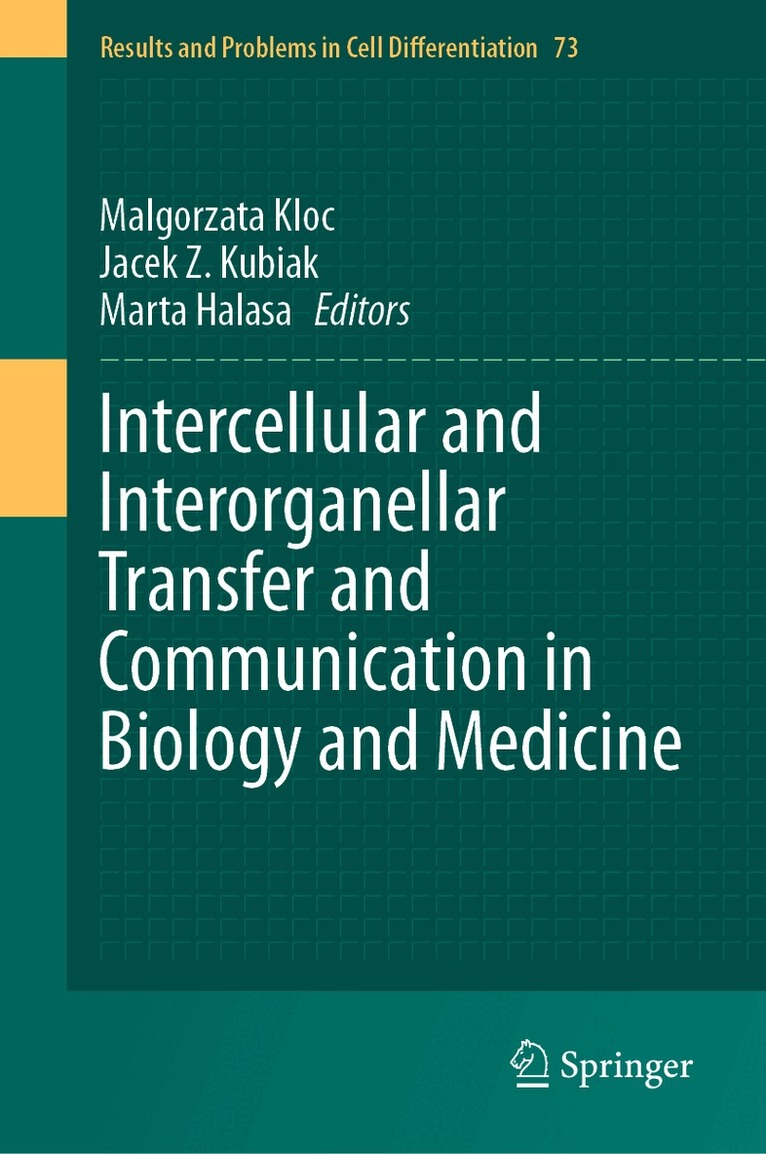
Intercellular and Interorganellar Transfer and Communication in Biology and Medicine
Inbunden, Engelska, 2024
2 939 kr
Skickas inom 7-10 vardagar
Variations in cytoskeletal composition, morphology, modality, and connected cells suggest that these structures play a role in development, establishment of cell fate, progenitor cell differentiation, cell reprogramming, ferroptosis, generation of cancer stem cells, and various diseases.
Del 73 - Results and Problems in Cell Differentiation
Intercellular and Interorganellar Transfer and Communication in Biology and Medicine
Häftad, Engelska, 2025
2 939 kr
Skickas inom 10-15 vardagar
This volume covers recent developments on the role, composition, and functional significance of intercellular and interorganellar transfer. It highlights the involvement of intercellular and interorganellar transfer in cell and developmental biology, differentiation, pathogen dissemination, shaping the genetic makeup of organisms, and the development of various diseases.Animals and plants evolved different communication mechanisms and transfer of molecules and organelles between cells and between organelles within the individual cells. Tunneling nanotubes (TNTs) in animals, discovered as recently as 2004, and their functional equivalent in plants, plasmodesmata, discovered over 100 years ago, are the membranous bridges that mediate the transfer of organelles, membrane patches, vesicles, DNA/RNA, and different molecules between cells. In addition, there are other means of transfer and communication between the cells, such as cytonemes, airinames, extracellular vesicles (exosomes), and others. Variations in cytoskeletal composition, morphology, modality, and connected cells suggest that these structures play a role in development, establishment of cell fate, progenitor cell differentiation, cell reprogramming, ferroptosis, generation of cancer stem cells, and various diseases. The exchange of intact membrane patches (trogocytosis) between cells of the immune system may modify the immune response. Additionally, the transfer of genetic information between nucleus and organelles and cells of different species can shape the species and evolutionary outcome. Viral and bacterial pathogens can hijack the inter-cellular transfer routes to spread more efficiently. Cell-to-cell transfer of animal and plant pathogens can also occur by the virological synapse (VS). These specialized pathogen-induced structures share similarities and differences with neurological and immunological synapses.
Del 74 - Results and Problems in Cell Differentiation
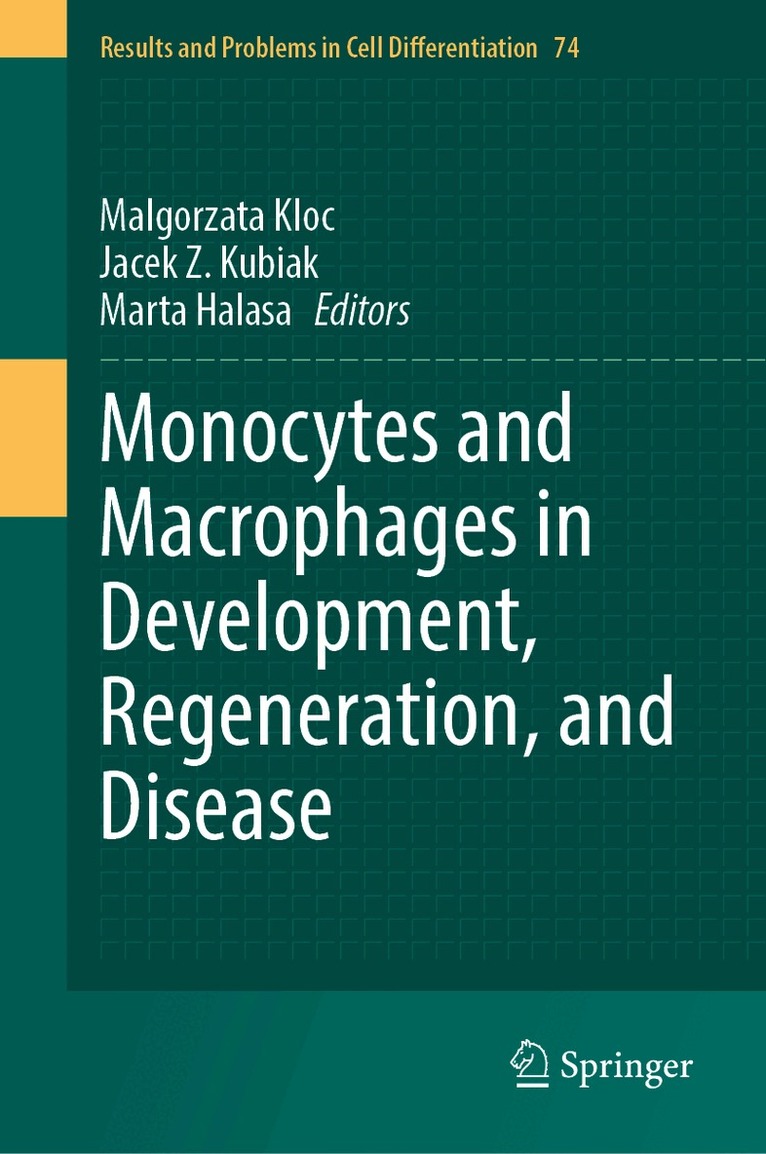
Monocytes and Macrophages in Development, Regeneration, and Disease
Inbunden, Engelska, 2024
2 380 kr
Skickas inom 10-15 vardagar
The study and therapeutic application of macrophages is a rapidly developing field. Tremendous progress has been made in understanding the phenotypes and functions of macrophages in healthy and diseased tissues and organs.Following the great success of Volume 62: "Macrophages - Origin, Functions and Biointervention" published in this series, this new book now focuses on the role of monocytes and macrophages in development, regeneration and disease. This new volume offers an overview of the latest developments in monocyte and macrophage subtypes and functions across various tissues including adipose tissue, bones, liver, lungs, testes, and the nervous system.The book also reviews existing and potential therapies targeted towards the macrophages and describes their homeostatic functions. It explores how macrophage cell cycle, metabolism, mitochondrial activity, histone acetylation status, and interaction with the extracellular matrix contribute to changes in macrophage phenotype and function in health and disease. Additionally, it examines the interactions between macrophages and cancer cells, bacteria, helminth parasites, and their role in the colonization and spread of HIV.For ease of reference, the volume is divided into three sections:Part I Nonimmunologic and immunologic functions of monocytes/macrophagesPart II Tissue/organ specific functions of macrophagesPart III Macrophage functions and dysfunction in diseasesThis book will be of interest to researchers working in the fields of developmental biology, immunology, cancer research, and therapeutic applications. It is written to inform and inspire experts and newcomers to the field of macrophages.
Del 74 - Results and Problems in Cell Differentiation
Monocytes and Macrophages in Development, Regeneration, and Disease
Häftad, Engelska, 2025
2 380 kr
Skickas inom 10-15 vardagar
The study and therapeutic application of macrophages is a rapidly developing field. Tremendous progress has been made in understanding the phenotypes and functions of macrophages in healthy and diseased tissues and organs.Following the great success of Volume 62: "Macrophages - Origin, Functions and Biointervention" published in this series, this new book now focuses on the role of monocytes and macrophages in development, regeneration and disease. This new volume offers an overview of the latest developments in monocyte and macrophage subtypes and functions across various tissues including adipose tissue, bones, liver, lungs, testes, and the nervous system.The book also reviews existing and potential therapies targeted towards the macrophages and describes their homeostatic functions. It explores how macrophage cell cycle, metabolism, mitochondrial activity, histone acetylation status, and interaction with the extracellular matrix contribute to changes in macrophage phenotype and function in health and disease. Additionally, it examines the interactions between macrophages and cancer cells, bacteria, helminth parasites, and their role in the colonization and spread of HIV.For ease of reference, the volume is divided into three sections:Part I Nonimmunologic and immunologic functions of monocytes/macrophagesPart II Tissue/organ specific functions of macrophagesPart III Macrophage functions and dysfunction in diseasesThis book will be of interest to researchers working in the fields of developmental biology, immunology, cancer research, and therapeutic applications. It is written to inform and inspire experts and newcomers to the field of macrophages.
1 948 kr
Skickas inom 10-15 vardagar
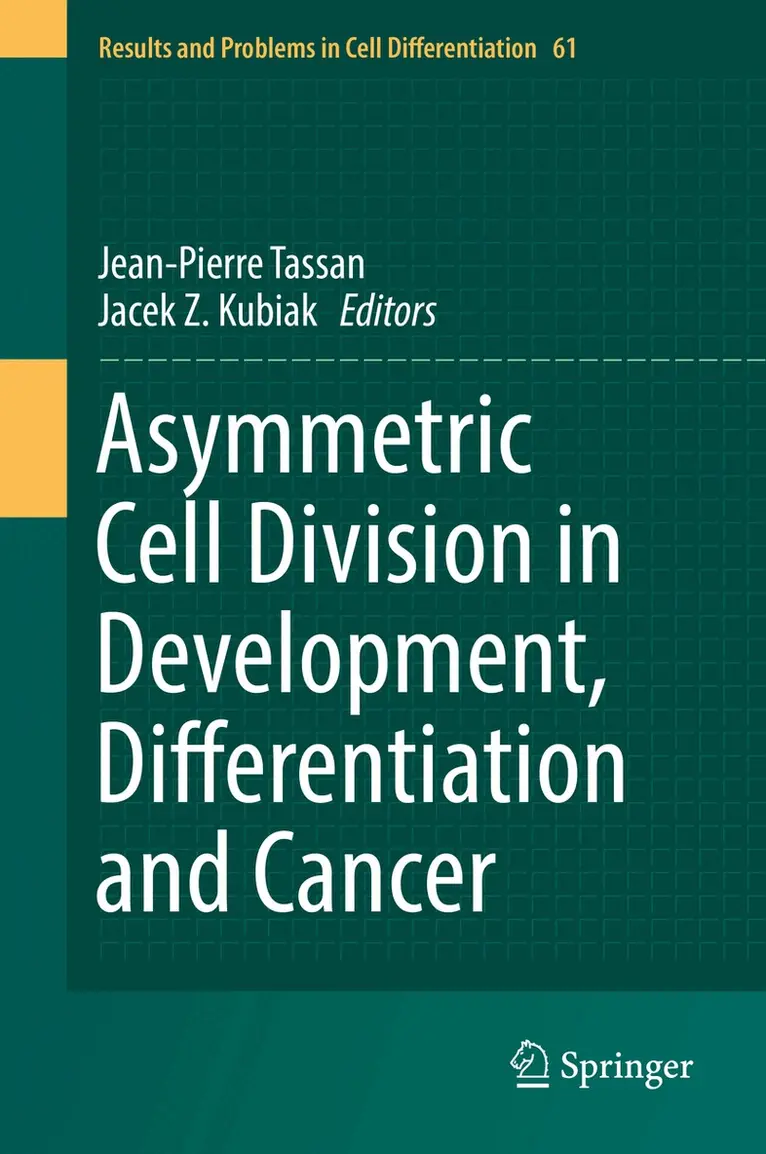
This book provides readers with an overview of the frequent occurrence of asymmetric cell division. Employing a broad range of examples, it highlights how this mode of cell division constitutes the basis of multicellular organism development and how its misregulation can lead to cancer.To underline such developmental correlations, readers will for example gain insights into stem cell fate and tumor growth. In turn, subsequent chapters include descriptions of asymmetric cell division from unicellular organisms to humans in both physiological and pathological conditions. The book also illustrates the importance of this process for evolution and our need to understand the background mechanisms, offering a valuable guide not only for students in the field of developmental biology but also for experienced researchers from neighboring fields.
1 948 kr
Skickas inom 10-15 vardagar
Employing a broad range of examples, it highlights how this mode of cell division constitutes the basis of multicellular organism development and how its misregulation can lead to cancer.To underline such developmental correlations, readers will for example gain insights into stem cell fate and tumor growth.
2 939 kr
Skickas inom 10-15 vardagar
This book highlights the potential advantages of using marine invertebrates like tunicates, echinoderms, sponges and cephalopods as models in both biological and medical research.
2 101 kr
Skickas inom 10-15 vardagar
This book focuses on the intersection between cell cycle regulation and embryo development. Specific modifications of the canonical cell cycle occur throughout the whole period of development and are adapted to fulfil functions coded by the developmental program. Deciphering these adaptations is essential to comprehending how living organisms develop. The aim of this book is to review the best-known modifications and adaptations of the cell cycle during development. The first chapters cover the general problems of how the cell cycle evolves, while consecutive chapters guide readers through the plethora of such phenomena. The book closes with a description of specific changes in the cell cycle of neurons in the senescent human brain. Taken together, the chapters present a panorama of species - from worms to humans - and of developmental stages - from unfertilized oocyte to aged adult.
2 101 kr
Skickas inom 10-15 vardagar
This book focuses on the intersection between cell cycle regulation and embryo development. Specific modifications of the canonical cell cycle occur throughout the whole period of development and are adapted to fulfil functions coded by the developmental program. Deciphering these adaptations is essential to comprehending how living organisms develop. The aim of this book is to review the best-known modifications and adaptations of the cell cycle during development. The first chapters cover the general problems of how the cell cycle evolves, while consecutive chapters guide readers through the plethora of such phenomena. The book closes with a description of specific changes in the cell cycle of neurons in the senescent human brain. Taken together, the chapters present a panorama of species - from worms to humans - and of developmental stages - from unfertilized oocyte to aged adult.
1 578 kr
Skickas inom 10-15 vardagar
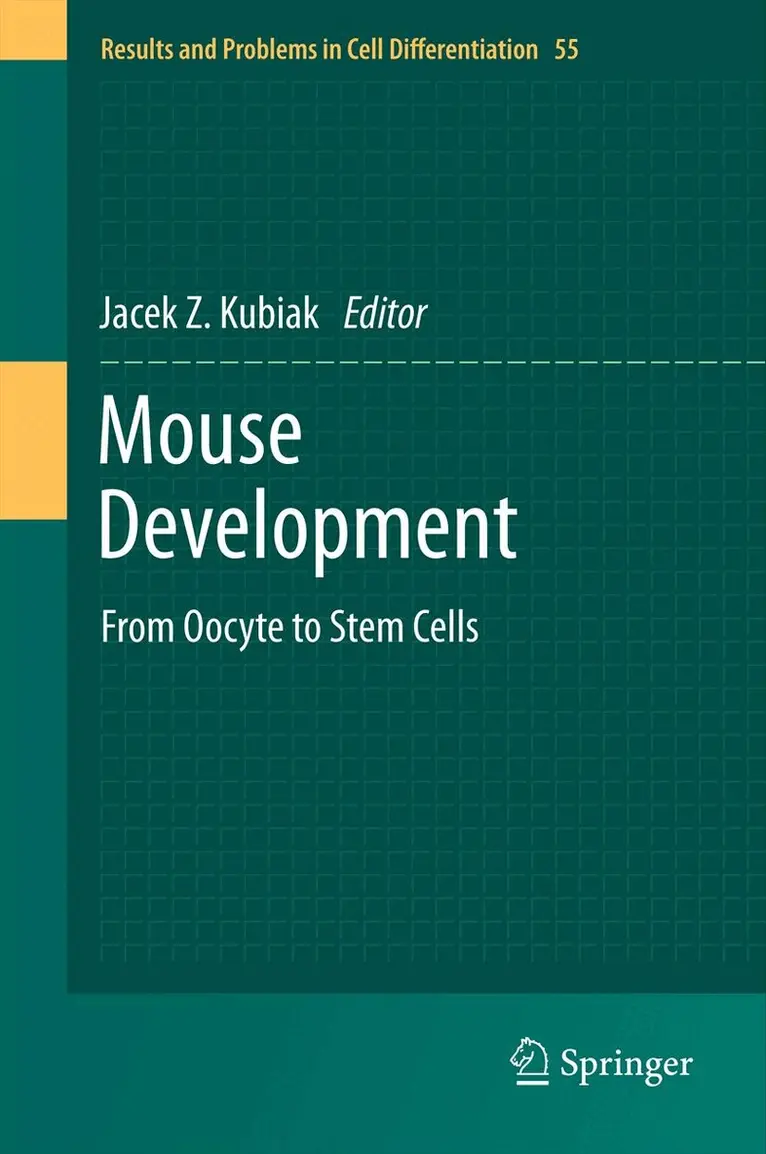
The mouse is a perfect model organism to study mammalian, and thus indirectly also human, embryology. Most scientific achievements that have had an important impact on the understanding of basic mechanisms governing embryo development in humans, originated from mouse embryology. Stem cell research, which now offers the promise of regenerative medicine, began with the isolation and culture of mouse embryonic stem cells by Martin Evans (who received the Nobel Prize in medicine in 2007 for this achievement) and Matthew Kaufman. This book provides an overview of mouse development, spanning from oocytes before fertilization to the state-of-the-art description of embryonic and adult stem cells. The chapters, written by the leading specialists in the field, deal with the most recent discoveries in this extremely fast-developing area of research.
1 625 kr
Skickas inom 10-15 vardagar
The mouse is a perfect model organism to study mammalian, and thus indirectly also human, embryology. Most scientific achievements that have had an important impact on the understanding of basic mechanisms governing embryo development in humans, originated from mouse embryology. Stem cell research, which now offers the promise of regenerative medicine, began with the isolation and culture of mouse embryonic stem cells by Martin Evans (who received the Nobel Prize in medicine in 2007 for this achievement) and Matthew Kaufman. This book provides an overview of mouse development, spanning from oocytes before fertilization to the state-of-the-art description of embryonic and adult stem cells. The chapters, written by the leading specialists in the field, deal with the most recent discoveries in this extremely fast-developing area of research.