Jack J. Cohen – författare
Visar alla böcker från författaren Jack J. Cohen. Handla med fri frakt och snabb leverans.
11 produkter
Major Philosophers of Jewish Prayer in the 20th Century
Inbunden, 2000
1122 kr
Lägg i varukorg
Major Philosophers of Jewish Prayer in the Twentieth Century addresses the troubling questions posed by the modern Jewish worshiper, including such obstacles to prayer as the inability to concentrate on the words and meanings of formal liturgy, the paucity of emotional involvement, the lack of …
Major Philosophers of Jewish Prayer in the 20th Century
Häftad, 2000
426 kr
Lägg i varukorg
Major Philosophers of Jewish Prayer in the Twentieth Century addresses the troubling questions posed by the modern Jewish worshiper, including such obstacles to prayer as the inability to concentrate on the words and meanings of formal liturgy, the paucity of emotional involvement, the lack of …
Guides for an Age of Confusion
Studies in the Thinking of Avraham Y. Kook and Mordecai M. Kaplan
Inbunden, 1999
1122 kr
Lägg i varukorg
Guides for an Age of Confusion compares and contrasts the views of the two great Jewish philosophers Avraham Y. Kook and Mordecai M. Kaplan. Although these two thinkers stand at opposite ends of the spectrum of Jewish thought, they are united in their love for the Jewish people and in their belief …
Guides for an Age of Confusion
Studies in the Thinking of Avraham Y. Kook and Mordecai M. Kaplan
Häftad, 1999
426 kr
Lägg i varukorg
Guides for an Age of Confusion compares and contrasts the views of the two great Jewish philosophers Avraham Y. Kook and Mordecai M. Kaplan. Although these two thinkers stand at opposite ends of the spectrum of Jewish thought, they are united in their love for the Jewish people and in their belief …
Case for Religious Naturalism
A Philosophy for the Modern Jew
E-bok, 2019
468 kr
Lägg i varukorg
How can religion speak to the millions of men and women who have irretrievably lost their belief in a supernatural God? This is the fundamental challenge that all of the great religions of mankind face in the twentieth century. Rabbi Cohen responds to the challenge with a carefully reasoned …
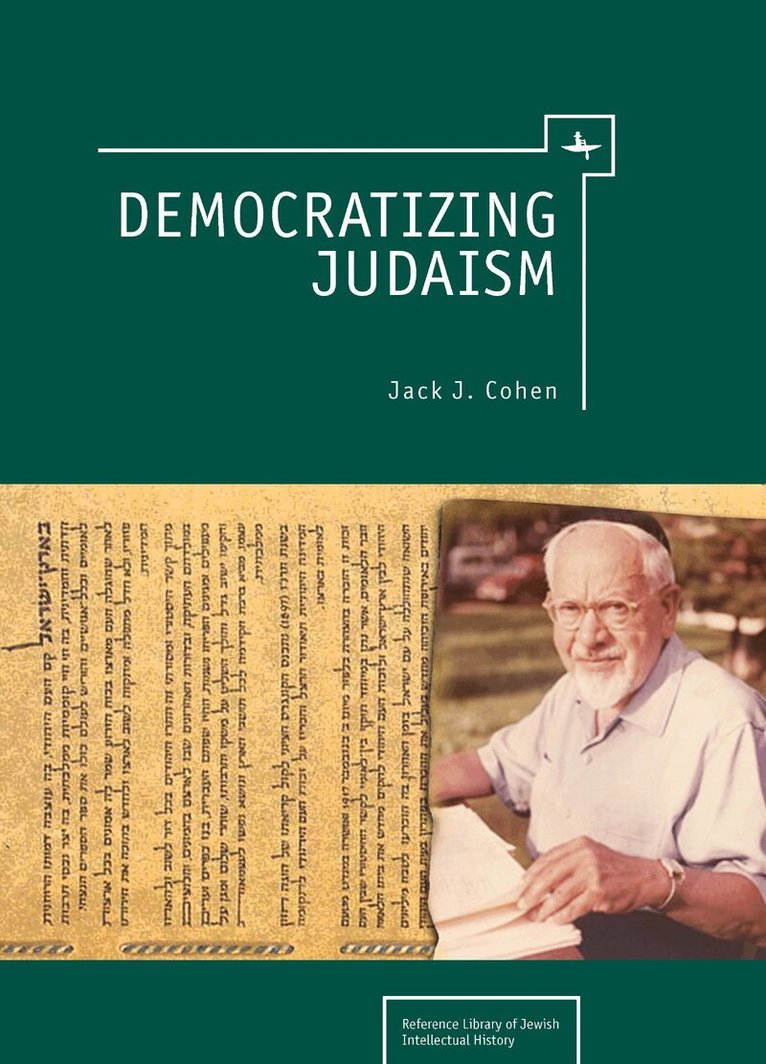
Democratizing Judaism
E-bok, 2010
2771 kr
Lägg i varukorg
Democratizing Judaism is a two-part examination of the Reconstructionist philosophy of Mordecai M. Kaplan. Part I is largely devoted to a defense of Kaplan against several serious critics. It also provides new insight into Kaplan’s theology through reference to hitherto unknown passages in his …
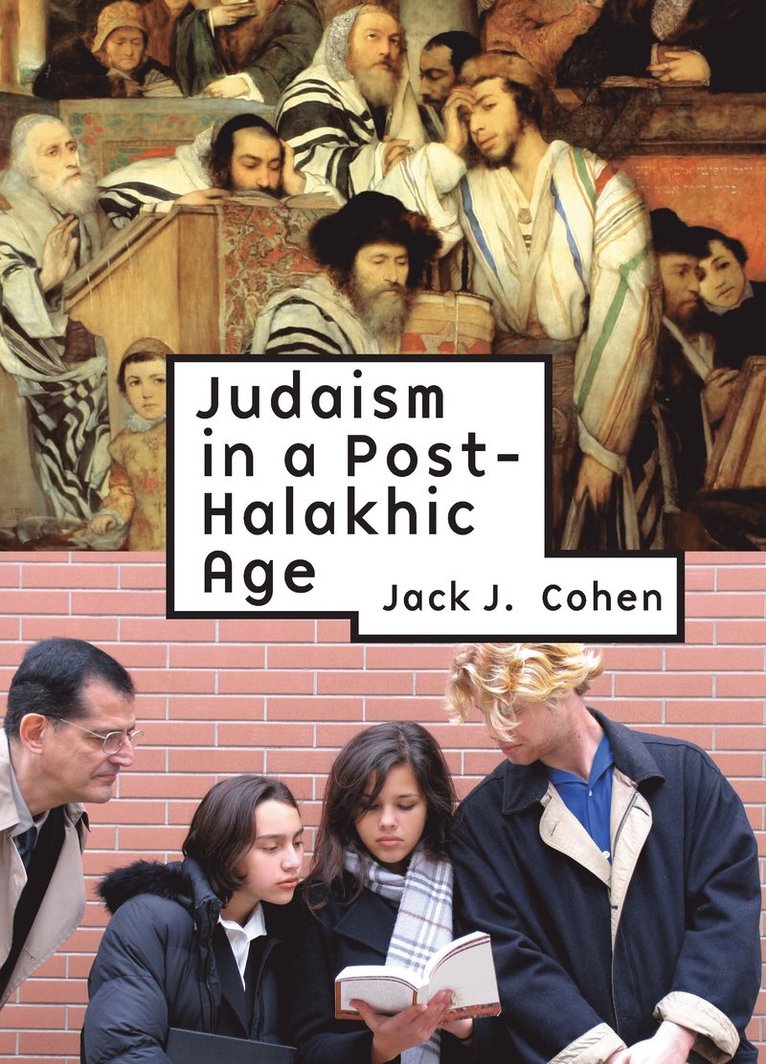
Judaism in a Post-Halakhic Age
E-bok, 2010
2771 kr
Lägg i varukorg
Judaism in a Post-Halakhic Age tackles the following questions: 1. What is Halakhah, and what role has it played in the creative survival of the Jewish people for two millennia? 2. Why is Halakhah no longer capable of functioning as it has until now? 3. What sort of polity and religious culture can …
Judaism in a Post-Halakhic Age
Inbunden, 2010
1286 kr
Lägg i varukorg
Judaism in a Post-Halakhic Age tackles the following questions: 1. What is Halakhah, and what role has it played in the creative survival of the Jewish people for two millennia? 2. Why is Halakhah no longer capable of functioning as it has until now? 3. What sort of polity and religious culture can …
Democratizing Judaism
Inbunden, 2010
1466 kr
Lägg i varukorg
Democratizing Judaism is a two-part examination of the Reconstructionist philosophy of Mordecai M. Kaplan. Part I is largely devoted to a defense of Kaplan against several serious critics. It also provides new insight into Kaplan’s theology through reference to hitherto unknown passages in his …