Jack M. Widholm - Böcker
Visar alla böcker från författaren Jack M. Widholm. Handla med fri frakt och snabb leverans.
4 produkter
4 produkter
2 300 kr
Skickas inom 10-15 vardagar
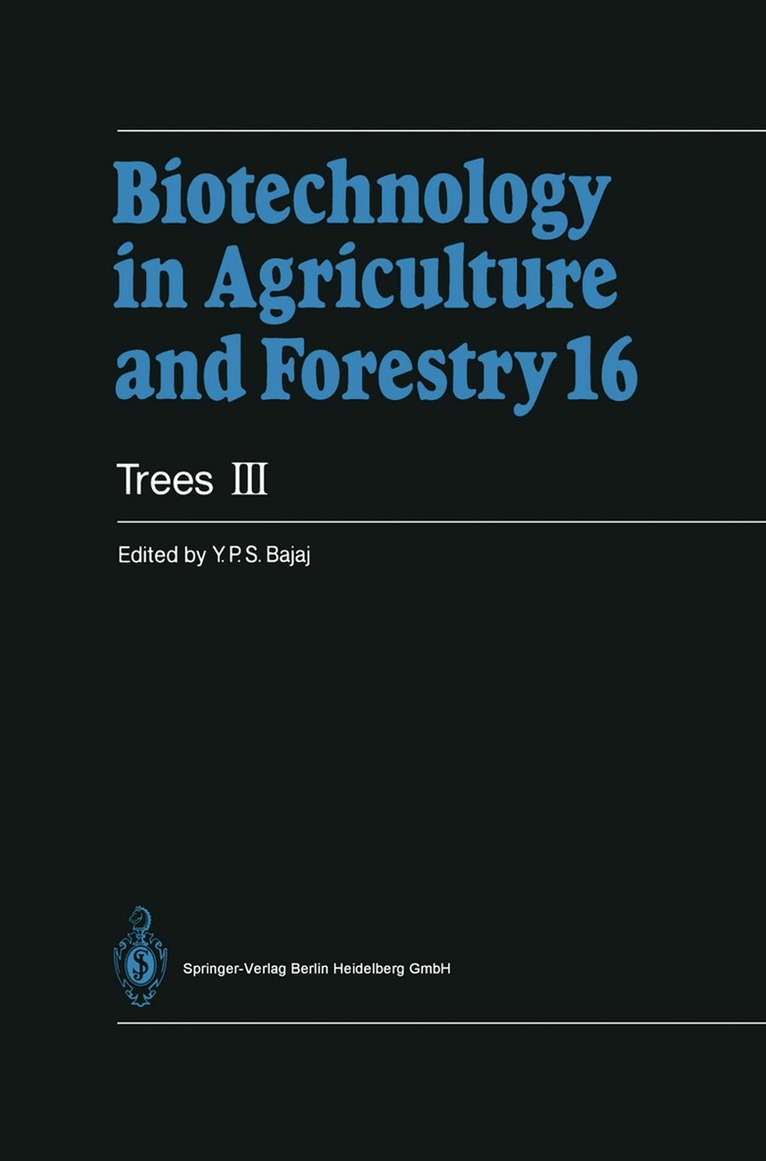
After the 1986 and 1989 volumes, this is the third volume on biotechnology for propagation of trees. Comprising 28 chapters contributed by international experts the book deals with fruit, ornamental, and forest trees, such as Black cherry, Sour cherry, Pomegranate, Loquat, Ficus, Yellow poplar, Horse chestnut, Judas tree, Linden tree, Saskatoons, Taiwan sassafras, Plane-tree, Rattans, Bamboos, Engelmann spruce, White spruce, Larches, Hinoki cypress, Western redcedar, and various types of pines, i.e. Jack, Carribean, Eldarica, Slash, Egg-cone, Maritime, Ponderosa, Eastern white, Loblolly pine. Trees III is an excellent reference book for scientists, educators, and students of forestry, botany, genetics, and horticulture, who are interested in tree biotechnology.
3 149 kr
Skickas inom 10-15 vardagar
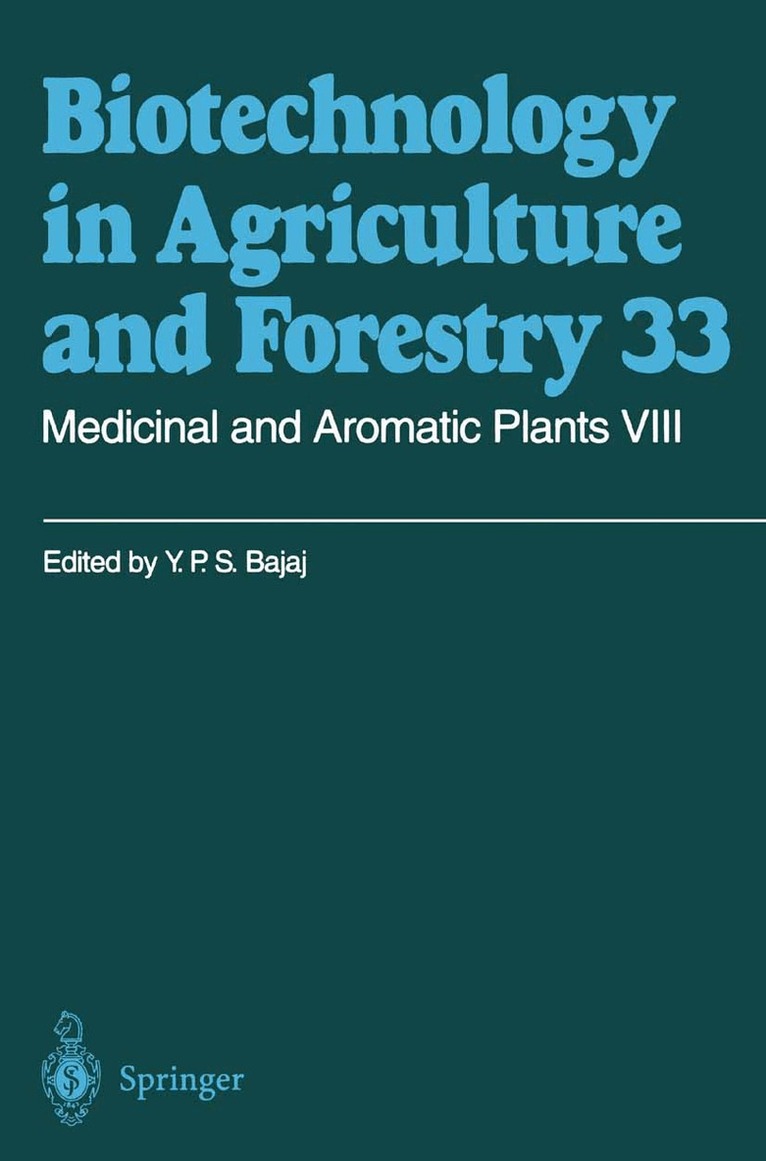
This series ofbooks on the biotechnology of Medicinal and Aromatic Plants provides a survey of the literature focusing on recent information and the state of the art in tissue culture and the in vitro production of secondary metabolites. This book, Medicinal and Aromatic Plants VIII, like the previous seven volumes published in 1988, 1989, 1991, 1993, and 1994, is unique in its approach. It comprises 26 chapters dealing with the distribution, importance, conventional propagation, micropropagation, tissue culture studies and the in vitro production of important medicinal and pharmaceutical compounds in various species of Achillea, Anethum, Aquilaria, Arnica, Aspergillus, Astragalus, Catalpa, Chelidonium, Eremo- phila, Eucalyptus, Eucommia, Geranium, Heterocentron, Hypericum, Maclura, Morinda, Mortierella, Nicotiana, Phaseolus, Pinellia, Piqueria, Psorales, Rhodiola, Sanguisorba, Valeriana, and Vancouveria. This book is tailored to the needs of advanced students, teachers, and research scientists in the field of pharmacy, plant tissue culture, phytochemistry, biochemical engineering, and plant biotechnology in general. New Delhi, July 1995 Professor Y. P. S.BAJAJ Series Editor Contents I Achillea millefolium L. ssp. millefolium (Yarrow): In Vitro Culture and Production of Essential Oils A. C. FIGUEIREDO, M. S. S. PAIS, and J. J. c. SCHEFFER (With 9 Figures) 1 Introduction...1 2 In Vitro Culture Studies ...4 3 Ultrastructural Study of the Glandular Trichomes and Cell Suspension Cultures ...8 4 Composition of the Essential Oils of A. millefolium In Vivo and In Vitro ...11 5 Summary and Conc1usion ...15 6 Protocol ...15 References ...17 II Anethum graveolens L.
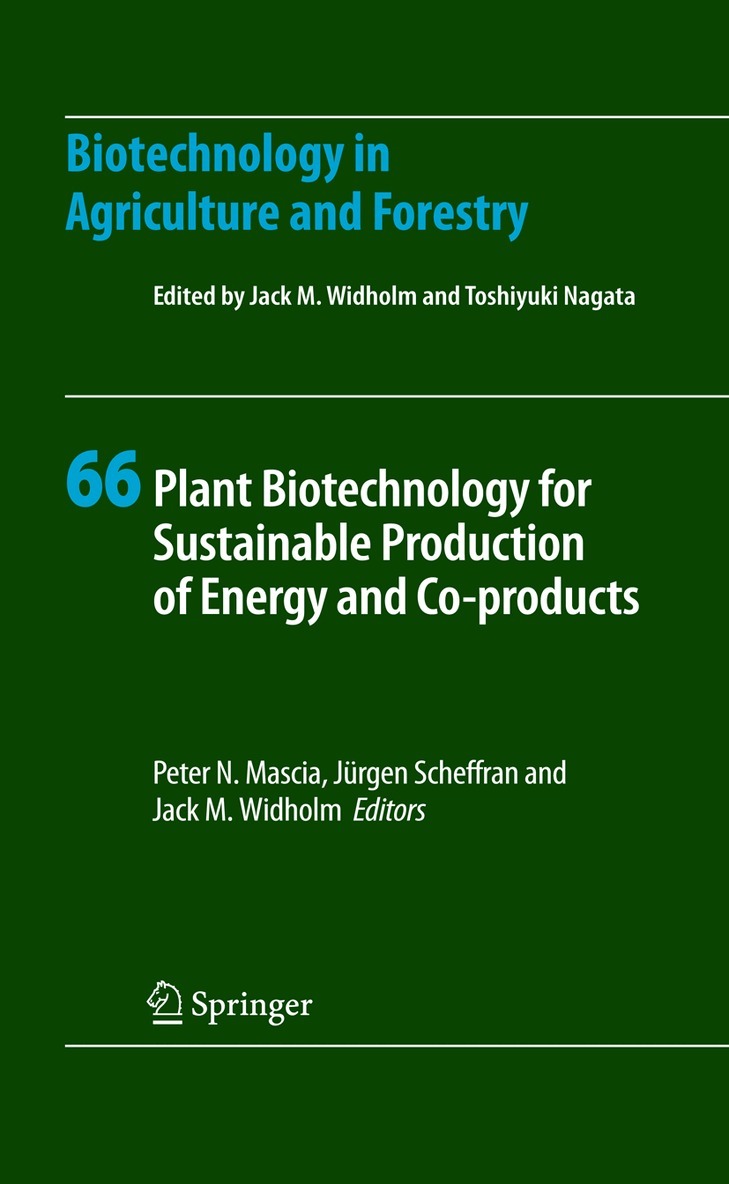
Del 66 - Biotechnology in Agriculture and Forestry
Plant Biotechnology for Sustainable Production of Energy and Co-products
Inbunden, Engelska, 2010
1 578 kr
Skickas inom 10-15 vardagar
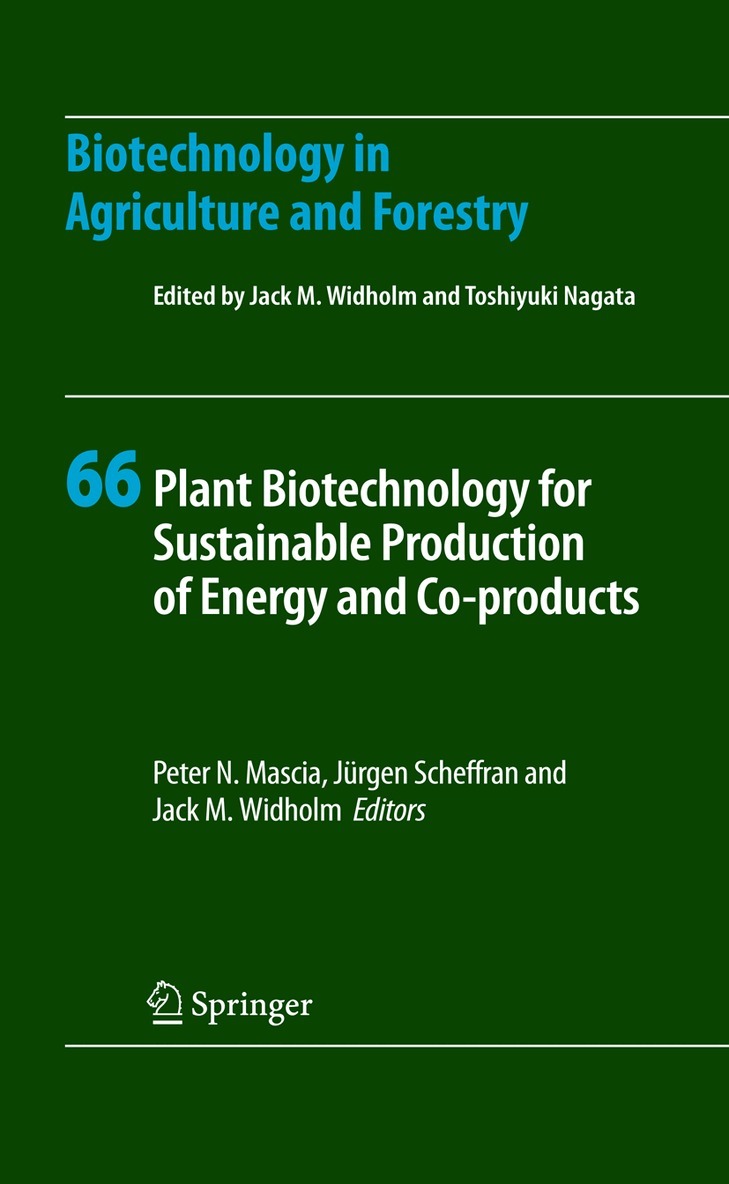
This book is a collection of chapters concerning the use of biomass for the sustainable production of energy and chemicals–an important goal that will help decrease the production of greenhouse gases to help mitigate global warming, provide energy security in the face of dwindling petroleum reserves, improve balance of payment problems and spur local economic development. Clearly there are ways to save energy that need to be encouraged more. These include more use of energy sources such as, among others, manure in anaerobic digesters, waste wood in forests as fuel or feedstock for cellulosic ethanol, and conservation reserve program (CRP) land crops that are presently unused in the US. The use of biofuels is not new; Rudolf Diesel used peanut oil as fuel in the ?rst engines he developed (Chap. 8), and ethanol was used in the early 1900s in the US as automobile fuel [Songstad et al. (2009) Historical perspective of biofuels: learning from the past to rediscover the future. In Vitro Cell Dev Biol Plant 45:189–192). Brazil now produces enough sugar cane ethanol to make up about 50% of its transportation fuel needs (Chap. 4). The next big thing will be cellulosic ethanol. At present, there is also the use of Miscanthus x giganteous as fuel for power plants in the UK (Chap. 2), bagasse (sugar cane waste) to power sugar cane mills (Chap. 4), and waste wood and sawdust to power sawmills (Chap. 7).
1 578 kr
Skickas inom 10-15 vardagar
This book is a collection of chapters concerning the use of biomass for the sustainable production of energy and chemicals–an important goal that will help decrease the production of greenhouse gases to help mitigate global warming, provide energy security in the face of dwindling petroleum reserves, improve balance of payment problems and spur local economic development. Clearly there are ways to save energy that need to be encouraged more. These include more use of energy sources such as, among others, manure in anaerobic digesters, waste wood in forests as fuel or feedstock for cellulosic ethanol, and conservation reserve program (CRP) land crops that are presently unused in the US. The use of biofuels is not new; Rudolf Diesel used peanut oil as fuel in the ?rst engines he developed (Chap. 8), and ethanol was used in the early 1900s in the US as automobile fuel [Songstad et al. (2009) Historical perspective of biofuels: learning from the past to rediscover the future. In Vitro Cell Dev Biol Plant 45:189–192). Brazil now produces enough sugar cane ethanol to make up about 50% of its transportation fuel needs (Chap. 4). The next big thing will be cellulosic ethanol. At present, there is also the use of Miscanthus x giganteous as fuel for power plants in the UK (Chap. 2), bagasse (sugar cane waste) to power sugar cane mills (Chap. 4), and waste wood and sawdust to power sawmills (Chap. 7).