Jack Marsh - Böcker
Visar alla böcker från författaren Jack Marsh. Handla med fri frakt och snabb leverans.
6 produkter
6 produkter
630 kr
Skickas inom 10-15 vardagar
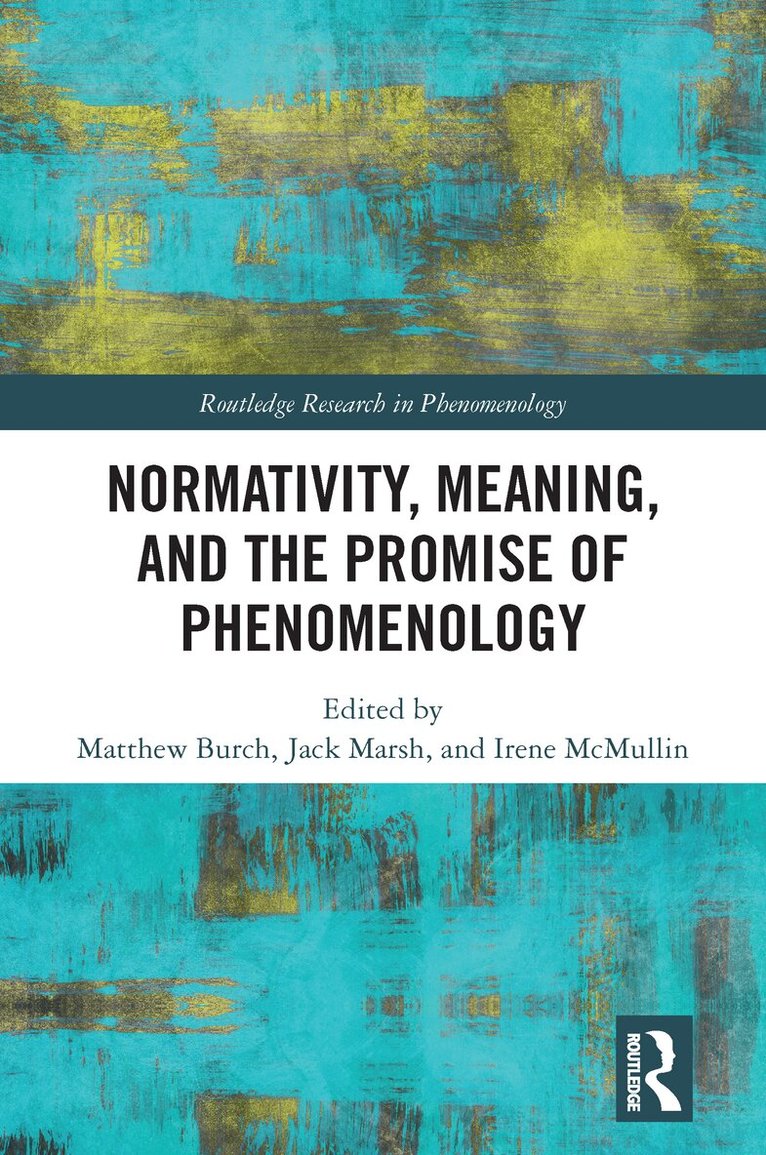
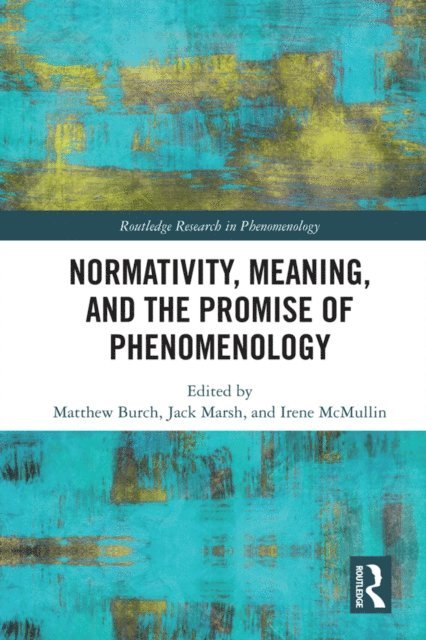
The aim of this volume is to critically assess the philosophical importance of phenomenology as a method for studying the normativity of meaning and its transcendental conditions. Using the pioneering work of Steven Crowell as a springboard, phenomenologists from all over the world examine the promise of phenomenology for illuminating long-standing problems in epistemology, the philosophy of mind, action theory, the philosophy of religion, and moral psychology. The essays are unique in that they engage with the phenomenological tradition not as a collection of authorities to whom we must defer, or a set of historical artifacts we must preserve, but rather as a community of interlocutors with views that bear on important issues in contemporary philosophy.The book is divided into three thematic sections, each examining different clusters of issues aimed at moving the phenomenological project forward. The first section explores the connection between normativity and meaning, and asks us to rethink the relation between the factual realm and the categories of validity in terms of which things can show up as what they are. The second section examines the nature of the self that is capable of experiencing meaning. It includes essays on intentionality, agency, consciousness, naturalism, and moral normativity. The third section addresses questions of philosophical methodology, examining if and why phenomenology should have priority in the analysis of meaning. Finally, the book concludes with an afterword written by Steven Crowell.Normativity, Meaning, and the Promise of Phenomenology will be a key resource for students and scholars interested in the phenomenological tradition, the transcendental tradition from Kant to Davidson, and existentialism. Additionally, its forward-looking focus yields crucial insights into pressing philosophical problems that will appeal to scholars working across all areas of the discipline.
2 088 kr
Skickas inom 10-15 vardagar
The aim of this volume is to critically assess the philosophical importance of phenomenology as a method for studying the normativity of meaning and its transcendental conditions. Using the pioneering work of Steven Crowell as a springboard, phenomenologists from all over the world examine the promise of phenomenology for illuminating long-standing problems in epistemology, the philosophy of mind, action theory, the philosophy of religion, and moral psychology. The essays are unique in that they engage with the phenomenological tradition not as a collection of authorities to whom we must defer, or a set of historical artifacts we must preserve, but rather as a community of interlocutors with views that bear on important issues in contemporary philosophy.The book is divided into three thematic sections, each examining different clusters of issues aimed at moving the phenomenological project forward. The first section explores the connection between normativity and meaning, and asks us to rethink the relation between the factual realm and the categories of validity in terms of which things can show up as what they are. The second section examines the nature of the self that is capable of experiencing meaning. It includes essays on intentionality, agency, consciousness, naturalism, and moral normativity. The third section addresses questions of philosophical methodology, examining if and why phenomenology should have priority in the analysis of meaning. Finally, the book concludes with an afterword written by Steven Crowell.Normativity, Meaning, and the Promise of Phenomenology will be a key resource for students and scholars interested in the phenomenological tradition, the transcendental tradition from Kant to Davidson, and existentialism. Additionally, its forward-looking focus yields crucial insights into pressing philosophical problems that will appeal to scholars working across all areas of the discipline.
373 kr
Skickas
Offers an immanent critique of Levinas's core philosophical proposals by reference to his allegedly eurocentric statements.Levinas's big idea is that our lived sense of moral obligation occurs in an immediate experience of the otherness of the Other, and that moral meaning is grounded in alterity rather than identity. Yet he also held what seemed an inconsiderate, or "eurocentric," view of other cultural traditions. In Saying Peace, Jack Marsh explores this problem, testing the coherence and adequacy of Levinas's central philosophical claims. Using a twofold method of reconstruction and critique, Marsh conducts a holistic immanent evaluation of Levinas's major works, showing how the problem of eurocentrism, and abiding ambiguities in Levinas's political and religious thought, can be traced back to specific problems in his general philosophical methodology. Marsh offers an original analysis of Levinas's method that verifies and extends existing critical work by Jacques Derrida, Robert Bernasconi, Judith Butler, and others. This is the first book to foreground the normative question of chauvinism in Levinas's work, and the first to perform a holistic critical diagnosis of his general philosophical method.
1 223 kr
Skickas inom 5-8 vardagar
Offers an immanent critique of Levinas's core philosophical proposals by reference to his allegedly eurocentric statements.Levinas's big idea is that our lived sense of moral obligation occurs in an immediate experience of the otherness of the Other, and that moral meaning is grounded in alterity rather than identity. Yet he also held what seemed an inconsiderate, or "eurocentric," view of other cultural traditions. In Saying Peace, Jack Marsh explores this problem, testing the coherence and adequacy of Levinas's central philosophical claims. Using a twofold method of reconstruction and critique, Marsh conducts a holistic immanent evaluation of Levinas's major works, showing how the problem of eurocentrism, and abiding ambiguities in Levinas's political and religious thought, can be traced back to specific problems in his general philosophical methodology. Marsh offers an original analysis of Levinas's method that verifies and extends existing critical work by Jacques Derrida, Robert Bernasconi, Judith Butler, and others. This is the first book to foreground the normative question of chauvinism in Levinas's work, and the first to perform a holistic critical diagnosis of his general philosophical method.
480 kr
Skickas inom 5-8 vardagar
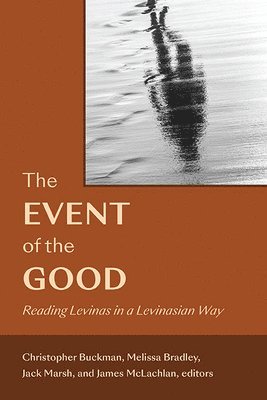
Centers on the ethics of Emmanuel Levinas, aiming to understand this important thinker on his own terms.To read Levinas in a Levinasian way means to understand this important thinker on his own terms, thinking "ethics as first philosophy," without reducing his role to that of a contributor to some other discourse, such as phenomenology, deconstruction, or religious traditions other than his own. This volume offers a variety of interventions into how the priority of the ethical-as formulated by Emmanuel Levinas and seconded by Richard A. Cohen, one of his preeminent interpreters-reorients philosophy to its own questioning-indeed, to its very sense of itself as meaningful. In the decades since Levinas first emerged as a profound and critical voice, many have used his thought to illuminate a broad range of philosophical questions. Often this has occurred in ways that have deemphasized or altered what is arguably Levinas's most radical gesture: reframing philosophy, indeed reframing the meaning of meaning, via an ethical turn. To this end, the essays in this volume, drawing especially on Cohen's reading of Levinas, offer insights into how appropriations and assessments of his philosophy might become more in line with the urgency and full meaning of his notion of the ethical. Whether discussing ethics, aesthetics, politics, or Jewish thought, when taken together, they enhance our comprehension of ethics and Levinas's philosophy of responsibility.
1 349 kr
Skickas
Centers on the ethics of Emmanuel Levinas, aiming to understand this important thinker on his own terms.To read Levinas in a Levinasian way means to understand this important thinker on his own terms, thinking "ethics as first philosophy," without reducing his role to that of a contributor to some other discourse, such as phenomenology, deconstruction, or religious traditions other than his own. This volume offers a variety of interventions into how the priority of the ethical-as formulated by Emmanuel Levinas and seconded by Richard A. Cohen, one of his preeminent interpreters-reorients philosophy to its own questioning-indeed, to its very sense of itself as meaningful. In the decades since Levinas first emerged as a profound and critical voice, many have used his thought to illuminate a broad range of philosophical questions. Often this has occurred in ways that have deemphasized or altered what is arguably Levinas's most radical gesture: reframing philosophy, indeed reframing the meaning of meaning, via an ethical turn. To this end, the essays in this volume, drawing especially on Cohen's reading of Levinas, offer insights into how appropriations and assessments of his philosophy might become more in line with the urgency and full meaning of his notion of the ethical. Whether discussing ethics, aesthetics, politics, or Jewish thought, when taken together, they enhance our comprehension of ethics and Levinas's philosophy of responsibility.