
Jacob W. Wood - Böcker
Visar alla böcker från författaren Jacob W. Wood. Handla med fri frakt och snabb leverans.
3 produkter
3 produkter
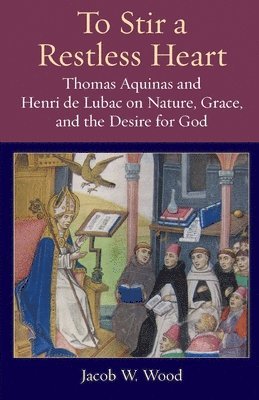
To Stir a Restless Heart
Thomas Aquinas and Henri De Lubac on Nature, Grace, and the Desire for God
Inbunden, Engelska, 2019
688 kr
Skickas inom 7-10 vardagar
To Stir a Restless Heart tells for the first time the story of how Thomas Aquinas conversed with his contemporaries about the dynamics of human nature’s longing for God, and documents how he deliberately utilized Greek, Arabic, Hebrew, and Latin sources to develop a version of Aristotelian natural desire that was uniquely Augustinian: natural desire seeks the complete fulfillment of human nature “insofar as is possible,” and so comes to rest in the highest end that God offers to it. Depending on whether God offers the free gift of grace to humanity, one and the same natural desire can come to rest in knowing God through creatures or seeing God directly.Tracing the reception of Aquinas in the centuries that follow, Jacob Wood argues that Aquinas’s student from among the Augustinian Hermits, Giles of Rome, consciously transformed Aquinas’s understanding of human nature. By insisting that every nature has a positive aptitude for one, specific end, Giles tied our natural desire positively and directly to the vision of God, setting up a 700-year challenge among the Augustinian Hermits to explain the integrity of a nature with a supernatural end, as well as the gratuity of the grace which perfects it. Showing how de Lubac’s early discovery of that tradition served as a principal source for his “natural desire for a supernatural end,” To Stir a Restless Heart argues that many recent criticisms of de Lubac’s theological anthropology find ready answers among the Augustinian Hermits, but that a renewed understanding of Aquinas’s Augustinianism offers a more complete way forward: it preserves Aristotle’s commitment to the integrity of human nature, de Lubac’s commitment to the transcendence of human perfection, and Augustine’s insistence on the priority and gratuity of divine grace in the work of redemption.
To Stir a Restless Heart
Thomas Aquinas and Henri De Lubac on Nature, Grace, and the Desire for God
Häftad, Engelska, 2021
366 kr
Skickas inom 10-15 vardagar
To Stir a Restless Heart tells for the first time the story of how Thomas Aquinas conversed with his contemporaries about the dynamics of human nature’s longing for God, and documents how he deliberately utilized Greek, Arabic, Hebrew, and Latin sources to develop a version of Aristotelian natural desire that was uniquely Augustinian: natural desire seeks the complete fulfillment of human nature "insofar as is possible," and so comes to rest in the highest end that God offers to it. Depending on whether God offers the free gift of grace to humanity, one and the same natural desire can come to rest in knowing God through creatures or seeing God directly.Tracing the reception of Aquinas in the centuries that follow, Jacob Wood argues that Aquinas’s student from among the Augustinian Hermits, Giles of Rome, consciously transformed Aquinas’s understanding of human nature. By insisting that every nature has a positive aptitude for one, specific end, Giles tied our natural desire positively and directly to the vision of God, setting up a 700-year challenge among the Augustinian Hermits to explain the integrity of a nature with a supernatural end, as well as the gratuity of the grace which perfects it. Showing how de Lubac’s early discovery of that tradition served as a principal source for his "natural desire for a supernatural end," To Stir a Restless Heart argues that many recent criticisms of de Lubac’s theological anthropology find ready answers among the Augustinian Hermits, but that a renewed understanding of Aquinas’s Augustinianism offers a more complete way forward: it preserves Aristotle’s commitment to the integrity of human nature, de Lubac’s commitment to the transcendence of human perfection, and Augustine’s insistence on the priority and gratuity of divine grace in the work of redemption.
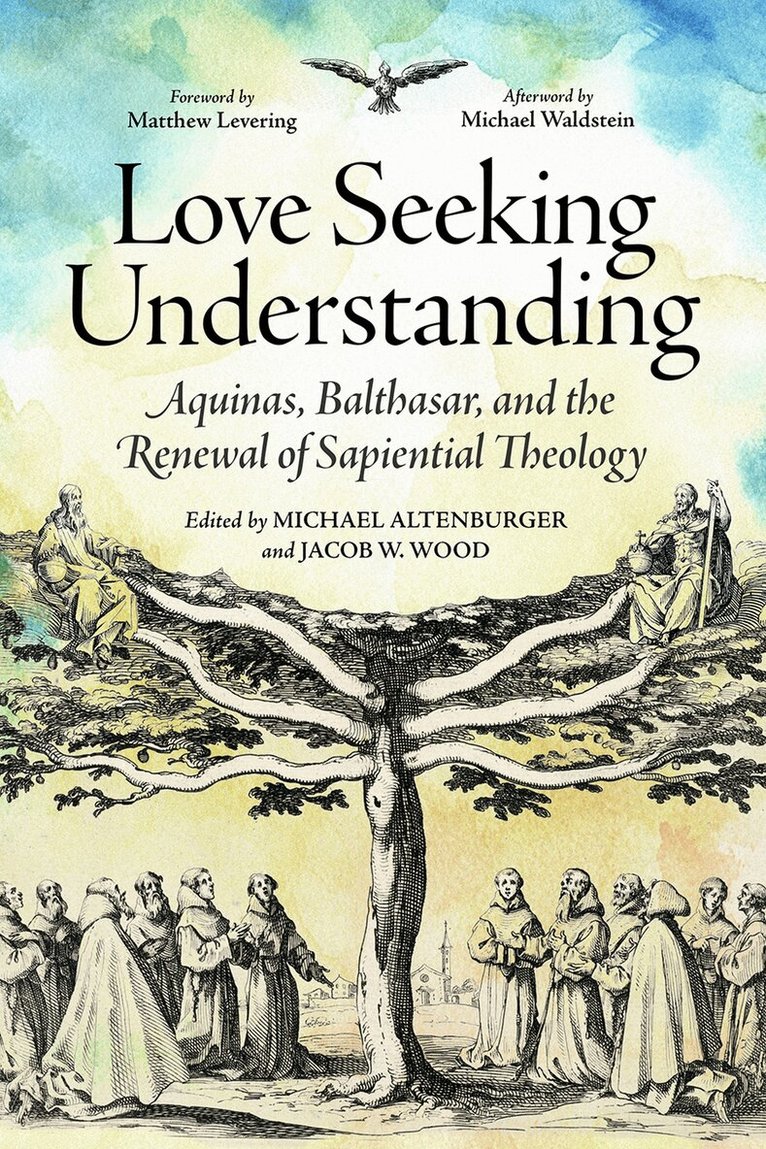
Love Seeking Understanding
Aquinas, Balthasar, and the Renewal of Sapiential Theology
Inbunden, Engelska, 2025
898 kr
Skickas inom 7-10 vardagar
As Catholic theology emerged from the crisis of modernity, theologians turned to both patristic and medieval sources to recover lost wisdom from the theological tradition, and adapt it to the challenges of an age that separated reason from faith, the practice of theology from the spiritual life. In time, Thomas Aquinas and Hans Urs von Balthasar became the patrons of two very different approaches to this challenge. St. Thomas Aquinas offering contemporary theologians an approach rooted in the patristic-medieval Latin synthesis of Augustine and Aristotle that also draws on the East, and von Balthasar offering contemporary theologians a patristic-modern approach rooted in the Eastern theological synthesis of Maximus the Confessor and Erich Pzrywara, that also draws on the West. Although Aquinas and Balthasar, together with their contemporary followers, sought to unite reason and faith, theology and prayer, contemporary Thomists and Balthasarians have tended to diverge widely from one another, often with a polemical spirit. How should one understand the theological genius of St. Thomas Aquinas and Hans Urs von Balthasar today? How can two of the greatest theologians in the Catholic tradition be brought together in more fruitful and peaceful dialogue? This edited volume comprises contributions from a range of scholars who elucidate the depth and breadth of two of the most prominent figures of the Catholic tradition today. A scholar from each school of thought contributes an essay on a particular theme: Metaphysics, Trinity, Revelation, Christology, Anthropology, Evil, and Eschatology. By presenting the two essays side by side, this volume provides the contemporary reader with an opportunity to better engage both thinkers and understand disagreements and areas for constructive movement forward. The tone of the volume is intentionally irenic, seeking points of constructive dialogue, and opening new pathways to the renewal of sapiential theology through a fruitful synthesis of Thomistic and Balthasarian thought.