Jacqueline Avila – författare
Visar alla böcker från författaren Jacqueline Avila. Handla med fri frakt och snabb leverans.
8 produkter
Cinesonidos
Film Music and National Identity During Mexico's Época de Oro
Inbunden, 2019
2045 kr
Lägg i varukorg
During Mexico's silent (1896-1930) and early sound (1931-52) periods, cinema saw the development of five significant genres: the prostitute melodrama (including the cabaretera subgenre), the indigenista film (on indigenous themes or topics), the cine de añoranza porfiriana (films of Porfirian …
Cinesonidos
Film Music and National Identity During Mexico's Época de Oro
Häftad, 2019
568 kr
Lägg i varukorg
During Mexico's silent (1896-1930) and early sound (1931-52) periods, cinema saw the development of five significant genres: the prostitute melodrama (including the cabaretera subgenre), the indigenista film (on indigenous themes or topics), the cine de añoranza porfiriana (films of Porfirian …
Cinesonidos
Film Music and National Identity During Mexico's Epoca de Oro
E-bok, 2019
510 kr
Lägg i varukorg
During Mexico''s silent (1896-1930) and early sound (1931-52) periods, cinema saw the development of five significant genres: the prostitute melodrama (including the cabaretera subgenre), the indigenista film (on indigenous themes or topics), the cine de añoranza porfiriana (films of Porfirian …
Cinesonidos
Film Music and National Identity During Mexico's Epoca de Oro
E-bok, 2019
510 kr
Lägg i varukorg
During Mexico''s silent (1896-1930) and early sound (1931-52) periods, cinema saw the development of five significant genres: the prostitute melodrama (including the cabaretera subgenre), the indigenista film (on indigenous themes or topics), the cine de añoranza porfiriana (films of Porfirian …
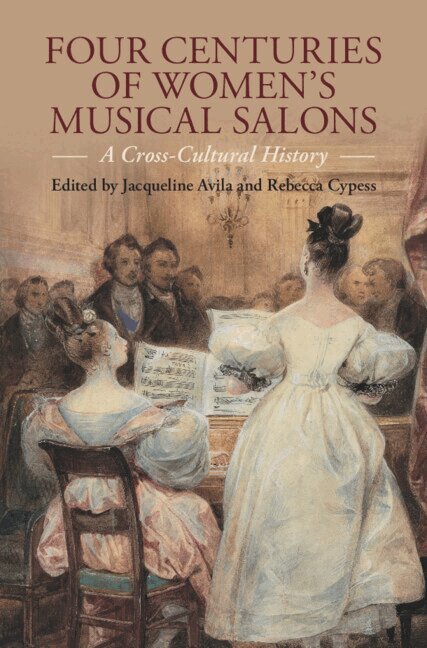
Four Centuries of Women's Musical Salons
A Cross-Cultural History
Av Jacqueline Avila, Rebecca Cypess
Inbunden, 2026
2029 kr
Lägg i varukorg
For centuries, women have organized and hosted social gatherings known as 'salons,' which have served as sites of women's creativity and agency in the arts, sciences, and letters - especially music. This volume offers new understandings of women's musical salons across four centuries from North …
Four Centuries of Women's Musical Salons
A Cross-Cultural History
Av Rebecca Cypess, Jacqueline Avila
E-bok, 2026
1950 kr
Lägg i varukorg
Four Centuries of Women's Musical Salons
A Cross-Cultural History
Av Rebecca Cypess, Jacqueline Avila
E-bok, 2026
1971 kr
Lägg i varukorg
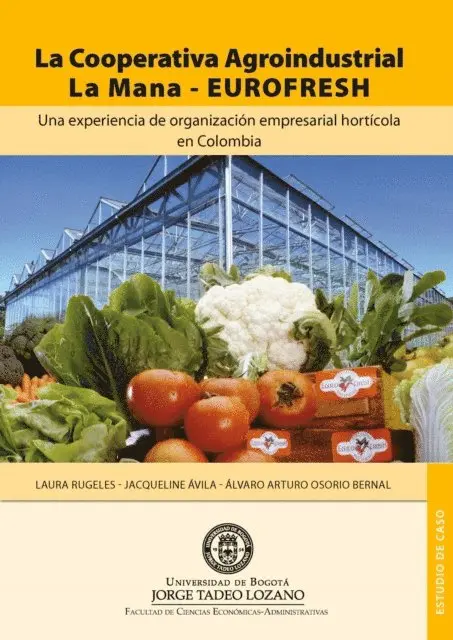
La cooperativa agroindustrial La Mana EUROFRESH
Av Alvaro Arturo Osorio, Jacqueline Avila m. fl.
E-bok, 2011
50 kr
Lägg i varukorg
la Cooperativa Agroindustrial La Mana EUROFRESH, y la segunda con la actividad de la palma de aceite: la Cooperativa de Palmicultores de Colombia Copalcol. Ambos estudios forman parte del portafolio de proyectos desarrollados por el grupo de investigación Redes Agroempresariales y Territorio RAET …