Jaime Moreno Tejada – författare
Visar alla böcker från författaren Jaime Moreno Tejada. Handla med fri frakt och snabb leverans.
3 produkter
3 produkter
697 kr
Skickas inom 10-15 vardagar
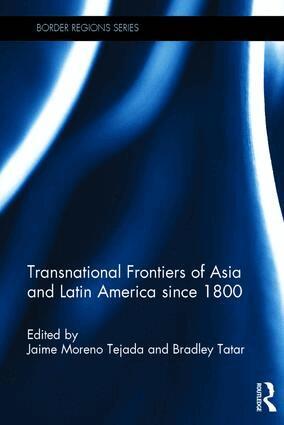
Frontiers are "wild." The frontier is a zone of interaction between distinct polities, peoples, languages, ecosystems and economies, but how do these frontier spaces develop? If the frontier is shaped by the policing of borders by the modern-nation state, then what kind of zones, regions or cultural areas are created around borders?This book provides 16 different case studies of frontiers in Asia and Latin America by interdisciplinary scholars, charting the first steps toward a transnational and transcontinental history of social development in the borderlands of two continents. Transnationalism provides a shared focus for the contributions, drawing upon diverse theoretical perspectives to examine the place-making projects of nation states. Through the lenses of different scales and time frames, the contributors examine the social processes of frontier life, and how the frontiers have been created through the exertions of nation-states to control marginal or borderland peoples. The most significant cases of industrialization, resource extraction and colonization projects in Asia and Latin America are examined in this book reveal the incompleteness of frontiers as modernist spatial projects, but also their creativity - as sources of new social patterns, new human adaptations, and new cultural outlooks and ways of confronting power and privilege. The incompleteness of frontiers does not detract from their power to move ideas, peoples and practices across borders both territorial and conceptual.In bringing together Asian and Latin American cases of frontier-making, this book points toward a comparativist and cosmopolitan approach in the study of statecraft and modernity. For scholars of Latin America and/or Asia, it brings together historical themes and geographic foci, providing studies accessible to researchers in anthropology, geography, history, politics, cultural studies and other fields of the human sciences.
617 kr
Skickas
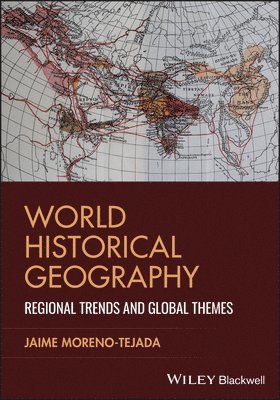
A groundbreaking guide to world history through regional geography and interdisciplinary insight World Historical Geography: Regional Trends and Global Themes examines world history through the lens of geography, where landforms, climates, and spatial relationships are not background elements but central agents of change. Bridging the humanities and natural sciences, this unique textbook integrates recent research in paleoclimatology, paleogenetics, and archaeology to uncover how physical and human geographies have shaped distinct historical trajectories across the globe. By foregrounding geography as both context and catalyst, Jaime Moreno-Tejada equips students to think critically about historical causality and regional specificity from a global perspective. The text divides the world into twelve regions and follows a geographic path from Sub-Saharan Africa to the Caribbean. Each chapter identifies a dominant regional trend—including climate variation, political centralization, or mobility—and weaves it into a broader historical narrative. Throughout the book, 36 concise, interdisciplinary micro-essays (Global Themes) explore key concepts such as domestication, rivers, slavery, and ethnogenesis, both complementing the core material and providing flexible entry points for thematic exploration. Providing a grounded yet expansive understanding of how geography continues to inform the human story, World Historical Geography: Regional Trends and Global Themes: Uses an interdisciplinary approach that connects environmental history, human geography, and historical narrativesEmphasizes reflexive learning, with each chapter prompting students to question regional boundaries and pursue transregional connections.Organized regionally, with each chapter centered on one or two historical-geographic trends for targeted understandingIncludes questions designed to foster both regional insight and global comparison at the end of each chapterOffering unique global scope while maintaining depth of analysis within each region, World Historical Geography: Regional Trends and Global Themes is perfect for undergraduate and graduate courses in World History, World Geography, and Area Studies, as well as core curricula in History, Geography, and Global Studies programs.
2 260 kr
Skickas inom 10-15 vardagar
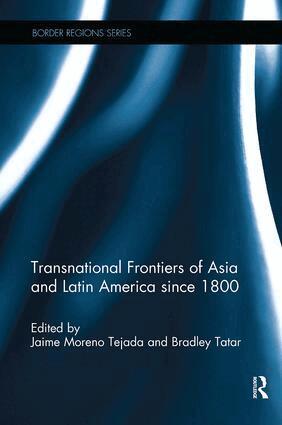
Frontiers are "wild." The frontier is a zone of interaction between distinct polities, peoples, languages, ecosystems and economies, but how do these frontier spaces develop? If the frontier is shaped by the policing of borders by the modern-nation state, then what kind of zones, regions or cultural areas are created around borders?This book provides 16 different case studies of frontiers in Asia and Latin America by interdisciplinary scholars, charting the first steps toward a transnational and transcontinental history of social development in the borderlands of two continents. Transnationalism provides a shared focus for the contributions, drawing upon diverse theoretical perspectives to examine the place-making projects of nation states. Through the lenses of different scales and time frames, the contributors examine the social processes of frontier life, and how the frontiers have been created through the exertions of nation-states to control marginal or borderland peoples. The most significant cases of industrialization, resource extraction and colonization projects in Asia and Latin America are examined in this book reveal the incompleteness of frontiers as modernist spatial projects, but also their creativity - as sources of new social patterns, new human adaptations, and new cultural outlooks and ways of confronting power and privilege. The incompleteness of frontiers does not detract from their power to move ideas, peoples and practices across borders both territorial and conceptual.In bringing together Asian and Latin American cases of frontier-making, this book points toward a comparativist and cosmopolitan approach in the study of statecraft and modernity. For scholars of Latin America and/or Asia, it brings together historical themes and geographic foci, providing studies accessible to researchers in anthropology, geography, history, politics, cultural studies and other fields of the human sciences.