Jamee K. Moudud - Böcker
Visar alla böcker från författaren . Handla med fri frakt och snabb leverans.
5 produkter
5 produkter
2 246 kr
Skickas inom 10-15 vardagar
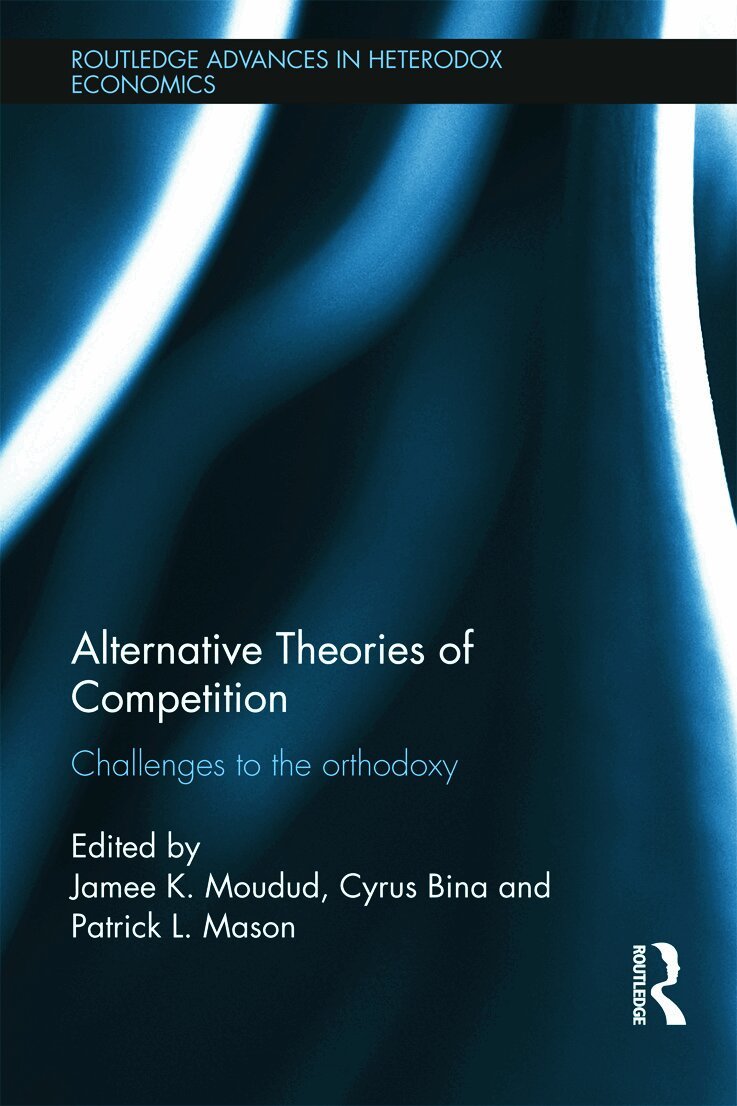
The history of policymaking has been dominated by two rival assumptions about markets. Those who have advocated Keynesian-type policies have generally based their arguments on the claim that markets are imperfectly competitive. On the other hand laissez faire advocates have argued the opposite by claiming that in fact free market policies will eliminate "market imperfections" and reinvigorate perfect competition.The goal of this book is to enter into this important debate by raising critical questions about the nature of market competition in both the neoclassical and Kaleckian traditionsBy drawing on the insights of the classical political economists, Schumpeter, Hayek, the Oxford Economists' Research Group (OERG) and others, the authors in this book challenge this perfect versus imperfect competition dichotomy in both theoretical and empirical terms. There are important differences between the theoretical perspectives of several authors in the broad alternative theoretical tradition defined by this book; nevertheless, a unifying theme throughout this volume is that competition is conceptualized as a dynamic disequilibrium process rather than the static equilibrium state of conventional theory. For many of the authors the growth of the firm is consistent with a heightened degree of competitiveness, as the classical economists and Schumpeter emphasized, and not a lowered one as in the conventional 'monopoly capital' and imperfect competition perspectives.Contributions by Rania Antonopoulos, Serdal Bahçe, Cyrus Bina, Scott Carter, Benan Eres, Jason Hecht, Jack High, William Lazonick, Andreìs Lazzarini, Fred S. Lee, J. Stanley Metcalfe, Jamee Moudud, John Sarich, Anwar Shaikh, Persefoni Tsaliki, Lefteris Tsoulfidis, and John Weeks.
578 kr
Skickas inom 10-15 vardagar
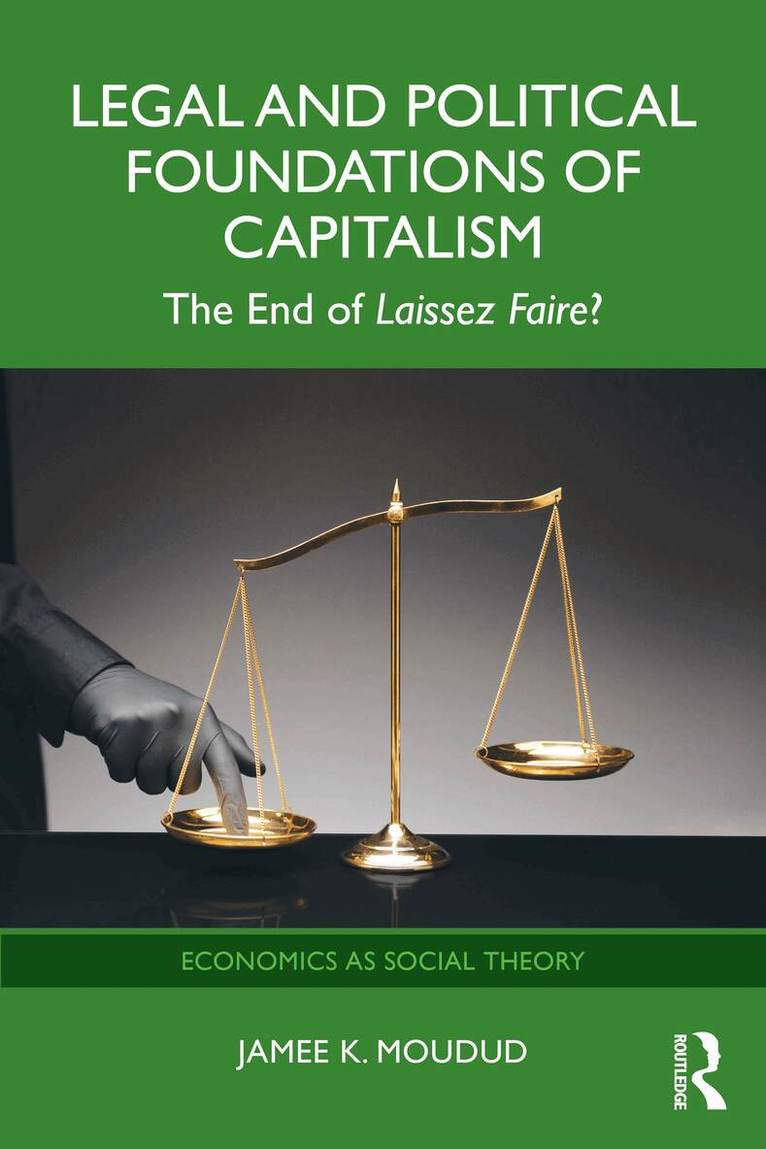
“Institutions matter” is a common refrain among all economists—including many who have proposed progressive alternatives to free market fundamentalism. However, this sentiment does not go far enough.This book draws principally on the Original Institutional Economics and American Legal Realist traditions to propose a theory of legal institutionalism or institutional political economy. By arguing that society is a political community it challenges the private law versus public law or state versus markets distinction. Focusing on property, money and credit, constitutional law, and corporations this book argues that laissez-faire has never existed and that “state intervention versus de-regulation” and “market failures versus free markets” are false dichotomies. This book proposes the need to engage with legal-economic theory and history to understand what institutions are, what economic regulation means, law’s intrinsic connection to the economy, and the distribution of power relations within capitalism.This book will be of interest to readers of economics, law, public policy, international and development studies, and all those seeking to explore progressive alternatives in this period of multiple crises.
2 113 kr
Skickas inom 10-15 vardagar
“Institutions matter” is a common refrain among all economists—including many who have proposed progressive alternatives to free market fundamentalism. However, this sentiment does not go far enough.This book draws principally on the Original Institutional Economics and American Legal Realist traditions to propose a theory of legal institutionalism or institutional political economy. By arguing that society is a political community it challenges the private law versus public law or state versus markets distinction. Focusing on property, money and credit, constitutional law, and corporations this book argues that laissez-faire has never existed and that “state intervention versus de-regulation” and “market failures versus free markets” are false dichotomies. This book proposes the need to engage with legal-economic theory and history to understand what institutions are, what economic regulation means, law’s intrinsic connection to the economy, and the distribution of power relations within capitalism.This book will be of interest to readers of economics, law, public policy, international and development studies, and all those seeking to explore progressive alternatives in this period of multiple crises.
833 kr
Skickas inom 10-15 vardagar
The history of policymaking has been dominated by two rival assumptions about markets. Those who have advocated Keynesian-type policies have generally based their arguments on the claim that markets are imperfectly competitive. On the other hand laissez faire advocates have argued the opposite by claiming that in fact free market policies will eliminate "market imperfections" and reinvigorate perfect competition.The goal of this book is to enter into this important debate by raising critical questions about the nature of market competition in both the neoclassical and Kaleckian traditionsBy drawing on the insights of the classical political economists, Schumpeter, Hayek, the Oxford Economists' Research Group (OERG) and others, the authors in this book challenge this perfect versus imperfect competition dichotomy in both theoretical and empirical terms. There are important differences between the theoretical perspectives of several authors in the broad alternative theoretical tradition defined by this book; nevertheless, a unifying theme throughout this volume is that competition is conceptualized as a dynamic disequilibrium process rather than the static equilibrium state of conventional theory. For many of the authors the growth of the firm is consistent with a heightened degree of competitiveness, as the classical economists and Schumpeter emphasized, and not a lowered one as in the conventional 'monopoly capital' and imperfect competition perspectives.Contributions by Rania Antonopoulos, Serdal Bahçe, Cyrus Bina, Scott Carter, Benan Eres, Jason Hecht, Jack High, William Lazonick, Andreìs Lazzarini, Fred S. Lee, J. Stanley Metcalfe, Jamee Moudud, John Sarich, Anwar Shaikh, Persefoni Tsaliki, Lefteris Tsoulfidis, and John Weeks.
1 695 kr
Skickas inom 7-10 vardagar
Jamee Moudud provides a new microfoundational explanation for the Harrodian long-run or warranted growth rate. The author, emphasizing the role of Keynesian uncertainty, shows that the growth model is anchored in a new interpretation of the Oxford Economists’ Research Group’s microeconomic analysis and a variant of the stock-flow consistent framework. In a distinctly Kaldorian vein, Jamee Moudud discusses the relationship between capital budgeting, public investment, and taxation policy as it relates to the warranted growth rate and its impact on long-term involuntary unemployment. Combining ideas from theorists involved in the Oxford Economists’ Research Group (especially Sir Roy Harrod, P.W.S. Andrews, and others), Kaldor, and Keynes, Jamee Moudud offers original insights into the impact of government spending and taxation policies on output. The book discusses and extends Harrod’s taxation-cum-public investment proposals to raise the warranted growth rate and strengthen the social safety net. Other topics explored in the text include: reasons that higher government spending/GDP shares have opposite short- and long-run effects, whether money supply can ever be different from money demand in a stock-flow consistent framework, and the effects of changes in the composition of government spending on the long-run growth path.The book provides the theoretical basis for new policy insights regarding the role of the state dealing with mass unemployment and poverty.Professional economists, graduate and advanced undergraduate students in economics, and policy researchers in international organizations will find this work a stimulating and thought-provoking addition to the field.