James A. Boon – författare
Visar alla böcker från författaren James A. Boon. Handla med fri frakt och snabb leverans.
6 produkter
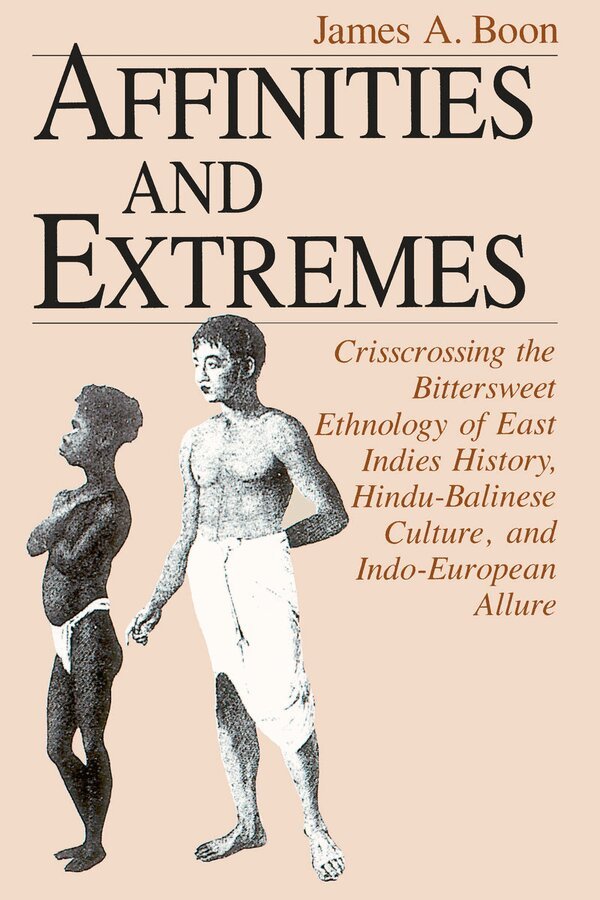
Affinities and Extremes
Crisscrossing the Bittersweet Ethnology of East Indies History, Hindu-Balinese Culture, and Indo-European Allure
Häftad, 1990
307 kr
Lägg i varukorg
Examining representations of Balinese culture in complex contexts of Indonesia's colonial history, Hindu ritual practice as opposed to Islam, and comparative Indo-European hierarchies, Boon offers a powerful critique of doctrinal approaches to culture, religion, literature, politics, and the …
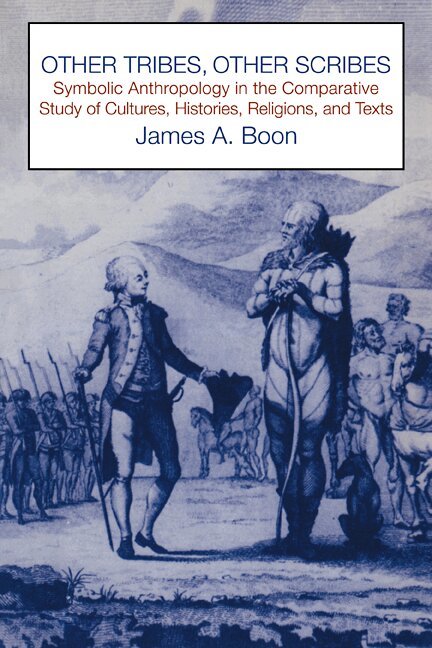
Other Tribes, Other Scribes
Symbolic Anthropology in the Comparative Study of Cultures, Histories, Religions and Texts
Häftad, 1983
569 kr
Lägg i varukorg
Any interpretation of another culture is itself embedded in a specific cultural context and historical moment. In this book, James A. Boon investigates the history, dialectics and practice of the symbolic analysis of cultural diversity. His aim is to formulate a general comparative approach to the …
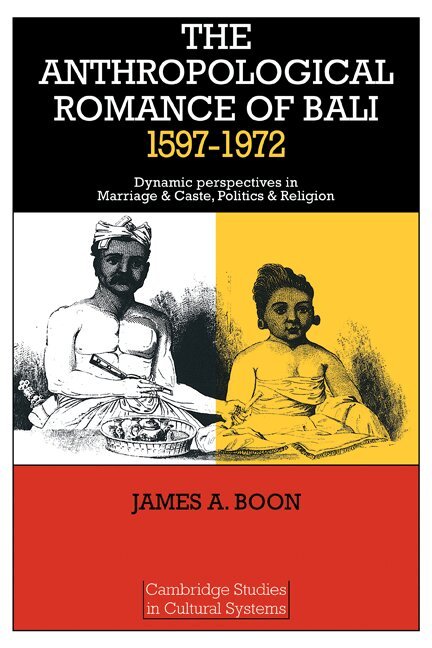
The Anthropological Romance of Bali 1597-1972
Dynamic Perspectives in Marriage and Caste, Politics and Religion
Häftad, 1977
569 kr
Lägg i varukorg
For centuries Bali has generated provocative - and often conflicting - images in the minds of ethnographers and travellers alike. Professor Boon places our current understanding of Bali within the context of historical views of Balinese life and religion, beginning with the initial Dutch contacts …
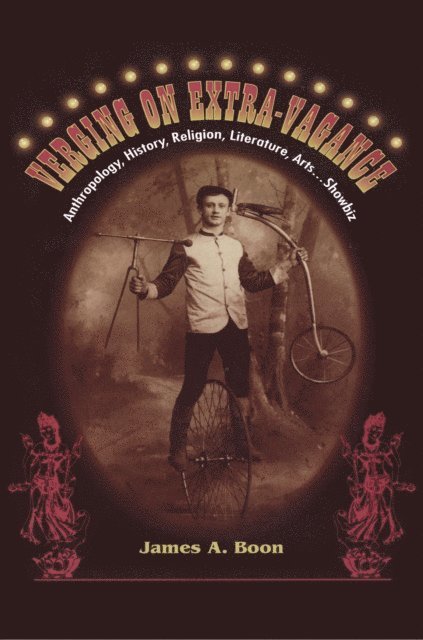
Verging on Extra-Vagance
Anthropology, History, Religion, Literature, Arts . . . Showbiz
Häftad, 1999
641 kr
Lägg i varukorg
In this book, James Boon ranges through history and around the globe in a series of provocative reflections on the limitations, attractions, and ambiguities of cultural interpretation. The book reflects the unusual keyword of its title, extra-vagance, a term Thoreau used to refer to thought that …
Verging on Extra-Vagance
Anthropology, History, Religion, Literature, Arts . . . Showbiz
E-bok, 2021
837 kr
Lägg i varukorg
In this book, James Boon ranges through history and around the globe in a series of provocative reflections on the limitations, attractions, and ambiguities of cultural interpretation. The book reflects the unusual keyword of its title, extra-vagance, a term Thoreau used to refer to thought that …
Affinities and Extremes
Crisscrossing the Bittersweet Ethnology of East Indies History, Hindu-Balinese Culture, and Indo-European Allure
Inbunden, 1990
941 kr
Tillfälligt slut
Examining representations of Balinese culture in complex contexts of Indonesia's colonial history, Hindu ritual practice as opposed to Islam, and comparative Indo-European hierarchies, Boon offers a powerful critique of doctrinal approaches to culture, religion, literature, politics, and the …