James A. Harris – författare
Visar alla böcker från författaren James A. Harris. Handla med fri frakt och snabb leverans.
25 produkter
Hume
A Very Short Introduction
Häftad, 2021
120 kr
Lägg i varukorg
David Hume, philosopher, historian, economist, librarian, and essayist, was one of the great figures of the European Enlightenment. Unlike some of his famous contemporaries, however, he was not dogmatically committed to idealised conceptions of reason, liberty, and progress. Instead, Hume was a …
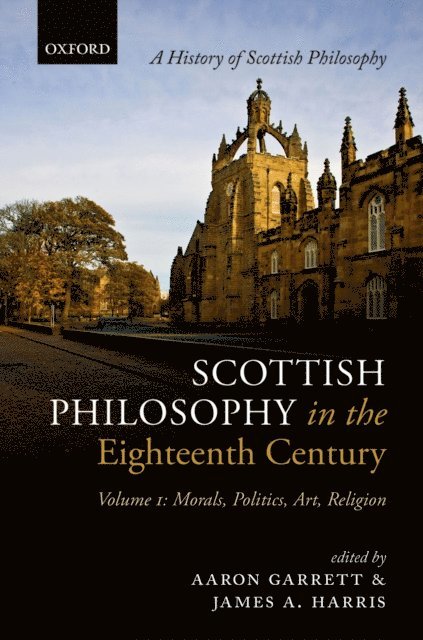
Scottish Philosophy in the Eighteenth Century, Volume I
Morals, Politics, Art, Religion
Av James A. Harris, Aaron Garrett
E-bok, 2015
1467 kr
Lägg i varukorg
A History of Scottish Philosophy is a series of collaborative studies by expert authors, each volume being devoted to a specific period. Together they provide a comprehensive account of the Scottish philosophical tradition, from the centuries that laid the foundation of the remarkable burst of …
Oxford Handbook of British Philosophy in the Eighteenth Century
E-bok, 2013
495 kr
Lägg i varukorg
Philosophy in eighteenth-century Britain was diverse, vibrant, and sophisticated. This was the age of Hume and Berkeley and Reid, of Hutcheson and Kames and Smith, of Ferguson and Burke and Wollstonecraft. Important and influential works were published in every area of philosophy, from the theory …
Oxford Handbook of British Philosophy in the Eighteenth Century
E-bok, 2013
495 kr
Lägg i varukorg
Philosophy in eighteenth-century Britain was diverse, vibrant, and sophisticated. This was the age of Hume and Berkeley and Reid, of Hutcheson and Kames and Smith, of Ferguson and Burke and Wollstonecraft. Important and influential works were published in every area of philosophy, from the theory …
Scottish Philosophy in the Eighteenth Century, Volume I
Morals, Politics, Art, Religion
Av James A. Harris, Aaron Garrett
E-bok, 2015
1467 kr
Lägg i varukorg
A History of Scottish Philosophy is a series of collaborative studies by expert authors, each volume being devoted to a specific period. Together they provide a comprehensive account of the Scottish philosophical tradition, from the centuries that laid the foundation of the remarkable burst of …
Of Liberty and Necessity
The Free Will Debate in Eighteenth-Century British Philosophy
E-bok, 2005
571 kr
Lägg i varukorg
In Of Liberty and Necessity James A. Harris presents the first comprehensive account of the free will problem in eighteenth-century British philosophy. Harris proposes new interpretations of the positions of familiar figures such as Locke, Hume, Edwards, and Reid. He also gives careful attention to …
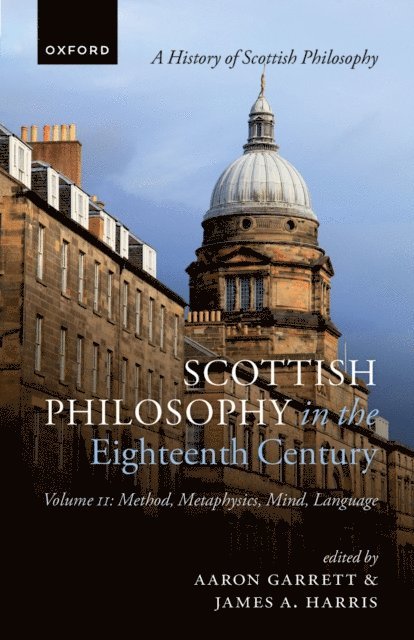
Scottish Philosophy in the Eighteenth Century, Volume II
Method, Metaphysics, Mind, Language
Av James A. Harris, Aaron Garrett
E-bok, 2023
1283 kr
Lägg i varukorg
A History of Scottish Philosophy is a series of collaborative studies by expert authors, each volume being devoted to a specific period. Together they provide a comprehensive account of the Scottish philosophical tradition, from the centuries that laid the foundation of the remarkable burst of …
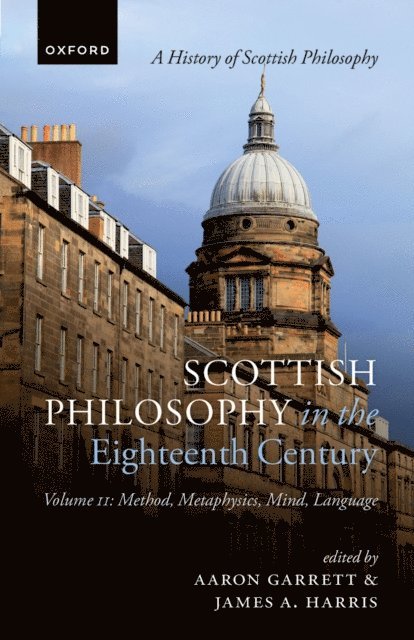
Scottish Philosophy in the Eighteenth Century, Volume II
Method, Metaphysics, Mind, Language
Av James A. Harris, Aaron Garrett
E-bok, 2023
1283 kr
Lägg i varukorg
A History of Scottish Philosophy is a series of collaborative studies by expert authors, each volume being devoted to a specific period. Together they provide a comprehensive account of the Scottish philosophical tradition, from the centuries that laid the foundation of the remarkable burst of …
Hume
A Very Short Introduction
E-bok, 2021
98 kr
Lägg i varukorg
David Hume, philosopher, historian, economist, librarian, and essayist, was one of the great figures of the European Enlightenment. Unlike some of his famous contemporaries, however, he was not dogmatically committed to idealised conceptions of reason, liberty, and progress. Instead, Hume was a …
Hume
A Very Short Introduction
E-bok, 2021
98 kr
Lägg i varukorg
David Hume, philosopher, historian, economist, librarian, and essayist, was one of the great figures of the European Enlightenment. Unlike some of his famous contemporaries, however, he was not dogmatically committed to idealised conceptions of reason, liberty, and progress. Instead, Hume was a …
The Oxford Handbook of British Philosophy in the Eighteenth Century
Häftad, 2017
730 kr
Lägg i varukorg
Philosophy in eighteenth-century Britain was diverse, vibrant, and sophisticated. This was the age of Hume and Berkeley and Reid, of Hutcheson and Kames and Smith, of Ferguson and Burke and Wollstonecraft. Important and influential works were published in every area of philosophy, from the theory …
Scottish Philosophy in the Eighteenth Century, Volume II
Method, Metaphysics, Mind, Language
Av Aaron Garrett, James A. Harris
Inbunden, 2023
1433 kr
Lägg i varukorg
A History of Scottish Philosophy is a series of collaborative studies by expert authors, each volume being devoted to a specific period. Together they provide a comprehensive account of the Scottish philosophical tradition, from the centuries that laid the foundation of the remarkable burst of …
Of Liberty and Necessity
The Free Will Debate in Eighteenth-Century British Philosophy
Häftad, 2007
1025 kr
Lägg i varukorg
In Of Liberty and Necessity James A. Harris presents the first comprehensive account of the free will problem in eighteenth-century British philosophy. Harris proposes new interpretations of the positions of familiar figures such as Locke, Hume, Edwards, and Reid. He also gives careful attention to …
Of Liberty and Necessity
The Free Will Debate in Eighteenth-Century British Philosophy
Inbunden, 2005
2490 kr
Lägg i varukorg
In Of Liberty and Necessity James A. Harris presents the first comprehensive account of the free will problem in eighteenth-century British philosophy. Harris proposes new interpretations of the positions of familiar figures such as Locke, Hume, Edwards, and Reid. He also gives careful attention to …
The Oxford Handbook of British Philosophy in the Eighteenth Century
Inbunden, 2013
2902 kr
Lägg i varukorg
Philosophy in eighteenth-century Britain was diverse, vibrant, and sophisticated. This was the age of Hume and Berkeley and Reid, of Hutcheson and Kames and Smith, of Ferguson and Burke and Wollstonecraft. Important and influential works were published in every area of philosophy, from the theory …
Scottish Philosophy in the Eighteenth Century, Volume I
Morals, Politics, Art, Religion
Av Aaron Garrett, Aaron Garrett m. fl.
Inbunden, 2015
2260 kr
Lägg i varukorg
A History of Scottish Philosophy is a series of collaborative studies by expert authors, each volume being devoted to a specific period. Together they provide a comprehensive account of the Scottish philosophical tradition, from the centuries that laid the foundation of the remarkable burst of …
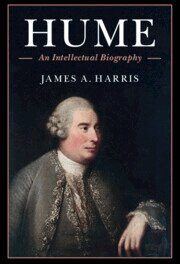
Hume
An Intellectual Biography
Inbunden, 2015
813 kr
Lägg i varukorg
This is the first book to provide a comprehensive overview of the entire career of one of Britain's greatest men of letters. It sets in biographical and historical context all of Hume's works, from A Treatise of Human Nature to The History of England, bringing to light the major influences on the …
Sketches of the History of Man -- 3-Volume Set
Av Kames, James A. Harris m. fl.
Inbunden, 2007
784 kr
Lägg i varukorg
Henry Home, Lord Kames, was by nature an advocate for reform and improvement and stood at the heart of the modernizing and liberalizing movement now known as the Scottish Enlightenment. The reaction to his Essays on the Principles of Morality and Natural Religion was a defining moment in the …
Historical Law-Tracts
Av Henry Home, James A. Harris m. fl.
Inbunden, 2019
244 kr
Lägg i varukorg
Kames presents a history of law as a history of the progress of humankind from savage to civil society.
Redcoats in the Wilderness
Historical Miniatures Rules for the Wilderness Wars of the 18th Century
Av James A Harris, Philip S Bock m. fl.
Häftad, 2019
351 kr
Lägg i varukorg
Hume
An Intellectual Biography
Häftad, 2018
585 kr
Lägg i varukorg
This is the first book to provide a comprehensive overview of the entire career of one of Britain's greatest men of letters. It sets in biographical and historical context all of Hume's works, from A Treatise of Human Nature to The History of England, bringing to light the major influences on the …
Fall of Centuria
Av James A Harris, Alice Osborn
Häftad, 2015
220 kr
Lägg i varukorg
In the world of Palatovia, a demon lord seeks an ancient artifact, the Book of Stars, in the city of Centuria to gain power over the entire planet. Through his dark arts, he now commands all of the demons and other vulgar beasts, including several members of the royal family now existing as demons. …
Sketches of the History of Man (in 3 volumes)
In Three Volumes
Av Lord (Henry Home) Kames, James A. Harris
E-bok, 2007
92 kr
Lägg i varukorg
Divided into three books, Kames’s Sketches of the History of Man draws together the concerns of many of his earlier works. The first book considers man in the private sphere, while the second explores man in the public sphere. The final book is an account of progress in the sciences of logic, …
Historical Law-Tracts
The Fourth Edition with Additions and Corrections
Av Lord Kames Henry Home, James A. Harris m. fl.
E-bok, 2019
80 kr
Lägg i varukorg
Historical Law-Tracts is one of the earliest contributions to the Scottish Enlightenment project of a historical science of society. Henry Home, Lord Kames (1696–1782), was an influential Scottish juEAe, a prolific man of letters, and one of the leading figures of the Enlightenment in Scotland, and …
Hume : liv och tänkande
E-bok, 2019
99 kr
Lägg i varukorg
David Hume (1711 1776) är en av Storbritanniens största tänkare genom tiderna. James A. Harris Hume: Liv och tänkande är den första större studien av hans litterära karriär i sin helhet. Här sätts Humes alla arbeten in i sin biografiska och historiska kontext, från det epokgörande ungdomsverket A …