James A. Sweeney - Böcker
Visar alla böcker från författaren James A. Sweeney. Handla med fri frakt och snabb leverans.
7 produkter
7 produkter
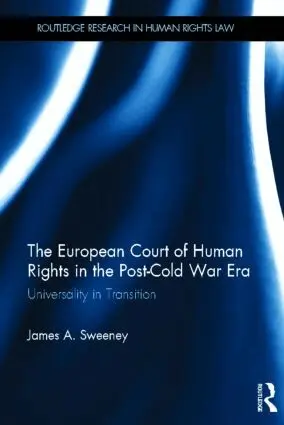
European Court of Human Rights in the Post-Cold War Era
Universality in Transition
Inbunden, Engelska, 2012
1 997 kr
Skickas inom 10-15 vardagar
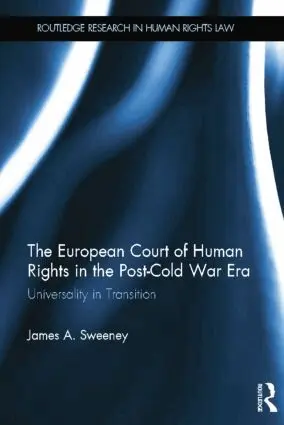
The European Court of Human Rights in the Post-Cold War Era: Universality in Transition examines transitional justice from the perspective of its impact on the universality of human rights, taking the jurisprudence of the European Court of Human Rights as its detailed case study. The problem is twofold: there are questions about differences in human rights standards between transitional and non-transitional situations, and about differences between transitions.The European Court has been a vital part of European democratic consolidation and integration for over half a century, setting meaningful standards and offering legal remedies to the individually repressed, the politically vulnerable, and the socially excluded. After their emancipation from Soviet influence in the 1990s, and with membership of the European Union in mind for many, the new democracies of Central and Eastern Europe flocked to the Convention system. The voluminous jurisprudence of the European Court of Human Rights can now give us some clear information about how an international human rights law regime can interact with transitional justice. The jurisprudence is divided between those cases concerning the human rights implications of explicitly transitional policies (such as lustration), and those that involve impacts upon specific democratic rights during the transition. The book presents a close examination of claims by states that transitional policies and priorities require a level of deference from the Strasbourg institutions. The book proposes that states’ claims for leeway from international human rights supervisory mechanisms during times of transition can be characterised not as arguments for cultural relativism, but for ‘transitional relativism’.
1 997 kr
Skickas inom 10-15 vardagar
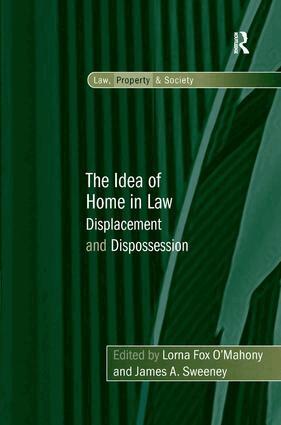
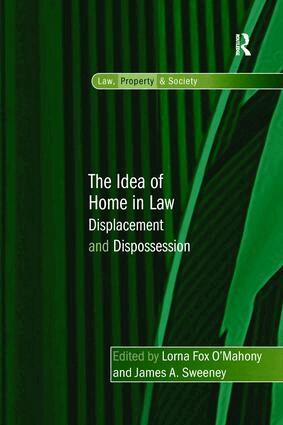
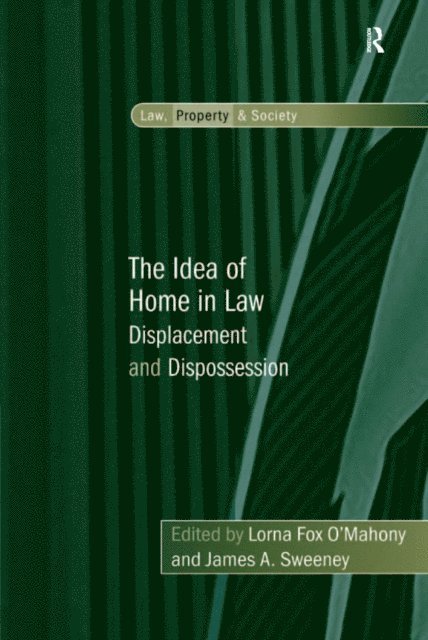
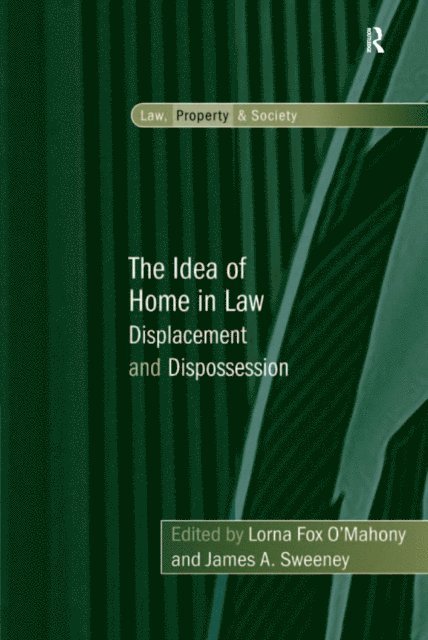
The Idea of Home in Law: Displacement and Dispossession explores an important set of legal and policy issues surrounding the concepts of home and homelessness, taking a growing area of legal scholarship into the new arena of human rights and international law. The collection considers the ideas concerning home - both in the sense of the dwelling place as a special type of property, and territorial claims to homeland - which underpin many contemporary legal problems, by examining a range of contexts where people are displaced or dispossessed from their homes. The essays focusing on dispossession consider themes ranging from mortgage and rent arrears in the UK to responses to the foreclosure crisis in the USA, and from eviction for the purposes of economic development in South Africa to the exclusion of asylum seekers from the UK's social housing and welfare provision, and within the framework of the European Convention on Human Rights. The displacement theme, meanwhile, examines transnational 'home' issues from the experiences of exiles and refugees in areas of conflict to the impact of the broader context of economic, social and cultural rights on attempts to protect housing and home through international law. At the heart of each essay the contributors, experts from across the fields of law, policy, and housing rights, examine the circumstances in which displacement and dispossession take place, and reconsider how law and policy respond to such circumstances with a particular focus on the impact of loss of home for the human person. At a time of particular and increasing concern about security of tenure and the role of law and policy in protecting people who are vulnerable to forced eviction, The Idea of Home in Law presents a bold opportunity to raise questions about the 'rights' and norms associated with housing and home, and to generate new insights for scholarship and for national and international policy debates concerning displacement and dispossession.
697 kr
Skickas inom 10-15 vardagar
The Idea of Home in Law: Displacement and Dispossession explores an important set of legal and policy issues surrounding the concepts of home and homelessness, taking a growing area of legal scholarship into the new arena of human rights and international law. The collection considers the ideas concerning home - both in the sense of the dwelling place as a special type of property, and territorial claims to homeland - which underpin many contemporary legal problems, by examining a range of contexts where people are displaced or dispossessed from their homes. The essays focusing on dispossession consider themes ranging from mortgage and rent arrears in the UK to responses to the foreclosure crisis in the USA, and from eviction for the purposes of economic development in South Africa to the exclusion of asylum seekers from the UK's social housing and welfare provision, and within the framework of the European Convention on Human Rights. The displacement theme, meanwhile, examines transnational 'home' issues from the experiences of exiles and refugees in areas of conflict to the impact of the broader context of economic, social and cultural rights on attempts to protect housing and home through international law. At the heart of each essay the contributors, experts from across the fields of law, policy, and housing rights, examine the circumstances in which displacement and dispossession take place, and reconsider how law and policy respond to such circumstances with a particular focus on the impact of loss of home for the human person. At a time of particular and increasing concern about security of tenure and the role of law and policy in protecting people who are vulnerable to forced eviction, The Idea of Home in Law presents a bold opportunity to raise questions about the 'rights' and norms associated with housing and home, and to generate new insights for scholarship and for national and international policy debates concerning displacement and dispossession.
697 kr
Skickas inom 10-15 vardagar
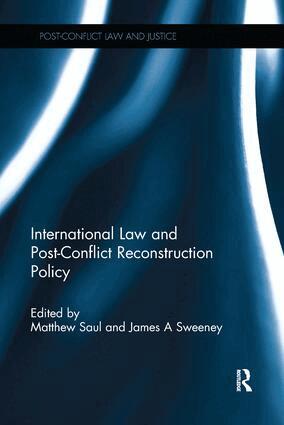
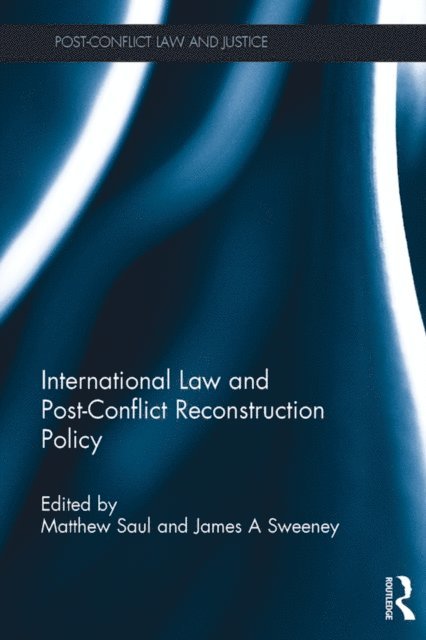
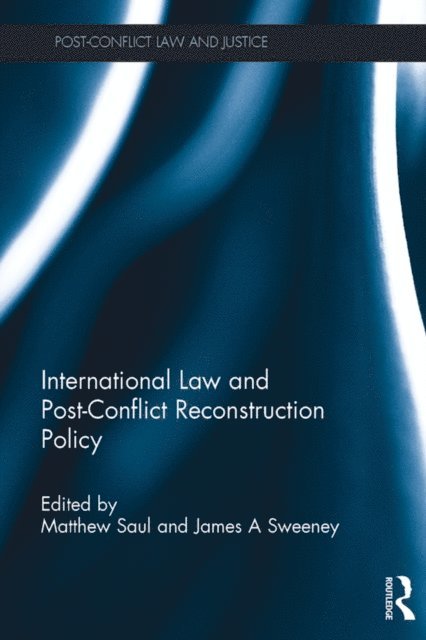
The trend for international engagement in post-conflict reconstruction has produced a host of best-practice postulates on topics such as local involvement in decision-making, accountability for past atrocities, sensitivity to context, and the construction of democratic institutions of governance. International law has potential relevance for many of these themes, yet the question of how the implementation of best-practice policy recommendations might be affected by international law remains under-examined. This book offers a fuller understanding of the role of international law in the practice of post-conflict reconstruction. It explores how international legal issues that arise in the post-conflict period relate to a number of strands of the policy debate, including government creation, constitution-making, gender policy, provision of security, justice for past atrocities, rule of law development, economic recovery, returning displaced persons, and responsibilities of international actors. The chapters of the book work to reveal the extent to which international law figures in the policy of internationally enabled post-conflict reconstruction across a range of sectors. They also highlight the scope for international law to be harnessed in a more effective manner from the perspective of the transition to peace and stability. The book lays out a basis for future policy making on post-conflict reconstruction; one that is informed about the international legal parameters, and more aware of how international law can be utilized to promote key objectives.
2 121 kr
Skickas inom 10-15 vardagar
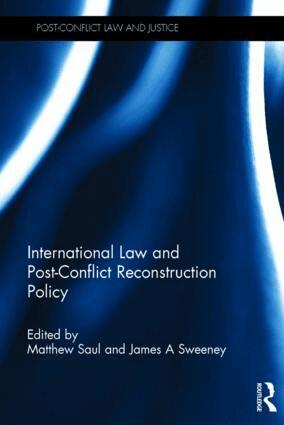
The trend for international engagement in post-conflict reconstruction has produced a host of best-practice postulates on topics such as local involvement in decision-making, accountability for past atrocities, sensitivity to context, and the construction of democratic institutions of governance. International law has potential relevance for many of these themes, yet the question of how the implementation of best-practice policy recommendations might be affected by international law remains under-examined. This book offers a fuller understanding of the role of international law in the practice of post-conflict reconstruction. It explores how international legal issues that arise in the post-conflict period relate to a number of strands of the policy debate, including government creation, constitution-making, gender policy, provision of security, justice for past atrocities, rule of law development, economic recovery, returning displaced persons, and responsibilities of international actors. The chapters of the book work to reveal the extent to which international law figures in the policy of internationally enabled post-conflict reconstruction across a range of sectors. They also highlight the scope for international law to be harnessed in a more effective manner from the perspective of the transition to peace and stability. The book lays out a basis for future policy making on post-conflict reconstruction; one that is informed about the international legal parameters, and more aware of how international law can be utilized to promote key objectives.
European Court of Human Rights in the Post-Cold War Era
Universality in Transition
Häftad, Engelska, 2014
534 kr
Skickas inom 10-15 vardagar
The European Court of Human Rights in the Post-Cold War Era: Universality in Transition examines transitional justice from the perspective of its impact on the universality of human rights, taking the jurisprudence of the European Court of Human Rights as its detailed case study. The problem is twofold: there are questions about differences in human rights standards between transitional and non-transitional situations, and about differences between transitions.The European Court has been a vital part of European democratic consolidation and integration for over half a century, setting meaningful standards and offering legal remedies to the individually repressed, the politically vulnerable, and the socially excluded. After their emancipation from Soviet influence in the 1990s, and with membership of the European Union in mind for many, the new democracies of Central and Eastern Europe flocked to the Convention system. The voluminous jurisprudence of the European Court of Human Rights can now give us some clear information about how an international human rights law regime can interact with transitional justice. The jurisprudence is divided between those cases concerning the human rights implications of explicitly transitional policies (such as lustration), and those that involve impacts upon specific democratic rights during the transition. The book presents a close examination of claims by states that transitional policies and priorities require a level of deference from the Strasbourg institutions. The book proposes that states’ claims for leeway from international human rights supervisory mechanisms during times of transition can be characterised not as arguments for cultural relativism, but for ‘transitional relativism’.
620 kr
Skickas inom 5-8 vardagar