James A. van Dyke – författare
Visar alla böcker från författaren James A. van Dyke. Handla med fri frakt och snabb leverans.
2 produkter
2 produkter
622 kr
Kommande
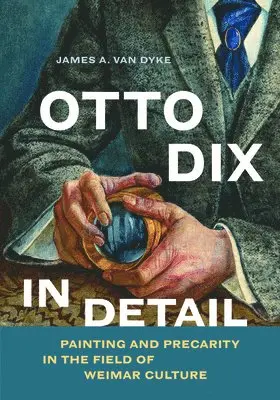
How small details in the paintings of Otto Dix materialize the realities of a modern German artist. Offering a fresh look at German art during a period of extraordinary transition and precarity, James A. van Dyke focuses on overlooked but critically significant details in works completed by Otto Dix between 1919 and 1936. A small lump of paint, a monogram, an almost invisible self-portrait, the verso of a drawing, a patch of discoloration, and a web of fine cracks—van Dyke reveals such details, hidden in plain sight, as coded dialogue through which Dix addressed audiences and art-world insiders amid the combative world of cultural production in Weimar Germany. Sly, cutting, and provocative, these are the material traces of social relationships between the painter and those who represented threats to his professional ambition: an avant-garde mentor and rival, an increasingly skeptical critic, a prominent bourgeois photographer, and a local Nazi authority. Proving that small things offer insight into the big picture, this book highlights Dix’s satirical, transgressive work as nuanced and polyvocal, reflecting the complex fields of power and economics in which the field of art is located.
1 226 kr
Skickas inom 7-10 vardagar
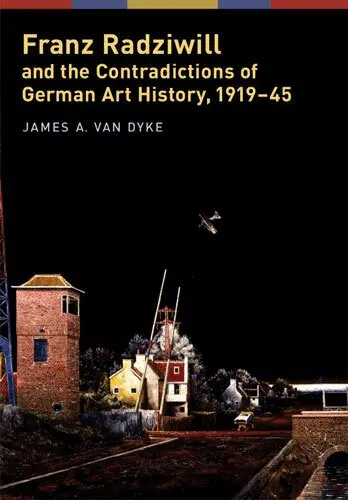
"Van Dyke has taken a risk and succeeded masterfully. His book means a major step to our understanding of the art world and the cultural politics during the Weimar Republic and the Third Reich. This case study, with its methodological approach, its close reading and contextualization, is a superb work and contributes to central debates about modernity and art history."---Olaf Peters, Department of Art History, Martin Luther University, Halle-Wittenberg"James van Dyke has made a critically important contribution not only to German art studies, but also to the broader investigation---in history, literary studies, and cultural studies---of early twentieth century 'modernities.'"---Barbara McCloskey, University of Pittsburgh"Far more than a monograph on an individual painter, this carefully researched work of critical art history captures the complexities and paradoxes of culture during the Third Reich. James van Dyke's examination of Franz Radziwill---arguably the preeminent 'reactionary modernist' artist of the time---shows that success during the Weimar Republic did not preclude an attempt to find accommodation with the Nazi regime. Many modernist cultural figures sought to find a place in the Third Reich, and while this proved difficult, their experiences undoubtedly challenge the notion of a monolithic 'Nazi art.'"---Jonathan Petropoulos, author of The Faustian Bargain: The Art World in Nazi GermanyWhat was Nazi art? For the most part, we think of traditionally painted scenes of peasants plowing; blonde German girls with or without clothes; and heroically posed, square-jawed soldiers. When we think of modern art in Nazi Germany, we typically think above all of the infamous exhibition "Degenerate Art," which opened in Munich in July 1937. While these associations are not entirely wrong, the relationship between modern German art and National Socialism is considerably more complex than has generally been understood. In Franz Radziwill and the Contradictions of German Art History, 1919–45, James A. van Dyke tells the story of a well-known modern artist who regarded modernity and civilization with deep ambivalence during the 1920s and then for a time became a strong supporter of National Socialism. Radziwill's art, politics, and career are embedded in the debates about the definition of German art and state art policy in and after Hitler's rise. Challenging the monolithic view of "the Nazis," this book details how a painter could be championed by certain powerful National Socialists and be seen as a "degenerate" artist by others, how he could criticize the state and yet fight for the Fatherland, and how the unevenness of Hitler's state could foster hope and resistance even in a man who ultimately was deeply distressed by events.James A. van Dyke is Assistant Professor of Modern European Art History in the Department of Art History and Archaeology at the University of Missouri in Columbia, Missouri, and has published extensively on German modern art.Jacket art: Franz Radziwill, The Death Dive of Karl Buchstätter, 1928, oil on canvas on masonite, 90 × 95 cm. Museum Folkwang Essen. (Photo: Jens Nober.) © 2010 Artists Rights Society (ARS), New York / VG Bild-Kunst, Bonn.