James A. Woodbridge - Böcker
Visar alla böcker från författaren James A. Woodbridge. Handla med fri frakt och snabb leverans.
4 produkter
4 produkter
1 456 kr
Skickas inom 3-6 vardagar
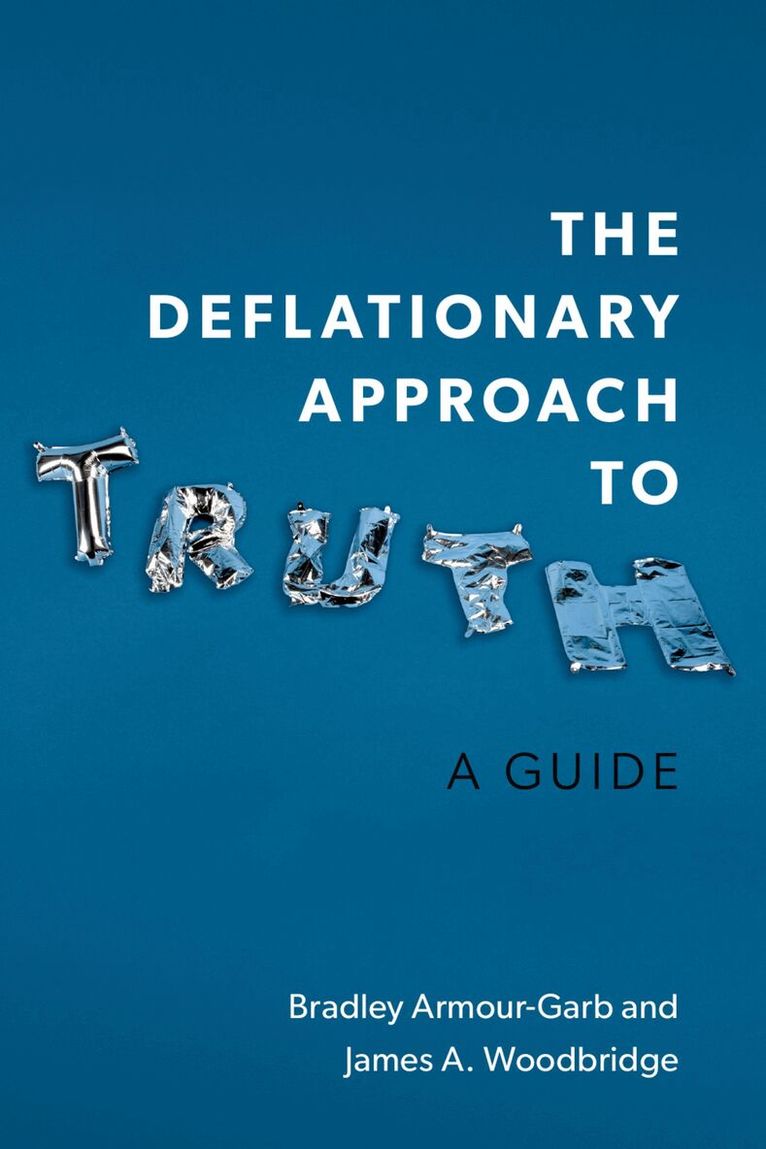
"Deflationary" theories are views about truth that are often, but not always, characterized as accounts that accept the utility of the truth predicate without granting the metaphysical or epistemological assumptions that usually go along with it. The Deflationary Approach to Truth: A Guide presents a detailed, up-to-date, and historically informed survey and critical explication of the deflationary approach to the topic of truth, paying special attention to the wide range of various deflationary theories. In Part One, Bradley Armour-Garb and James A. Woodbridge explain what the deflationary approach to truth involves and develop a useful framework that clarifies how it differs from the traditional, "inflationary" approach. The framework illuminates certain general deflationary themes in terms of what Armour-Garb and Woodbridge call broad four-dimensional deflationism. This analysis reveals four different dimensions that any deflationary account must satisfy: Linguistic Deflationism, Metaphysical Deflationism, Conceptual Deflationism, and Paradox Treatment Deflationism. Armour-Garb and Woodbridge examine the degree to which these dimensions are displayed in early, "proto-deflationary" accounts before explaining the different contemporary deflationary views and assessing the degree to which these accounts adhere to the four deflationary dimensions, differ from inflationism, and differ from each other. In Part Two, Armour-Garb and Woodbridge examine various challenges to deflationism, systematizing them by considering each deflationary dimension and grouping the challenges in terms of which dimension they target. For each challenge, they explain its historical development and investigate the extent to which the most prominent contemporary deflationary accounts answer, or fail to answer, that challenge. In Part Three, Armour-Garb and Woodbridge explore fruitful new directions for deflationism and develop a version of the approach that they think best handles the challenges that are examined in Part Two. The result is an accessible yet comprehensive overview of the challenges to and merits of the deflationary approach to truth.
278 kr
Skickas inom 5-8 vardagar
"Deflationary" theories are views about truth that are often, but not always, characterized as accounts that accept the utility of the truth predicate without granting the metaphysical or epistemological assumptions that usually go along with it. The Deflationary Approach to Truth: A Guide presents a detailed, up-to-date, and historically informed survey and critical explication of the deflationary approach to the topic of truth, paying special attention to the wide range of various deflationary theories. In Part One, Bradley Armour-Garb and James A. Woodbridge explain what the deflationary approach to truth involves and develop a useful framework that clarifies how it differs from the traditional, "inflationary" approach. The framework illuminates certain general deflationary themes in terms of what Armour-Garb and Woodbridge call broad four-dimensional deflationism. This analysis reveals four different dimensions that any deflationary account must satisfy: Linguistic Deflationism, Metaphysical Deflationism, Conceptual Deflationism, and Paradox Treatment Deflationism. Armour-Garb and Woodbridge examine the degree to which these dimensions are displayed in early, "proto-deflationary" accounts before explaining the different contemporary deflationary views and assessing the degree to which these accounts adhere to the four deflationary dimensions, differ from inflationism, and differ from each other. In Part Two, Armour-Garb and Woodbridge examine various challenges to deflationism, systematizing them by considering each deflationary dimension and grouping the challenges in terms of which dimension they target. For each challenge, they explain its historical development and investigate the extent to which the most prominent contemporary deflationary accounts answer, or fail to answer, that challenge. In Part Three, Armour-Garb and Woodbridge explore fruitful new directions for deflationism and develop a version of the approach that they think best handles the challenges that are examined in Part Two. The result is an accessible yet comprehensive overview of the challenges to and merits of the deflationary approach to truth.
1 126 kr
Skickas inom 7-10 vardagar
In this book, Bradley Armour-Garb and James A. Woodbridge distinguish various species of fictionalism, locating and defending their own version of philosophical fictionalism. Addressing semantic and philosophical puzzles that arise from ordinary language, they consider such issues as the problem of non-being, plural identity claims, mental-attitude ascriptions, meaning attributions, and truth-talk. They consider 'deflationism about truth', explaining why deflationists should be fictionalists, and show how their philosophical fictionalist account of truth-talk underwrites a dissolution of the Liar Paradox and its kin. They further explore the semantic notions of reference and predicate-satisfaction, showing how philosophical fictionalism can also resolve puzzles that these notions appear to present. Their critical examination of fictionalist approaches in philosophy, together with the development and application of their own brand of philosophical fictionalism, will be of great interest to scholars and upper-level students of philosophy of language, metaphysics, philosophical logic, philosophy of mind, epistemology, and linguistics.
428 kr
Skickas inom 7-10 vardagar
In this book, Bradley Armour-Garb and James A. Woodbridge distinguish various species of fictionalism, locating and defending their own version of philosophical fictionalism. Addressing semantic and philosophical puzzles that arise from ordinary language, they consider such issues as the problem of non-being, plural identity claims, mental-attitude ascriptions, meaning attributions, and truth-talk. They consider 'deflationism about truth', explaining why deflationists should be fictionalists, and show how their philosophical fictionalist account of truth-talk underwrites a dissolution of the Liar Paradox and its kin. They further explore the semantic notions of reference and predicate-satisfaction, showing how philosophical fictionalism can also resolve puzzles that these notions appear to present. Their critical examination of fictionalist approaches in philosophy, together with the development and application of their own brand of philosophical fictionalism, will be of great interest to scholars and upper-level students of philosophy of language, metaphysics, philosophical logic, philosophy of mind, epistemology, and linguistics.