James Allen Evans - Böcker
Visar alla böcker från författaren James Allen Evans. Handla med fri frakt och snabb leverans.
2 produkter
2 produkter
626 kr
Skickas inom 10-15 vardagar
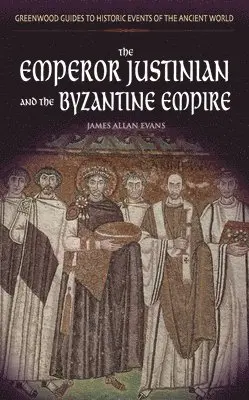
When Justinian first assumed the title of Roman Emperor in 527 CE, his inherited empire—now based in Constantinople— had lost almost all of its connection with the Eternal City itself, and was threatened from within by profound theological splits, and from without by the various barbarian kingdoms that surrounded it. By taking military action against the barbarian Ostrogoths, Visigoths, and Vandals, and signing an eternal peace with Persia, Justinian managed to reclaim much of the lands formerly held by Rome; while through his incessant legislation and monetary contributions to an extensive building program, he sought to reestablish the old Roman cultural institutions of order and architectural beauty in his newly won kingdom. This inveterate reformer and innovative leader, whose name remains on the beams of the Hagia Sophia, and whose influence extends into the legal practices of the present time, remains as compelling a man today as he was to his original historians almost 1500 years ago.Designed as an accessible introduction to Justinian's reign and his time, The Emperor Justinian and the Byzantine Empire offers readers and researchers an appealing mix of descriptive chapters, biographical sketches, and annotated primary documents. An overview of the world of Late Antiquity is presented in the introduction, and is followed by chapters on the shape of the Empire, the Nike revolt of 532, the legal achievements of Justinian, the Empress Theodora, and Justinian's building program. The narrative chapters conclude with a section discussing the imperial achievements as a whole. An annotated bibliography and index are also included in this work.
764 kr
Skickas inom 10-15 vardagar
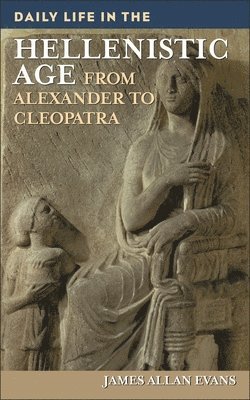
The Hellenistic world, ushered into existance by Alexander the Great, took in a vast region, stretching from Iraq in the east to Sicily in the west. Within this area, society was multicultural but the dominant culture was Greek, developed from the culture of classical Greece, and carrying on the legacy of classical Greece in the visual arts, literature, science, technology, and daily life.Narrative chapters guide the reader though the vast conquered lands of Hellenistic Greece, exploring marriage customs; festivals, sports, and spectacles; symposia (drinking parties); the agricultural and urban components of the polis (city-state); food; drink; education; science; technology; and the legacy of the Hellenistic age in the modern world.