James Coyne - Böcker
Visar alla böcker från författaren James Coyne. Handla med fri frakt och snabb leverans.
6 produkter
6 produkter
941 kr
Skickas inom 10-15 vardagar
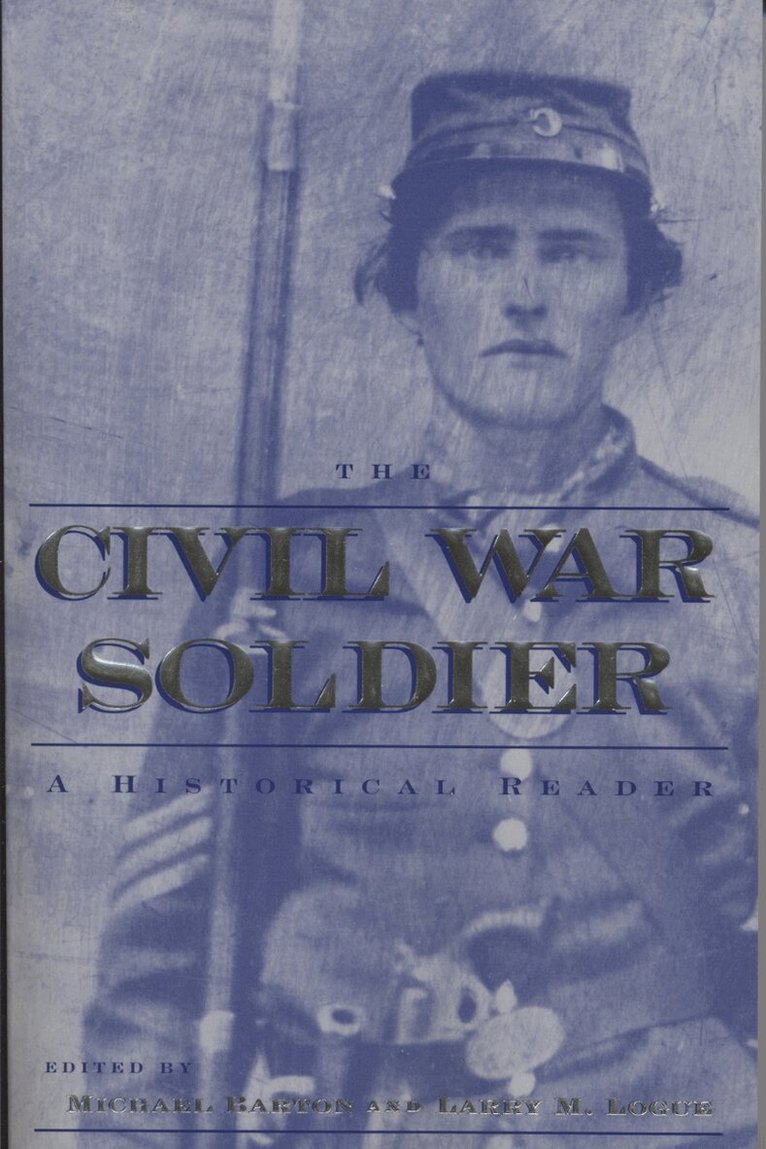
An anthology of landmark scholarship on the histories of the common soldier in the U.S. Civil WarIn 1943, Bell Wiley's groundbreaking book Johnny Reb launched a new area of study: the history of the common soldier in the U.S. Civil War. This anthology brings together landmark scholarship on the subject, from a 19th century account of life as a soldier to contemporary work on women who, disguised as men, joined the army.One of the only available compilations on the subject, The Civil War Soldier answers a wide range of provocative questions: What were the differences between Union and Confederate soldiers? What were soldiers' motivations for joining the army—their "will to combat"? How can we evaluate the psychological impact of military service on individual morale? Is there a basis for comparison between the experiences of Civil War soldiers and those who fought in World War II or Vietnam? How did the experiences of black soldiers in the Union army differ from those of their white comrades? And why were southern soldiers especially drawn to evangelical preaching?Offering a host of diverse perspectives on these issues, The Civil War Soldier is the perfect introduction to the topic, for the student and the Civil War enthusiast alike.Contributors: Michael Barton, Eric T. Dean, David Donald, Drew Gilpin Faust, Joseph Allen Frank, James W. Geary, Joseph T. Glaatthaar, Paddy Griffith, Earl J. Hess, Thomas Wentworth Higginson, Perry D. Jamieson, Elizabeth D. Leonard, Gerald F. Linderman, Larry Logue, Pete Maslowski, Carlton McCarthy, James M. McPherson, Grady McWhiney, Reid Mitchell, George A. Reaves, Jr., James I. Robertson, Fred A. Shannon, Maris A. Vinovskis, and Bell Irvin Wiley.
1 921 kr
Skickas inom 10-15 vardagar
The integration of drones into society has attracted unprecedented attention throughout the world. The change, for aviation, has been described as being equally as big as the arrival of the jet engine. This book examines the issues that surround this change, for our society and the legal frameworks that preserve our way of life. Drones in Society takes the uninitiated on a journey to understand the history of drones, the present day and the potential future in order to demystify the media hype.Written in an accessible style, Drones in Society will appeal to a broad range of interested readerships, among them students, safety regulators, government employees, airspace regulators, insurance brokers and underwriters, risk managers, lawyers, privacy groups and the Remotely Piloted Aircraft System (RPAS) industry generally. In a world first, this book is a light and interesting read; being both relatable and memorable while discussing complex matters of privacy, international law and the challenges ahead for us all.
568 kr
Skickas inom 10-15 vardagar
The integration of drones into society has attracted unprecedented attention throughout the world. The change, for aviation, has been described as being equally as big as the arrival of the jet engine. This book examines the issues that surround this change, for our society and the legal frameworks that preserve our way of life. Drones in Society takes the uninitiated on a journey to understand the history of drones, the present day and the potential future in order to demystify the media hype.Written in an accessible style, Drones in Society will appeal to a broad range of interested readerships, among them students, safety regulators, government employees, airspace regulators, insurance brokers and underwriters, risk managers, lawyers, privacy groups and the Remotely Piloted Aircraft System (RPAS) industry generally. In a world first, this book is a light and interesting read; being both relatable and memorable while discussing complex matters of privacy, international law and the challenges ahead for us all.
146 kr
Skickas inom 7-10 vardagar
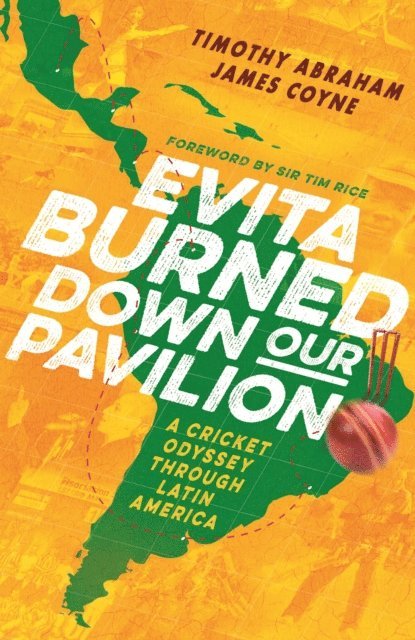
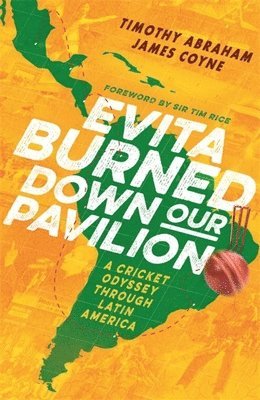
'A highly entertaining read, deftly melding social history with sporting memoir and travelogue' Mail on SundayA history of Latin America through cricketCricket was the first sport played in almost every country of the Americas - earlier than football, rugby or baseball. In 1877, when England and Australia played the inaugural Test match at the MCG, Uruguay and Argentina were already ten years into their derby played across the River Plate.The visionary cricket historian Rowland Bowen said that, during the highpoint of cricket in South America between the two World Wars, the continent could have provided the next Test nation. In Buenos Aires, where British engineers, merchants and meatpackers flocked to make their fortune, the standard of cricket was high: towering figures like Lord Hawke and Plum Warner took star-studded teams of Test cricketers to South America, only to be beaten by Argentina. A combined Argentine, Brazilian and Chilean team took on the first-class counties in England in 1932. The notion of Brazilians and Mexicans playing T20 at the Maracana or the Azteca today is not as far-fetched as it sounds.But Evita Burned Down Our Pavilion is also a social history of grit, industry and nation-building in the New World. West Indian fruit workers battled yellow fever and brutal management to carve out cricket fields next to the railway lines in Costa Rica. Cricket was the favoured sport of Chile's Nitrate King. Emperors in Brazil and Mexico used the game to curry favour with Europe. The notorious Pablo Escobar even had a shadowy connection to the game. The fate of cricket in South America was symbolised by Eva Peron ordering the burning down of the Buenos Aires Cricket Club pavilion when the club refused to hand over their premises to her welfare scheme.Cricket journalists Timothy Abraham and James Coyne take us on a journey to discover this largely untold story of cricket's fate in the world's most colourful continent. Fascinating and surprising, Evita Burned Down Our Pavilion is a valuable addition to cricketing and social history.
221 kr
Skickas inom 7-10 vardagar
'A highly entertaining read, deftly melding social history with sporting memoir and travelogue' Mail on SundayA history of Latin America through cricketCricket was the first sport played in almost every country of the Americas - earlier than football, rugby or baseball. In 1877, when England and Australia played the inaugural Test match at the MCG, Uruguay and Argentina were already ten years into their derby played across the River Plate.The visionary cricket historian Rowland Bowen said that, during the highpoint of cricket in South America between the two World Wars, the continent could have provided the next Test nation. In Buenos Aires, where British engineers, merchants and meatpackers flocked to make their fortune, the standard of cricket was high: towering figures like Lord Hawke and Plum Warner took star-studded teams of Test cricketers to South America, only to be beaten by Argentina. A combined Argentine, Brazilian and Chilean team took on the first-class counties in England in 1932. The notion of Brazilians and Mexicans playing T20 at the Maracana or the Azteca today is not as far-fetched as it sounds.But Evita Burned Down Our Pavilion is also a social history of grit, industry and nation-building in the New World. West Indian fruit workers battled yellow fever and brutal management to carve out cricket fields next to the railway lines in Costa Rica. Cricket was the favoured sport of Chile's Nitrate King. Emperors in Brazil and Mexico used the game to curry favour with Europe. The notorious Pablo Escobar even had a shadowy connection to the game. The fate of cricket in South America was symbolised by Eva Peron ordering the burning down of the Buenos Aires Cricket Club pavilion when the club refused to hand over their premises to her welfare scheme.Cricket journalists Timothy Abraham and James Coyne take us on a journey to discover this largely untold story of cricket's fate in the world's most colourful continent. Fascinating and surprising, Evita Burned Down Our Pavilion is a valuable addition to cricketing and social history.
168 kr
Skickas inom 7-10 vardagar
South American food, music and culture are cutting a swathe across the western world.But what if cricket - the quintessential English sport - were to conquer Latin America? The notion of Brazilians and Mexicans playing T20 at the Maracana or the Azteca is not as far-fetched as it sounds.Cricket was the first sport played in almost every country of the Americas - earlier than football, rugby or baseball. In 1877, when England and Australia played the inaugural Test match at the MCG, Uruguay and Argentina were already 10 years into their derby played across the River Plate.The visionary cricket historian Rowland Bowen reckoned that during the highpoint of cricket in South America between the two world wars, the continent could have provided the next Test nation. In Buenos Aires, where British engineers, merchants and meat-packers flocked to make their fortune, the standard of cricket was high: towering figures like Lord Hawke and Plum Warner took star-studded teams of Test cricketers to South America, and were beaten by Argentina. A combined Argentine, Brazilian and Chilean team took on the first-class counties in England in 1932.But this is as much a social history of grit, industry and nation-building in the New World. West Indian fruit workers battled yellow fever and brutal management to carve out cricket fields next to the railway lines in Costa Rica and by the hulking locks of the Panama Canal. The legendary BBC commentator Brian Johnston, working for the family coffee business in Santos, was Brazil's best wicketkeeper until he was bed-ridden by beri-beri. Cricket was the favoured pursuit of the blustering Nitrate King of Chile; Emperors in Brazil and Mexico used the game to curry favour with Europe; General Pinochet's grandchildren avidly play the game in Chile to this day.But the fate of cricket in South America is symbolised by Eva Perón ordering the burning down of the Buenos Aires Cricket Club pavilion when the club refused to hand over their premises to her welfare scheme. Mexican bandits, Colombian guerrillas and Argentine anarchists have kidnapped their country's leading cricketers for ransom. One of the first Uruguayan cricketers - who scored the first goal for the national football team - was killed when a whirlwind carried away the cabin he was sheltering in. This is a book short on match reports, and long on blood and guts.