James Dawes - Böcker
Visar alla böcker från författaren James Dawes. Handla med fri frakt och snabb leverans.
6 produkter
6 produkter
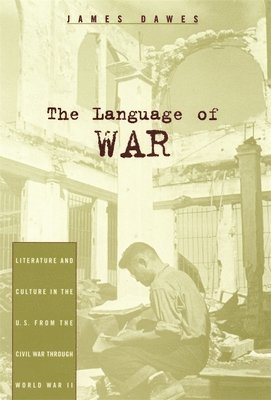
Language of War
Literature and Culture in the U.S. from the Civil War through World War II
Häftad, Engelska, 2005
614 kr
Skickas inom 10-15 vardagar
The Language of War examines the relationship between language and violence, focusing on American literature from the Civil War, World War I, and World War II. James Dawes proceeds by developing two primary questions: How does the strategic violence of war affect literary, legal, and philosophical representations? And, in turn, how do such representations affect the reception and initiation of violence itself? Authors and texts of central importance in this far-reaching study range from Louisa May Alcott and William James to William Faulkner, the Geneva Conventions, and contemporary American organizational sociology and language theory.The consensus approach in literary studies over the past twenty years has been to treat language as an extension of violence. The idea that there might be an inverse relation between language and violence, says Dawes, has all too rarely influenced the dominant voices in literary studies today. This is an ambitious project that not only makes a serious contribution to American literary history, but also challenges some of the leading theoretical assumptions of our day.
406 kr
Skickas inom 10-15 vardagar
Listen to a short interview with James DawesHost: Chris Gondek | Producer: Heron & CraneAfter the worst thing in the world happens, then what? What is left to the survivors, the witnesses, those who tried to help? What can we do to prevent more atrocities from happening in the future, and to stop the ones that are happening right now? That the World May Know tells the powerful and moving story of the successes and failures of the modern human rights movement. Drawing on firsthand accounts from fieldworkers around the world, the book gives a painfully clear picture of the human cost of confronting inhumanity in our day.There is no dearth of such stories to tell, and James Dawes begins with those that emerged from the Rwandan genocide. Who, he asks, has the right to speak for the survivors and the dead, and how far does that right go? How are these stories used, and what does this tell us about our collective moral future? His inquiry takes us to a range of crises met by a broad array of human rights and humanitarian organizations. Here we see from inside the terrible stresses of human rights work, along with its curious seductions, and the myriad paradoxes and quandaries it presents.With pathos, compassion, and a rare literary grace, this book interweaves personal stories, intellectual and political questions, art and aesthetics, and actual "news" to give us a compelling picture of humanity at its conflicted best, face-to-face with humanity at its worst.
200 kr
Skickas inom 10-15 vardagar
Presented with accounts of genocide and torture, we ask how people could bring themselves to commit such horrendous acts. A searching meditation on our all-too-human capacity for inhumanity, Evil Men confronts atrocity head-on—how it looks and feels, what motivates it, how it can be stopped.Drawing on firsthand interviews with convicted war criminals from the Second Sino-Japanese War (1937–1945), James Dawes leads us into the frightening territory where soldiers perpetrated some of the worst crimes imaginable: murder, torture, rape, medical experimentation on living subjects. Transcending conventional reporting and commentary, Dawes’s narrative weaves together unforgettable segments from the interviews with consideration of the troubling issues they raise. Telling the personal story of his journey to Japan, Dawes also lays bare the cultural misunderstandings and ethical compromises that at times called the legitimacy of his entire project into question. For this book is not just about the things war criminals do. It is about what it is like, and what it means, to befriend them.Do our stories of evil deeds make a difference? Can we depict atrocity without sensational curiosity? Anguished and unflinchingly honest, as eloquent as it is raw and painful, Evil Men asks hard questions about the most disturbing capabilities human beings possess, and acknowledges that these questions may have no comforting answers.
478 kr
Skickas inom 10-15 vardagar
The Novel of Human Rights defines a new, dynamic American literary genre. It incorporates key debates within the contemporary human rights movement in the United States, and in turn influences the ideas and rhetoric of that discourse.In James Dawes’s framing, the novel of human rights takes as its theme a range of atrocities at home and abroad, scrambling the distinction between human rights within and beyond national borders. Some novels critique America’s conception of human rights by pointing out U.S. exploitation of international crises. Other novels endorse an American ethos of individualism and citizenship as the best hope for global equality. Some narratives depict human rights workers as responding to an urgent ethical necessity, while others see only inefficient institutions dedicated to their own survival. Surveying the work of Chris Abani, Susan Choi, Edwidge Danticat, Dave Eggers, Nathan Englander, Francisco Goldman, Anthony Marra, and John Edgar Wideman, among others, Dawes finds traces of slave narratives, Holocaust literature, war novels, and expatriate novels, along with earlier traditions of justice writing.The novel of human rights responds to deep forces within America’s politics, society, and culture, Dawes shows. His illuminating study clarifies many ethical dilemmas of today’s local and global politics and helps us think our way, through them, to a better future. Vibrant and modern, the human rights novel reflects our own time and aspires to shape the world we will leave for those who come after.
1 456 kr
Skickas inom 3-6 vardagar
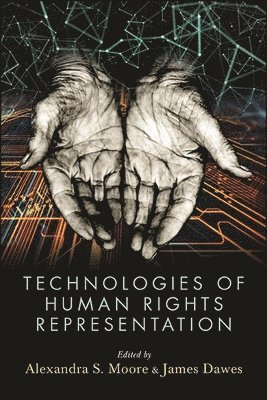
Analyzes the effects of new technologies on human rights, with a particular focus on how representations of technology affect our ability to understand and control it.The speed of technological development, from cell phones to artificial intelligence, opens up exciting new opportunities for promoting human flourishing. It also raises grave risks, threatening not only personal privacy and dignity but also our collective survival. Technologies of Human Rights Representation brings together three fields of research critical to securing our future: changing technologies, human rights, and representation. For each of these fields, this book asks key questions: How can we open the black box of technological advances so that we can more fully understand their effects upon our lives? What can we do to make sure that these effects align with the values of human rights? And how does the way we talk about technology and rights-from military reports and corporate marketing to human rights reports and poetry-amplify or diminish our capacity both to understand and to control what happens next? Contributors from anthropology, communications, criminology, global studies, law, literary and cultural studies, and women and gender studies bring diverse methodological approaches to these crucial questions.
566 kr
Skickas inom 3-6 vardagar
Analyzes the effects of new technologies on human rights, with a particular focus on how representations of technology affect our ability to understand and control it.The speed of technological development, from cell phones to artificial intelligence, opens up exciting new opportunities for promoting human flourishing. It also raises grave risks, threatening not only personal privacy and dignity but also our collective survival. Technologies of Human Rights Representation brings together three fields of research critical to securing our future: changing technologies, human rights, and representation. For each of these fields, this book asks key questions: How can we open the black box of technological advances so that we can more fully understand their effects upon our lives? What can we do to make sure that these effects align with the values of human rights? And how does the way we talk about technology and rights-from military reports and corporate marketing to human rights reports and poetry-amplify or diminish our capacity both to understand and to control what happens next? Contributors from anthropology, communications, criminology, global studies, law, literary and cultural studies, and women and gender studies bring diverse methodological approaches to these crucial questions.