James Diego Vigil - Böcker
Visar alla böcker från författaren James Diego Vigil. Handla med fri frakt och snabb leverans.
7 produkter
7 produkter
234 kr
Skickas inom 10-15 vardagar
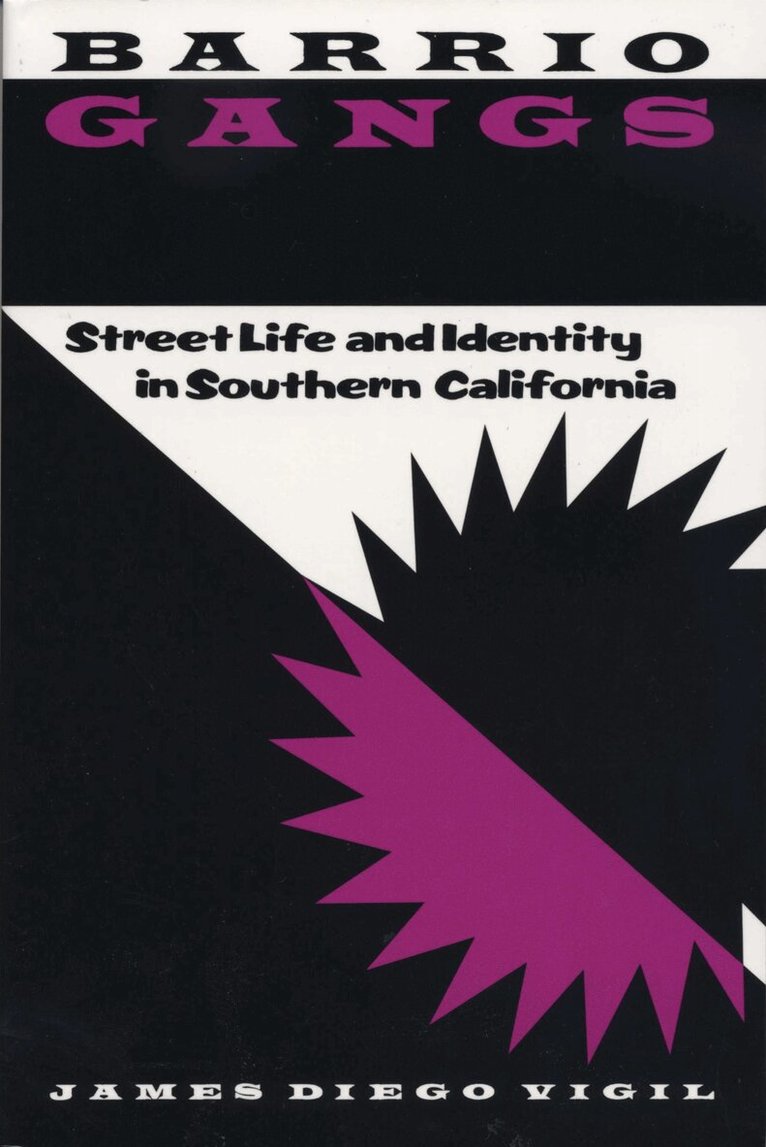
Within the Mexican American barrios of Los Angeles, gang activity, including crime and violent acts, has grown and flourished. In the past, community leaders and law enforcement officials have approached the problem, not as something that needs to be understood, but only as something to be gotten rid of. Rejecting that approach, James D. Vigil asserts that only by understanding the complex factors that give birth and persistence to gangs can gang violence be ended. Drawing on many years of experience in the barrios as a youth worker, high school teacher, and researcher, Vigil identifies the elements from which gangs spring: isolation from the dominant culture, poverty, family stress and crowded households, peer pressure, and the adolescent struggle for self-identity. Using interviews with actual gang members, he reveals how the gang often functions as parent, school, and law enforcement in the absence of other role models in the gang members' lives. And he accounts for the longevity of gangs, sometimes over decades, by showing how they offer barrio youth a sense of identity and belonging nowhere else available.
260 kr
Skickas inom 10-15 vardagar
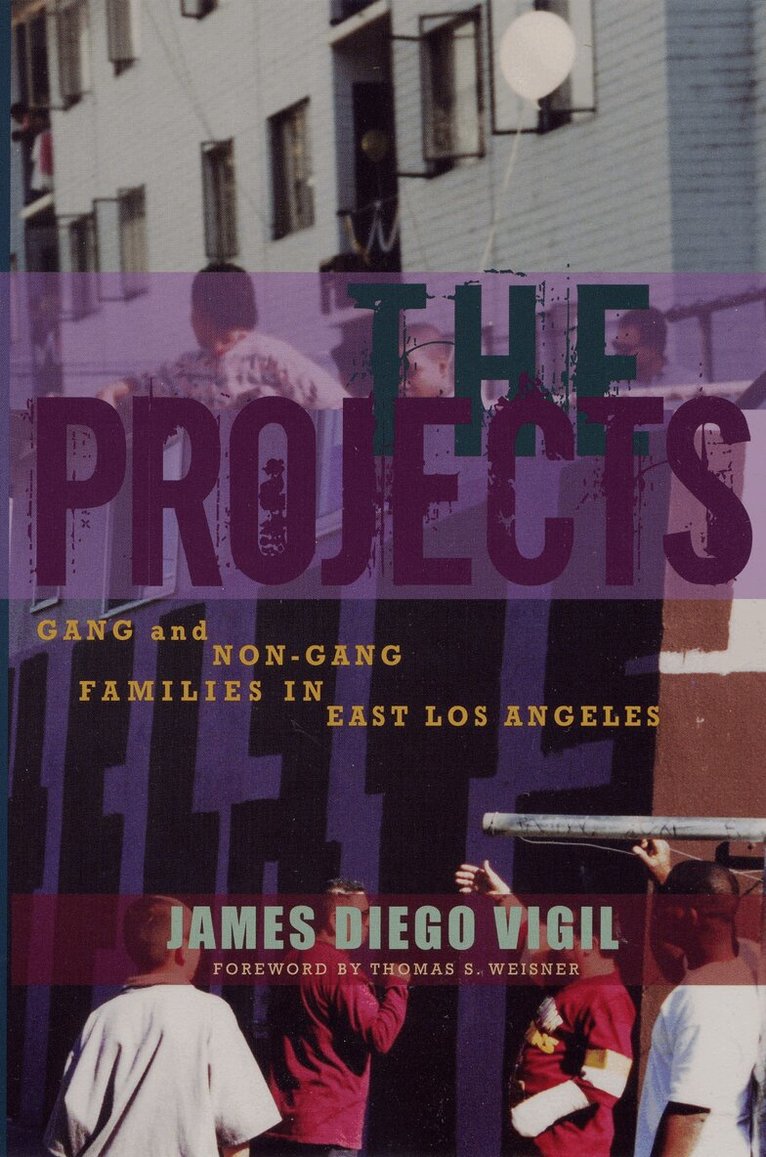
2008 - ALLA Prize for Best Book on Latina/o AnthropologyThe Pico Gardens housing development in East Los Angeles has a high percentage of resident families with a history of persistent poverty, gang involvement, and crime. In some families, members of three generations have belonged to gangs. Many other Pico Gardens families, however, have managed to avoid the cycle of gang involvement. In this work, Vigil adds to the tradition of poverty research and elaborates on the association of family dynamics and gang membership. The main objective of his research was to discover what factors make some families more vulnerable to gang membership, and why gang resistance was evidenced in similarly situated non-gang-involved families. Providing rich, in-depth interviews and observations, Vigil examines the wide variations in income and social capital that exist among the ostensibly poor, mostly Mexican American residents. Vigil documents how families connect and interact with social agencies in greater East Los Angeles to help chart the routines and rhythms of the lives of public housing residents. He presents family life histories to augment and provide texture to the quantitative information. By studying life in Pico Gardens, Vigil feels we can better understand how human agency interacts with structural factors to produce the reality that families living in all public housing developments must contend with daily.
416 kr
Skickas inom 11-20 vardagar
In Streetsmart Schoolsmart, two respected scholars present original research on youth gangs and school success to explain why some boys become disengaged and join gangs while others do not. Chapters vividly describe how urban boys from different ethnic backgrounds (Asian, African American, and Latino) approach schooling and identify the sociocultural factors that affect their choices. The authors concentrate on three areas: (1) the role of marginalised communities in the formation of urban gang youth, (2) the role of community-based organisations in reengaging urban youth, and (3) the role of schools in creating opportunities for urban boys to succeed despite disparities in their economic and social circumstances. Streetsmart Schoolsmart points the way toward important changes that can break the cycle of poverty in American neighbourhoods and society. It is essential reading for educators and all professionals working with urban youth, and anyone concerned with the success of young boys.
868 kr
Skickas inom 11-20 vardagar
In Streetsmart Schoolsmart, two respected scholars present original research on youth gangs and school success to explain why some boys become disengaged and join gangs while others do not. Chapters vividly describe how urban boys from different ethnic backgrounds (Asian, African American, and Latino) approach schooling and identify the sociocultural factors that affect their choices. The authors concentrate on three areas: (1) the role of marginalised communities in the formation of urban gang youth, (2) the role of community-based organisations in reengaging urban youth, and (3) the role of schools in creating opportunities for urban boys to succeed despite disparities in their economic and social circumstances. Streetsmart Schoolsmart points the way toward important changes that can break the cycle of poverty in American neighbourhoods and society. It is essential reading for educators and all professionals working with urban youth, and anyone concerned with the success of young boys.
230 kr
Skickas inom 7-10 vardagar
Winner, Best Book on Ethnic and Racial Politics in a Local or Urban Setting , Organized Section on Race, Ethnicity, and Politics of the American Political Science Association, 2002This cross-cultural study of Los Angeles gangs identifies the social and economic factors that lead to gang membership and underscores their commonality across four ethnic groups--Chicano, African American, Vietnamese, and Salvadorian.With nearly 1,000 gangs and 200,000 gang members, Los Angeles holds the dubious distinction of being the youth gang capital of the United States. The process of street socialization that leads to gang membership now cuts across all ethnic groups, as evidenced by the growing numbers of gangs among recent immigrants from Asia and Latin America. This cross-cultural study of Los Angeles gangs identifies the social and economic factors that lead to gang membership and underscores their commonality across four ethnic groups-Chicano, African American, Vietnamese, and Salvadorian. James Diego Vigil begins at the community level, examining how destabilizing forces and marginalizing changes have disrupted the normal structures of parenting, schooling, and policing, thereby compelling many youths to grow up on the streets. He then turns to gang members' life stories to show how societal forces play out in individual lives. His findings provide a wealth of comparative data for scholars, policymakers, and law enforcement personnel seeking to respond to the complex problems associated with gangs.
1 076 kr
Skickas inom 10-15 vardagar
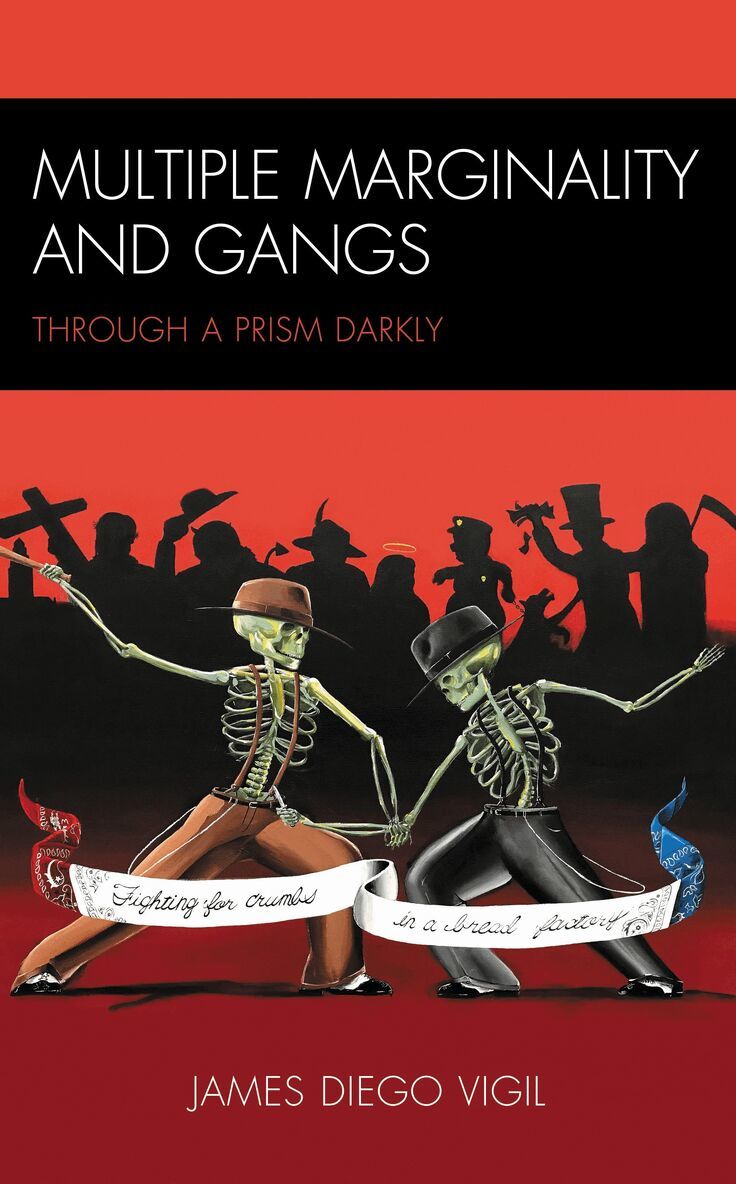
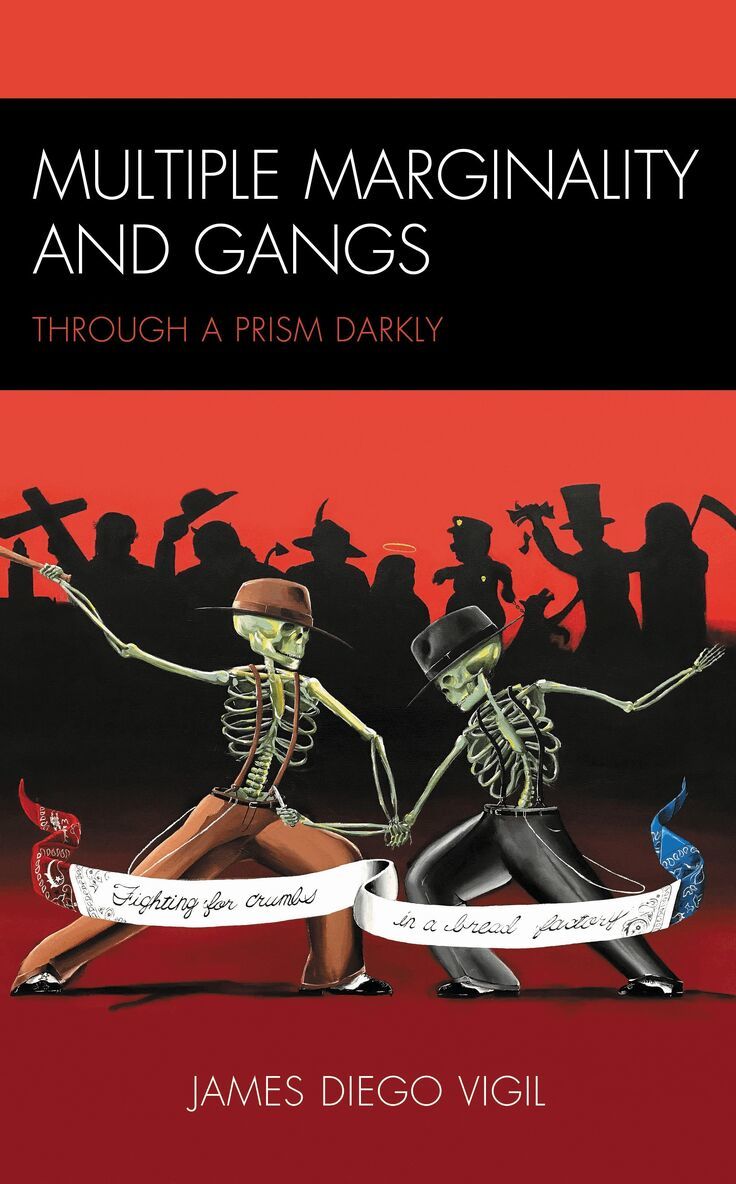
Multiple Marginality and Gangs: Through a Prism Darkly unravels the youth gang problem in a multidimensional approach that encompasses the place, status, social control, subcultural, and identity facets of urban street gangs. The power of place and the status of persons and groups are the major forces that generate the many situations and conditions that give rise to gangs. In its simplest trajectory, Multiple Marginality can be modeled as follows: place/status to street socialization to street subculture to street identity. It is the actions and reactions among them that we fathom. As we witness detrimental or absent family influence, we also observe weaker, underfunded schools that limit educators’ reach. At the same time, there has been an increase in the militarization of law enforcement to deal with the youth street populations, the heaviest hand is that of the police. There is a causal relationship between social marginalization factors and gang membership. A psychological analysis also entails how street socialization leads to a street identity. In a place and status group, the cascading effects of marginalization have certainly affected—and mostly thwarted—social control institutions.
488 kr
Skickas inom 10-15 vardagar
Multiple Marginality and Gangs: Through a Prism Darkly unravels the youth gang problem in a multidimensional approach that encompasses the place, status, social control, subcultural, and identity facets of urban street gangs. The power of place and the status of persons and groups are the major forces that generate the many situations and conditions that give rise to gangs. In its simplest trajectory, Multiple Marginality can be modeled as follows: place/status to street socialization to street subculture to street identity. It is the actions and reactions among them that we fathom. As we witness detrimental or absent family influence, we also observe weaker, underfunded schools that limit educators’ reach. At the same time, there has been an increase in the militarization of law enforcement to deal with the youth street populations, the heaviest hand is that of the police. There is a causal relationship between social marginalization factors and gang membership. A psychological analysis also entails how street socialization leads to a street identity. In a place and status group, the cascading effects of marginalization have certainly affected—and mostly thwarted—social control institutions.