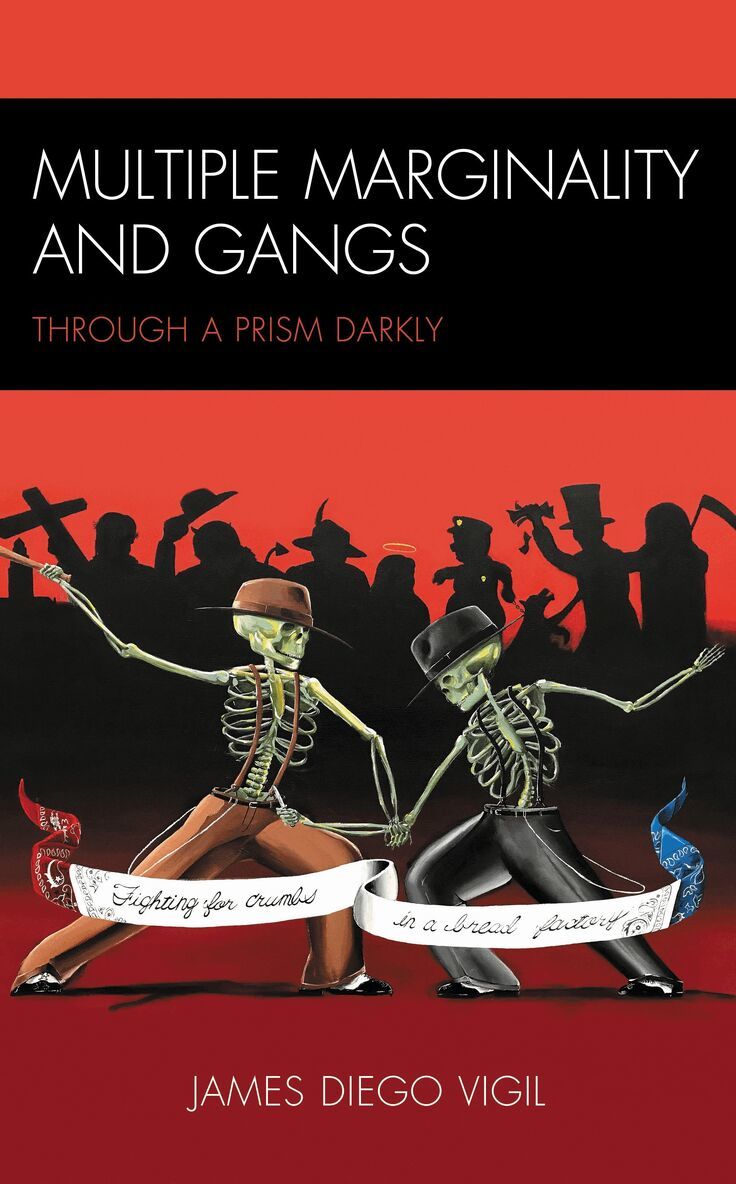
Häftad, Engelska, 2021
Multiple Marginality and Gangs
Through a Prism Darkly
514 kr
Beställningsvara. Skickas inom 10-15 vardagar. Fri frakt över 249 kr.
Beskrivning
Produktinformation
- Utgivningsdatum: 2021-06-23
- Mått: 154 x 218 x 11 mm
- Vikt: 218 g
- Format: Häftad
- Språk: Engelska
- Antal sidor: 140
- Förlag: Bloomsbury Publishing Plc
- ISBN: 9781793613332
Utforska kategorier
Mer om författaren
James Diego Vigil is professor of social ecology at the University of California, Irvine.
Recensioner i media
Multiple marginality refers to the many ways that a cluster of ecological, economic, and sociocultural macro and micro conditions leads to racism, ethnicism, and oppression. They in turn cause strain, undermine social control, disrupt family associations, and destabilize conventional socialization. Vigil uses this conceptual lens to show why many marginalized youth, such as those he observed in several distressed Los Angeles neighborhoods, join street gangs. Marginalization began long ago as immigrants and minorities were forced into urban ethnic enclaves that became impoverished, heightening patterns of unemployment and family disruption. Because of these factors, Vigil argues, youth were more likely to experience strain due to living in unsafe neighborhoods, receiving poor educational opportunities, and experiencing poor school environments, family turmoil, and oppressive encounters with law enforcement. These experiences in turn caused low self-esteem and further marginalization, ultimately leading many youth to join street gangs to protect themselves, to enhance their self-esteem, and to gain a supportive social network not available elsewhere. Ameliorative steps should thus include strengthening families and improving educational and employment opportunities for youth who experience multiple marginalities. Recommended.
Betyg & recensioner
0 recensioner
Inga recensioner tillgängliga.