James E. Fleming – författare
Visar alla böcker från författaren James E. Fleming. Handla med fri frakt och snabb leverans.
15 produkter
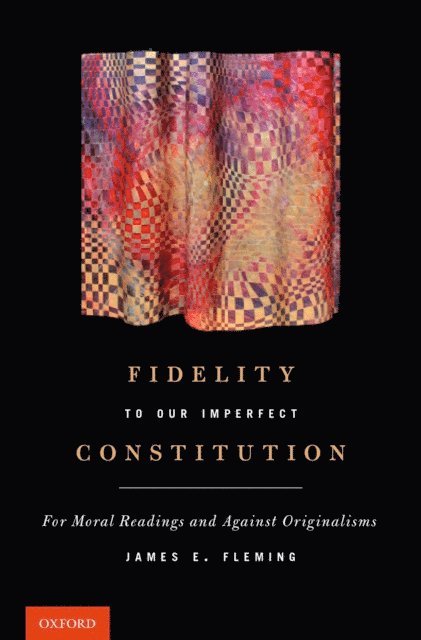
Fidelity to Our Imperfect Constitution
For Moral Readings and Against Originalisms
E-bok, 2015
1147 kr
Lägg i varukorg
In recent years, some have asked "Are we all originalists now?" and many have assumed that originalists have a monopoly on concern for fidelity in constitutional interpretation. In Fidelity to Our Imperfect Constitution , James Fleming rejects originalisms-whether old or new, concrete or abstract, …
Constitutional Interpretation
The Basic Questions
Av Sotirios A. Barber, James E. Fleming
Häftad, 2007
658 kr
Lägg i varukorg
Ronald Dworkin famously argued that fidelity in interpreting the Constitution as written calls for a fusion of constitutional law and moral philosophy. Barber and Fleming take up that call, arguing for a philosophic approach to constitutional interpretation. In doing so, they systematically …
Constitutional Interpretation
The Basic Questions
Av James E. Fleming, Sotirios A. Barber
E-bok, 2007
450 kr
Lägg i varukorg
Ronald Dworkin famously argued that fidelity in interpreting the Constitution as written calls for a fusion of constitutional law and moral philosophy. Barber and Fleming take up that call, arguing for a philosophic approach to constitutional interpretation. In doing so, they systematically …
Constitutional Interpretation
The Basic Questions
Av James E. Fleming, Sotirios A. Barber
E-bok, 2007
450 kr
Lägg i varukorg
Ronald Dworkin famously argued that fidelity in interpreting the Constitution as written calls for a fusion of constitutional law and moral philosophy. Barber and Fleming take up that call, arguing for a philosophic approach to constitutional interpretation. In doing so, they systematically …
Fidelity to Our Imperfect Constitution
For Moral Readings and Against Originalisms
Inbunden, 2015
1384 kr
Lägg i varukorg
In recent years, some have asked "Are we all originalists now?" and many have assumed that originalists have a monopoly on concern for fidelity in constitutional interpretation. In Fidelity to Our Imperfect Constitution, James Fleming rejects originalisms-whether old or new, concrete or abstract, …
Fidelity to Our Imperfect Constitution
For Moral Readings and Against Originalisms
E-bok, 2015
1147 kr
Lägg i varukorg
In recent years, some have asked "Are we all originalists now?" and many have assumed that originalists have a monopoly on concern for fidelity in constitutional interpretation. In Fidelity to Our Imperfect Constitution , James Fleming rejects originalisms-whether old or new, concrete or abstract, …
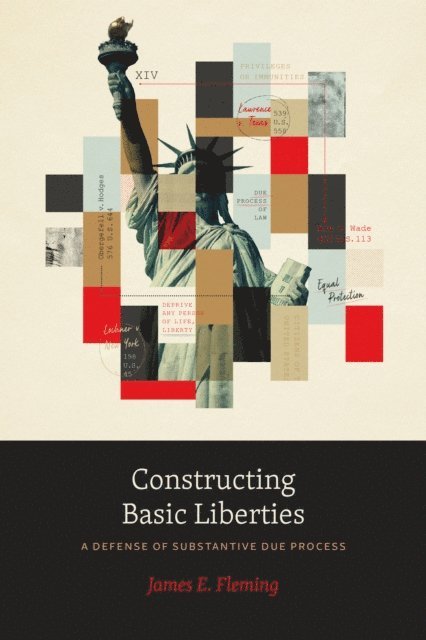
Constructing Basic Liberties
A Defense of Substantive Due Process
Inbunden, 2022
747 kr
Lägg i varukorg
A strong and lively defense of substantive due process. From reproductive rights to marriage for same-sex couples, many of our basic liberties owe their protection to landmark Supreme Court decisions that have hinged on the doctrine of substantive due process. This doctrine is controversial—a …
Constructing Basic Liberties
A Defense of Substantive Due Process
Häftad, 2022
240 kr
Lägg i varukorg
A strong and lively defense of substantive due process. From reproductive rights to marriage for same-sex couples, many of our basic liberties owe their protection to landmark Supreme Court decisions that have hinged on the doctrine of substantive due process. This doctrine is controversial—a …
Constructing Basic Liberties
A Defense of Substantive Due Process
E-bok, 2022
467 kr
Lägg i varukorg
A strong and lively defense of substantive due process. From reproductive rights to marriage for same-sex couples, many of our basic liberties owe their protection to landmark Supreme Court decisions that have hinged on the doctrine of substantive due process. This doctrine is controversial—a …
Ordered Liberty
Rights, Responsibilities, and Virtues
Av James E. Fleming, Linda C. McClain
Inbunden, 2013
553 kr
Lägg i varukorg
Many have argued in recent years that the U.S. constitutional system exalts individual rights over responsibilities, virtues, and the common good. Answering the charges against liberal theories of rights, James Fleming and Linda McClain develop and defend a civic liberalism that takes …
Passions and Emotions
NOMOS LIII
Inbunden, 2012
828 kr
Lägg i varukorg
Throughout the history of moral, political, and legal philosophy,many have portrayed passions and emotions as beingopposed to reason and good judgment. At the same time,others have defended passions and emotions as temperingreason and enriching judgment, and there is mountingempirical evidence …
Evolution and Morality
NOMOS LII
Av James E. Fleming, Sanford V. Levinson
Inbunden, 2012
927 kr
Lägg i varukorg
Can theories of evolution explain the development of our capacityfor moral judgment and the content of morality itself?If bad behavior punished by the criminal law is attributableto physical causes, rather than being intentional or voluntaryas traditionally assumed, what are the implications for …
Federalism and Subsidiarity
NOMOS LV
Av James E. Fleming, Jacob T Levy
Inbunden, 2014
955 kr
Lägg i varukorg
In Federalism and Subsidiarity, a distinguished interdisciplinary group of scholars in political science, law, and philosophy address the application and interaction of the concept of federalism within law and government. What are the best justifications for and conceptions of federalism? What are …
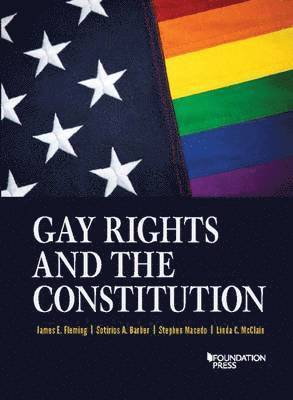
Gay Rights and the Constitution
Cases and Materials
Av James E. Fleming, Sotirios A. Barber m. fl.
Häftad, 2016
872 kr
Lägg i varukorg
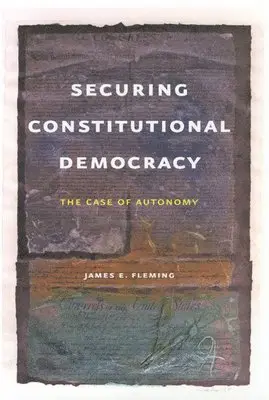
Securing Constitutional Democracy
The Case of Autonomy
Inbunden, 2006
490 kr
Tillfälligt slut
Famously described by Louis Brandeis as "the most comprehensive of rights" and "the right most valued by civilized men," the right of privacy or autonomy is more embattled during modern times than any other. Debate over its meaning, scope, and constitutional status is so widespread that it all but …