Sotirios A. Barber - Böcker
Visar alla böcker från författaren Sotirios A. Barber. Handla med fri frakt och snabb leverans.
6 produkter
6 produkter
470 kr
Skickas inom 5-8 vardagar
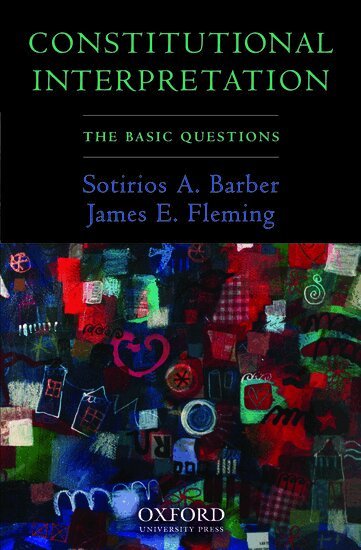
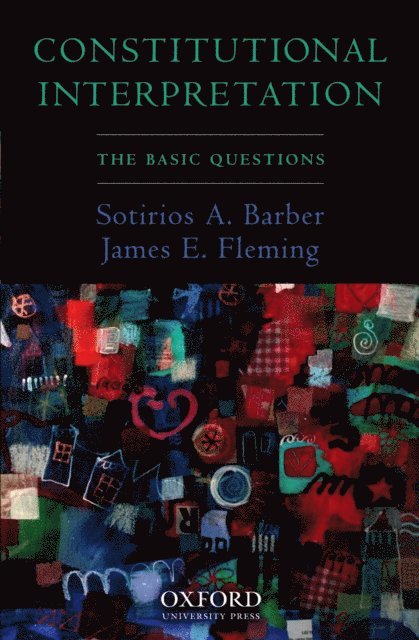
Ronald Dworkin famously argued that fidelity in interpreting the Constitution as written calls for a fusion of constitutional law and moral philosophy. Barber and Fleming take up that call, arguing for a philosophic approach to constitutional interpretation. In doing so, they systematically critique the competing approaches - textualism, consensualism, originalism, structuralism, doctrinalism, minimalism, and pragmatism - that aim and claim to avoid a philosophic approach. Constitutional Interpretation: The Basic Questions illustrates that these approaches cannot avoid philosophic reflection and choice in interpreting the Constitution. Barber and Fleming contend that fidelity in constitutional interpretation requires a fusion of philosophic and other approaches, properly understood. Within such a fusion, interpreters would begin to think of text, consensus, intentions, structures, and doctrines not as alternatives to, but as sites of philosophic reflection about the best understanding of our constitutional commitments. Constitutional Interpretation: The Basic Questions examines the fundamental inquiries that arise in interpreting constitutional law. In doing so, the authors survey the controversial and intriguing questions that have stirred constitutional debate in the United States for over two centuries, such as: how and for what ends should governmental institutions and powers be arranged; what does the Constitution mean under general circumstances and how should it be interpreted during concrete controversies; and finally how do we decide what our constitution means and who ultimately decides its meaning.
422 kr
Skickas inom 10-15 vardagar
The idea that “states’ rights” restrain national power is riding high in American judicial and popular opinion. Here, Sotirios A. Barber shows how arguments for states’ rights, from the days of John C. Calhoun to the present, have offended common sense, logic, and bedrock constitutional principles.To begin with, states’ rights federalism cannot possibly win the debate with national federalism owing to the very forum in which the requisite argument must occur—a national one, thanks to the Civil War—and the ordinary rules of practical argumentation. Further, the political consequences of this self-defeating logic can only hasten the loss of American sovereignty to international economic forces. Both philosophical and practical reasons compel us to consider two historical alternatives to states’ rights federalism. In the federalism of John Marshall, the nation’s most renowned jurist, the national government’s duty to ensure security, prosperity, and other legitimate national ends must take precedence over all conflicting exercises of state power. In “process” federalism, the Constitution protects the states by securing their roles in national policy making and other national decisions. Barber opts for Marshall’s federalism, but the contest is close, and his analysis takes the debate into new, fertile territory.Affirming the fundamental importance of the Preamble, Barber advocates a conception of the Constitution as a charter of positive benefits for the nation. It is not, in his view, a contract among weak separate sovereigns whose primary function is to protect people from the central government, when there are greater dangers to confront.
462 kr
Skickas inom 7-10 vardagar
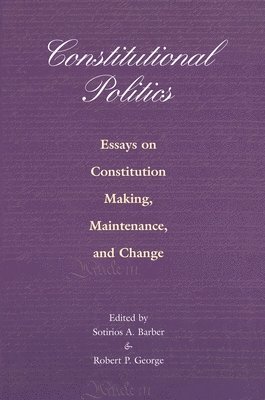
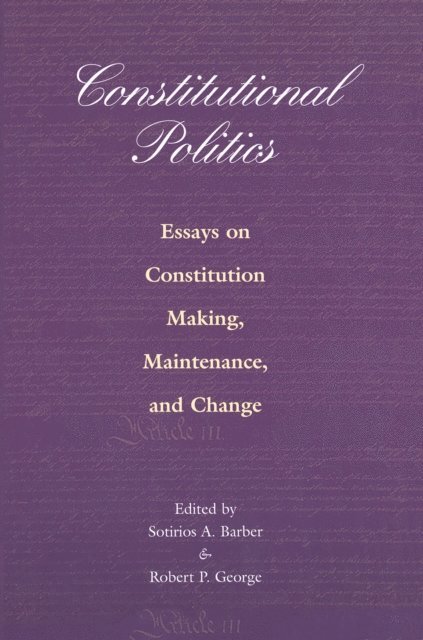
What does it mean to have a constitution? Scholars and students associated with Walter Murphy at Princeton University have long asked this question in their exploration of constitutional politics and judicial behavior. These scholars, concerned with the making, maintenance, and deliberate change of the Constitution, have made unique and significant contributions to our understanding of American constitutional law by going against the norm of court-centered and litigation-minded research. Beginning in the late 1970s, this new wave of academics explored questions ranging from the nature of creating the U.S. Constitution to the philosophy behind amending it. In this collection, Sotirios A. Barber and Robert P. George bring together fourteen essays by members of this Princeton group--some of the most distinguished scholars in the field. These works consider the meaning of having a constitution, the implications of particular choices in the design of constitutions, and the meaning of judicial supremacy in the interpretation of the Constitution.The overarching ambition of this collection is to awaken a constitutionalist consciousness in its readers--to view themselves as potential makers and changers of constitutions, as opposed to mere subjects of existing arrangements. In addition to the editors, the contributors are Walter F. Murphy, John E. Finn, Christopher L. Eisgruber, James E. Fleming, Jeffrey K. Tulis, Suzette Hemberger, Stephen Macedo, Sanford Levinson, H. N. Hirsch, Wayne D. Moore, Keith E. Whittington, and Mark E. Brandon.
650 kr
Skickas inom 3-6 vardagar
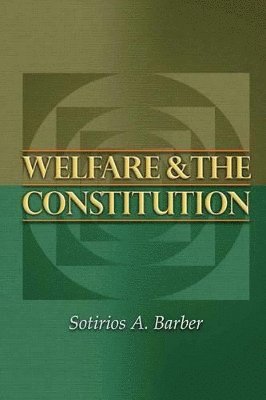
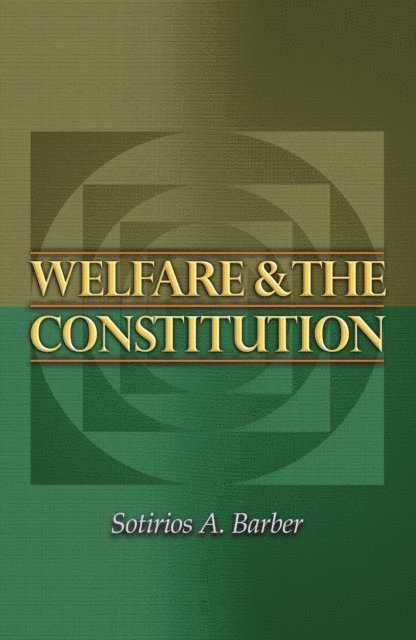
Welfare and the Constitution defends a largely forgotten understanding of the U.S. Constitution: the positive or "welfarist" view of Abraham Lincoln and the Federalist Papers. Sotirios Barber challenges conventional scholarship by arguing that the government has a constitutional duty to pursue the well-being of all the people. He shows that James Madison was right in saying that the "real welfare" of the people must be the "supreme object" of constitutional government. With conceptual rigor set in fluid prose, Barber opposes the shared view of America's Right and Left: that the federal constitutional duties of public officials are limited to respecting negative liberties and maintaining processes of democratic choice. Barber contends that no historical, scientific, moral, or metaethical argument can favor today's negative constitutionalism over Madison's positive understanding. He urges scholars to develop a substantive account of constitutional ends for use in critiquing Supreme Court decisions, the policies of elected officials, and the attitudes of the larger public.He defends the philosophical possibility of such theories while also offering a theory of his own as a starting point for the discussion the book will provoke. This theory holds, for example, that voucher schemes which drain resources from secular public schools to schools that would train citizens to submit to religious authority are unconstitutional; First Amendment issues aside, such schemes defeat what is undeniably an element of the "real welfare" of the people, individually and collectively: the capacity to think critically for oneself.
547 kr
Skickas inom 10-15 vardagar
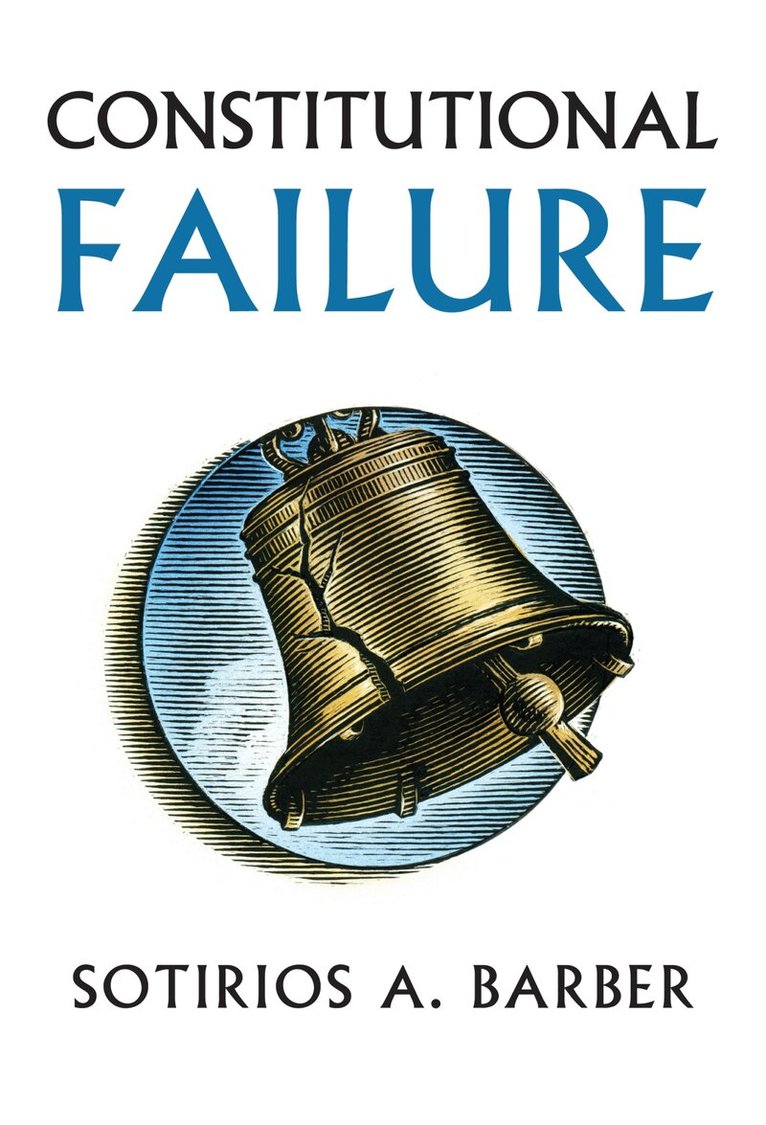
Americans err in thinking that while their politics may be ailing, their Constitution is fine. Sick politics is a sure sign of constitutional failure. This is Sotirios Barber's message in Constitutional Failure. Public attitudes fostered by a consumer culture, constitution worship, the lack of a trusted leadership community, and academic historicism and value skepticism--these, this book tells us in clear and bracing terms, are at the root of our political dysfunction. Barber characterizes the Constitution as a plan of government--a set of means to public purposes like national security and prosperity. He argues that if the government is failing, it's fair to conclude that the plan is failing and that laws that are supposed to serve as means can't in reason continue to bind when they no longer work. He argues further that constitutional success depends ultimately on a stratum of diverse and self-critical citizens, who see each other as moral equals and parts of one national community. These citizens, with the politicians among them, would be good-faith contestants regarding the meaning of the common good and the most effective means to secure it. In this way--showing how the success of a constitutional democracy is more a matter of political attitudes than of institutional performance--Barber's book upends the conventional understanding of constitutional failure. In Barber's analysis, the apparent stability of formal constitutional institutions--usually interpreted as evidence of constitutional health--may actually indicate the defining element of constitutional failure: a mentally inert citizenry no longer capable of constitutional reflection and reform. At once concise and thorough in its analysis of the concept of constitutional failure and its accounts of a ""healthy politics,"" the corrosive impact of Madisonian checks and balances (as a substitute for trust-worthy leadership), and the outlook for meaningful reform, this book offers a carefully reasoned and provocative assessment of the viability of constitutional governance in the United States.
830 kr
Skickas