James E. Lock – författare
Visar alla böcker från författaren James E. Lock. Handla med fri frakt och snabb leverans.
3 produkter
3 produkter
2 180 kr
Skickas inom 10-15 vardagar
In the late 1990s, the field of cardiac catheterization for congenital heart disease is nearing the end of a period of rapid expansion, change, and diversification. Now is a good time to identify and assess many of these changes. This retrospective view serves more purposes than self-congratulation: it allows a clearer prediction of where the field is likely to go, and how it gets there. The first and most obvious change is the continued rapid growth of catheter-directed interventional procedures. A less dramatic but equally pervasive change has been the improvement in non-invasive diagnosis, primarily by ultrasound but increasingly via magnetic resonance imaging. A highly revolutionary change has been the consolidation and shrinkage of cardiologists who perform interventional procedures. Where will the next decade take the catheterizer and his or her colleagues? Perhaps into catheter delivery of gene therapy to treat inherited myopathies or vasculopathies. Even likelier is the use of catheters to implant pulmonary valves made from a patient's own tissue. Likelier still will be the demise of film and the continued emergence of the multimedia laboratory.Underlying the success of any and all of these changes will be a commitment to rigorous self-criticism and self-analysis. A renewed commitment to these values is especially important at this time for the field of diagnostic and interventional catheterization in congenital heart disease.
1 094 kr
Skickas inom 10-15 vardagar
During the third quarter of this century, cardiac radiologists (among them W. Rashkind, L. catheterization of the infant, child, or adult with Bargeron, K. Amplatz, C. Mullins, R. White, P. congenital cardiac disease was performed to Lurie, Z. Lababidi, and J. Kan) are responsible establish a general diagnosis and an overall for this revolution. assessment of prognosis. Precision was required The purpose of this book is to consolidate this only for those patients who might be candidates new information, and to place it in the context for surgery; even then the accuracy required by of classical cardiac catheterization techniques, our surgical colleagues was, for the most part, tools, and data. It is not intended to be a com- unassuming. This unambitious role was virtual- plete textbook on all aspects of catheterization: ly abolished, in the last decade, by the introduc- much of the basic information on hemodynamic tion of sophisticated two dimensional echocar- measurements, electrophysiology, and roent- diography and Doppler ultrasonography. When genologic imaging are thoroughly covered else- ultrasound data were combined with the classi- where.Rather, it is intended to provide practical cal clinical tools of auscultation, electrocardiolo- guidelines to both the novice and experienced gy, and chest radiology, it became obvious that cardiologist, and to indicate to noncardiologists an accurate general assessment of cardiac anat- what can be expected from the catheterization omy, physiology, and prognosis could be made laboratory. We have tried, whenever possible, noninvasively in nearly all patients.
2 180 kr
Skickas inom 10-15 vardagar
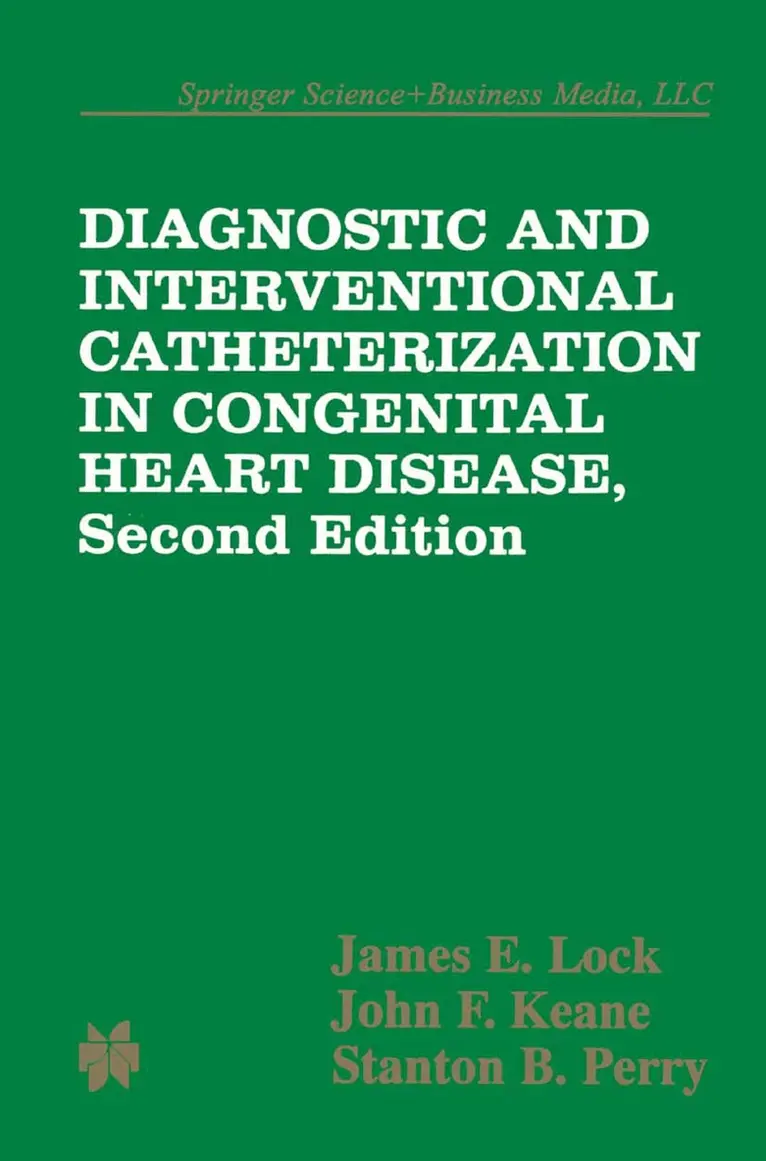
Cardiac catheterization has long been a central diagnostic modality in the evaluation of children, adolescents, and adults with congenital heart disease, and in children with acquired heart disease. Over the past two decades, transcatheter interventions have become equally important in the treatment of pediatric and congenital heart disease. Some transcatheter therapies have become established as the standard of care for congenital cardiovascular anomalies previously managed surgically, others serve to supplement surgery in the integrated management of complex lesions, and still others are in their infancy, as pediatric interventional cardiology continues to advance in step with the broader field of pediatric cardiovascular medicine.Since the previous edition of this book, new technologies and techniques have been introduced to the field of pediatric interventional cardiology, much has been learned about established transcatheter therapies, and there has been a substantial increase in the volume of published data on outcomes of transcatheter procedures in congenital and pediatric heart disease. With increasing experience, the role of interventional catheterization has become solidified as an integral component of the comprehensive management of patients with essentially all forms of congenital heart disease. Cardiac catheterization has also become established as a distinct subspecialty within the discipline of pediatric cardiology, and at many centers has become the purview of cardiologists who have received specialized training in interventional catheterization and whose practice is focused on catheterization. This book is targeted to trainees and established interventional cardiologists alike, and is intended as a comprehensive reference for the clinical practice of diagnostic and interventional cardiology in pediatric and congenital heart disease. In the organization of this book, a combination of procedure-based and problem-based approaches has been employed. The structure of the book has been updated to make it more reader friendly, chapters have been added to address new techniques and problems in the field, and greater emphasis has been placed on evaluation of outcomes of transcatheter interventions in congenital heart disease.Section 1 covers the fundamentals of cardiac catheterization, with chapters devoted to pre-procedure patient evaluation, sedation and anesthesia, vascular access and related issues, catheterization equipment ands its use, hemodynamic evaluation, angiography, radiation and radiation safety, and echocardiography in the catheterization lab.Sections 2 through 4 include procedure-based chapters that are organized according to the technical type of intervention. Section 2 is devoted to transcatheter interventions for obstructive lesions, including valvar stenoses and vascular obstructions. Section 3 includes chapters that cover interventions to close various pathologic intracardiac communications and vascular anomalies. Section 4 includes chapters covering interventions performed to create or enlarge intracardiac communications, as well as other interventions.Section 5 focuses on the applications of catheterization and transcatheter interventions in the evaluation and management of specific patient populations. This problem-based or patient-based focus, which is substantially expanded from the previous edition of the book, reflects the expanding role of catheterization in the comprehensive management of pediatric and congenital heart disease, and addresses emerging applications of transcatheter interventions, including management of the patient receiving extracorporeal circulatory support, hybrid transcatheter-surgical interventions, and prenatal cardiac intervention.Section 6 includes two chapters that cover outcome assessment and regulatory issues pertinent to the pediatric cardiology in general andinterventional cardiology in particular.