James E. Young - Böcker
Visar alla böcker från författaren James E. Young. Handla med fri frakt och snabb leverans.
5 produkter
5 produkter
463 kr
Tillfälligt slut
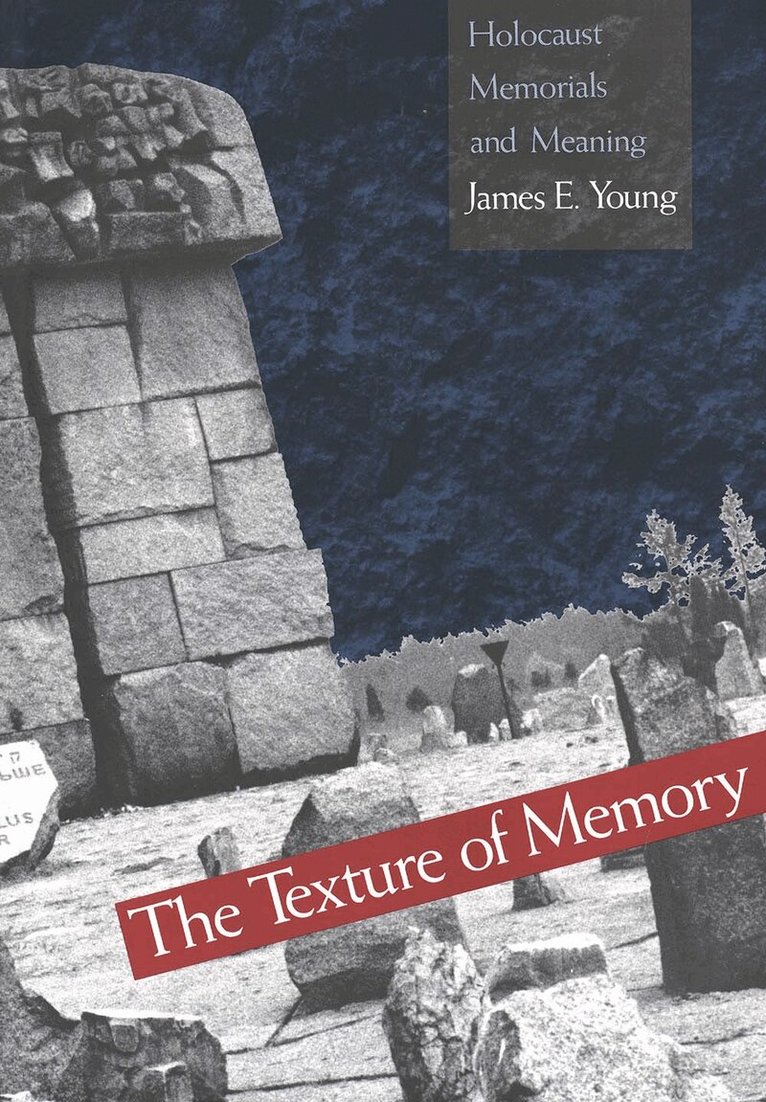
In Dachau, Auschwitz, Yad Vashem, and thousands of other locations throughout the world, memorials to the Holocaust are erected to commemorate its victims and its significance. This fascinating work by James E. Young examines Holocaust monuments and museums in Europe, Israel, and America, exploring how every nation remembers the Holocaust according to its own traditions, ideals, and experiences, and how these memorials reflect their place in contemporary aesthetic and architectural discourse. The result is a groundbreaking study of Holocaust memory, public art, and their fusion in contemporary life.Among the issues Young discusses are: how memorials suppress as much as they commemorate; how museums tell as much about their makers as about events; the differences between memorials conceived by victims and by victimizers; and the political uses and abuses of officially cast memory. Young describes, for example, Germany's "counter monuments," one of which was designed to disappear over time, and the Polish memorials that commemorate the whole of Polish destruction through the figure of its murdered Jewish part. He compares European museums and monuments that focus primarily on the internment and killing process with Israeli memorials that include portrayals of Jewish life before and after the destruction. In his concluding chapters, he finds that American Holocaust memorials are guided no less by distinctly American ideals, such as liberty and pluralism.Interweaving graceful prose and arresting photographs, the book is eloquent testimony to the way varied cultures and nations commemorate an era that breeds guilt, shame, pain, and amnesia, but rarely pride. By reinvigorating these memorials with the stories of their origins, Young highlights the ever-changing life of memory over its seemingly frozen face in the landscape.
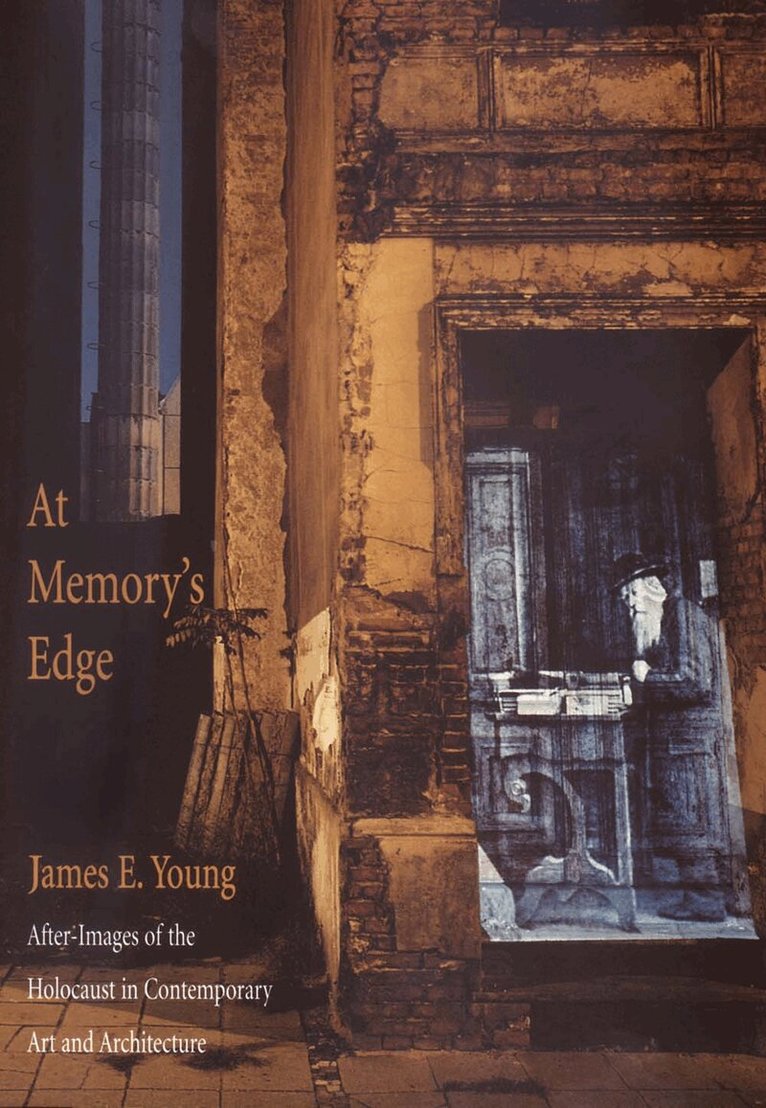
At Memory's Edge
After-Images of the Holocaust in Contemporary Art and Architecture
Häftad, Engelska, 2002
311 kr
Skickas inom 7-10 vardagar
How should Germany commemorate the mass murder of Jews once committed in its name? In 1997, James E. Young was invited to join a German commission appointed to find an appropriate design for a national memorial in Berlin to the European Jews killed in World War II. As the only foreigner and only Jew on the panel, Young gained a unique perspective on Germany’s fraught efforts to memorialize the Holocaust. In this book, he tells for the first time the inside story of Germany’s national Holocaust memorial and his own role in it.In exploring Germany’s memorial crisis, Young also asks the more general question of how a generation of contemporary artists can remember an event like the Holocaust, which it never knew directly. Young examines the works of a number of vanguard artists in America and Europe—including Art Spiegelman, Shimon Attie, David Levinthal, and Rachel Whiteread—all born after the Holocaust but indelibly shaped by its memory as passed down through memoirs, film, photographs, and museums. In the context of the moral and aesthetic questions raised by these avant-garde projects, Young offers fascinating insights into the controversy surrounding Berlin’s newly opened Jewish museum, designed by Daniel Libeskind, as well as Germany’s soon-to-be-built national Holocaust memorial, designed by Peter Eisenman.Illustrated with striking images in color and black-and-white, At Memory’s Edge is the first book in any language to chronicle these projects and to show how we remember the Holocaust in the after-images of its history.
372 kr
Skickas inom 7-10 vardagar
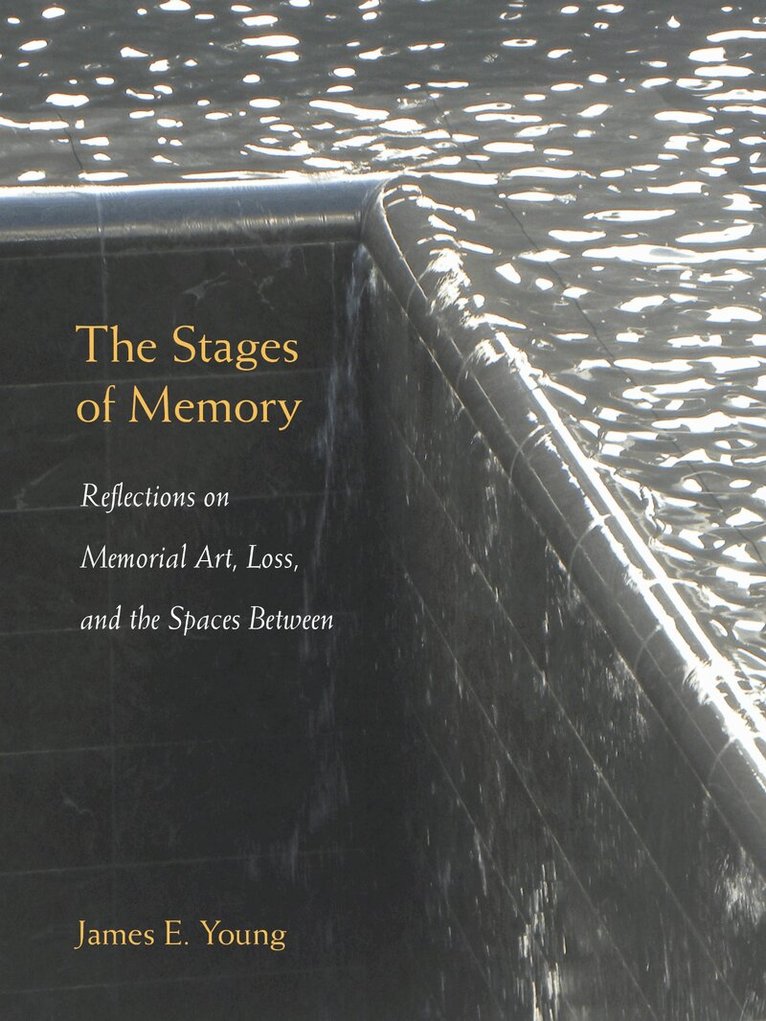
From around the world, whether for New York City's 9/11 Memorial, at exhibits devoted to the arts of Holocaust memory, or throughout Norway's memorial process for the murders at Utøya, James E. Young has been called on to help guide the grief stricken and survivors in how to mark their losses. This poignant, beautifully written collection of essays offers personal and professional considerations of what Young calls the ""stages of memory,"" acts of commemoration that include spontaneous memorials of flowers and candles as well as permanent structures integrated into sites of tragedy. As he traces an arc of memorial forms that spans continents and decades, Young returns to the questions that preoccupy survivors, architects, artists, and writers: How to articulate a void without filling it in? How to formalize irreparable loss without seeming to repair it?Richly illustrated, the volume is essential reading for those engaged in the processes of public memory and commemoration and for readers concerned about how we remember terrible losses.
457 kr
Skickas
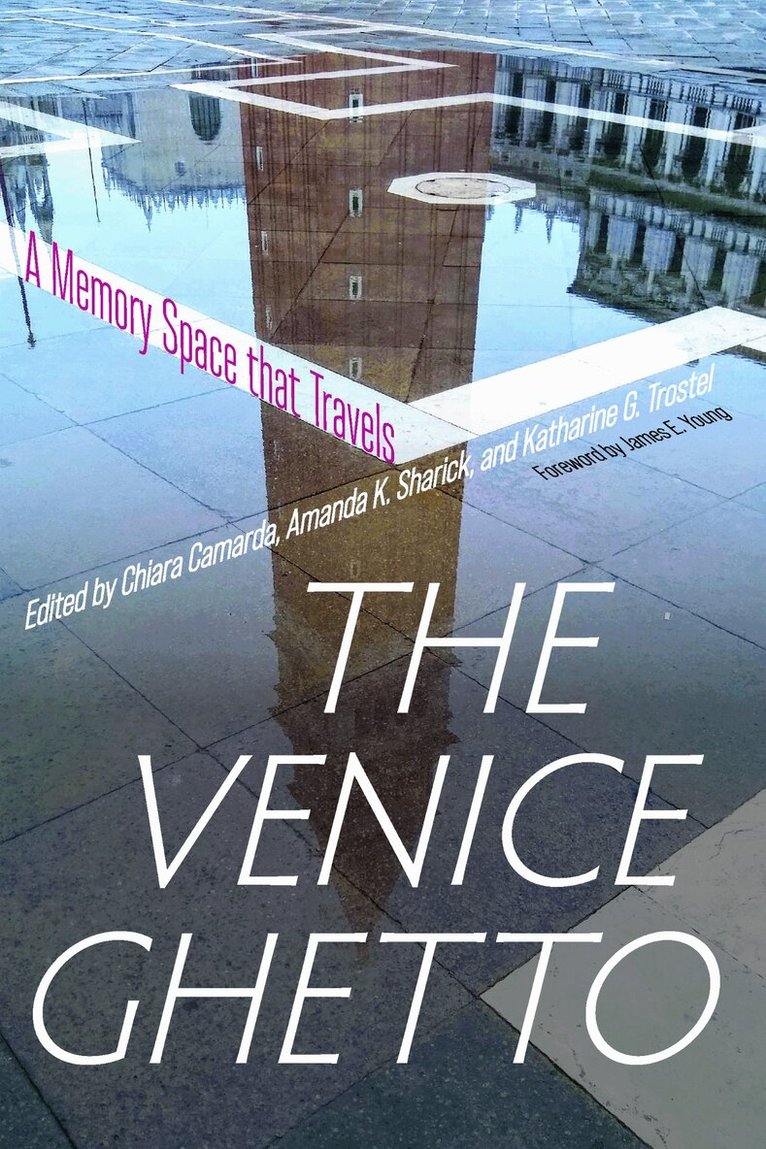
The Venice Ghetto was founded in 1516 by the Venetian government as a segregated area of the city in which Jews were compelled to live. The world's first ghetto and the origin of the English word, the term simultaneously works to mark specific places and their histories, and as a global symbol that evokes themes of identity, exile, marginalization, and segregation. To capture these multiple meanings, the editors of this volume conceptualize the ghetto as a "memory space that travels" through both time and space.This interdisciplinary collection engages with questions about the history, conditions, and lived experience of the Venice Ghetto, including its legacy as a compulsory, segregated, and enclosed space. Contributors also consider the ghetto's influence on the figure of the Renaissance moneylender, the material culture of the ghetto archive, the urban form of North Africa's mellah and hara, and the ghetto's impact on the writings of Primo Levi and Marjorie Agosín.In addition to the volume editors, The Venice Ghetto features a foreword from James E. Young and contributions from Shaul Bassi, Murray Baumgarten, Margaux Fitoussi, Dario Miccoli, Andrea Yaakov Lattes, Federica Ruspio, Michael Shapiro, Clive Sinclair, and Emanuela Trevisan Semi.
219 kr
Skickas
Esther Shalev-Gerzs art has long been at the forefront of debates regarding participation, citizenship, cultural memory, and the role of the artist in society. Her practice has consistently confronted many of the most profound ethical questions of our time regarding the politics of representation, memorialization, and the narration of our histories. Through the artworks and methods of Esther Shalev-Gerz, this book seeks to provide a platform for a debate on trust and dialogue and to act as a catalyst for reflection on the relativity of these two concepts when characterized by, and as, art. This is the first illustrated anthology to be published on Shalev-Gerzs work. It brings together some of the most significant thinkers, writers, and curators of our time to stimulate debate on notions of trust and dialogue and their interrelations as exemplified through her oeuvre. Edited by Jason E. Bowman Contributing writers: Stefanie Baumann, Jason E. Bowman, George Didi-Huberman, Lisa Le Feuvre, Andrea Phillips, Jacques Rancière, Jacqueline Rose, Esther Shalev-Gerz, Annika Wik, James E. Young