James F. Brooks – Författare
Visar alla böcker från författaren James F. Brooks. Handla med fri frakt och snabb leverans.
7 produkter
7 produkter
162 kr
Tillfälligt slut
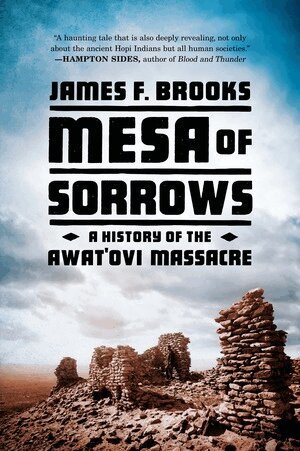
The Hopi community of Awat’ovi existed peacefully on Arizona’s Antelope Mesa for generations until one bleak morning in the fall of 1700—raiders from nearby Hopi villages descended on Awat’ovi, slaughtering their neighboring men, women, and children. While little of the pueblo itself remains, five centuries of history lie beneath the low rises of sandstone masonry, and theories about the events of that night are as persistent as the desert winds. The easternmost town on Antelope Mesa, Awat’ovi was renowned for its martial strength, and had been the gateway to the entire Hopi landscape for centuries. Why did kinsmen target it for destruction?Drawing on oral traditions, archival accounts, and extensive archaeological research, James Brooks unravels the story and its significance. Mesa of Sorrows follows the pattern of an archaeological expedition, uncovering layer after layer of evidence and theories. Brooks questions their reliability and shows how interpretations were shaped by academic, religious and tribal politics. Piecing together three centuries of investigation, he offers insight into why some were spared—women, mostly, and taken captive—and others sacrificed. He weighs theories that the attack was in retribution for Awat’ovi having welcomed Franciscan missionaries or for the residents’ practice of sorcery, and argues that a perfect storm of internal and external crises revitalized an ancient cycle of ritual bloodshed and purification.A haunting account of a shocking massacre, Mesa of Sorrows is a probing exploration of how societies confront painful histories, and why communal violence still plagues us today.
324 kr
Skickas inom 10-15 vardagar
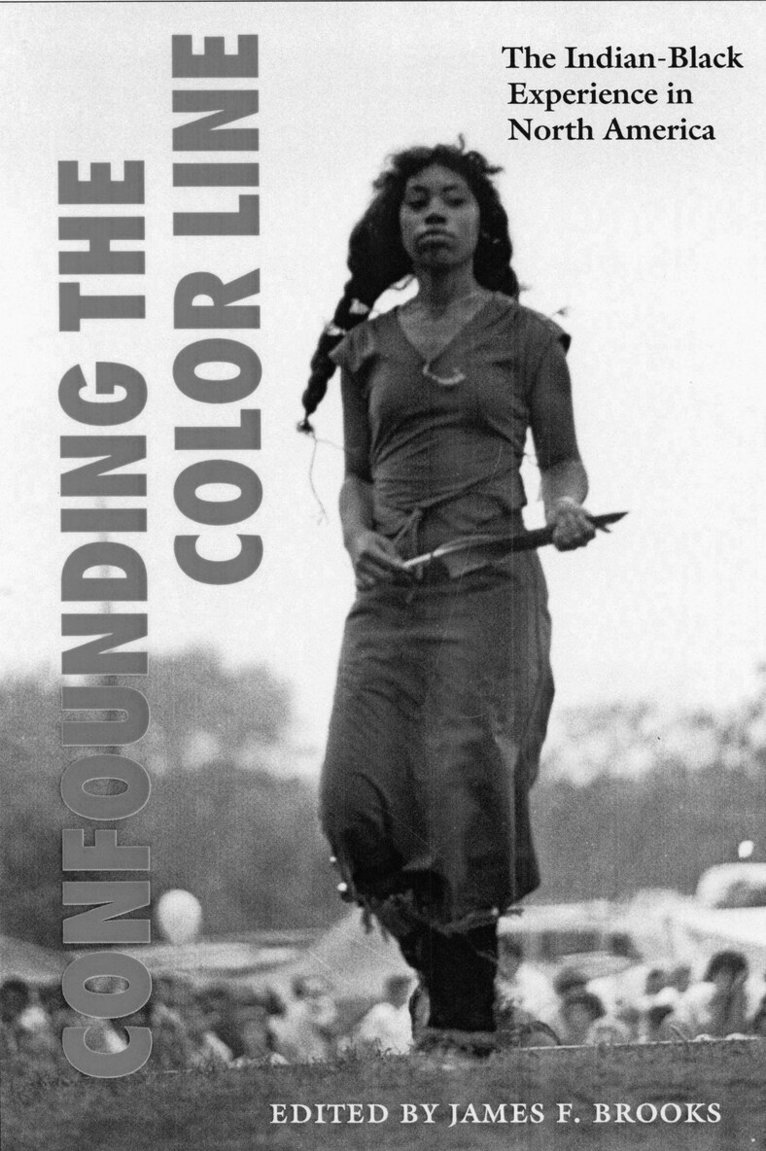
Confounding the Color Line is an essential, interdisciplinary introduction to the myriad relationships forged for centuries between Indians and Blacks in North America. Since the days of slavery, the lives and destinies of Indians and Blacks have been entwined-thrown together through circumstance, institutional design, or personal choice. Cultural sharing and intermarriage have resulted in complex identities for some members of Indian and Black communities today. The contributors to this volume examine the origins, history, various manifestations, and long-term consequences of the different connections that have been established between Indians and Blacks. Stimulating examples of a range of relations are offered, including the challenges faced by Cherokee freedmen, the lives of Afro-Indian whalers in New England, and the ways in which Indians and Africans interacted in Spanish colonial New Mexico. Special attention is given to slavery and its continuing legacy, both in the Old South and in Indian Territory. The intricate nature of modern Indian-Black relations is showcased through discussions of the ties between Black athletes and Indian mascots, the complex identities of Indians in southern New England, the problem of Indian identity within the African American community, and the way in which today's Lumbee Indians have creatively engaged with African American church music.At once informative and provocative, Confounding the Color Line sheds valuable light on a pivotal and not well understood relationship between these communities of color, which together and separately have affected, sometimes profoundly, the course of American history.
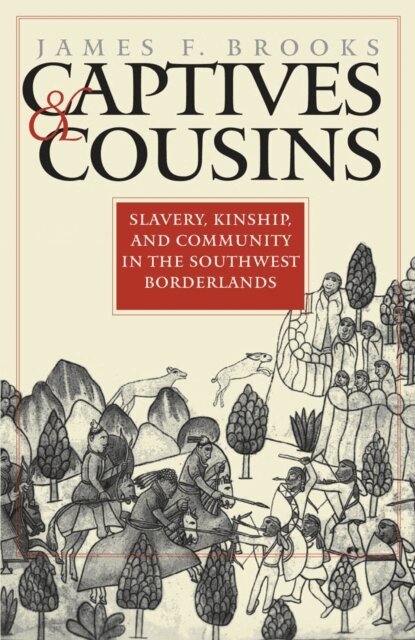
Captives and Cousins
Slavery, Kinship, and Community in the Southwest Borderlands
Häftad, Engelska, 2002
517 kr
Skickas inom 10-15 vardagar
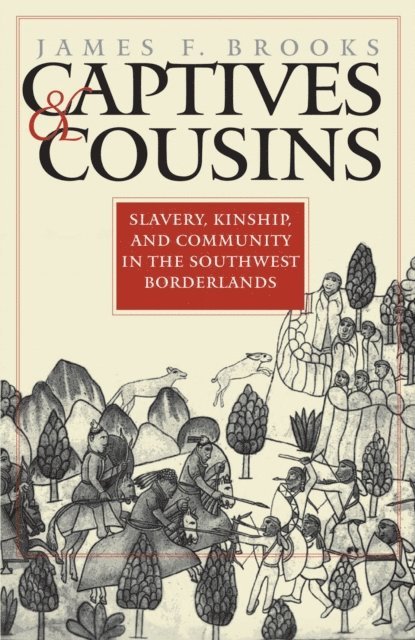
This sweeping, richly evocative study examines the origins and legacies of a flourishing captive exchange economy within and among Native American and Euroamerican communities throughout the Southwest Borderlands from the Spanish colonial era to the end of the nineteenth century. Indigenous and colonial traditions of capture, servitude, and kinship met and meshed in the borderlands, forming a ""slave system"" in which victims symbolized social wealth, performed services for their masters, and produced material goods under the threat of violence. Slave and livestock raiding and trading among Apaches, Comanches, Kiowas, Navajos, Utes, and Spaniards provided labor resources, redistributed wealth, and fostered kin connections that integrated disparate and antagonistic groups even as these practices renewed cycles of violence and warfare. Always attentive to the corrosive effects of the ""slave trade"" on Indian and colonial societies, the book also explores slavery's centrality in intercultural trade, alliances, and ""communities of interest"" among groups often antagonistic to Spanish, Mexican, and American modernizing strategies. The extension of the moral and military campaigns of the American Civil War to the Southwest in a regional ""war against slavery"" brought differing forms of social stability but cost local communities much of their economic vitality and cultural flexibility.
2 040 kr
Skickas inom 3-6 vardagar
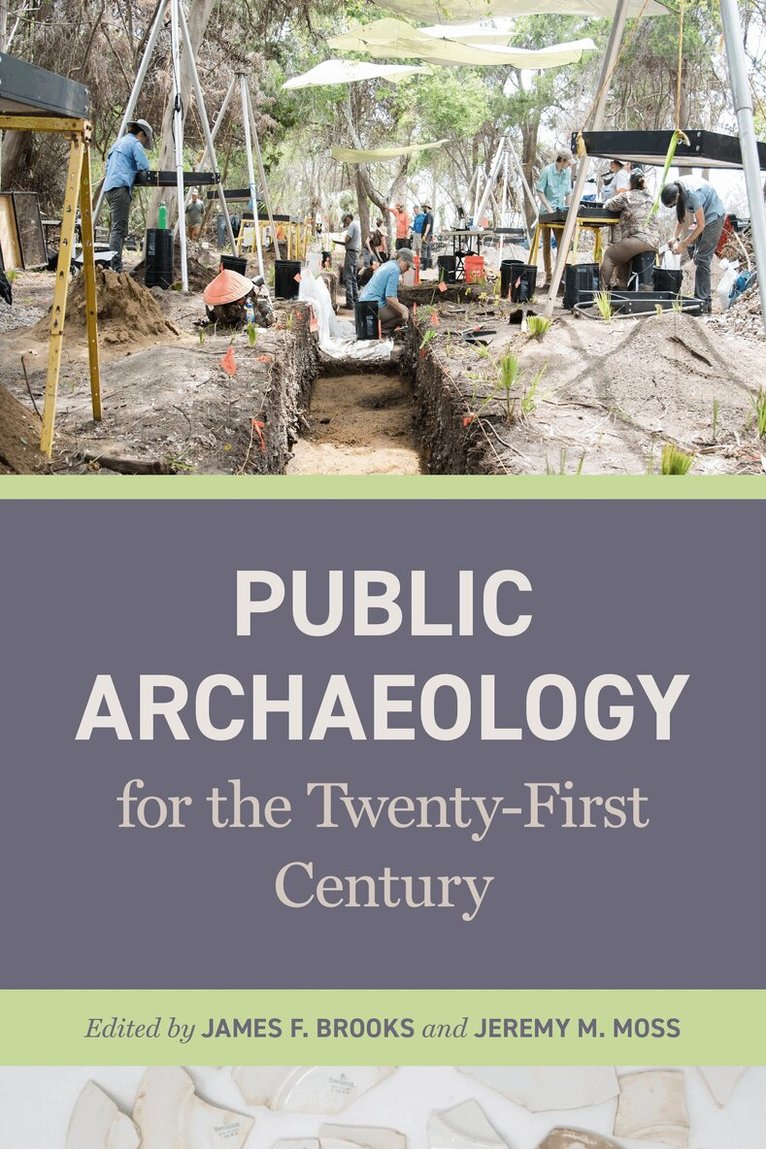
In Public Archaeology for the Twenty-First Century, James F. Brooks and Jeremy M. Moss have collected essays from twenty-seven scholars and community members to illuminate archaeological sites like ancient “water courts” at Mound Key in Florida, the lost Black cemetery at Nashville Zoo, fur-trade-era Fort Michilimackinac, and Arizona’s Gila Bend Internment Camp. Each case offers readers an experience that enlivens the past whilespeaking to the present.These essays wrestle with key tensions in the field of public archaeology. What do we mean by “public”? Is this site public facing or public participating? Does “public” simply imply simplifications in scholarly rigor or does it require more creative attention to methods of analysis and interpretation to render stories sensible for those beyond the academy?In the broadest sense, these chapters explore the relationship between archaeological practice, the representation of archaeology and history, and our varied publics. This requires not only consultation with varied stakeholders but also collaborative partnerships with descendant communities who have direct connections to the heritage resources we wish to share.
518 kr
Skickas inom 7-10 vardagar
In Public Archaeology for the Twenty-First Century, James F. Brooks and Jeremy M. Moss have collected essays from twenty-seven scholars and community members to illuminate archaeological sites like ancient “water courts” at Mound Key in Florida, the lost Black cemetery at Nashville Zoo, fur-trade-era Fort Michilimackinac, and Arizona’s Gila Bend Internment Camp. Each case offers readers an experience that enlivens the past whilespeaking to the present.These essays wrestle with key tensions in the field of public archaeology. What do we mean by “public”? Is this site public facing or public participating? Does “public” simply imply simplifications in scholarly rigor or does it require more creative attention to methods of analysis and interpretation to render stories sensible for those beyond the academy?In the broadest sense, these chapters explore the relationship between archaeological practice, the representation of archaeology and history, and our varied publics. This requires not only consultation with varied stakeholders but also collaborative partnerships with descendant communities who have direct connections to the heritage resources we wish to share.
534 kr
Skickas inom 3-6 vardagar
Growing unease with grand theories of modernization and global integration brought twelve scholars from four disciplines to the School for Advanced Research for an experiment with the research genre known as microhistory. These authors now call for a return to narrative, detailed analysis on a small scale, and the search for unforeseen meanings embedded in cases. The essential feature of this perspective is a search for significance in the microcosm, the large lessons discovered in small worlds. Urging the recognition of potential commonalities among archaeology, history, sociology, and anthropology, the authors propose that historical interpretation should move freely across disciplines, historical study should be held up to the present, and individual lives should be understood as the intersection of biography and history. The authors develop these themes in a kaleidoscope of places and periods--West Africa, the Yucatan peninsula, Italy, Argentina, California, Brazil, Virginia, and Boston, among others.They illuminate discrete places, people, and processes through which both the intimacy of lived experience and the more distant forces that shaped their days can be viewed simultaneously.
416 kr
Skickas inom 7-10 vardagar
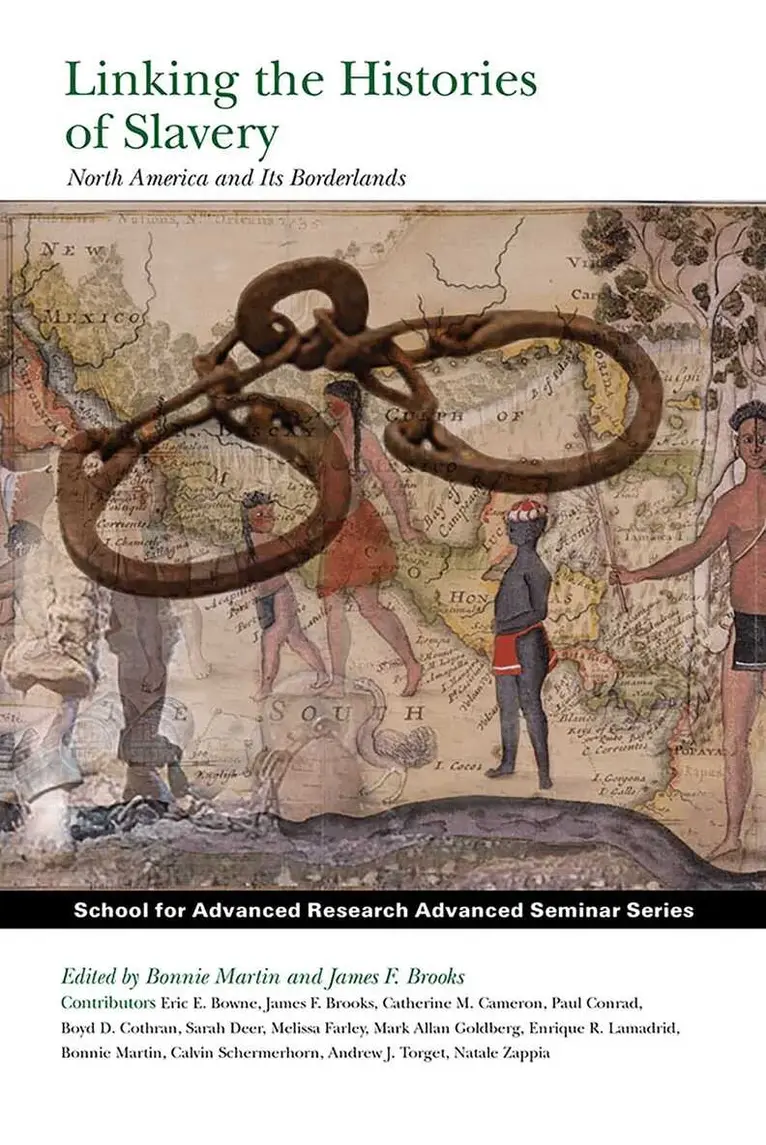
This volume has brought together scholars from anthropology, history, psychology, and ethnic studies to share their original research into the lesser-known stories of slavery in North America and reveal surprising parallels among slave cultures across the continent. Although they focus on North America, these scholars also take a broad view of slavery as a global historical phenomenon and describe how coercers and the coerced, as well as outside observers, have understood what it means to be a “slave” in various times and cultures, including in the twentieth and twenty-first centuries. The contributors explore the links between indigenous customs of coercion before European contact, those of the tumultuous colonial era, some of the less-familiar paradigms of slavery before the Civil War, and the hazy legal borders between voluntary and involuntary servitude today. The breadth of the chapters complements and enhances traditional scholarship that has focused on slavery in the colonial and nineteenth-century South, and the contributors find the connections among the many histories of slavery in order to provide a better understanding of the many ways in which coercion and slavery worked across North America and continue to work today.