
James H. Hallas – författare
Visar alla böcker från författaren James H. Hallas. Handla med fri frakt och snabb leverans.
9 produkter
9 produkter

833 kr
Skickas inom 10-15 vardagar
On September 15, 1944, General William Rupertus and the 16,000 Marines of the U.S. 1st Marine Division moved confidently toward Peleliu, an obscure speck of coral island 500 miles east of the Philippines. Though he knew a tough fight awaited him, Rupertus anticipated a quick two-day crush to victory, strengthening Gen. Douglas MacArthur's flank in his drive on the Philippines. Instead, as The Devil's Anvil reveals, American forces struggled desperately for more than two months against 10,000 deeply entrenched Japanese soldiers who had spent six months preparing for the battle. By the time the weary Americans could claim a victory, the fight had become one of the war's most costly successes. Even more tragic, Peleliu was later deemed a more or less unnecessary seizure.For those who survived, Peleliu remains a bitter, emotionally exhausting chapter of their lives. In The Devil's Anvil, Hallas reports on the personal combat experience of scores of officers and enlisted men who were at Peleliu. These men describe the heartbreaking loss of friends, the pain of wounds, and the heat, dirt, and exhaustion of a fight that never seemed to end.

833 kr
Skickas inom 10-15 vardagar
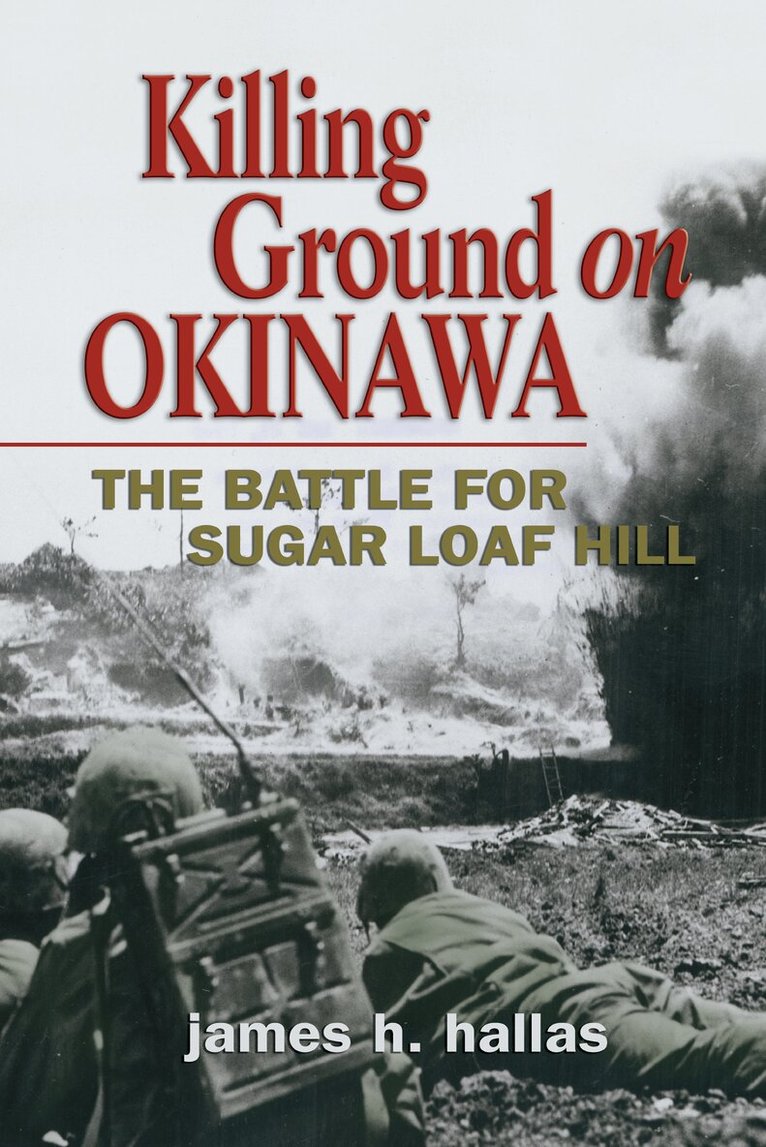
On May 12, 1945, the 6th Marine Division was nearing Naha, capital of Okinawa. To the division's front lay a low, loaf-shaped hill. It looked no different from other hills seized with relative ease over the past few days. But this hill, soon to be dubbed, Sugar Loaf, was very different indeed. Part of a complex of three hills, Sugar Loaf formed the western anchor of General Mitsuru Ushijima's Shuri Line, which stretched from coast to coast across the island. Sugar Loaf was critical to the defense of that line, preventing U.S. forces from turning the Japanese flank. Over the next week, the Marines made repeated attacks on the hill losing thousands of men to death, wounds, and combat fatigue. Not until May 18 was Sugar Loaf finally seized. Two days later, the Japanese mounted a battalion-sized counterattack in an effort to regain their lost position, but the Marines held.Ironically, these losses may not have been necessary. General Lemuel Shepherd, Jr., had argued for an amphibious assault to the rear of the Japanese defense line, but his proposal was rejected by U.S. Tenth Army Commander General Simon Bolivar Buckner. That refusal led to a controversy that has continued to this day.

392 kr
Skickas inom 10-15 vardagar
On September 15, 1944, General William Rupertus and the 16,000 Marines of the U.S. 1st Marine Division moved confidently toward Peleliu, an obscure speck of coral island 500 miles east of the Philippines. Though he knew a tough fight awaited him, Rupertus anticipated a quick two-day crush to victory, strengthening Gen. Douglas MacArthur's flank in his drive on the Philippines. Instead, as The Devil's Anvil reveals, American forces struggled desperately for more than two months against 10,000 deeply entrenched Japanese soldiers who had spent six months preparing for the battle. By the time the weary Americans could claim a victory, the fight had become one of the war's most costly successes. Even more tragic, Peleliu was later deemed a more or less unnecessary seizure.For those who survived, Peleliu remains a bitter, emotionally exhausting chapter of their lives. In The Devil's Anvil, Hallas reports on the personal combat experience of scores of officers and enlisted men who were at Peleliu. These men describe the heartbreaking loss of friends, the pain of wounds, and the heat, dirt, and exhaustion of a fight that never seemed to end.
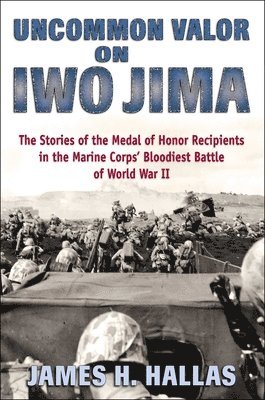
Uncommon Valor on Iwo Jima
The Stories of the Medal of Honor Recipients in the Marine Corps' Bloodiest Battle of World War II
Inbunden, Engelska, 2016
359 kr
Tillfälligt slut
When the smoke cleared on Iwo Jima in March 1945, 19,000 American Marines had been wounded and 7,000 were dead, a casualty rate of nearly 39 percent. Lasting over a month, Iwo was the Marines' bloodiest battle of the war and the only Pacific battle in which a U.S. landing force suffered more casualties than it inflicted. It was also the most highly decorated single engagement in Marine Corps history.• Focuses on the twenty-two Marines and five Navy personnel who received the Medal of Honor and the actions that earned the award• Accounts of men at war showing gallantry under fire in one of the country's most storied engagements• Recounts the entire Battle of Iwo Jima through its most dramatic moments
394 kr
Skickas inom 7-10 vardagar
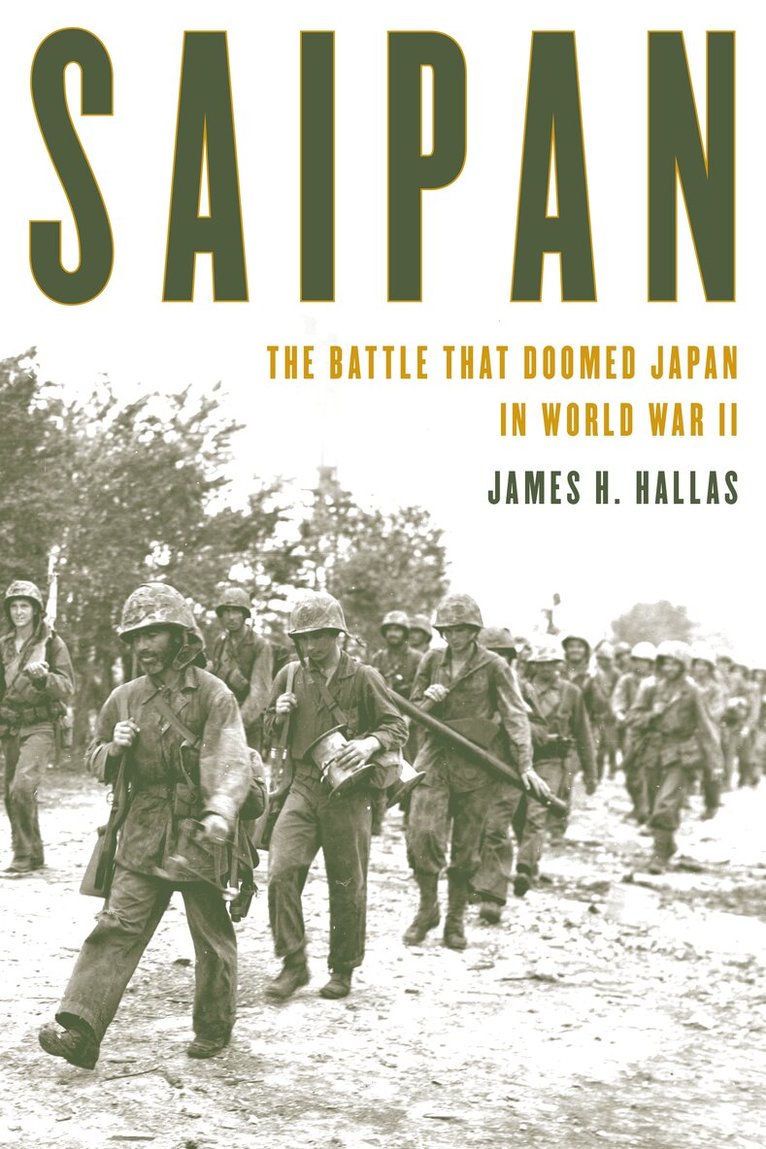
The story of the Battle of Saipan has it all. Marines at war: on Pacific beaches, in hellish volcanic landscapes in places like Purple Heart Ridge, Death Valley, and Hell’s Pocket, under a commander known as “Howlin’ Mad.” Naval combat: carriers battling carriers from afar, fighters downing Japanese aircraft, submarines sinking carriers. Marine-army rivalry. Fanatical Japanese defense and resistance. A turning point of the Pacific War. James Hallas reconstructs the full panorama of Saipan in a way that no recent chronicler of the battle has done. In its comprehensiveness, attention to detail, scope of research, and ultimate focus on the men who fought and won the battle on the beaches and at and above the sea, it rivals Richard Frank’s modern classic Guadalcanal. This is the definitive military history of the Battle of Saipan.
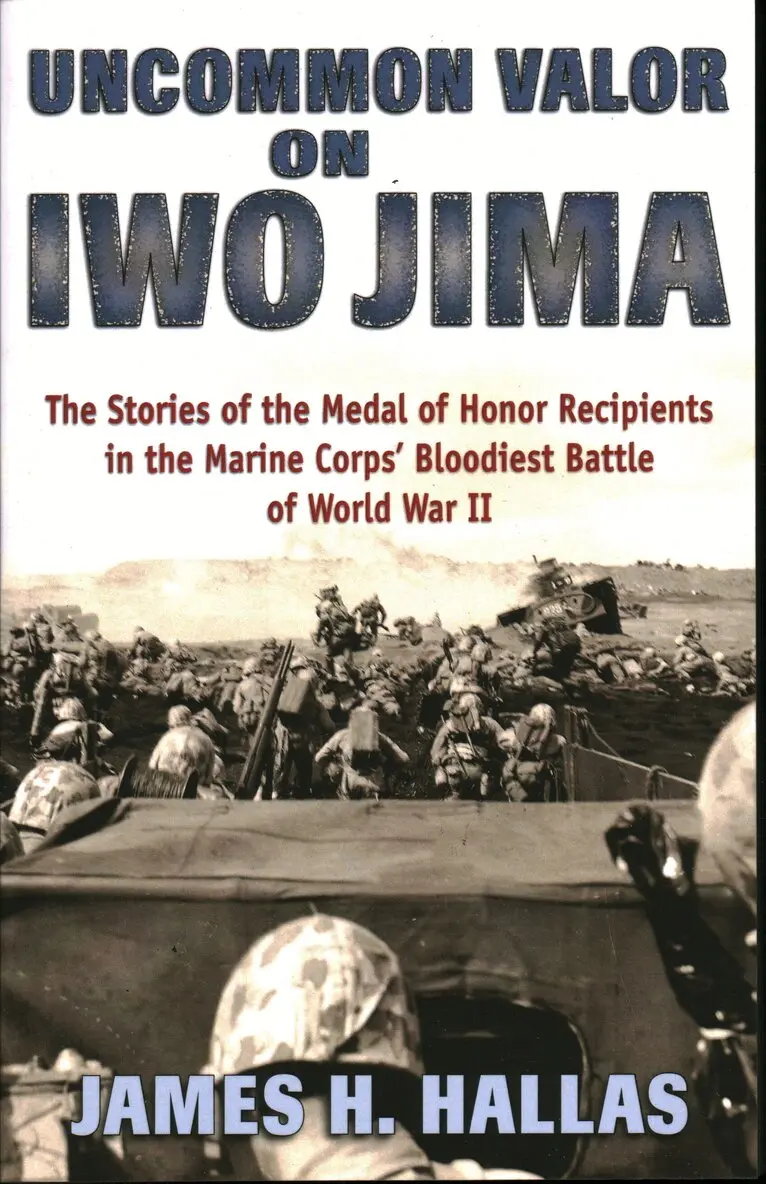
Uncommon Valor on Iwo Jima
The Stories of the Medal of Honor Recipients in the Marine Corps' Bloodiest Battle of World War II
Häftad, Engelska, 2020
294 kr
Skickas inom 5-8 vardagar
When the smoke cleared on Iwo Jima in March 1945, 19,000 American Marines had been wounded and 7,000 were dead, a casualty rate of nearly 39 percent. Lasting over a month, Iwo was the Marines' bloodiest battle of the war and the only Pacific battle in which a U.S. landing force suffered more casualties than it inflicted. It was also the most highly decorated single engagement in Marine Corps history.Focuses on the twenty-two Marines and five Navy personnel who received the Medal of Honor and the actions that earned the awardAccounts of men at war showing gallantry under fire in one of the country's most storied engagementsRecounts the entire Battle of Iwo Jima through its most dramatic moments
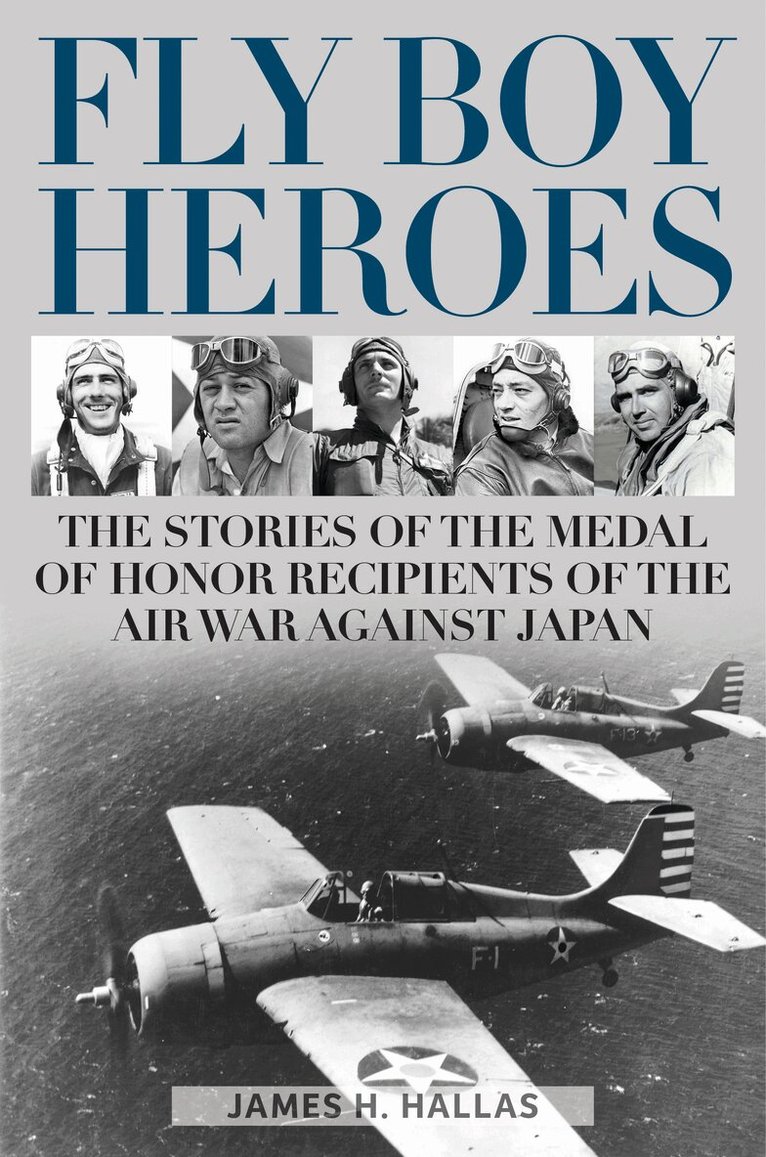
Fly Boy Heroes
The Stories of the Medal of Honor Recipients of the Air War against Japan
Inbunden, Engelska, 2022
306 kr
Skickas
On the morning of December 7, 1941, Aviation Chief Ordnanceman John W. Finn, though wounded, continued to man his machine gun against the waves of Japanese attacks around Pearl Harbor. Just over three years later, as World War II struggled into its final months, a B-29 radioman named Red Erwin died to save his fellow crewman in the skies near Japan. They were the first and last of thirty U.S. Navy, Army, and Marine Corps aviation personnel awarded the Medal of Honor for their actions against the Japanese. They included pilots and crewmen manning fighters and dive-bombers and flying boats and bombers. One was a general. Another was a sergeant. Some shot down large numbers of enemy aircraft in aerial combat. Others sacrificed themselves for their friends.Fly Boy Heroes is the story of the Pacific theater of World War II through the men who received the Medal of Honor in the air war against Japan. They served in U.S Army air squadrons, on U.S. Navy carriers, in U.S. Marine Corps air units. Who were these now largely forgotten men? Where did they come from? What inspired them to rise “above and beyond”? What, if anything, made them different? Virtually all had one thing in common: they always wanted to fly. They came from a generation that revered the aces of World War I, like Eddie Rickenbacker, the civilian flyer Charles Lindbergh, and the lost aviator Amelia Earhart—and then they blazed their own trail during World War II.
458 kr
Skickas inom 3-6 vardagar
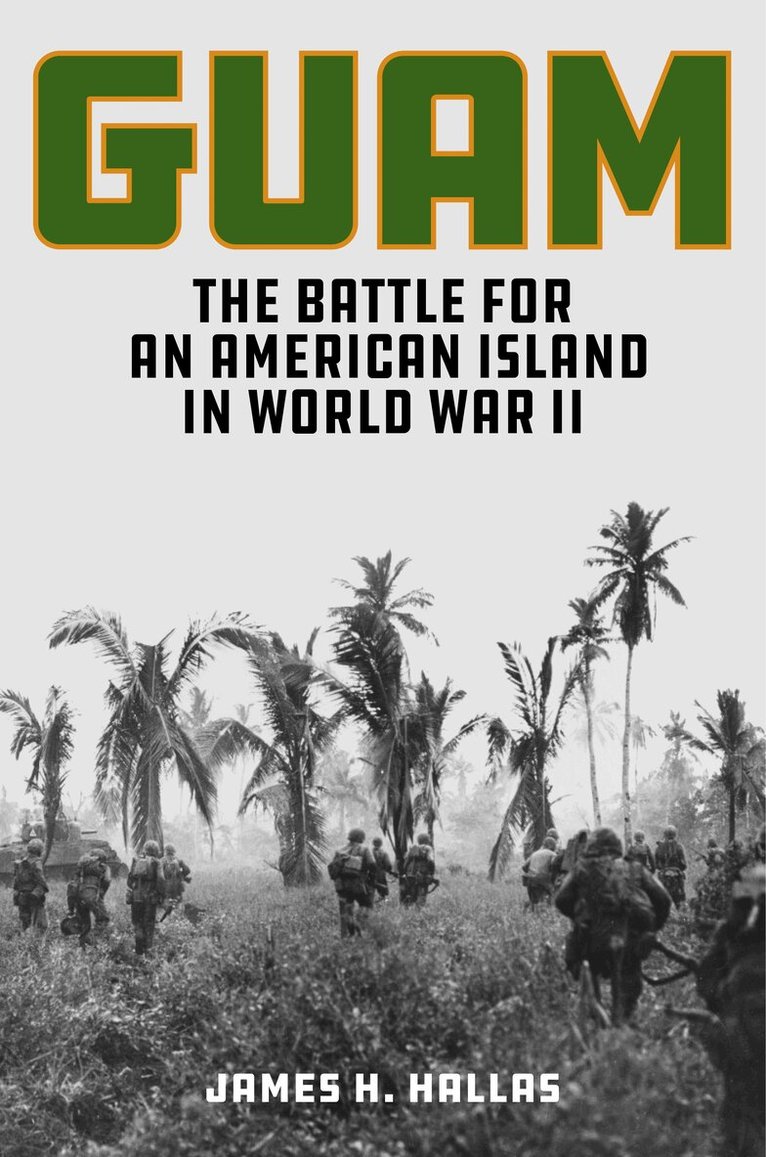
In this sequel to his epic Saipan, James Hallas tells the dramatic story of the battle for Guam in World War II, the next stage of the United States’ pivotal campaign for the Mariana Islands—and the beginning of the end for the Japanese Empire.In December 1941, Japan captured Guam, the largest island of the Marianas archipelago and an American territory since 1898, and turned it into a naval and air base, a supply dump, and a massive prison for the native Chamorros. After a long, bloody drive back across the Pacific, the United States was ready to retake Guam in the summer of 1944, not only to liberate the island, but to secure its harbor and airstrip, both vitally important for mounting an aggressive attack against the Japanese home islands.Saipan came first in Operation Forager, the campaign to take the Marianas, and as that battle bogged down in vicious combat, the invasion of Guam was delayed—until July 21, 1944, when, after one of the Pacific War’s longest and most devastating bombardments, U.S. Marines and Army soldiers trudged ashore, spearheaded by frogmen who pierced Japanese defenses. Guam was a hellish place for a war, and for two and a half weeks, American fighting men battled a tenacious enemy on sandy beaches, in jungles, mountains, ravines, caves, and swamps, in sweltering humidity and frequent downpours. The Japanese fought to the last man, at first mounting well-organized attacks and in the end relying on suicidal charges—in places inflicting up to 50 percent casualties on American units. Major operations ended on August 10, but mopping up continued until the end of the war, and the last Japanese holdout did not surrender until 1972.James Hallas reconstructs the full panorama of the Battle of Guam. In its comprehensiveness, attention to detail, scope of research, and intimate focus on the men who fought and won the battle, this will stand as the definitive history of the battle for years to come.
244 kr
Tillfälligt slut
• Compelling account of the last major battle of WWII•Dramatically evokes the scale and ferocity of the fighting The Battle of Okinawa, fought on the Japanese island of Okinawa, was the largest amphibious assault during the Pacific campaigns of World War II, and the last major ground battle of the war. The battle has been referred to as the`Typhoon of Steel’ in English, and tetsu no ame (`rain of steel’) in Japanese. The nicknames refer to the ferocity of the fighting, the intensity of gunfire involved, and sheer numbers of Allied ships and armoured vehicles that assaulted the island. US losses were over 72,000 casualties, of whom 12,513 were killed or missing, over twice the number killed at Iwo Jima and Guadalcanal combined. There were about 66,000 Japanese combatants and at least 150,000 local civilians killed during the battle.A key point in the Japanese defensive line on Okinawa was Sugar Loaf Hill which became the site of a tenacious seven-day battle that inflicted heavy casualties on the attacking US Marines.In this emotionally compelling account of the fierce fight, Hallaschronicles the extraordinary courage and tactical skills of the 6thMarine Division’s junior officers and enlisted men as they captureda network of sophisticated Japanese defences on Sugar Loaf whileunder heavy artillery fire from surrounding hills.James H. Hallas is the author of three other books, including anaccount of the assault on Peleliu. He lives in Portland, Connecticut.