James Heintz – författare
3 348 kr
Skickas inom 11-20 vardagar
2 738 kr
Skickas inom 10-15 vardagar
937 kr
Skickas inom 10-15 vardagar
1 416 kr
Skickas inom 10-15 vardagar
529 kr
Skickas inom 10-15 vardagar
622 kr
Läs direkt efter köp
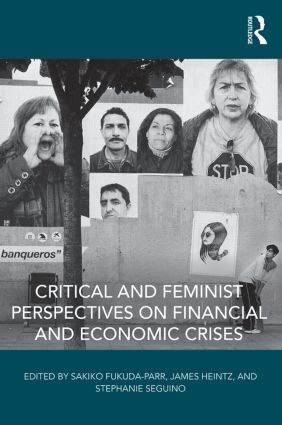
Economic and financial crises have become perennial features of today’s global economy. Macroeconomic theories of crisis, including the global crisis that unfolded in 2008, emphasize the role of financial deregulation; capital flow imbalances; and growing debt, fueled by income and wealth inequality. These approaches tend to be divorced from feminist thinking which analyzes broader distributional dynamics transmitted through structural channels and government policy responses, with an emphasis on gender, race, class and ethnicity. This volume brings together innovative thinking from heterodox macroeconomists and feminist economists to explore the causes, consequences, and ramifications of economic crises. By doing so, it highlights aspects of the economy that are frequently overlooked or ignored, such as the impact of crises on the vast amount of unpaid work which women perform relative to men. The collection of international studies assembled here takes an innovative approach to analyzing a range of issues, from the subprime mortgage crisis to the gendered effects of austerity to the role of the International Monetary Fund in governing an unstable global economy. In so doing, it looks beyond causes and consequences and points to new directions for macroeconomic and financial policy. This book was originally published as a special issue of Feminist Economics.
622 kr
Läs direkt efter köp
Economic and financial crises have become perennial features of today’s global economy. Macroeconomic theories of crisis, including the global crisis that unfolded in 2008, emphasize the role of financial deregulation; capital flow imbalances; and growing debt, fueled by income and wealth inequality. These approaches tend to be divorced from feminist thinking which analyzes broader distributional dynamics transmitted through structural channels and government policy responses, with an emphasis on gender, race, class and ethnicity. This volume brings together innovative thinking from heterodox macroeconomists and feminist economists to explore the causes, consequences, and ramifications of economic crises. By doing so, it highlights aspects of the economy that are frequently overlooked or ignored, such as the impact of crises on the vast amount of unpaid work which women perform relative to men. The collection of international studies assembled here takes an innovative approach to analyzing a range of issues, from the subprime mortgage crisis to the gendered effects of austerity to the role of the International Monetary Fund in governing an unstable global economy. In so doing, it looks beyond causes and consequences and points to new directions for macroeconomic and financial policy. This book was originally published as a special issue of Feminist Economics.
1 076 kr
Läs direkt efter köp
The dominant approach to economic policy has so far failed to adequately address the pressing challenges the world faces today: extreme poverty, widespread joblessness and precarious employment, burgeoning inequality, and large-scale environmental threats. This message was brought home forcibly by the 2008 global economic crisis.
Rethinking Economic Policy for Social Justice shows how human rights have the potential to transform economic thinking and policy-making with far-reaching consequences for social justice. The authors make the case for a new normative and analytical framework, based on a broader range of objectives which have the potential to increase the substantive freedoms and choices people enjoy in the course of their lives and not on not upon narrow goals such as the growth of gross domestic product. The book covers a range of issues including inequality, fiscal and monetary policy, international development assistance, financial markets, globalization, and economic instability. This new approach allows for a complex interaction between individual rights, collective rights and collective action, as well as encompassing a legal framework which offers formal mechanisms through which unjust policy can be protested.
This highly original and accessible book will be essential reading for human rights advocates, economists, policy-makers and those working on questions of social justice.
1 076 kr
Läs direkt efter köp
The dominant approach to economic policy has so far failed to adequately address the pressing challenges the world faces today: extreme poverty, widespread joblessness and precarious employment, burgeoning inequality, and large-scale environmental threats. This message was brought home forcibly by the 2008 global economic crisis.
Rethinking Economic Policy for Social Justice shows how human rights have the potential to transform economic thinking and policy-making with far-reaching consequences for social justice. The authors make the case for a new normative and analytical framework, based on a broader range of objectives which have the potential to increase the substantive freedoms and choices people enjoy in the course of their lives and not on not upon narrow goals such as the growth of gross domestic product. The book covers a range of issues including inequality, fiscal and monetary policy, international development assistance, financial markets, globalization, and economic instability. This new approach allows for a complex interaction between individual rights, collective rights and collective action, as well as encompassing a legal framework which offers formal mechanisms through which unjust policy can be protested.
This highly original and accessible book will be essential reading for human rights advocates, economists, policy-makers and those working on questions of social justice.
1 276 kr
Skickas inom 5-8 vardagar
1 091 kr
Skickas inom 5-8 vardagar
2 160 kr
Skickas inom 3-6 vardagar
Economy's Other Half
How Taking Gender Seriously Transforms Macroeconomics
559 kr
Skickas inom 5-8 vardagar
Economy's Other Half
How Taking Gender Seriously Transforms Macroeconomics
459 kr
Läs direkt efter köp
Choices made in macroeconomic policies – such as government spending, taxation, monetary policy and financial regulation – have distinct distributive consequences for women and men. They also shape the constraints within which efforts to advance gender equality must operate. The implications of gender dynamics for macroeconomics extends beyond consideration of distributive outcomes. The unpaid and non-market work that women perform – running a household, bringing up children – is unrecognized and uncounted in macroeconomic variables used to formulate policy. Yet the economic consequences of these unpaid activities are far-reaching: contributing to the well-being of society, affecting productive activities in the market economy and creating the foundation for the long-run sustainability of our economies.
It has long been assumed that economic growth and women’s growing participation in the paid workforce would eventually take care of gender inequalities, and yet there is little evidence that faster growth will achieve this. In addition it ignores the valuable and quantifiable role that the unpaid work of women for their families contributes to the economy.
James Heintz tackles the shortcomings of macroeconomics in relation to gender dynamics and challenges the dominant methods and measurements, suggesting new ways of framing macroeconomic concepts. He concludes by considering implications for how this new way of thinking could transform policymaking in the future.
Economy's Other Half
How Taking Gender Seriously Transforms Macroeconomics
459 kr
Läs direkt efter köp
Choices made in macroeconomic policies – such as government spending, taxation, monetary policy and financial regulation – have distinct distributive consequences for women and men. They also shape the constraints within which efforts to advance gender equality must operate. The implications of gender dynamics for macroeconomics extends beyond consideration of distributive outcomes. The unpaid and non-market work that women perform – running a household, bringing up children – is unrecognized and uncounted in macroeconomic variables used to formulate policy. Yet the economic consequences of these unpaid activities are far-reaching: contributing to the well-being of society, affecting productive activities in the market economy and creating the foundation for the long-run sustainability of our economies.
It has long been assumed that economic growth and women’s growing participation in the paid workforce would eventually take care of gender inequalities, and yet there is little evidence that faster growth will achieve this. In addition it ignores the valuable and quantifiable role that the unpaid work of women for their families contributes to the economy.
James Heintz tackles the shortcomings of macroeconomics in relation to gender dynamics and challenges the dominant methods and measurements, suggesting new ways of framing macroeconomic concepts. He concludes by considering implications for how this new way of thinking could transform policymaking in the future.
1 853 kr
Skickas inom 5-8 vardagar
1 975 kr
Skickas inom 5-8 vardagar
3 260 kr
Tillfälligt slut
1 476 kr
Tillfälligt slut
1 476 kr
Tillfälligt slut
964 kr
Tillfälligt slut