• Fri frakt över 249 kr
  • •
  • Snabba leveranser
  • •
  • Billiga böcker
Kundservice

Du är på sajten för privatpersoner.

Företag, bibliotek eller offentlig verksamhet?

Du handlar på classic.bokus.com, där alla dina funktioner finns intakta.
Till classic.bokus.com
Bokus logotyp. Gå till startsidan.
  • Erbjudanden
  • Nyheter
  • Student
  • Topplistor
  • Barn & ungdom
  • Bokus Play
  • E-böcker
  • Pocketböcker
  • Spel & pussel

10% rabatt på allt med kod NYSTART10 →

Sidfot

Mina sidor

    Hjälp

    • Kundservice
    • Vanliga frågor och svar
    • Frakt och leverans
    • Retur vid ångerrätt
    • Reklamera vara
    • Betalning
    • Köpvillkor
    • Allmänna villkor
    • Information om webbplatsens tillgänglighet

    Om Bokus

    • Om oss
    • Pressrum
    • För studenter
    • För företag
    • För bibliotek och offentlig verksamhet
    • För leverantörer
    • Hållbarhet

    Populärt

    • Aktuella erbjudanden
    • Presentkort
    • Studentlitteratur
    • Nya böcker
    • Topplistor
    • Signerade böcker
    • Engelska böcker

    Inspiration

    • Boktips
    • BookTok
    • Populära bokserier
    • Barnbokskaraktärer
    • Populära författare
    Logotyp för Bokus
    Följ oss på Facebook (extern länk)Följ oss på Instagram (extern länk)Följ oss på YouTube (extern länk)Följ oss på TikTok (extern länk)
    bokus @ CookiesAnpassa cookiesIntegritetspolicyKöpvillkor
    Till Citymail hemsida (extern länk)Till Budbee hemsida (extern länk)Till Postnord hemsida (extern länk)Till Schenker hemsida (extern länk)Till Early Bird hemsida (extern länk)Till Walleys hemsida (extern länk)
    1. Ekonomi och Ledarskap
    2. Nationalekonomi
    3. Ekonomisk politik

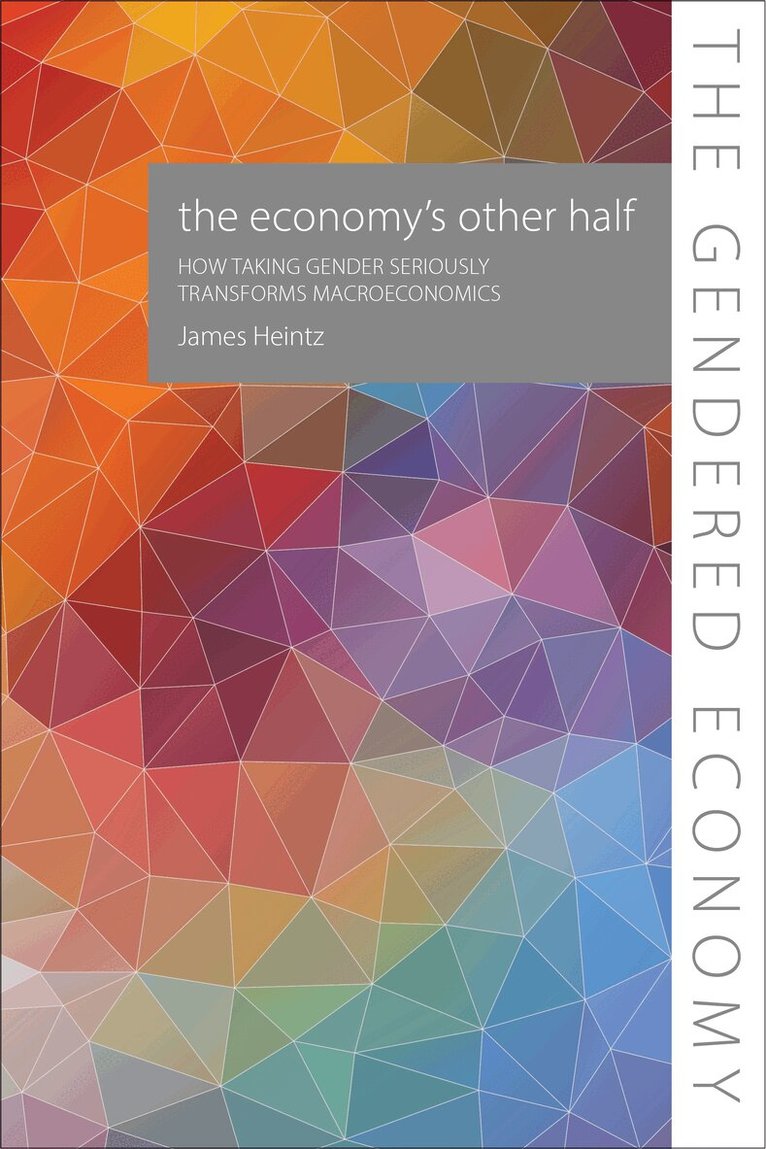
    Economy's Other Half

    How Taking Gender Seriously Transforms Macroeconomics

    AvJames Heintz

    Häftad, Engelska, 2018

    Del 8 i serien Gendered Economy

    464 kr

    Beställningsvara. Skickas inom 11-20 vardagar. Fri frakt över 249 kr.

    Fler format och utgåvor

    E-bok

    457 kr

    E-bok

    457 kr

    Beskrivning

    Choices made in macroeconomic policies – such as government spending, taxation, monetary policy and financial regulation – have distinct distributive consequences for women and men. They also shape the constraints within which efforts to advance gender equality must operate. The implications of gender dynamics for macroeconomics extends beyond consideration of distributive outcomes. The unpaid and non-market work that women perform – running a household, bringing up children – is unrecognized and uncounted in macroeconomic variables used to formulate policy. Yet the economic consequences of these unpaid activities are far-reaching: contributing to the well-being of society, affecting productive activities in the market economy and creating the foundation for the long-run sustainability of our economies.It has long been assumed that economic growth and women’s growing participation in the paid workforce would eventually take care of gender inequalities, and yet there is little evidence that faster growth will achieve this. In addition it ignores the valuable and quantifiable role that the unpaid work of women for their families contributes to the economy.James Heintz tackles the shortcomings of macroeconomics in relation to gender dynamics and challenges the dominant methods and measurements, suggesting new ways of framing macroeconomic concepts. He concludes by considering implications for how this new way of thinking could transform policymaking in the future.

    Produktinformation

    • Utgivningsdatum:2018-12-21
    • Mått:156 x 234 x 16 mm
    • Vikt:186 g
    • Format:Häftad
    • Språk:Engelska
    • Serie:Gendered Economy
    • Antal sidor:112
    • Förlag:Edinburgh University Press
    • ISBN:9781788210638

    Utforska kategorier

    • Ekonomisk politik inom Ekonomi och Ledarskap
    • Makroekonomi inom Ekonomi och Ledarskap

    Mer om författaren

    James Heintz is Andrew Glyn Professor of Economics at the University of Massachusetts, Amherst.

    Innehållsförteckning

    • Foreword by Series EditorsIntroduction1. Gender inequality and macroeconomic policy2. The mis-measured economy: incorporating feminist ideas into macroeconomic accounting3. Reimagining macro: gender and economics in the long run4. Revamping macroeconomics so that people count