James J. Clark - Böcker
Visar alla böcker från författaren James J. Clark. Handla med fri frakt och snabb leverans.
3 produkter
3 produkter
1 590 kr
Skickas inom 10-15 vardagar
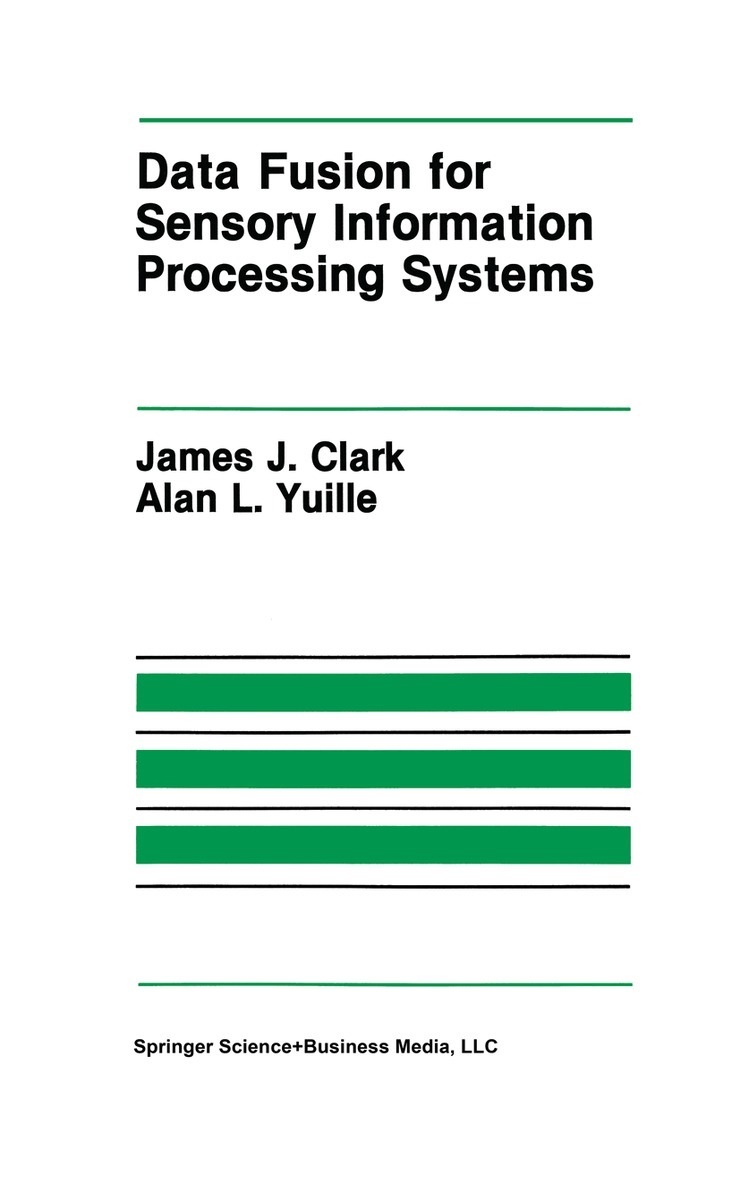
The science associated with the development of artificial sen sory systems is occupied primarily with determining how information about the world can be extracted from sensory data. For example, computational vision is, for the most part, concerned with the de velopment of algorithms for distilling information about the world and recognition of various objects in the environ (e. g. localization ment) from visual images (e. g. photographs or video frames). There are often a multitude of ways in which a specific piece of informa tion about the world can be obtained from sensory data. A subarea of research into sensory systems has arisen which is concerned with methods for combining these various information sources. This field is known as data fusion, or sensor fusion. The literature on data fusion is extensive, indicating the intense interest in this topic, but is quite chaotic. There are no accepted approaches, save for a few special cases, and many of the best methods are ad hoc. This book represents our attempt at providing a mathematical foundation upon which data fusion algorithms can be constructed and analyzed. The methodology that we present in this text is mo tivated by a strong belief in the importance of constraints in sensory information processing systems. In our view, data fusion is best un derstood as the embedding of multiple constraints on the solution to a sensory information processing problem into the solution pro cess.
1 577 kr
Skickas inom 10-15 vardagar
The science associated with the development of artificial sen sory systems is occupied primarily with determining how information about the world can be extracted from sensory data. For example, computational vision is, for the most part, concerned with the de velopment of algorithms for distilling information about the world and recognition of various objects in the environ (e. g. localization ment) from visual images (e. g. photographs or video frames). There are often a multitude of ways in which a specific piece of informa tion about the world can be obtained from sensory data. A subarea of research into sensory systems has arisen which is concerned with methods for combining these various information sources. This field is known as data fusion, or sensor fusion. The literature on data fusion is extensive, indicating the intense interest in this topic, but is quite chaotic. There are no accepted approaches, save for a few special cases, and many of the best methods are ad hoc. This book represents our attempt at providing a mathematical foundation upon which data fusion algorithms can be constructed and analyzed. The methodology that we present in this text is mo tivated by a strong belief in the importance of constraints in sensory information processing systems. In our view, data fusion is best un derstood as the embedding of multiple constraints on the solution to a sensory information processing problem into the solution pro cess.
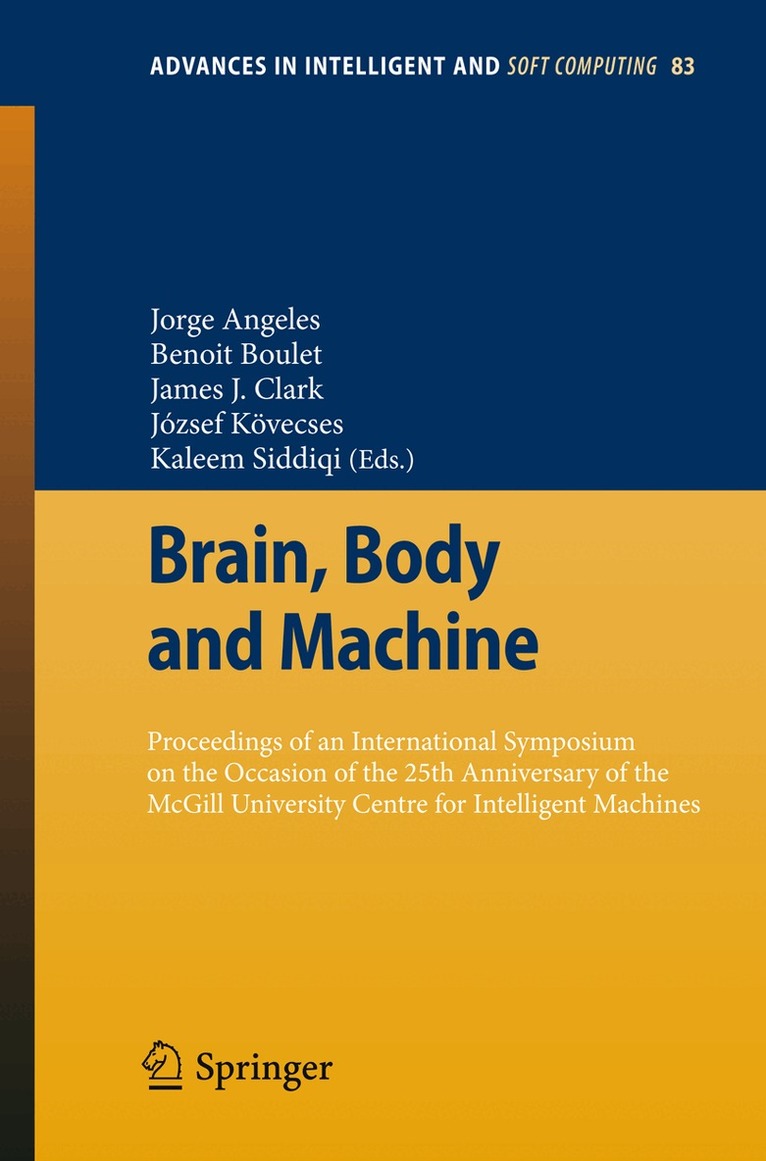
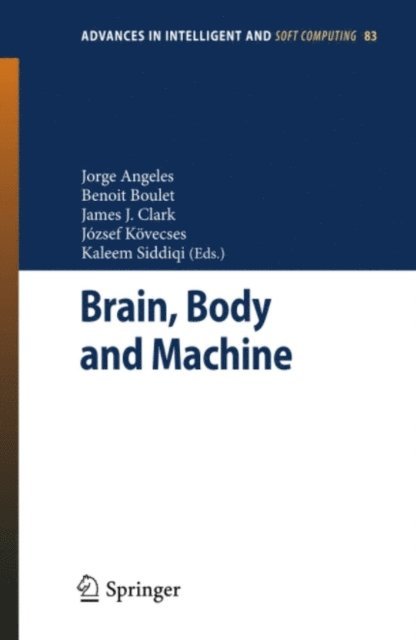
Brain, Body and Machine
Proceedings of an International Symposium on the Occasion of the 25th Anniversary of McGill University Centre for Intelligent Machines
Häftad, Engelska, 2010
2 118 kr
Skickas inom 10-15 vardagar
The Centre for Intelligent Machines (CIM), McGill University, was of?cially c- ated on November13th, 1985,upon approvalby the University Senate. The mission of the centre is, since its inception, "to excel in the ?eld of intelligent systems, stressing basic research, technology development and education." Intelligent - chines are understood,along these lines, as systems "capable of adapting their go- oriented behavior by sensing and interpreting their environment, making decisions and plans, and then carrying out those plans using physical actions." Research - tivities of interest to CIM include robot design, mechanical system dynamics, robot control,computervision,visualperception,medicalimaging,haptics,systemtheory and applications, and virtual environments.These ?elds can be succinctly described by the title of the international symposium recorded in this book,Brain,Bodyand Machine (BBM). CIM's objectof research is thusre?ected in the book,wherereaderswill ?nd that most papers cover at least two of the three main thrusts. Papers re?ect the state-- the-artofthemultidisciplineofintelligentmachines,nowadayshighlydiversi?ed.A broad spectrum of applications is covered, from humanoid robots and autonomous planetary rovers, to innovative procedures and systems for shape-reproduction and on to systems or devices for medical diagnosis.Applications are all geared to one commongoal,a better quality of life for highlychallengedpatients or simply for the healthy individual. Methods to face the challenges include not only sophisticated deterministic algorithms, but also their heuristic counterparts, at the roots of what is known assoftcomputing.