James Jakób Liszka - Böcker
Visar alla böcker från författaren James Jakób Liszka. Handla med fri frakt och snabb leverans.
5 produkter
5 produkter
272 kr
Skickas inom 10-15 vardagar
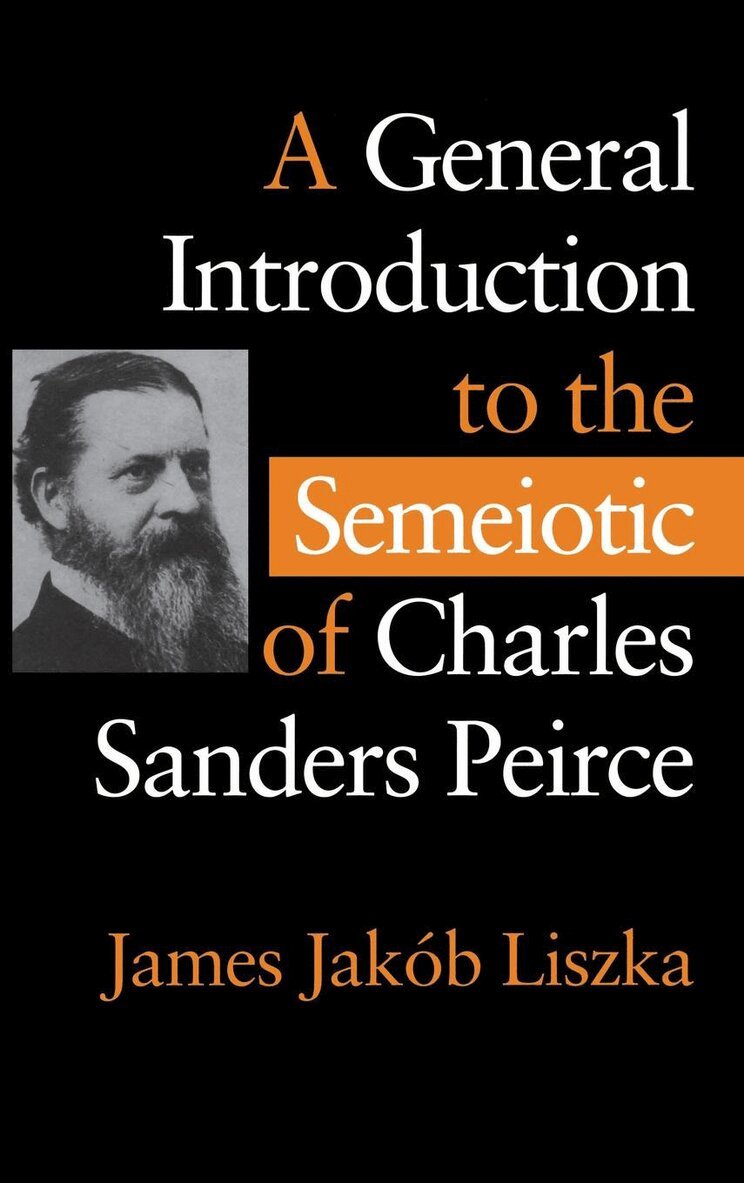
"This definitive text is the single best work on Peirce's semeiotic (as Peirce would have spelled it) allowing scholars to extrapolate beyond Peirce or to apply him to new areas . . ." —Society for the Advancement of American Philosophy Newsletter". . . indispensable introduction to Peirce's semiotics." —Teaching Philosophy"Both for students new to Peirce and for the advanced student, this is an excellent and unique reference book. It should be available in libraries at all . . . colleges and universities." —Choice"The best and most balanced full account of Peirce's semiotic which contributes not only to semiotics but to philosophy. Liszka's book is the sourcebook for scholars in general." —Nathan HouserAlthough 19th-century philosopher and scientist Charles Sanders Peirce was a prolific writer, he never published his work on signs in any organized fashion, making it difficult to grasp the scope of his thought. In this book, Liszka presents a systematic and comprehensive acount of Peirce's theory, including the role of semiotic in the system of sciences, with a detailed analysis of its three main branches—grammar, critical logic, and universal rhetoric.
2 096 kr
Skickas inom 10-15 vardagar
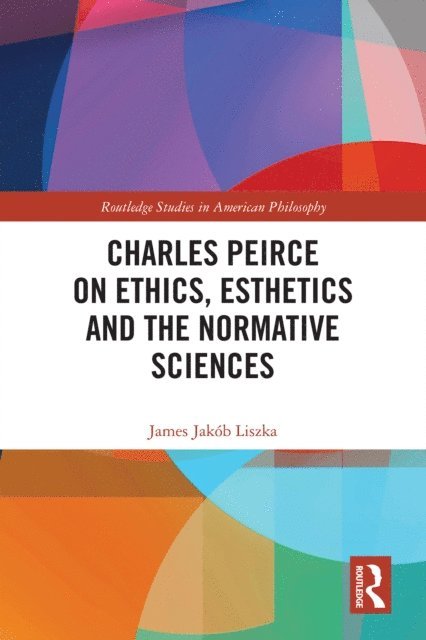
This book presents a comprehensive and systematic picture of Charles Peirce’s ethics and aesthetics, arguing that Peirce established a normative framework for the study of right conduct and good ends. It also connects Peirce’s normative thought to contemporary debates in ethical theory.Peirce sought to articulate the relation among logic as right thinking, ethics as good conduct and, in an unorthodox sense of aesthetics, the pursuit of ends that are fine and worthy. Each plays an important role in ethical life. Once aesthetics has determined what makes an end worthy and admirable, and ethics determines which are good and right to pursue, logical and scientific reasoning is employed to figure the most likely means to attain those ends. Ethics does the additional duty of ensuring that the means conform to ideals of conduct. In the process, Peirce develops an interesting theory of moral motivation, an account of moral reasoning, moral truth, and a picture of what constitutes a moral community.Charles Peirce on Ethics, Esthetics and the Normative Sciences will be of interest to scholars and students working on Peirce, American philosophy, and metaethics.
573 kr
Skickas inom 10-15 vardagar
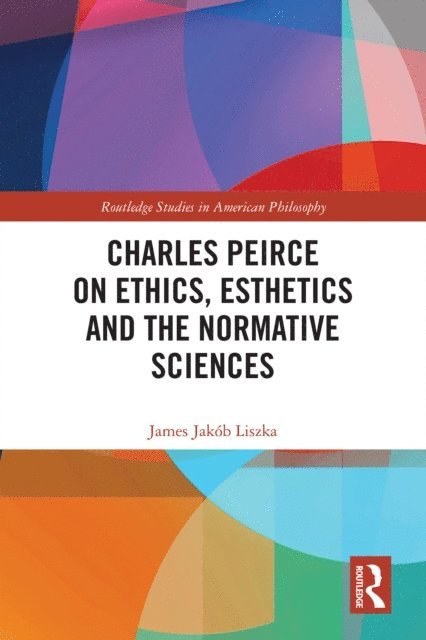
This book presents a comprehensive and systematic picture of Charles Peirce’s ethics and aesthetics, arguing that Peirce established a normative framework for the study of right conduct and good ends. It also connects Peirce’s normative thought to contemporary debates in ethical theory.Peirce sought to articulate the relation among logic as right thinking, ethics as good conduct and, in an unorthodox sense of aesthetics, the pursuit of ends that are fine and worthy. Each plays an important role in ethical life. Once aesthetics has determined what makes an end worthy and admirable, and ethics determines which are good and right to pursue, logical and scientific reasoning is employed to figure the most likely means to attain those ends. Ethics does the additional duty of ensuring that the means conform to ideals of conduct. In the process, Peirce develops an interesting theory of moral motivation, an account of moral reasoning, moral truth, and a picture of what constitutes a moral community.Charles Peirce on Ethics, Esthetics and the Normative Sciences will be of interest to scholars and students working on Peirce, American philosophy, and metaethics.
1 456 kr
Skickas inom 3-6 vardagar
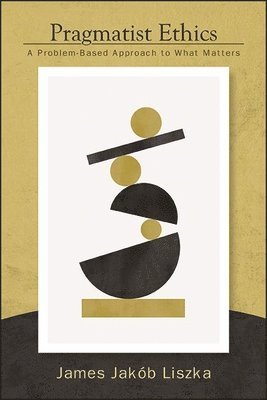
Argues that the path to the good life does not consist in working toward some abstract concept of the good, but rather by ameliorating the problems of the practices and institutions that make up our practical life.Grounded in American pragmatism, Pragmatist Ethics proposes a rethinking of ethics. Rather than looking to the good-a concept for which consensus is difficult to achieve-pragmatists instead advocate for tending to the problems of the day. James Jakób Liszka examines how daily practices and institutions are originally conceived and then evolve to solve certain problems, and that their failure to do so is the source of most problems. Liszka argues that the ethical goal, therefore, is to improve upon these practices and that the sort of practical reasoning that characterizes practices can be enhanced by a more scientific, empirical approach. But how do we know when changes to practices and institutions are progressive? Problems will plague the best of communities; the better community is the one that succeeds best at solving its problems. Pragmatist Ethics examines various accounts of improvement and progress, concluding that the problem-solving effectiveness of communities is the key to progressive changes.
529 kr
Argues that the path to the good life does not consist in working toward some abstract concept of the good, but rather by ameliorating the problems of the practices and institutions that make up our practical life.Grounded in American pragmatism, Pragmatist Ethics proposes a rethinking of ethics. Rather than looking to the good-a concept for which consensus is difficult to achieve-pragmatists instead advocate for tending to the problems of the day. James Jakób Liszka examines how daily practices and institutions are originally conceived and then evolve to solve certain problems, and that their failure to do so is the source of most problems. Liszka argues that the ethical goal, therefore, is to improve upon these practices and that the sort of practical reasoning that characterizes practices can be enhanced by a more scientific, empirical approach. But how do we know when changes to practices and institutions are progressive? Problems will plague the best of communities; the better community is the one that succeeds best at solving its problems. Pragmatist Ethics examines various accounts of improvement and progress, concluding that the problem-solving effectiveness of communities is the key to progressive changes.